VIDEO VOYAGEUR: 3 Q’S WITH KEN LOVERN

blindboone

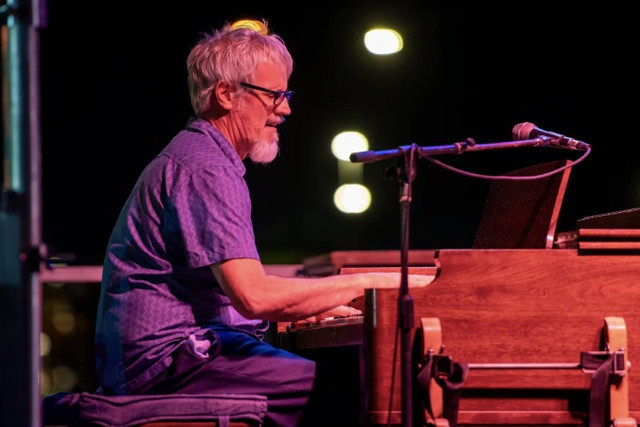
When Ken Lovern set out to create Blind Boone the Musical, he wasn’t simply writing songs. He was uncovering an overlooked chapter of American history. Through an ambitious blend of jazz, theatrical storytelling and historical research, the Kansas City composer and jazz organist is bringing the remarkable life of Missouri pianist John William “Blind” Boone to a whole new generation.

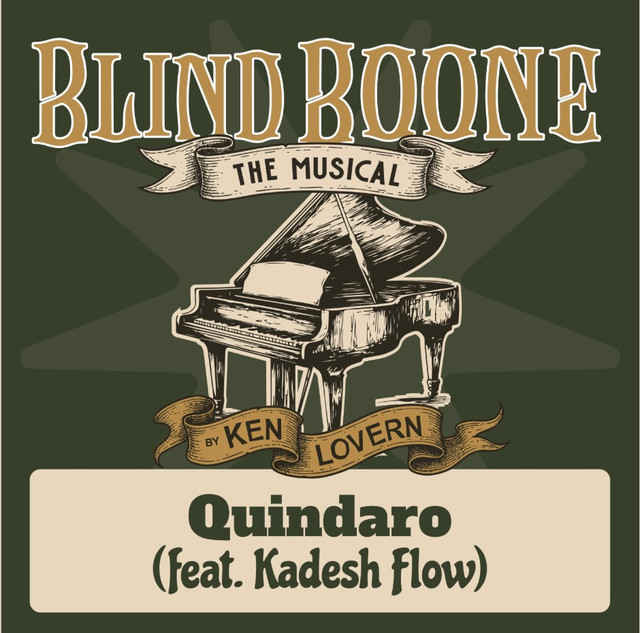
The project’s latest single, “Quindaro,” shifts the focus from Boone himself to the courageous journey of his mother, Rachel, bringing together the story of the Underground Railroad, the historic free state town of Quindaro, and the events that ultimately shaped one of America’s most extraordinary musicians. Accompanied by a striking visual narrative that combines original comic book artwork, archival imagery and footage from the recording sessions, the release demonstrates the scale and vision behind Blind Boone the Musical.

We caught up with Ken to discuss the inspiration behind “Quindaro,” the symbolism woven into its music, the creative process behind the video and why preserving stories like Blind Boone’s has never been more important than now.

Tell us the story of this track. Why did you choose to visualize it specifically in this way?

Quindaro is part of the story of Rachel Boone as told in the musical historical fantasy, “Blind Boone the Musical.” 

The song’s setting is just before sunset in late Summer 1863, near Miami, Missouri in north central Missouri.  A group of escaped and freed former enslaved persons, called “contrabands” by the Union Army, are heading west to Kansas in search of freedom and a better life.  Their immediate goal is to reach the river port town of Quindaro on the Kansas side of the Missouri river and a known stop on the Underground Railroad.  They sing to tell their story and their reasons for heading to the Free State of Kansas.

At dawn, the freedom seekers continue walking west to Quindaro.  Rachel twisted her ankle the previous day, and it has swollen through the night.  She is unable to walk.  She will remain in central Missouri and give birth to John William Boone, who will become the prodigy and performing legend “Blind Boone.”

The cowbell beat that begins Quindaro is a standard “bell pattern” that forms the basis for much of the music of sub-Saharan Africa.  The migration of this cross-rhythmic figure into the Americas introduced new rhythms to American music that did not exist in Europe.  Some musicologist trace the “swing” of American blues and jazz to this pattern.  

In the song Quindaro, the bell pattern remains consistent while the underlying pulse of the shaker and the bass drum alternate from a 6/8 beat to a 4/4 beat.  Shifting the underlying pulse from 6/8 to 4/4 symbolizes the forced migration of the Africans to the Americas.

What was the inspiration behind this new video (visuals , storyline, etc.)?

The video features art from the companion comic book, video from the recording sessions, photos, and historical maps and drawings.  My goal was to tell the story of the freedom seekers along with the experience of the musicians.  The viewer can see through the maps and drawings the perilous journey from the Missouri side of the river at Parkville to the Kansas side of the river at Quindaro.

What was the process of making the video?

To create the video, I drew on images from several sources.  To present the story of Blind Boone the Musical in a clear and linear manner, I collaborated with Gutter Studios to develop a comic book adaptation.

While recording Quindaro, I filmed videos of the musicians performing.  I interspersed those videos with the comic book images and vintage maps and drawings to visually tell the story.

The video represents the dramatic story of freedom seekers from one hundred and sixty-three years ago and the joy of musicians performing today. 

Connect with Ken Lovern and Blind Boone the Musical HERE

“Palomino”: Where Memory, Movement and Melody Converge

Palomino

With a light footed blend of samba rhythms, bossa nova elegance and personal storytelling, Todd Mosby releases “Palomino,” a buoyant, memory soaked single that dances gracefully between nostalgia and forward motion. It’s joyful, reflective and quietly philosophical.

Taken from his forthcoming album American Heartland, “Palomino” captures the spirit of Mosby’s early years growing up on his family’s farm, where mornings were shaped by animals, open skies and unspoken lessons in patience and trust. Inspired by the horse he first learned to ride, the song becomes a metaphor for learning when to guide, when to follow, and when to simply listen.

Musically, all the familiar Mosby hallmarks are present and correct. There’s the gentle propulsion of a fast bustling samba groove, the galloping pulse of classic bossa nova, and those signature harmonic twists that refuse to settle for the obvious route. Influenced by the elegant tradition of Brazilian bossa nova, yet filtered through Mosby’s own sophisticated lens, the track feels both timeless and quietly adventurous.

Layered over this rhythmic shimmer are Mosby’s nimble electric guitar lines, weaving in and out of the arrangement like sunlight through trees, and the soaring vocals of Lola Kristine, which adds lift and an emotional clarity. Together, they have created an effortless sound, even though every note has been clearly placed with care and intention.

But “Palomino” is more than just an exercise in musical elegance. As with much of Mosby’s work, the real magic lies in how the sound serves the story. Close your eyes, and the imagery unfolds naturally; dust rising from hooves, early morning light across open land, a quiet dialogue between rider and horse. It’s music that describes a scene and then asks you to step inside it.

And in that sense, the song becomes a perfect introduction to the wider world of American Heartland. While the album as a whole explores landscapes, history and regional identity, “Palomino” focuses on something smaller and more intimate – a single relationship, a single moment, a single lesson that echoes through a lifetime.

There’s also a subtle philosophy at work here. The track reflects Mosby’s belief in grace through awareness, in learning through observation rather than domination.

In transforming a childhood experience into a richly layered musical narrative, Todd Mosby once again shows why he remains such a compelling voice in contemporary instrumental music. “Palomino” simply rides alongside you for a while, painting a scene you can step into.

Todd Mosby

About Todd Mosby

Todd Mosby is an award winning composer, guitarist and musical innovator based in St. Louis, Missouri. His music brings together elements of jazz, folk, New Age, blues, rock, bossa nova, and North Indian classical music to create richly textured landscapes.

A multiple Global Music and Zone Music Reporter Award winner, Mosby has spent more than a decade developing immersive, place inspired conceptual albums that translate memory, landscape and culture into music. His acclaimed discography includes the “elements” trilogy, beginning with Eagle Mountain (2016), and Land of Enchantment (2023), both celebrated for their emotional depth and visual storytelling.

Mosby studied at the Berklee College of Music and Webster University and spent thirteen years studying classical North Indian music with Ustad Imrat Khan, becoming the only guitarist inducted into the prestigious Imdadkhani Gharana. He also played a key role in designing the Imrat guitar, an 18 string hybrid instrument that bridges Eastern and Western musical traditions. Throughout his career, Mosby has collaborated with many of the world’s most respected studio musicians and released seven albums to date.

Find out more about Todd Mosby on his Website

Stream music on Spotify and Apple Music

VIDEO VOYAGEUR: 3 Q’S WITH AMANA MELOME’

New Cover art Con Calma

With her single “Con C.ALMA” and accompanying video, Amana Melome’ continues to create a space that is both deeply personal and quietly powerful.

“Con C.ALMA” is more than just a song. It’s a reflection of her philosophy on creativity, presence and moving through life at your own rhythm.

Filmed in the flower lined streets of Southern Spain and in her own creative studio, the video captures the calm, colour and intention that define this new chapter of her artistic journey. Rooted in themes of self-trust, patience and inner alignment, “Con C.ALMA” feels like a gentle invitation to slow down and reconnect both with ourselves and with the world around us.

We spoke with Melome’ about the symbolism behind the visuals, the spontaneous process of bringing the video to life and why flowers became the central metaphor for this beautifully unhurried release.

Tell us the story of this song, why did you choose to visualize this song specifically in this way?

Con C.Alma is a song about doing things on your own way at your own pace, without letting the world rush you. 

I felt flowers were very symbolic for the sentiment behind the song. You can’t rush a flower to bloom, and you can’t expect one flower to be exactly like another either! Just like people!

The intention was to create a video that felt elegant yet simple, colourful and calming like sunshine.

What was the inspiration behind this new video (visuals, storyline, etc.)?

I intentionally inserted flowers in all of the visuals for this song! I made a wire flower for the cover of the single, I am wearing big flower earrings in the video and I am walking and dancing around the beautiful flower lined streets of Andalusia in Southern Spain. 

There is a softness dancing with the boldness of the images, a calm and colourful sultry meets don’t mess with me vibe hahaha! I thought after waltzing around these beautiful streets, orange trees and fountains, ending up in my studio was the perfect ending to the story line.

Lighting my candles and painting, with flowers in my hair. This is my actual studio where I paint and record music, so it encapsulates my essence in a perfect way!

What was the process of making the video?

I had the vision of the vibe I wanted to create, and called in my good friend and amazing makeup artist Kirsten (shoutout to @kirstenpromakeup) who is always game to get creative together! 

I pulled the clothes and accessories from my closet. Once I explained my vision, she found a walking map of the flower-lined streets in the area, and off we went! 

2 iPhones in hand and a tripod! We walked through all of the areas, I sang the song through once (sometimes twice) at each, and we kept it moving. Once I left her, I drove to my studio…and it hit me:  that could be a perfect closing scene! Super unplanned I filmed all of the studio images by myself! Opening the door, to lighting the candles, to painting and dancing in the mirror. I was just imagining fun edits…and I happened to have two big white flowers in my studio (the last of a bouquet gifted to me on  my birthday a few days before).  I chose my favorite clips and the rest is history!

I am very happy with how the video turned out! 

Keep up with everything Amana Melome’ on her Website

VIDEO VOYAGEUR: 3 Q’s WITH CLEMENTINE MOSS

As a founding member of the all female Led Zeppelin tribute band ZEPPARELLA, and the force behind introspective solo projects like Nothing Will Keep Us Apart and Clem & Clearlight, Clementine Moss has long balanced raw rock power with a spiritual depth.

Her latest work continues this exploration, blending poetic songwriting with personal transformation.

In this exclusive interview, Clementine opens up about the emotional and spiritual shifts that inspired one of her most evocative songs called “Coming to Meet The Blues”.

Created during her journey toward sobriety, the track and its accompanying music video captures the ache of existential questioning and the haunting beauty of roads not taken. Working closely with visual artist Luigi Florente of Blackstars Studio, Clementine brings to life a narrative of romantic memory, longing and awakening. All framed through a vintage lens that echoes the soul of the song.

Here, she walks us through the heart of the piece, the vision behind the visuals and how art continues to help her meet life without the veil:

1. Tell us the story of this song, why did you choose to visualize this song specifically in this way?

I wrote the album, and this song in particular, as my life was shifting and I was becoming sober. The songs on the record ended up being a kind of love letter to the life I was leaving behind, the late nights in bars, substance-induced hazy moments where judgment was maybe not present. Those moments could be beautiful and creative, but also illusory and over time I began to be more excited by meeting life without a veil.

This song is about that feeling of longing that is existential, when alcohol takes over and you begin to question all the choices that brought you to this point. The narrator of the song sees someone across the bar and paths not taken come into view and amplify the question… have I made the right choices? Is this where I thought I was going? Is the uncertainty I feel about myself truth or mistake?

2. What was the inspiration behind this video (visuals, storyline, etc.)?

I work with Luigi Florente of Blackstars Studio in Spain to do the videos for the album. I ask that he work with clips and footage without AI generation, and he has a wonderful way of getting inside the song and telling the story. He chose to tell the story of lost love here, and we loved the romantic visuals.

3. What was the process of making the video?

Luigi finds the clips and puts the story together, and then I bring the video into Wondershare and add some lighting and texture. I love working in that program, as there are so many options to use so easily. I love things to look vintage, and the various options of light leak filters really add to the romance.

Slow Burn Elegance – Lil’ Red & The Rooster Shine on Latest Single “Melancholy Mood”

Lil-Red-7-Cover-Digital-Media

Lil’ Red & The Rooster slow the pace and turn up the elegance on “Melancholy Mood,” the fourth single from their forthcoming album 7.

With a tip of the hat to blues greats T-Bone Walker and Dinah Washington, this track is a smoky and slow burning gem dripping with class, control and emotional finesse.

Jennifer “Lil’ Red” Milligan delivers the vocals with a velvet gloved hand, allowing every word linger in the air like perfume in a dimly lit club. There’s pain here for sure, but it’s the kind of pain worn like a tailored dress – graceful, knowing and timeless. Her phrasing moves with the same unhurried confidence as a singer who understands what it means to have restrain.

Pascal Fouquet’s guitar work is pure vintage cool. His tone is warm and articulate, never showy. It’s just the right bends, the right space and the kind of touch that makes the blues feel intimate and eternal.

Bobby Floyd’s B3 organ swells beneath the track with a soulful subtlety, while Jean Marc Despeignes (bass) and Pascal Mucci (drums) keep things locked in with a hushed, heartbeat rhythm section that lets the emotion breathe.

As part of 7, “Melancholy Mood” feels a lot like a candlelit centerpiece. A moment of reflection that invites listeners to lean in closer. It’s not just a love letter to classic blues, but a confident entry in that lineage, re-imagined with the Rooster’s signature “retro modern” touch.

In a world that often moves too fast, “Melancholy Mood” is a reminder that sometimes the deepest feeling comes in the quietest swing.

Lil’ Red & The Rooster’s upcoming album 7 is a rich blend of gospel, blues, retro soul, and pop jazz rooted in a distinctly 1960’s vibe. Featuring seven original tracks, including an instrumental and a gospel blues opener, the album explores themes of freedom and soulful transformation. With Grammy-nominated Bobby Floyd on B3 and piano, 7 is both elegant and gritty, nostalgic and fresh.

The full album drops August 22, 2025, with singles released every three weeks along the way!

Find out all about Lil’ Red & The Rooster on their Website

VIDEO VOYAGEUR: 3 Q’S WITH GAVIN HOLLIGAN

unnamed-copy

From the roar of the football pitch to the soul-stirring acoustics of Abbey Road, Gavin Holligan’s journey has been anything but ordinary.

Once a rising star in the world of professional football, he made the bold leap into music, carving out a career that has seen him work with legends like Stevie Wonder, Gloria Gaynor, and Duffy.

But beyond the session gigs and high-profile collaborations, Gavin’s true creativity lies in his ability to create deeply personal, timeless music. Songs that stir you on a deep leve.

His latest release “Just Passing Through“is no exception. Inspired by the fear of losing a close friend to cancer, the song captures the raw emotion of grief, love and the fleeting nature of life.

Recorded live at the now iconic Abbey Road Studios, this track strips everything back to its very essence – pure, unfiltered storytelling through music. In this interview, Gavin shares the deeply personal journey behind the song, the magic of recording, and what it means to create something timeless.

1. Tell us the story of this song, why did you choose to visualize this song specifically in this way?

The song was inspired by the pending thought of losing a close friend and colleague who was diagnosed with cancer a few years ago. Fortunately he has made a full recovery, but the whole experience hit me deeply, and made me consider that we are all facing the inevitability of our departure from this life, or at some point likely to lose someone that we love and appreciate dearly. 

Less than a year after writing the song, I was invited by a record label to record a couple of my original songs, live at Abbey Road, and I thought it would be the right time to express this piece, and do it in the most honest and meaningful way, especially after having lost a good friend and colleague of mine, (a separate incident to my other friend, also to a brutal bout of cancer). 

My next challenge became figuring out who would be able to assist me musically, but I was fortunate to have the good pleasure of being accompanied by some of the best musicians I know! I and the core musical line up, met for a meet and greet – the day before to play through the song and feel our way through the structure, and make sure we were all on ‘the same page’. And then we did one final run through in the morning of the shoot – before the trip to Abbey road, where we met the String players for a final top and tail on set.

2. What was the inspiration behind this new video (visuals, storyline, etc.)?

So much of my time is spent carefully crafting music/records (for myself and others), with the use of software, samples, and machines! . Whilst this is an amazing and enjoyable process (for the most part) there is something magical about capturing a live take of a song, in one take, with humans in the room. The video is literally a documentation of that exact moment, when we all found a way to connect with the song, and each other, and do it seamlessly! It was all about maintaining the integrity of the sentiment of the arrangement and the lyrics, by bringing a level of simplicity and honesty to the performance, which I believe can be very hard to do, but I feel that we did thankfully!   

3. What was the process of making the video?

There was an enormous amount of pressure, as we only had around 45 mins to get in and set up, do a quick sound check, and execute the song! Most of the magic of the video is in witnessing the beauty of the music/arrangement, the lyrics, and of course, the honesty caught on camera. There was literally no way of preparing for that moment, other than being ‘fully present’, and of course knowing how to deliver in your chosen craft (performers and crew).

There was a camera team set up and an audio team already assembled to capture the moment, and we literally had time enough to record 3 takes of the track. 

We then decided on which take was the best take, and I believe it was take three that we chose as the best take!

Even the camera edit was done live, so all in all, a very efficient process and an incredible outcome considering all the variables!

I am really pleased the world can enjoy this art in such an authentic way.