VIDEO VOYAGEUR: 3 Q’s WITH GEORGE COLLINS

There is something really infectious about a song that simply wants to make you feel good. With “Happiness Looks Good on You,” George Collins set out to do exactly that, deliberately stepping away from the more reflective and introspective territory that has characterised much of his songwriting to create a joyful, celebratory track steeped in vintage soul and Gospel influences.

Inspired by childhood memories of watching Soul Train, as well as a lifelong admiration for The Staple Singers, the song channels the warmth, optimism and irresistible spirit of classic soul. The accompanying video takes that nostalgia a step further, taking inspiration from Billy Joel’s wonderfully retro “Tell Her About It” and imagining Collins performing with a vintage soul band on a 1960’s television show.

Created in collaboration with visual artist Marta Vorontsova, the video brings together Collins’ love of classic music, his playful sense of humour and a distinctly old-school visual aesthetic. We caught up with George to talk about the inspiration behind “Happiness Looks Good on You,” the making of the video, his love of vintage soul and the process of bringing the two together.

Tell us the story of this track. Why did you choose to visualize it specifically in this way?

As I was reviewing my catalog and planning my latest album “New Ways of Getting Old,” I realized that many of my songs are reflective and introspective and that I had very few “happy” songs. This was surprising to me, as I am generally an upbeat and happy person! So I intentionally set out to write a happy song. From the outset, I knew that I wanted it to be a celebratory song with a vintage soul vibe and a Gospel choir. I used to watch the TV show “Soul Train” when I was young, and I loved the Staple Singers – I thought Pops Staples was the coolest old dude in the world! I listened to their music continuously while I was writing and recording “Happiness Looks Good on you.”

What was the inspiration behind this new video (visuals, storyline, etc.)?

I am a huge fan of Billy Joel, and he, like me, is also a huge fan of vintage music – as evidenced by his wonderful retro album, “An Innocent Man.” He has a video of a track from that album, “Tell Her About It,” in which he plays a singer backed by a soul band performing on The Ed Sullivan Show in the 1960s. I love that song and the video, and I wanted to do something similar for my song.

What was the process of making the video?

I have been working with an amazing visual artist, Marta Vorontsova, for several years – she has created many of my lyric videos, and her work is absolutely first rate. (https://www.instagram.com/_imagikali_/) So I sent her the track and my basic ideas and she got to work creating the video. It was an iterative, interactive process, and after a lot of back and forth we ended up with a video we could both be proud of – and that I sincerely hope my audience will enjoy!
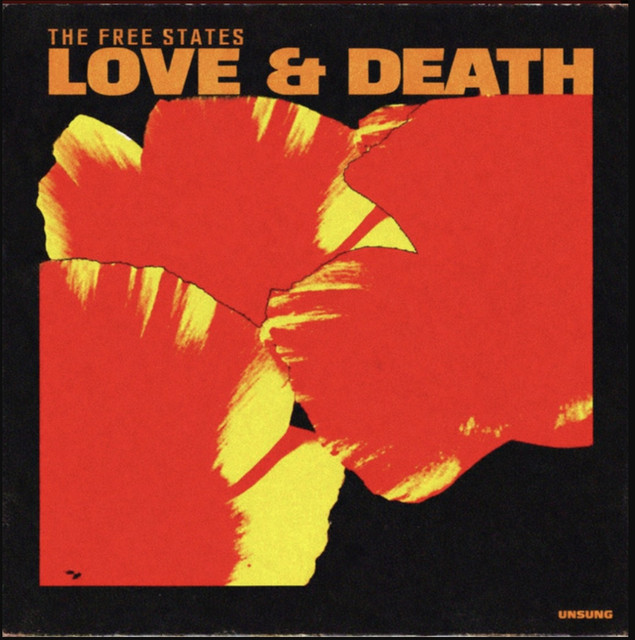
The Free States Let the Songs Do the Talking on “Love & Death”

thefreestates

There is something to be said for music that doesn’t immediately tell you what it is. In a world of genre tags, carefully curated aesthetics and songs apparently designed to make perfect sense within the first fifteen seconds, it is rather nice to encounter an album that seems perfectly happy to wander off and see what happens. No map or flashing neon sign saying this is the important bit, just a collection of ideas allowed to develop at their own pace. And that, in a nutshell, is rather what The Free States are doing on Love & Death.

The project of American songwriter Shaun Lyons, now based in Athens, Greece, The Free States has always been difficult to squeeze into one particular musical box, and frankly, why would you want to? There are traces of rock, soul, alternative music, experimental rhythms and a healthy appreciation of melody, but attempting to reduce all of that to a convenient label would miss the point. Lyons is interested in songs first.

“Definite” is a particularly good example. Built around the wonderfully human problem of being indecisive at a crucial moment in a relationship, it moves in 7/4, which is not generally the time signature one reaches for when trying to make uncertainty sound comfortable. But it works. There is an ease here that makes the unusual rhythm feel natural, while the song itself manages to be thoughtful.

Then there is the opening track “Most of All,” apparently born at three in the morning while Lyons’s electric guitar was lying beside him with the amplifier still switched on. Which is probably proof that sometimes the best songwriting advice is simply to leave the equipment where it is and see what happens. The song has a lovely sense of longing running through it, while strings, a refrain and a guitar solo give it a little more space and help distinguish Love & Death from the more guitar driven album that came before it.

Elsewhere, “Man the Baddies” brings considerably more muscle to the proceedings. What began around thoughts of war, friends being conscripted and the complicated question of what it actually means to move forward. It is energetic, rhythmically unusual and probably the heaviest thing The Free States have recorded, but there is no neatly packaged political statement waiting at the end of it. Lyons is more interested in the uncomfortable business of making decisions, which is rather more interesting than having the songwriter hand you a conclusion and ask you to tick a box.

Lyons has talked about songwriting as something that needs to happen before consciousness starts getting in the way, and there is freedom in that approach.

There is a similar freedom in the way the album was made. Recorded largely in Athens, with drums captured in several different rooms and vocals recorded together in another, Love & Death is clearly more interested in capturing a good performance than in constructing some immaculate sonic monument. Lyons makes much of the music himself, working with trusted collaborators when required, and there is something appealingly old fashioned about that. You have an idea, you make the record, you listen to it and you decide whether it works. Revolutionary stuff apparently.

Love & Death is an album that can groove, can rock and it can become rhythmically peculiar, it can pull back and allow a melody to carry the weight and it can occassionally make you wonder where on earth Lyons is taking you before realising that you rather like the journey. The Free States have remembered that the scenic route is where the interesting stuff happens.

Listen here:

VIDEO VOYAGEUR: 3 Q’s WITH DANIELE ODASSO

Living in between single cover with frame

Italian singer songwriter Daniele Odasso has always moved through music with a rare blend of emotional honesty and refined musicanship.

His new single, “Living in Between,” marks a turning point for Daniele, shaped by a period of deep personal transformation and a return to the landscapes of Tuscany that have long anchored his sense of self. Recorded in Viareggio and brought to life through an intimate collaboration with producer Amira, the song drifts between electronic pulse and soulful warmth, mirroring the emotional space it was born from.

What makes this moment in Daniele’s career so compelling is the clarity with which he speaks about the connection between voice, body and environment. Water, reflection, memory and nature all play a role in the sound and visuals of “Living in Between,” forming a world where music becomes a form of inner exploration.

The accompanying video, shot between underwater frames, pine forests and the glowing dunes of Lecciona doesn’t just illustrate the song. It lives and breathes with it.

We sat down with Daniele to talk about the making of “Living in Between,” the sensory world behind his vocal work, the unexpected joy of shooting underwater and how returning to Tuscany helped him rediscover the path forward.

1. Tell us the story of this song, why did you choose to visualize this song specifically in
this way?

“Living in Between” was recorded while I was living in Viareggio, Tuscany—a place that carries deep meaning for me because of my mother’s family roots there. During that period, I reconnected with nature in a way that shaped the entire sound of the song: the pulsating electronic groove, the layered vocals, and the fluid movement of the electric guitar all echo that sense of being suspended between states.

Water became a central metaphor throughout the making of the record. Living so close to the sea in Tuscany deeply influenced the emotional atmosphere of the track, and it was something I asked Amira to keep in mind while producing the record—this idea of fluidity, immersion, and constant movement between light and shadow.

That’s why the visual concept also begins with water as a symbolic entry point. It represents the emotional space from which the song emerged: a place of introspection, depth, and transformation. As the video shifts into the landscape of pine trees and dunes in Viareggio, it mirrors the song’s inner journey—from being enveloped by the element of water to resurfacing in the brightness of the natural world that inspired the music.

2. What was the inspiration behind this new video (visuals, storyline, etc.)?

The visuals were inspired by my daily proximity to water in Viareggio and the sensory relationship I developed with it through swimming every day. Because my vocal research is rooted in the Lichtenberger method, which focuses on acoustic perception and proprioception, being immersed in such a fluid medium gave me a new way of experiencing sound in my body. That liquid, tactile connection to water deeply influenced how I approached singing on this record, and Amira’s production supported and expanded that direction.

I wanted the video to reflect this whole sensory world, so I created an initial storyboard centered on an immersive water state and shared it with director Francesco Quadrelli. After exploring underwater imagery with photographer William Petriccioli and scouting the dunes of Viareggio together, the visual arc became clear: starting within the layered reflections and depth of water, gradually moving toward the sunlight near the beach, and ultimately returning to the sea. The visuals mirror the full cycle that shaped the music—nature, body, voice, and sound flowing back into one another.

3. What was the process of making the video?

The process of making the video was truly one of the best experiences I’ve ever had. I first met the incredibly talented art director William Petriccioli, who also shot the cover and instantly grasped the imagery and intentions behind the project. Shortly after, I met Francesco Quadrelli, a visionary and evocative director who immediately understood the concept and the different technical possibilities for shooting underwater. His visual language aligned perfectly with what I had envisioned and pushed the concept even further.

Shooting the underwater scenes was unexpectedly fun. I had trained myself to move from different directions while keeping my eyes open and staying in constant dialogue with Francesco’s camera. That allowed us to play with the surface of the water from multiple angles, creating those mirrored layers of light that shift with my movements.

We then moved to the “outside world.” The first scenes were filmed in my grandmother’s house in Tuscany—a room I literally grew up in—before heading to the pine forest near the beach of Lecciona in Viareggio. That location has an extraordinary sunset between the dunes and the water, and it became the perfect place to let go and immerse myself at the end of the day.

William and Francesco are an extraordinary team, and because they’re close friends, their trust and synergy made me feel completely embraced and understood throughout the shoot. We filmed in the exact order of the narrative, starting with the morning water scenes and ending with the sunset and my return to the sea. Experiencing that progression in real time felt both powerful and deeply cathartic.

Stream “Living in Between” now:

Keep up with Daniele Odasso on his Website

VIDEO VOYAGEUR – 3 Q’s WITH GEORGE COLLINS

Houston

With each new release, George Collins continues to refine a songwriting voice that is thoughtful and deeply expressive.

His latest single “Houston” takes that craft in a striking new direction, trading autobiographical detail for metaphor, and finding emotional truth in the vastness of outer space. Originally written during a creative retreat in Spain and then later transformed into a piano and cello ballad under the guidance of Grammy nominated producer Jeff Franzel, “Houston” explores the slow drift that can occur between two people who once felt close.

To accompany the single, Collins has released a visually striking video created in collaboration with graphic artist Nancy Razk. It’s a striking blend of imagery and emotion, pairing stark lunar landscapes with the quiet desperation of a relationship losing oxygen.

In this interview, Collins reflects on the unusual origins of “Houston,” the creative partnerships that brought it to life, and the process of translating a song about distance and communication into a powerful visual.

Tell us the story of this song, why did you choose to visualize this song specifically in this way?

Many of my songs have an autobiographical element, but fortunately my haunting new single, “Houston,” does not!

I co-wrote this song with two extremely talented songwriters, Kelsey Grant and Pete Bonne, on a retreat in Spain sponsored by The Songwriting Academy – we were fortunate to be mentored by multi-platinum songwriter Paul Statham.

We were given a brief to write a song about “space,” and after kicking around a number of possible themes we stumbled across the idea of using the ill-fated Apollo 13 mission as a metaphor to describe a relationship on the rocks.

It’s hard to believe that such a dark, harrowing song was written in a beautiful, bougainvillea-filled garden in a tiny white washed village in the hills above Malaga in sunny Spain!

What was the inspiration behind this new video (visuals, storyline, etc.)?

Although “Houston,” was originally written on acoustic guitar, I thought it would make a lovely piano/cello ballad.

So I reached out to one of my mentors, Grammy-nominated composer and producer Jeff Franzel, who did an amazing job arranging the song for piano and cello and producing the track – that’s him on piano and well known classical musician Peter Sachon on cello.

In keeping with the metaphor of outer space and theme of a relationship on the rocks, I knew the video would need a dark vibe, so I reached out to a gifted graphic artist named Nancy Razk. (Follow her on Instagram here

She has made several excellent videos for me in the past, and she has a bit of a darker palette than some other graphic artists I have worked with, so I knew she would be perfect for “Houston.”

What was the process of making the video?

Nancy and I had an interactive and collaborative approach to making this video. I knew that I wanted to video to be Black & White, to have images of outer space and lunar landscapes, to show black holes emphasizing danger and canyons emphasizing separateness, to show a lonely man and lonely woman frustrated and on the verge of breaking up, and also to feature a pianist and a cellist to match the musical accompaniment.

Nancy miraculously found the video footage to illustrate these themes, and through an iterative process we placed the clips to match the lyrics, so the visual and the audio were perfectly lined up. Nancy did an expert job stitching everything together, based on my detailed comments to her extremely creative drafts – she was full of wonderful ideas, and it was a delight to work with her once again. Apart from being grateful to my co-writers and the world class musicians who performed on this track, I am extremely proud of how the video turned out and beautifully brings this dark, haunting song to life.

//

George Collins is a singer songwriter whose work carries thoughtful storytelling with finely crafted melodies. His musical catalogue has steadily grown to include pieces that explore connection, vulnerability and the quiet shifts that shape human relationships.

Collins continues to collaborate with respected producers and musicians who help bring his vision to life. His newest single, “Houston,” adds another compelling layer to his evolving artistic journey.

Keep up with everything George Collins on his Website

    Ray Ray Star’s New Single “Feelin'” is an Electric Redemption Story

    4625077-39-EB153-C-8-A57-4-F83-8-F0-A7-B1-E6-E79-E70-A-0-1863206-Feelin-Artwork3000x3000

    When the first guitar hits in Ray Ray Star’s brand new single “Feelin’,” you can tell this isn’t just another rock song. There is fire behind each chord, and it’s all about emotional release with equal parts grit, groove and grace.

    Written and composed entirely by Ray Ray Star, “Feelin’” digs deep into the heart of addiction and recovery. But it’s not just about the fight to stay clean. It’s about the moment after the storm has passed, that fragile process of learning how to feel again when you’ve been numb for years.

    Listen in here:

    The lyrics are introspective and piercing, but it’s the music that tells the story with the bite of the guitar, and the push and pull between darkness and light.

    Ray Ray plays all the guitars himself on this track, bringing a distinctive tone that blends emotional texture with sheer power. “Feelin'” also features a stellar supporting lineup with Nick Weber of Pigeon Park delivering unforgettable vocals that channel pain and redemption in equal measure. On drums, Ricardo Viana of The Veer Union (Rockstar Records / Universal) drives is all forwards with precision and ifre, while Ryan Jones of The Thick Of It holds down the low end with an unwavering strength. Together, they all work to create a sound where rock refuses to play it safe.

    Ray Ray states:

    “My single Feelin’ is about the very last time I used and the thoughts that were going through my mind at that time. There was so much trauma and I was doing everything in my power to not feel anything but along the way I lost the ability to feel anything. I was desperate for a feeling of any sort. Addiction took everything from me and turned me into a shadow of my formal self.

    Desperate to quit and an addiction that wouldn’t let me. The absolute insanity of it all. Bringing me to places I never thought I would ever go. Hanging with people I hated being around. Doing things I never thought I would. Overdoses, heart failure, etc. I wanted to escape life with drugs but then drugs wouldn’t let me go.

    Its a miracle I am still here to tell the story and that is why I volunteer work with people that want the help. I want to inspire others that not only is there a way out but, when clean, you can achieve anything! That is my motivation. To sore as high as I can and inspire others to do the same. We are all someone’s brothers, sisters, mothers, fathers, etc.”

    It is the blend of truth and power that makes Ray Ray Star’s music really stand ground in today’s rock landscape. And his music is the reflection of a man who has lived the story he is telling. Sixteen years sober, Ray Ray Star doesn’t romanticize recovery or pain. He just tells it like it it – the grit, the struggle, the flicker of light you cling to when everything else fades.

    Ray-Ray-250314-0091-highres

    About Ray Ray Star

    Ray Ray Star is a guitarist, songwriter, record producer and executive producer. With a career that spans international touring, high profile production work and years spent behind the scenes shaping sound and story, he’s an artist who’s seen every side of the music industry, and come out the other side with something real to say.

    Sixteen years clean and sober, Ray Ray has turned his recovery into art, creating songs that dig deep into the human condition. Themes of addiction and the search for truth.

    He has toured internationally, co-produced NBC’s Real Music Live and built a reputation for blending rock ’n’ roll swaRay gger with deeply personal storytelling. Sixteen years clean and sober, Ray Ray channels his recovery journey into his music.

    From his early days writing songs amidst the personal struggle to his latest releases like “One Step Away” and “Feelin’,” Ray Ray Star continues to turn survival into art, proving that even in brokenness, there is power, hope and the courage to feel again.

    Keep up with Ray Ray Star on his Website

    Stream music on Spotify and Apple Music

    Zoey Tess Opens the Door to Revolution on “Knocking at Your Front Door”

    zoeytess-knockingatyourfrontdoor-coverart

    There’s an unmistakable sense of reckoning in Zoey Tess’s new single, “Knocking at Your Front Door.” Tess doesn’t hide behind any metaphors or soften any blows. Instead, she steps forwards, steady and to say what too many are afraid to.

    The song opens with Zoey’s voice front and center. “I had a dream the world was burning, no one cared, the earth kept turning” is a lyric that lands like a hard truth that nobody wants to hear.

    Recorded at the legendary Clubhouse Studio in Rhinebeck, New York, the song captures a kind of analog immediacy that sounds live. Produced by Spencer Hattendorf and engineered by Paul Antonell, “Knocking at Your Front Door” brings together a sharp and intuitive band with Teddy Kumpel on guitar, Reed Sutherland on bass, and Nate Mondschein on drums. All of them work together to serve the emotions of this song.

    After the initial sessions, Grammy winning engineer Mario J. McNulty (David Bowie, Prince) handled the mix, giving it a clean and open feel that allows each lyric and texture to breathe. Dave McNair’s mastering gives it that final polish. This is protest music, after all. It’s supposed to make you a little uncomfortable.

    What makes “Knocking at Your Front Door” so effective isn’t just its political bite, but its clarity. Tess reckons with the present moment. With the noise, the hypocrisy, fatigue and the flickr of hope that refuses to go out.

    It’s the first single from her upcoming debut album, There’s Gonna Be a Reckoning, which was written earlier this year amid a growing sense of civic and spiritual unease.

    The album, according to Tess, was born “from a need to speak out against rising authoritarianism, religious hypocrisy, and deep inequality.”

    By the final verse, Tess sounds more like a mirror than a messenger and reflects back the chaos we have all grown a little to accustomed to. The revolution she is calling for is not just political, but it is moral, emotional and deeply human.

    About Zoey Tess

    Zoey Tess is an American singer songwriter, producer, and musician whose work bridges the confessional edge of 90’s era singer songwriters with the fearless spirit of 60’s folk protest music.

    Born in Coral Springs, Florida and raised in Newtown, Connecticut, Tess began studying piano and violin at a young age before attending the Interlochen Center for the Arts in Michigan and later Berklee College of Music.

    Leaving Berklee after a year to pursue her own artistic path, Tess worked under the mentorship of producer Vic Steffens (Whitney Houston, The Blues Brothers) and performed with the jazz fusion group Artful Soul. Her 2020 single “Late Night Thoughts” highlights her R&B and soul influences, but her forthcoming debut album, There’s Gonna Be a Reckoning marks a bold creative leap into folk rock territory.

    The album, which was recorded at The Clubhouse Studio in Rhinebeck, New York, features production by Spencer Hattendorf, collaborations with Dave Eggar (Coldplay) and mastering by Chris Gehringer and Dave McNair. Taking inspiration from Bob Dylan, Townes Van Zandt, Fiona Apple and PJ Harvey, Tess has a sound that is fiercely contemporary and one that refuses to look away from the world as it is.

    Keep up with Zoey Tess on her Website