A Song in Motion -Wayward Sparrow Finds Form in “Gravel and Broken Glass”

waywardsparrow

If there’s one thing that runs through certain strands of Americana and modern folk songwriting, it’s the sense that stories don’t always arrive in straight lines. Many of them settle into meaning slowly. “Gravel and Broken Glass,” which is the latest single from Wayward Sparrow, leans into that idea with confidence creating a song that is as much about atmosphere and suggestion as it is about traditional song structure.

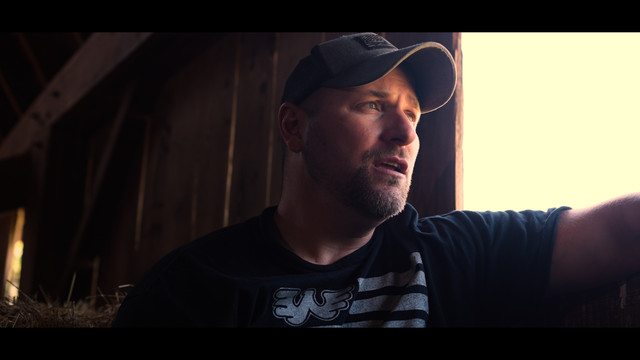
Detroit-based songwriter Rich Clark continues to develop Wayward Sparrow as a fully independent project, self producing and self recording the material with a deliberately stripped back approach to the arrangements. What emerges is not an attempt to recreate a genre in its polished form so much as to engage with its origin: storytelling, space, emotion.

On “Gravel and Broken Glass,” that philosophy is immediately apparent. The song did not begin in its final form. Originally written around a different chord structure, it shifted significantly during the recording process when Clark began experimenting with a new rhythm guitar part. That change re-directed the entire track. What was once a more conventional idea gradually became something darker and more atmospheric, shaped in real time rather than imposed from the outset.

he acoustic guitar carries a steady forward motion, and a Telecaster solo enters midway through not as a climactic moment, but as a tonal shift, slightly distant and bridging sections with a sense of mood rather than spectacle.

Vocally and lyrically, the song continues Clark’s focus on imagery and implication. Rather than spelling everything out directly, the writing leans into suggestion, letting meaning form gradually through repetition and reflection. It’s a style that feels closely tied to the broader intent behind Wayward Sparrow: lyrics that reward patience where interpretation is part of the listening experience rather than something resolved immediately.

Like much of Wayward Sparrow’s work, it feels less concerned with arrival than with the actual journey, much more about capturing the moment a song decides what it wants to be.

Wayward Sparrow copy

About Wayward Sparrow

Wayward Sparrow is the independent music project of Detroit-based singer-songwriter Rich Clark. Self-recorded, self-produced, and self-funded, the project embraces sparse arrangements that put honest storytelling and atmosphere at the forefront. 

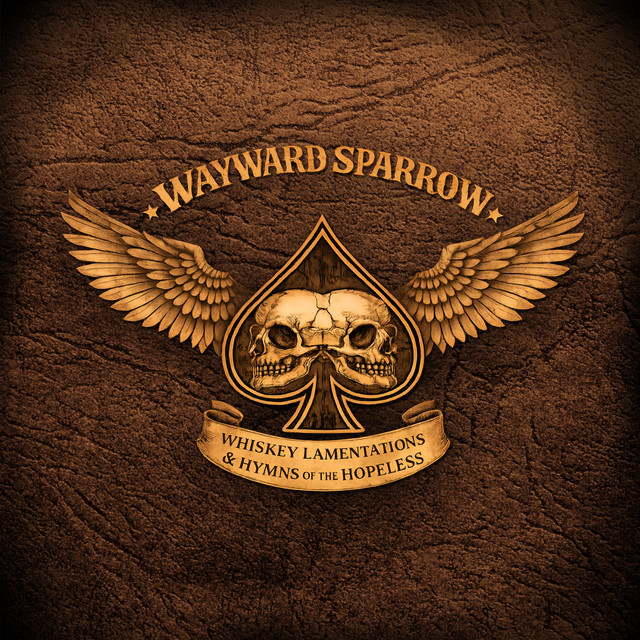
With a sound centered in folk, Americana, and subtle bluegrass influences, Wayward Sparrow explores the darker, often unspoken corners of life through music that is intimate and deeply human. Clark’s work has been described as “whiskey lamentations and hymns of the hopeless.”

Follow Wayward Sparrow on Instagram

Stream music on Soundcloud and YouTube Music

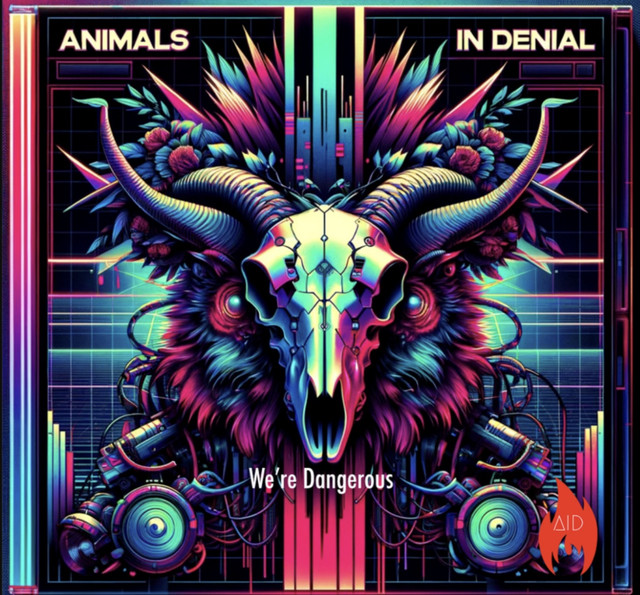
Animals in Denial Channels Chaos and Cultural Friction on Latest Release “We’re Dangerous”

AID

“We’re Dangerous” arrives like a signal bleeding through from somewhere slightly off-grid. It’s too loud, too dense, too emotionally charged to behave itself in the way modern alt-rock often politely insists it should.

Animals in Denial don’t seem interested in that politeness anyway. Christian Imes builds this thing like he’s holding multiple ideas in his hands at once and refusing to drop any of them, even if they clash, even if they spark, even if they threaten to overload the system.

There’s an almost basement level urgency running through the track, the kind you used to hear when bands had something to prove and not much interest in smoothing the edges for wider consumption. Guitars are stacked and slightly unruly, not in a sloppy way, but in a way that feels human with small variations left in the mix, textures allowed to overlap instead of being neatly separated into their own lanes. It doesn’t sound “produced” so much as assembled under pressure like the song might have broken out of the room if it had been given just one more pass.

And yet, for all that abrasion, there’s something strangely controlled underneath it. The drums hold steady like a metronome refusing to be dragged into chaos. The bass sits deeper in the structure, doing its job without calling attention to itself. It’s the tension between those grounding elements and the surrounding noise that gives the track its shape. Without that discipline, it would collapse into pure distortion.

“We’re Dangerous” is a song about being misread. About generational friction. About the way language gets flattened when one group looks at another and decides it already understands them. But unlike a lot of modern “statement” tracks, it doesn’t reduce that idea into slogans or clean takes.

There’s a moment in the track where everything feels like it’s pushing slightly out of alignment with layers pressing against each other, vocals cutting through. That’s where the song really clicks.

And that’s something a lot of modern alternative music seems to have forgotten how to do. “We’re Dangerous” does the opposite. It leans into friction. It lets the rough edges stay visible. It trusts that intensity doesn’t need to be smoothed in order to be understood.

Is it chaotic? Absolutely.
Is it controlled? Just enough.
Is it necessary? That’s the real question.

Because somewhere inside all that distortion and density, there’s a clarity and the sense that this is what it sounds like when someone refuses to simplify themselves for easy interpretation.

It’s loud, it’s uncomfortable, and it doesn’t apologize for either of those things.

Keep up with Animals In Denial on the Website

Stream music on Spotify and YouTube Music

Life Between the Lines: Bobbo Byrnes and the Reality of the Touring Musician

toomanymiles2

Despite spending more than two decades on the road, and playing everywhere from living rooms to festival stages across the U.S. and Europe, Bobbo Byrnes has largely remained just outside the traditional spotlight. Therefore, it feels appropriate that his memoir, Too Many Miles: On the Road with an Unofficial Rock & Roll Goodwill Ambassador, doesn’t focus on a single breakthrough moment or career peak, but instead captures the long, winding road of a working musician who has built his life one show, one connection and one mile at a time.

This is not a typical rock memoir filled with tales of excess or industry mythology, nor is it strictly a travelogue. Alhough it does contain elements of both. While Byrnes does recount the expected stories the book quickly expands into something broader. It becomes a reflection on what it means to exist in that middle space of the music world: not unknown but not quite mainstream either, working within a global network of small venues, house concerts and grassroots connections.

Byrnes’s early years and evolution as a musician are touched on throughout, from his beginnings in the Boston music scene to his eventual relocation to Southern California and the formation of his band, The Fallen Stars. These formative experiences are presented as part of an ongoing continuum, one that includes constant touring, creative partnerships and the gradual shaping of his identity as both an artist and a storyteller.

A significant portion of the book focuses on Byrnes’s experiences touring internationally, particularly in Europe where his role often extends beyond performer. Much like the best travel writing, these sections highlight not just where he goes but how he is received along the way.

Encounters with audiences frequently shift from music to conversations about American culture, politics and identity, placing Byrnes in an unexpected position of informal ambassador. These moments, including a tense radio interview in Germany and performances for diverse audiences, underscore the idea that music can serve as a bridge in ways that more formal channels often cannot.

Parallel to these stories is the recurring theme of connection and how fleeting interactions with strangers can leave lasting impressions. Whether it’s a conversation after a show, a shared meal or a collaborative moment with fellow musicians, Byrnes emphasizes the communal aspect of a life on the road. In doing so, he subtly pushes back against the notion of the lone artist, instead illustrating how his career has been shaped by countless individuals along the way.

Stylistically, the book mirrors Byrnes’s songwriting with its direct and conversational tone. There is little attempt to mythologize events or even elevate them beyond what they are. Instead, the strength lies in accumulation, in the gradual layering of stories that, taken together, form a clear picture of a life defined not by a sigular achievement but by persistence.

While the book stands out on its own, it also exists alongside a companion album which echoes many of the same themes. Much like the memoir, Byrnes’s music draws from years of travel and observation, reinforcing the idea that Byrnes’ songs and stories are inseparable parts of the same narrative.

If there is an overarching takeaway, it is that careers like this rarely follow a straight line. There is not a single defining moment or arrival point but just the work itself: the writing, the traveling, the performing and the decision to keep on going. If the realities of independent touring, the intersection of culture and songwriting and the quieter stories that exist beyond the mainstream music industry are of interest, then Too Many Miles is well worth the journey.

Connect with Bobbo Byrnes on his Website

A Is for Atom Finds Quiet Strength in “Closer”

closer

A Is for Atom first caught my attention through his ability to turn big, uncomfortable ideas into something deeply personal, and his new single “Closer” continues that tradition in quietly compelling fashion.

Where some artists respond to modern instability with just more noise, this track takes a different route and focuses instead on what happens when two people try to stay connected in a world that seems determined to pull them apart. Set against a backdrop of emotional static, empty rhetoric and everyday pressure, “Closer” is almost a reflection on intimacy as something you have to actively protect.

What makes the song work so well is that it never slips into sentimentality. There is uncertainty here, hesitation as well as an awareness that words can do damage as easily as they can heal. The narrator and their partner aren’t presented as flawless or heroic; they are restless, imperfect and occasionally unsure. Yet, rather than retreating into distance the song frames closeness as a conscious choice. In that sense, “Closer” is a lot more about romance than resilience.

The musical arrangement here is understated but the beats move with a gentle urgency, guitars shimmer and recede, and the overall production leaves space for the lyrics. There is subtle tension running through the song, and a general sense that things could easily unravel. But, they never quite do. This give the music a quiet strength and reinforces the idea that togetherness does not have to be loud to be powerful.

Like much of A Is for Atom’s work, “Closer” succeeds because it captures the feeling of trying to hold onto something meaningful while the world remains unresolved and unstable. In doing this, it becomes a small but significant reminder that connection when chosen deliberately, can still cut through the noise.

Mike

About A is For Atom

Mike Cykoski is the creative force behind A Is for Atom, a literate indie rock project that layers songwriting with electronic innovation. An NYU graduate with a Master’s in Music Technology, he has also studied at Juilliard, Harvest Work and Dubspot.

Mike has performed internationally, with highlights in Ireland, Mexico City, Toronto (NXNE, Canadian Music Week), and major U.S. hubs including New York City and Austin. His previous EPs, Song for You (2014) and Last Man on the Moon (2017), earned critical acclaim, establishing him as a forward-thinking voice in contemporary indie rock.

Now with latest release “Enola”, A Is For Atom is using autobiography to fuse social critique, and innovative sound design into a track that will resonate with many listeners.

Keep up with A is For Atom on the Website

Stream music on Spotify and Apple Music

Matt Alter Keeps It Real on “Train to Nowhere”

Mattalter copy

“Train to Nowhere” is a song that moves with purpose, one that understands the weight of its own narrative without overdoing it. From the opening intro, Matt Alter manages to balance reflection and momentum in a way that is deliberate and effortless. And it’s a track that is built on experience.

Sound wise, there is a familiar warmth here for anyone who remembers Technicolor from Race to the Finish. The guitars glide with understated polish, the rhythm section keeps a quiet tension humming beneath the surface and Alter’s vocals have that this lived in quality he has always had.

Lyrically, the song navigates that strange, uneasy space between forward motion and uncertainty. It’s about being on a train and not fully knowing the destination, about the moments when life keeps moving even when clarity feels far away. Here, Alter simply presents this feeling, and it is enough. It is this honesty which he pairs witih exacting musical choices that makes the track a welcome addition to your playlist.

From the forthcoming album I’m Lonely… It’s My Fault, which drops beginning of March, Matt Later promises a record that will continue to explore personal and introspective terrain. “Train to Nowhere” is one of those tracks that is a natural evolution of Matt Alter’s songwriting voice, both for longtime listeners and new fans alike.

About Matt Alter

Based in North Carolina, Matt Alter is a singer songwriter who layers melodic rock with personal themes.

After years of balancing a demanding medical career with his passion for music, Alter returned to songwriting with renewed focus, releasing a steady run of solo albums including The Bitter Pill, Race to the Finish, and Did I Offend You?, the latter produced by Tavis Stanley of Art of Dying.

His work is shaped by real life experience and a commitment to craftsmanship, resulting in songs that are grounded and authentic but which also demonstrate skilled musicianship. With his upcoming album I’m Lonely… It’s My Fault, Alter continues to refine his voice as a songwriter.

Find out more on the Website

Stream music on Spotify and Apple Music

A Is for Atom’s “Enola” Turns Atomic Age Fallout into a Modern Indie Anthem

Enola Album Cover

A is For Atom’s latest single “Enola” starts with a strong electronic pulse that is modern in quality without trying too hard. It’s the kind of groove you can imagine in an indie club or on a late night drive.

But this track quickly reveals itself as more than a beat. It’s built on a concept that feels both personal and bigger than one person. It’s a reflection on what we inherit, what we carry and what we can’t leave behind.

The Atomic Age imagery isn’t just a stylistic choice. It’s a metaphor for the way past decisions continue to echo. The title nods to the Enola Gay, a Boeing B-29 Superfortress bomber that became infamous for dropping the first atomic bomb, “Little Boy,” on Hiroshima, Japan in 1945. The aircraft played a decisive role in bringing World War II to an end. But this song is more interested in the fallout, in the emotional residue of growing up in a world that keeps shifting beneath your feet.

Mike Cykoski, the man behind A is For Atom, has vocals that very much sit in the center of the track like a witness to the story. There’s a sense of tension in them as if he is telling you something that he hasn’t fully processed. The lyrics move through scenes that are lived in – cruising through Fort Collins, the guilty of Catholic school upbringing, the adrenaline of rock and roll, and then reframing them inside a country that feels very volatile and unstable right now.

What’s striking about “Enola” is how it balances contrast. It’s nostalgic, but also anxious. It’s loud, but it’s not careless. It’s a song that wants to move you but it also wants you to think. It’s a critique of America, but it’s wrapped in autobiography which makes it that bit more human.

In the end, “Enola” is a strong new release from A Is for Atom because it’s not trying to be anything other than what it is. A thoughtful and bold song that sounds familiar but still manages to carve out its own space.

Keep up with A is For Atom on the Website

Stream music on Spotify and Apple Music