For Brooks John Martin, a song can begin with a guitar part and end up somewhere entirely unexpected. On his new single, “Ocean Breathes Salty“, the wave-like arpeggios of Mark Kozelek’s interpretation of the Modest Mouse original sparked an image of a windswept beach and an ash spreading ceremony, a scene that would eventually become the inspiration for the song’s accompanying video. Featuring Nashville singer-songwriter Lilly Hiatt, Martin’s version adds drums, bass and strings to create a melancholic, cinematic duet that honours the spirit of Kozelek’s arrangement.
The single offers a glimpse into the imaginative world of War All The Time, Martin’s forthcoming album and the first release to emerge from an extraordinary burst of songwriting that followed a period when he thought his musical journey might be over.
Blending the rootsy warmth of 1970s Laurel Canyon with orchestral arrangements, alternative rock and his own richly expressive baritone, Martin has created a collection shaped by musical curiosity and a gift for turning sounds into stories. We caught up with him to discuss the influence behind “Ocean Breathes Salty”, the making of its North Carolina beach video, and the creative resurgence that brought War All The Time into being.
Tell us the story of this song, why did you choose to visualize the song specifically in this way?
The song was originally written by Modest Mouse and Mark Kozalek reimagined the song with Sun Kil Moon. I always loved his arrangement and wanted to put my own spin on it. I added drums, bass, strings and sung it as a duet. I imagined the imagery of the song being on a beach at an ash spreading ceremony and the video made that a reality.
What was the inspiration behind this video? (visual, storyline, etc.)?
The inspiration for the song imagery was the guitar arpeggios Mark Kozalek came up with. They felt wave like to me and made me feel the sad beach vibe. The lyrics fit the imagery perfectly.
What was the process of making this video?
I had a preproduction meeting with Scotty Felix and we had to choose California or North Carolina to shoot. We decided on NC because it would be less crowded and I liked the dunes scenery. We flew everyone down and filmed it in one day on Oak Island. Had some great food and met some great people. Very nice part of the country.
Keep up with everything Brooks John Martin on his Website
David Diaz’s “Are We Gonna Talk?” began with a question that came from a very real place. After a friendship broke down and an attempt to ask for emotional support was met with silence, David found himself reflecting on a pattern of giving too much of himself to people who did not always give the same in return. Rather than leaving that frustration where it was, he turned it into a song, transforming hurt, anger and a few uncomfortable truths into something both personal and instantly relatable.
The video, however, takes that emotional story somewhere considerably more unexpected. Initially reluctant to make a video at all, David was persuaded by his friends and co-directors Abiesel “Abi” Baez and Kahlil Antonio to turn the song into an ’80s slasher movie, with David himself becoming the rather unlikely “Callback Killer.”
Shot over three days with a large cast and crew, the production became as much about collaboration and having fun as it was about telling the story. David describes the experience as feeling more like a camp getaway than a conventional music video shoot, with everyone from the directors and actors to the production and design teams contributing to the final result. Here, he talks about the personal experiences behind “Are We Gonna Talk?”, the unlikely inspiration for its horror-themed video, and why sometimes the best way to deal with being ignored is to become the killer everyone remembers.
Tell us the story of this song. Why did you choose to visualize the song specifically in this way?
“Are We Gonna Talk?” came from a falling out I had with a close friend of mine. Essentially, I came to understand that I was putting a lot more into the friendship than he was, and it wasn’t the first time that happened.
What initially brought everything on was that I was in a place where I needed something, and that one particular thing was just support. When I asked him for emotional support, it felt like it was too much or like I was an inconvenience to him, because when I asked him, he never answered me. Eventually, I found out he was prioritizing other things he thought were more important, and I felt like I wasn’t being prioritized.
In our relationship, I had given him a lot. I didn’t necessarily put everything on hold, but I did a lot for him and sacrificed a lot for him, and it just felt like he didn’t care about me at all. So I tried to reach out—nothing: no answer, no response, no conversation or explanation. I was completely in the dark.
At some point, I messaged him, “Are we gonna talk at all?” Still nothing. So I went home and made a song out of that line.
I felt like a complete idiot for putting myself in a position to be treated like that. It had happened to me a lot in the past because I was a people pleaser. I wanted people to like me, and I would do anything to try to keep them around, even if it hurt me. This was happening during a transitional period when I was starting to undo a lot of damage and unlearn things that didn’t benefit other people or me. So I got angry and made it into a song.
For the cover art and the general promotion, I knew I wanted it to be something along the lines of phones and people not getting a callback, and I wanted to be a little bit on the nose with it. Initially, it was going to be more modern—flip phones, smartphones, texting, whatever—but I was like, “That’s so boring.”
I want to say what I want to say, but I want to find a fun way to say it. If it’s going to be out there forever and people are going to hear this message, I think it’s more fun and more palatable for me, and hopefully for other people too, if it’s something familiar presented in a unique package. So, whenever you come back to it, see it or listen to it, you’re like, “Yeah, there’s that message that I know,” but you’re seeing it through this really unique, different lens of an ’80s world.
I really enjoy world-building, lore, and things like that, so that was really fun. My favorite color is blue, so I wanted to incorporate that into things too and put myself into the world.
It’s sort of a meta version of myself. It’s still David Diaz, the artist and the person, but more like a blank canvas so he can be whatever he needs to be for a particular song or situation. So yeah, it’s kind of me, but it’s also not at the same time. I had a lot of fun with it.
What was the inspiration behind this video? (visual, storyline, etc.)
I can’t take too much credit for the inspiration behind the video, because, initially, I didn’t even want to do a video for this song.
I usually find music videos to be very daunting and stressful. Even with shoots that I’ve really enjoyed in the past, they were still stressful for me because there’s so much involved and usually a very large crew. Mind you, these are amazing people who are so much more talented than I should be working with and have incredible vision and skill. It’s just such a different world for me. I appreciate it because I love films and movies, but these people actually know what they’re doing.
My friends and co-directors Abiesel “Abi” Baez and Kahlil Antonio came to me and asked, “If you were to do a music video for this song, what would you want to do?” And I was basically like, “I don’t really know.”
Then they said, “Okay, listen. Hear us out. What would you think about an ’80s slasher horror?”
And I was like, “Are you out of your f**king mind?” They know I hate scary movies. I can’t do anything involving supernatural horror because I will 100% get nightmares (I’m a lucid dreamer, so it makes them even a thousand times worse).
They were like, “Just think about it,” and I did. And I was basically like, “Yeah, no. Let’s do something else.”
Then, I think they showed me something, or showed me a plan with shots and different ideas, and somehow they managed to sell me on it, and I went through with it.
I remember one thing in particular. They were like, “Imagine this will technically be a sort of therapy for you.”
And I was like, “Uh, what do you mean?”
They said, “Instead of you being scared of anyone, you’ll be the one that’s scary.” And I was like, “You know what? I didn’t think about it like that. That’s actually funny.”
I’m so glad I listened to them because these guys absolutely know what they’re doing. They were incredible, and they came up with a lot of the story. I gave them the general direction I wanted and the inspiration behind some of the more specific parts of the story that inspired the song.
Even though the song was inspired by that one particular situation I mentioned, it’s happened to me multiple times with different people. So it’s really a collection of all of these different experiences. That’s why there are the friends who die and me as the killer – it’s the dramatization of the consequences of the actions of those particular people.
Visually, I really wanted to stick to the ’80s, and our entire production team did an amazing job. They were so much fun to be around and so much fun to watch and work with. I can’t wait to show everyone the behind-the-scenes footage, because what that place looked like before is absolutely not what it looked like during the shoot.
Abi and Kahlil came up with the rest of the sequence, the shot order, and everything along those lines. They would flesh everything out and run it by me. 99% of the time, I would approve everything on the first go because I really admire and respect their creativity and vision. I entertain it and run with it because I’ve learned to trust them and their process, and they’ve done the same with me.
They really understand me as a person, my art, and how I communicate artistically. I feel like we make a really good team, and I love working with them, even when it’s on fun little side projects that nobody might ever see, something you might see in the future, or things we’ve done in the past that I’m really happy we did.
I think this is the best thing we’ve done together, and I plan to work with them more in the future, whether it’s a music video or one of their projects, because they’re so much fun to be around and work with, and they’re awesome people overall.
The same goes for the crew and everyone they brought on and worked with on these projects. There’s a whole list of people who did amazing work on set during the video shoot, and I wish I could mention every single one of them by name here (which I will in the video credits, for sure). Abi and Kahlil were definitely the driving forces behind the storyline and the characters. Visually, I came in with ideas that the art and production design team, captained by the talented Ross Widener, brought to life so, so beautifully. Just wait until you see my blue scrapbook they made for the video; it’s hilarious.
What was the process of making this video?
The process of making the video was absolutely so much fun.
As I said before, we had already done multiple videos together, and I had done other videos before meeting them as well. The song itself had been finished for a long time, so by the time we started seriously talking about doing a video – and after they convinced me—we started booking everything far in advance.
Everything you see in the music video, including the location, was locked in about a year in advance. We had everything planned out to the day. We were ready.
They, along with my manager, Amanda Do Nascimento, got everyone on the crew on board, organized the schedule and logistics, and when we got there, it was a three-day shoot. Because we booked the location for multiple days, those of us who chose to stay could room there for the duration of the shoot, which was really cool. They were actual cabins that you could live in.
I really wanted to make sure that while we were shooting the video, everybody had a good time and that it was low-stress. I wanted it to feel more like a camp getaway than a job.
I was constantly taking people’s temperatures and asking how everybody was doing, if people were enjoying themselves, or if anybody was stressed out. Everyone kept saying they were having a really fun time, which I was relieved to hear.
Some people were coming off other shoots and really noteworthy projects, and working on some amazing things. They were tired or spent, and even though they still decided to come work on this, they were having a blast because the environment on set was very laid-back. That was really, really nice to hear, especially since I was internally freaking out because I felt responsible for everyone and everything. After all, my name was on it.
More than anything, I wanted everybody to feel comfortable and have a good time. I know this is a visual extension of my song, but I don’t have to make a music video. I’m doing it because it’s fun. After all, I love the art form and the medium, and I love the vision everyone brought to it.
Even though I’m responsible for the music, the song, and the basis of where the video came from, everything else is because of this crew, Abi, Kahlil, my manager, and every single person involved – from catering, to the production assistants, to people who came to visit, people running to get food or coffee, somebody getting me water, wardrobe, costuming, makeup—everyone. Everybody did such an incredible job, and I had such a blast. I’m so glad I got to meet everyone who was there. They all deserve so much credit.
The killing scenes were absolutely hilarious. Honestly, it wasn’t just those scenes—any time we were shooting, we would forget we were filming a music video because it started to feel like we were making an actual film. You’ll really see that more in the behind-the-scenes footage. These actors are screaming their heads off and acting their faces off. They did such an amazing job. If you muted the song and just listened to what was happening on set, it could have been a movie.
I absolutely want to highlight the actors because they were incredible and some of the most talented people I’ve worked with in my life. They brought so much life to these characters without having much to work with. Our main four are Carolina Lopez, who plays Gina, Jacob Stutchman, who plays Scooter, Marlene Zapien, who plays Wilma, and Sebastian Ortega, who plays Fernando, and then Joslyn Guzman and Christina Castillo play the other two characters, Daniela and Ellen, who get killed at the beginning of the video.
They all did an incredible job. They had to adapt and work through things with us at the last minute because we sometimes needed to change things around, and they were amazing. They also had fun with it, which was great, and they made really cool and funny choices that I’ll remember forever and always come back to the video to rewatch.
I also really want to highlight our director of photography, Carlos Irazabal. He did such an incredible job with these shots. I could not have asked for anything better visually. I don’t know anything about cameras, but Carlos absolutely knows what he’s doing, and he is so good and so talented. He’s also such a real person, and I could say the same about everybody else on the crew. Abi and Kahlil did such an incredible job directing everything together, and Carlos captured it all so beautifully. He really managed to let the characters shine and let the actors’ talents and interpretations come through. They took direction so well, and everyone did such an outstanding job.
I know this answer is already long (sorry), but everyone involved made this production what it was, and I couldn’t be more pleased with how it turned out. I feel so lucky to have been part of this production because of the people I got to work with. No artist can do something like this all alone. It takes a village, and everyone involved knocked it out of the park.
I’ll always remember the shoot fondly. At the end of every day, we would chill out, drink, eat, talk, be loud, and have a great time. Some of my favorite parts were sitting out in the grass or on the porch, stargazing, talking about life, hearing about projects everybody was working on and their passions, and just having a blast.
I hadn’t met some of these people before, so it was really cool to get to know them. It genuinely felt like a getaway—like camp, but no one gets murdered by the Callback Killer.
I felt like a kid again, if I were alive in the ‘80s, haha. It was the best.
There are some heartbreaks that linger long after the person who caused them has disappeared. For award-winning Americana/Folk-Pop singer-songwriter Randie O’Neil, that feeling became the inspiration behind her latest release, “Ghost of Me”, a haunting song about loss, loneliness and finding your way back to the part of yourself that can feel lost when someone walks away. Released today alongside its atmospheric new music video, the track finds Randie exploring the darker side of emotional abandonment while still holding on to the resilience that has become such a defining part of her songwriting.
The video was filmed at dusk in New Hope, Pennsylvania, a town with its own reputation for ghost stories, making it the perfect setting for a song about being haunted by someone who is no longer there. Walking through the fading light and shadows, Randie captures the searching quality of the song, while the visual echoes the emotional journey at its heart.
Randie has never been afraid to explore the experiences that shape us. Here, she talks about the personal story behind “Ghost of Me”, creating the video without her usual team, filming at dusk in one of Pennsylvania’s most atmospheric towns, and turning an experience of rejection and hurt into something hauntingly beautiful.
Tell us the story of this track. Why did you choose to visualise it specifically in this way?
I was literally ghosted on my birthday. I felt so empty and lost. You think you found someone, take that chance and they just can’t give it back.
What was the inspiration behind this new video (visuals, storyline, etc.)?
I just wanted it to be haunting, searching so we waited until dusk in New Hope PA (a truly haunted town).
What was the process of making the video?
I didn’t have my usual team so I took a chance and they were great. Two videos in one day. This was the end of the day dusk shot. Tried to emote as I walked. “Shadows know your name” is an angry line that he will get what’s coming.
There is something really infectious about a song that simply wants to make you feel good. With “Happiness Looks Good on You,” George Collins set out to do exactly that, deliberately stepping away from the more reflective and introspective territory that has characterised much of his songwriting to create a joyful, celebratory track steeped in vintage soul and Gospel influences.
Inspired by childhood memories of watching Soul Train, as well as a lifelong admiration for The Staple Singers, the song channels the warmth, optimism and irresistible spirit of classic soul. The accompanying video takes that nostalgia a step further, taking inspiration from Billy Joel’s wonderfully retro “Tell Her About It” and imagining Collins performing with a vintage soul band on a 1960’s television show.
Created in collaboration with visual artist Marta Vorontsova, the video brings together Collins’ love of classic music, his playful sense of humour and a distinctly old-school visual aesthetic. We caught up with George to talk about the inspiration behind “Happiness Looks Good on You,” the making of the video, his love of vintage soul and the process of bringing the two together.
Tell us the story of this track. Why did you choose to visualize it specifically in this way?
As I was reviewing my catalog and planning my latest album “New Ways of Getting Old,” I realized that many of my songs are reflective and introspective and that I had very few “happy” songs. This was surprising to me, as I am generally an upbeat and happy person! So I intentionally set out to write a happy song. From the outset, I knew that I wanted it to be a celebratory song with a vintage soul vibe and a Gospel choir. I used to watch the TV show “Soul Train” when I was young, and I loved the Staple Singers – I thought Pops Staples was the coolest old dude in the world! I listened to their music continuously while I was writing and recording “Happiness Looks Good on you.”
What was the inspiration behind this new video (visuals, storyline, etc.)?
I am a huge fan of Billy Joel, and he, like me, is also a huge fan of vintage music – as evidenced by his wonderful retro album, “An Innocent Man.” He has a video of a track from that album, “Tell Her About It,” in which he plays a singer backed by a soul band performing on The Ed Sullivan Show in the 1960s. I love that song and the video, and I wanted to do something similar for my song.
What was the process of making the video?
I have been working with an amazing visual artist, Marta Vorontsova, for several years – she has created many of my lyric videos, and her work is absolutely first rate. (https://www.instagram.com/_imagikali_/) So I sent her the track and my basic ideas and she got to work creating the video. It was an iterative, interactive process, and after a lot of back and forth we ended up with a video we could both be proud of – and that I sincerely hope my audience will enjoy!
Some of the most important moments in a person’s life happen before anyone knows what they will become. A child displays an unusual gift, someone takes notice and a single act of encouragement can alter the course of a life. For John William “Blind” Boone, one of America’s great musical pioneers, that moment came when a former Confederate general recognised something extraordinary in a young boy and decided he deserved the opportunity to develop it.
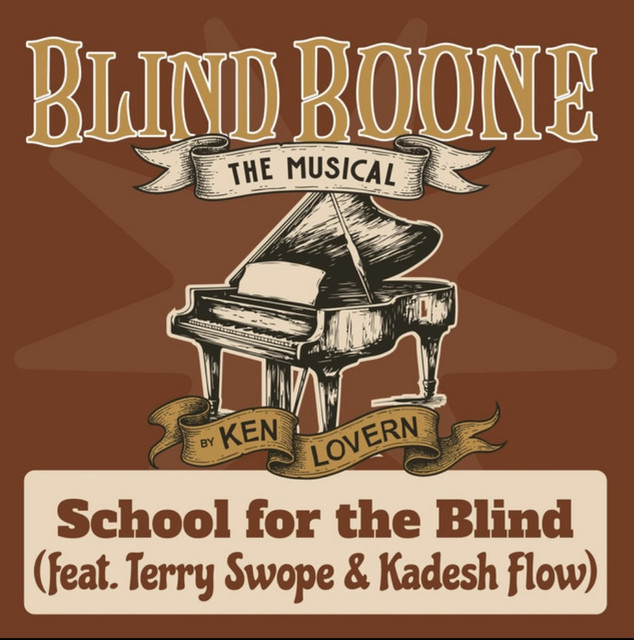
“School for the Blind,” the third single from Kansas City composer and jazz organist Ken Lovern’sBlind Boone the Musical, tells that remarkable chapter in Boone’s story. Set in post Civil War Missouri, the song explores Francis Cockrell’s efforts to persuade the people of Warrensburg to help nine-year-old Boone travel to St. Louis to study music at the Missouri School for the Blind.
The accompanying video brings that history into the present, combining artwork from the project’s companion graphic novel with archival photographs, historical imagery and footage of the musicians recording the song.
We caught up with Ken to talk about the remarkable relationship between Cockrell and Boone, the importance of showing the community that helped nurture the young musician’s talent, and the creative process behind bringing this pivotal chapter of Blind Boone the Musical to life on screen.
Tell us the story of this track. Why did you choose to visualize it specifically in this way?
In the song “School for the Blind,” former Confederate General Francis Cockrell is convincing the town of Warrensburg, Missouri to help young John Boone attend the Missouri State School for the Blind in St. Louis.
After the Civil War, Blind Boone’s mother, Rachel Boone, finds employment in the home of Francis Cockrell. Cockrell is immediately taken with young John Boone. Boone is a cheerful, charming, and enchanting child, and he imitates bird calls and other sounds he hears. Boone plays the tin whistle and forms a musical group with the other neighborhood children. He is a very talented child with a lot of potential.
Cockrell becomes a champion for Boone, and arranges for Boone to attend the Missouri School for the Blind in St. Louis where Boone can study music. Cockrell convinces the town elders to help him finance the education and the train fare to St. Louis. In the fall of 1872, nine-year-old Boone travels alone 225 miles to St. Louis. While Boone only attended this school for a few semesters, this time was instrumental in developing his ability to play piano. Francis Cockrell was correct when he realized that Boone had talents that deserved cultivating, and he convinced an entire town to help.
What was the inspiration behind this new video (visuals, storyline, etc.)?
I wanted to show the musicians creating the music for this track, and I also wanted to tell the story of the town of Warrensburg supporting young John Boone.
What was the process of making the video?
I used images from the Blind Boone the Musical comic book and historical images to help tell the story. I was particular interested in trying to explain Francis Cockrell’s motivation in helping this child of a former enslaved person.
I used video images captured during the recording of the track to show the musicians. My intent was to weave the musician images with the historical images and comic book art to convey the captivating story of Blind Boone.
Keep up with Ken Lovern andBlind Boone the Musicalhere.
For Zoey Madison, music has never been confined to what we hear. The New York based R&B-pop artist approaches her work as a complete creative world, where sound, imagery, storytelling and personal experience all have a place. With her latest single, Love Like You, that vision becomes particularly vivid.
A beautifully arranged piano ballad that grows into a sweeping production of strings and layered vocals, the song traces the experience of finding yourself through relationships – and confronting just how much of yourself you can sometimes give away in the process. But the story doesn’t stop when the music ends. Madison has created an accompanying visual world drawing on her fascination with 1920s design, classic Hollywood and the surreal, otherworldly atmosphere of The Twilight Zone.
It’s an aesthetic that reflects an artist who has a clear idea of where she wants her music to take her. From the initial mood board to the finished video created with graphic artist Monique Mendoza, every frame has been considered as part of a larger artistic identity.
We caught up with Zoey to talk about the story behind love like you, the meaning of its pivotal bridge, her fascination with old Hollywood and why building a visual language around her music is just as important as the songs themselves.
Tell us the story of this track. Why did you choose to visualize it specifically in this way?
The song is a journey of finding yourself through new relationships culminating in my favorite part of the song, the bridge which demonstrates that sometimes we put ourselves through a lot to stay with people we love. I chose to visualize it through compilations of things I love like 1920’s type graphics, old Hollywood which I’m very passionate about and images reminiscent of the twilight zone to give it another worldly feeling.
What was the inspiration behind this new video (visuals, storyline, etc.)?
I have always had a very particular view of what I want my brand and artistry to look like concerning my music. Visuals are very important to me. The various frames of the video were put together intentionally in such a way as to capture not only the mood of the song but advance the image I am trying to achieve.
What was the process of making this video?
I put together a mood board reflecting the images I found to represent my brand and what images of my brand I wanted my song “Love Like You” to convey. Working with graphic artist Monique Mendoza, we were able to put together a video which felt authentic to me as an artist.
Keep up with everything Zoey Madison on her Website




You must be logged in to post a comment.