If there’s one thing that runs through certain strands of Americana and modern folk songwriting, it’s the sense that stories don’t always arrive in straight lines. Many of them settle into meaning slowly.“Gravel and Broken Glass,” which is the latest single from Wayward Sparrow, leans into that idea with confidence creating a song that is as much about atmosphere and suggestion as it is about traditional song structure.
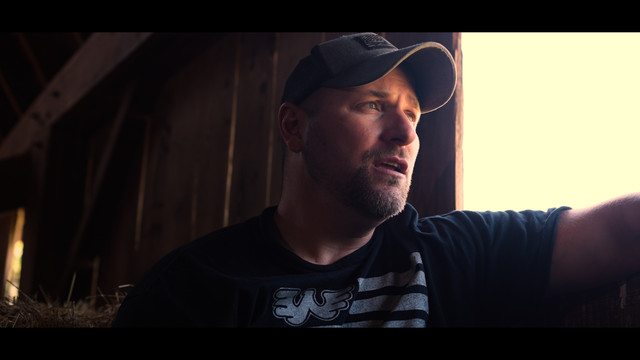
Detroit-based songwriter Rich Clark continues to develop Wayward Sparrow as a fully independent project, self producing and self recording the material with a deliberately stripped back approach to the arrangements. What emerges is not an attempt to recreate a genre in its polished form so much as to engage with its origin: storytelling, space, emotion.
On “Gravel and Broken Glass,” that philosophy is immediately apparent. The song did not begin in its final form. Originally written around a different chord structure, it shifted significantly during the recording process when Clark began experimenting with a new rhythm guitar part. That change re-directed the entire track. What was once a more conventional idea gradually became something darker and more atmospheric, shaped in real time rather than imposed from the outset.
he acoustic guitar carries a steady forward motion, and a Telecaster solo enters midway through not as a climactic moment, but as a tonal shift, slightly distant and bridging sections with a sense of mood rather than spectacle.
Vocally and lyrically, the song continues Clark’s focus on imagery and implication. Rather than spelling everything out directly, the writing leans into suggestion, letting meaning form gradually through repetition and reflection. It’s a style that feels closely tied to the broader intent behind Wayward Sparrow: lyrics that reward patience where interpretation is part of the listening experience rather than something resolved immediately.
Like much of Wayward Sparrow’s work, it feels less concerned with arrival than with the actual journey, much more about capturing the moment a song decides what it wants to be.
About Wayward Sparrow
Wayward Sparrow is the independent music project of Detroit-based singer-songwriter Rich Clark. Self-recorded, self-produced, and self-funded, the project embraces sparse arrangements that put honest storytelling and atmosphere at the forefront.
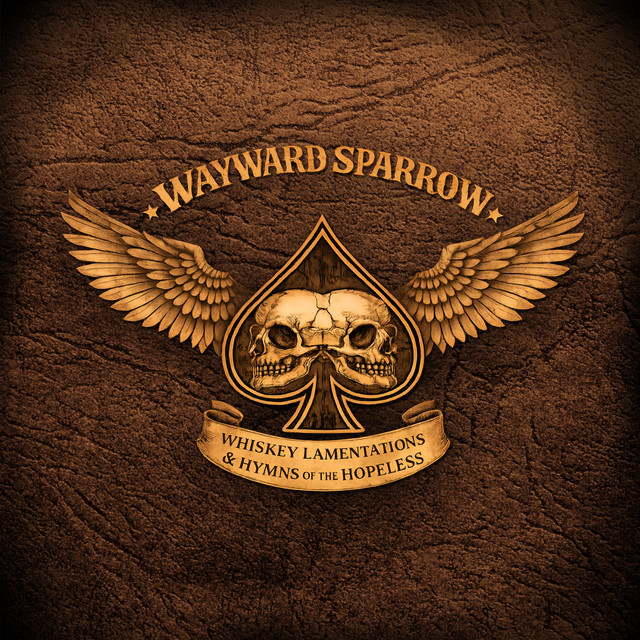
With a sound centered in folk, Americana, and subtle bluegrass influences, Wayward Sparrow explores the darker, often unspoken corners of life through music that is intimate and deeply human. Clark’s work has been described as “whiskey lamentations and hymns of the hopeless.”
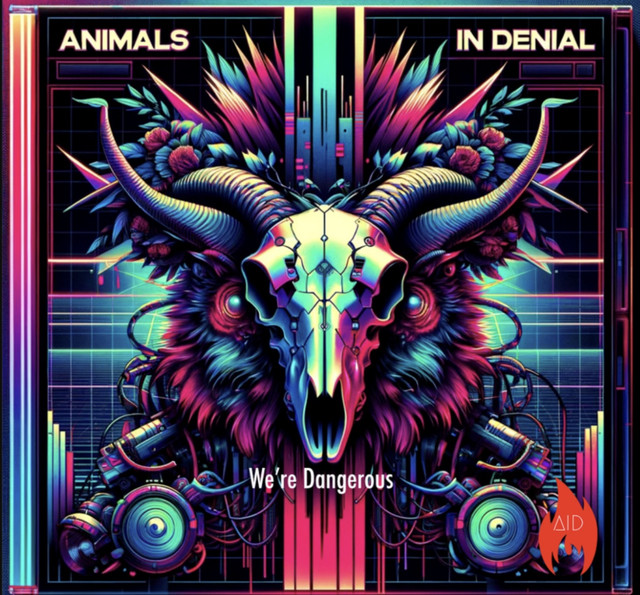
“We’re Dangerous” arrives like a signal bleeding through from somewhere slightly off-grid. It’s too loud, too dense, too emotionally charged to behave itself in the way modern alt-rock often politely insists it should.
Animals in Denial don’t seem interested in that politeness anyway. Christian Imes builds this thing like he’s holding multiple ideas in his hands at once and refusing to drop any of them, even if they clash, even if they spark, even if they threaten to overload the system.
There’s an almost basement level urgency running through the track, the kind you used to hear when bands had something to prove and not much interest in smoothing the edges for wider consumption. Guitars are stacked and slightly unruly, not in a sloppy way, but in a way that feels human with small variations left in the mix, textures allowed to overlap instead of being neatly separated into their own lanes. It doesn’t sound “produced” so much as assembled under pressure like the song might have broken out of the room if it had been given just one more pass.
And yet, for all that abrasion, there’s something strangely controlled underneath it. The drums hold steady like a metronome refusing to be dragged into chaos. The bass sits deeper in the structure, doing its job without calling attention to itself. It’s the tension between those grounding elements and the surrounding noise that gives the track its shape. Without that discipline, it would collapse into pure distortion.
“We’re Dangerous” is a song about being misread. About generational friction. About the way language gets flattened when one group looks at another and decides it already understands them. But unlike a lot of modern “statement” tracks, it doesn’t reduce that idea into slogans or clean takes.
There’s a moment in the track where everything feels like it’s pushing slightly out of alignment with layers pressing against each other, vocals cutting through. That’s where the song really clicks.
And that’s something a lot of modern alternative music seems to have forgotten how to do. “We’re Dangerous” does the opposite. It leans into friction. It lets the rough edges stay visible. It trusts that intensity doesn’t need to be smoothed in order to be understood.
Is it chaotic? Absolutely. Is it controlled? Just enough. Is it necessary? That’s the real question.
Because somewhere inside all that distortion and density, there’s a clarity and the sense that this is what it sounds like when someone refuses to simplify themselves for easy interpretation.
It’s loud, it’s uncomfortable, and it doesn’t apologize for either of those things.
Building upon years of writing, teaching, and performing music rooted in connection and observation, London, Ontario–based singer-songwriter and multi-instrumentalist Marty Kolls releases her latest single. “Waves” is a calm and meditative folk-pop single that draws from the natural rhythms of water to explore struggle, surrender, and emotional grounding. Gentle yet resonant, the track reflects on the ebb and flow of life, offering a quiet space for reflection and release.
Inspired by time spent along Lake Huron, “Waves” emerged from Marty’s deep, lifelong connection to water. “Whether observing water from the vastness of the ocean or a ripple in a pond, it has been the root of inspiration for me for much of my life,” she explains. “Its stillness can anchor me while its waves can cleanse me.” That duality sits at the heart of the song, where moments of calm and motion coexist, mirroring the emotional cycles we move through.
1. Tell us the story of this song, why did you choose to visualize this song specifically? The story of the song comes from two places. One is a melody that came to me as I was waking up one morning and I wanted to quickly record on my phone before it disappeared. While the lyrics came to me as I was walking along the beach in Grand Bend Ontario. I have always been in awe of the movement of water. How it ebbs and flows, how it can wear away rock, and how it can be so calming and mesmerizing. When I put the lyrics to the melody I had written, the ebb and flow, or rise and fall of the melody line fit well with the lyrics I had written.
2.What was the inspiration behind this video (visuals, storyline, etc.)? I often take pictures or videos of water, and since the creation of the song, I thought taking my own personal shots would go nicely with the images of water moving in many different places and forms. Since 2022 I have been collecting images of water on my phone and I was able to put them to the music.
3.What was the process of making this video?The process of making this video was something that I had running in my mind for some time. I was thinking about how different lyrics of the song would go ideally with different visuals, like the trickling of a creek or a slow pan on a moment of reflection. I was lucky to have enough in my collection to play with. I also wanted to make sure to have the lyrics subtitled, so the text and movement of the water could be enjoyed without necessarily hearing the music, or to help engage the listener further with the text in front of them.
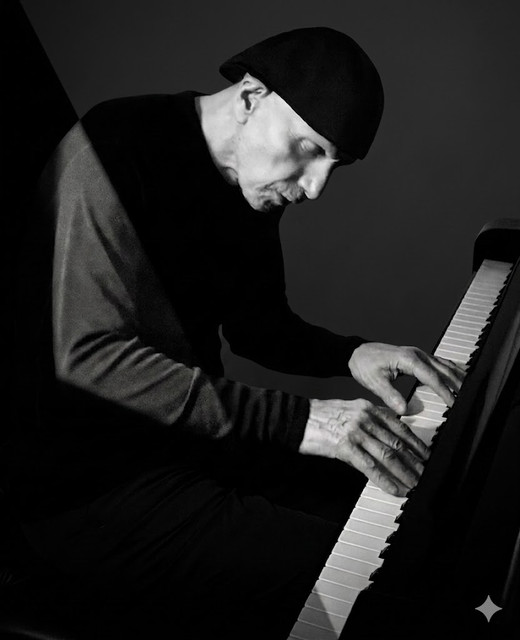
Improvisational pianist Mario Mattia continues to develop a deeply personal and exploratory musical language that exists somewhere between contemporary classical music, jazz improvisation and spontaneous composition. Rather than approaching improvisation as display or variation, Mattia treats it as a form of real-time architecture, shaping long form musical ideas through instinct, harmonic intuition, rhythm and emotional atmosphere.
His recent work has increasingly focused on the relationship between sound, abstraction, visual identity and spontaneous creation. With works such as Origin, Invention, The Unfolding Field, and now Abstract Boogie revealing different dimensions of his improvisational world.
In this exclusive feature, Mattia discusses the creation of Abstract Boogie, the tension between rhythmic propulsion and abstraction within the performance, and the visual language he has developed around his improvisational practice, including the symbolic Möbius imagery that connects his various musical forms.
The result is an artistic approach that is completely unique: grounded in the spontaneity of performance whilst also reaching towards something more immersive and deeply personal.
Tell us the story of this track. Why did you choose to visualize this it specifically in this way?
Abstract Boogie began spontaneously in my studio. It was not a preconceived composition, nor was it something I had planned in advance. I was recording in the moment, and the piece emerged from a chromatic, boogie-derived left-hand pattern that immediately took on a strong physical momentum. From there, the improvisation developed naturally, with the right hand moving in a more abstract, technically active direction above that driving foundation.
What interested me was the tension between that insistent left-hand engine and the more abstract, technically active right hand that emerged above it. It is not traditional boogie-woogie, but rather an improvisation that uses the rhythmic drive of boogie as a foundation for something freer, more chromatic, and more contemporary.
The visuals were chosen to reflect that intensity – the motion, pressure, and forward propulsion of the improvisation. The occasional glimpse of me at the piano is there to remind the viewer that this is a real-time performance, not something assembled or constructed afterward. I wanted the video to feel immersive, energetic, and slightly unstable, much like the music itself.
What was the inspiration behind this new video (visuals, storyline, etc.)?
The inspiration was less about creating a literal storyline and more about finding visuals that could reflect the internal energy of the improvisation. Abstract Boogie has a restless, driving quality – the left hand keeps pushing forward while the right hand moves in a more angular and unpredictable way – so I wanted the video to feel active, intense, and somewhat abstract.
The imagery is meant to mirror that sense of propulsion and tension rather than explain the music in a narrative way. I was drawn to visuals that had movement, contrast, and a slightly unstable quality, because that seemed closest to what the improvisation itself was doing. The occasional image of me at the piano gives the viewer a human point of reference and reinforces that this was a spontaneous, real-time performance.
What was the process of making the video?
The process began with searching for visual material that felt compatible with the intensity and motion of the improvisation. Because Abstract Boogie has such a strong physical drive, I wanted imagery that had energy, abstraction, and a sense of forward movement rather than anything too literal or decorative.
From there, I incorporated my abstract Möbius image, one of three Möbius images I use as visual signatures for the different improvisational areas I work in: meditative (blue), abstract (magenta), and freeform (green blend). Each image has its own distinct color identity, corresponding to the character of that particular genre. The meditative works tend to suggest stillness, depth, and inward motion; the abstract pieces are more angular, chromatic, and unstable; and the freeform improvisations are the most open-ended and exploratory. For Abstract Boogie, I used the abstract Möbius image because its color and visual character represents the intensity, tension, and unpredictability of the performance. The occasional images of me at the piano serve as a reminder that, beneath the abstraction, this is still a spontaneous real-time performance by a single musician responding in the moment.
I assembled and refined the video in DaVinci Resolve, working with the pacing, transitions, placement of images, and overall visual atmosphere until it felt aligned with the music. The goal was not to create a conventional storyline, but to build a visual environment that followed the momentum, intensity, and unpredictability of the performance.
About Mario Mattia
Mario Mattia is an improvisational pianist and graduate of the New England Conservatory whose work is rooted in spontaneity, deep listening and emotional presence. Drawing on influences ranging from Johann Sebastian Bach to Keith Jarrett and Brian Eno, his music bridges classical, jazz, progressive and ambient traditions.
Each performance is created entirely in the moment, without predetermined themes or structures. While his primary work centers on solo piano improvisation, Mattia also maintains an electronic studio practice that serves as a parallel and occasional extension of his explorations in sound.
Working from his rural studio, Mattia captures every nuance of sound, inviting listeners into immersive, contemplative spaces where music unfolds as lived experience.
Keep up with everything Mario Mattia on his Website
Toronto-based, Hong Kong-born songwriter Tennyson King shares “Big Mountain High (大山高),” a powerful and emotionally resonant new single that marks a defining moment in his artistic evolution. Blending traditional Chinese instrumentation with modern indie folk and singer-songwriter sensibilities, the track stands as a bold expression of identity, heritage, and creative confidence. It is the first single released from his forthcoming album 100 Cities.
“This was the first song I wrote with the intention of fusing traditional Chinese instruments with western folk music,” Tennyson explains. Inspired by the ancient guqin composition “High Mountains and Flowing Water,” he was struck by its emotional depth. “It made me feel sadness and a sense of power at the same time,” he says. “I knew I wanted to write something inspired by it.”
1. Tell us the story of this song, why did you choose to visualize this song specifically?
Big Mountain High (大山高) is the first song I wrote when I started working on the fusion of indie folk music and traditional Chinese music. It is inspired by a very well traditional Chinese composition called ‘High Mountains & Flowing Water” written for the oldest known instrument in Chinese history, the Guqin. I was doing a lot of deep listening to traditional Chinese songs and this one spoke to me, the melody, composition and the story. Once I started writing, the song came naturally and it felt like it worked and that this fusion project could actually be done. At the time, I had my doubts and challenges. I combined elements from traditional Chinese instruments, Peking Opera, and indie folk music. I felt like I found a unique sound that no one has done. The lyrics of this song tell a story of embracing the nature and knowledge of our elders, finding connection with others through the voice of song, and passing on our stories through music. I chose to visualize this song because I wanted people to not only hear my culture but be able to see it as well. To share my passions for Chinese pop culture, music culture, Tai Chi, Qi Gong, and Kung Fu. I also think that because not many people know what these instruments are, or what they look like, hearing it wouldn’t be enough. Seeing them visually performed would be the best way to fully share the art.
2.What was the inspiration behind this video (visuals, storyline, etc.)?
We filmed this music video in Taipei, Taiwan, collaborated with a kung fu fashion designer (Fly By Knight), and featured traditional Chinese musicians based in Taiwan. The clothing is special not only because of the collaboration with Fly By Knight but because it uses the ancient design of “through loops” to button up the shirts. This is an ancient practice that was considered a mental meditative practice and also a quick release. The music video is inspired by old 70’s Chinese Kung Fu movies, which is something I’ve always loved. The location is 228 Peace Park in Taipei. We feature performers of Da Gu, Guzheng, and Erhu from Taiwan. The visuals are truly to share more Taiwanese and Chinese culture. It was also filmed while I was on tour in Taiwan.
3.What was the process of making this video?
This music video was filmed and directed by Ewan Mac. I found the location on my previous tour in Taiwan about a year ago and thought it would be a great place for a music video. Fast forward to May 2026, both Ewan and I would be in Taiwan so we planned to shoot the video there. We filmed everything in one morning/afternoon on a weekday at 228 Peace Park which is right near the busy central area of Taipei. There were many people walking around, workers and others doing wedding photos so we had to work around a lot of elements that we didn’t expect. A lot of people ended up just watching us film and perform. It was a hot and sunny day too and both Ewan and I got heat stroke at the end of the day. The video looks so good though so it was all worth it.
Ahead of showcasing at the East Coast Music Awards later this month where she’s nominated for Dance Release of the Year, Canadian singer-songwriter Apryll Aileen shares “Call Me Anytime,” a warm and uplifting pop/alt-country single that captures the quiet strength of unconditional love across distance. Rooted in storytelling and emotional clarity, the track follows a grandfather supporting his grandson as he leaves home to pursue a rising soccer career, balancing pride, longing, and the enduring promise of connection.
At its core, the song is written from the perspective of a grandfather speaking to his grandson as he begins to find success in the Canadian soccer world. Through simple yet deeply resonant lyrics, he reminds him that no matter how far he goes, he is never alone. “Call Me Anytime” becomes both a message and a mantra; a steady reassurance that love remains constant, even as life pulls people in different directions. The song has already been added to four Apple Music editorial playlists.
That sense of connection extends into the song’s visual world. Filmed in Toronto during JUNO week, the accompanying music video features rising youth soccer talent Malakhai Eaton, one of the top defensive players in the GTA (12 and under). The video captures the emotional tension between ambition and home, reflecting the reality of leaving behind familiarity to chase something bigger, while still holding onto where you came from.
The creative process behind the song unfolded organically. “I was actually on a flight to the UK when I heard the chorus melody in my head,” Apryll shares. “I didn’t want to lose it, so I recorded a voice note right there in my seat. As soon as the plane touched down, I grabbed my friend’s guitar and the song grew naturally from there; it wrote itself.” The track was later brought to life in collaboration with UK-based producer Danny Lafrombe, blending simplicity with dynamic shifts that mirror the emotional arc of the story.
Apryll co-wrote the lyrics with her friend Bill Eaton who wanted to gift it to his grandson Malakhai for Christmas. From there, it turned into something the pair wanted to share with the world so other families could resonate with it. Apryll also has a hidden art skill – she has recently found a meditative peace in painting so she decided to paint the cover art above. While filming on set, she gifted him the painting, so he could have a visual reminder to remember the love of his family.
One of the most unexpected moments came during filming. While traveling between locations, 11-year-old Malakhai played “Fast Car” by Tracy Chapman, a song that had subconsciously influenced Apryll while writing. “Keep in mind I had never met Malakhai until we filmed the video. This alone is mind boggling to me. I’m not sure which one of us felt the call to ‘Fast Car’ first, but I think we were successful in capturing part of its intimate, raw, narrative essence and driving yet slightly melancholic rhythm.”
Sonically, “Call Me Anytime” blends contemporary pop sensibilities with alternative country warmth and singer-songwriter intimacy. Built on accessible chord progressions and a melody designed to be shared, the track invites listeners to make it their own; a song meant to be sung to loved ones, wherever they may be.




You must be logged in to post a comment.