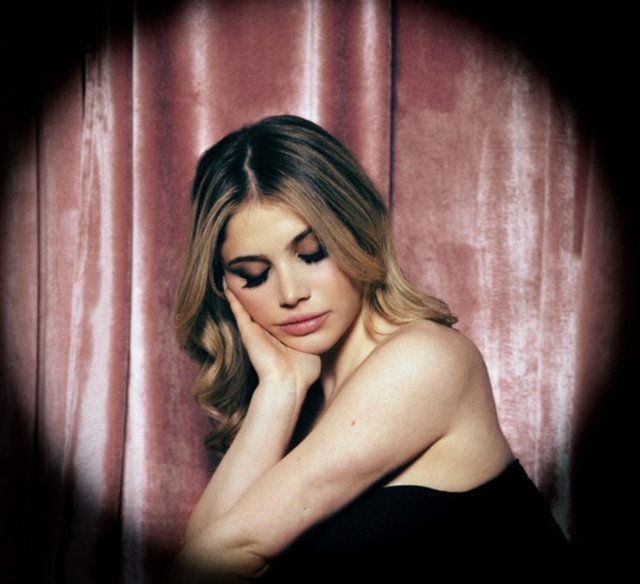
For Zoey Madison, music has never been confined to what we hear. The New York based R&B-pop artist approaches her work as a complete creative world, where sound, imagery, storytelling and personal experience all have a place. With her latest single, Love Like You, that vision becomes particularly vivid.
A beautifully arranged piano ballad that grows into a sweeping production of strings and layered vocals, the song traces the experience of finding yourself through relationships – and confronting just how much of yourself you can sometimes give away in the process. But the story doesn’t stop when the music ends. Madison has created an accompanying visual world drawing on her fascination with 1920s design, classic Hollywood and the surreal, otherworldly atmosphere of The Twilight Zone.
It’s an aesthetic that reflects an artist who has a clear idea of where she wants her music to take her. From the initial mood board to the finished video created with graphic artist Monique Mendoza, every frame has been considered as part of a larger artistic identity.
We caught up with Zoey to talk about the story behind love like you, the meaning of its pivotal bridge, her fascination with old Hollywood and why building a visual language around her music is just as important as the songs themselves.
Tell us the story of this track. Why did you choose to visualize it specifically in this way?
The song is a journey of finding yourself through new relationships culminating in my favorite part of the song, the bridge which demonstrates that sometimes we put ourselves through a lot to stay with people we love. I chose to visualize it through compilations of things I love like 1920’s type graphics, old Hollywood which I’m very passionate about and images reminiscent of the twilight zone to give it another worldly feeling.
What was the inspiration behind this new video (visuals, storyline, etc.)?
I have always had a very particular view of what I want my brand and artistry to look like concerning my music. Visuals are very important to me. The various frames of the video were put together intentionally in such a way as to capture not only the mood of the song but advance the image I am trying to achieve.
What was the process of making this video?
I put together a mood board reflecting the images I found to represent my brand and what images of my brand I wanted my song “Love Like You” to convey. Working with graphic artist Monique Mendoza, we were able to put together a video which felt authentic to me as an artist.
Keep up with everything Zoey Madison on her Website
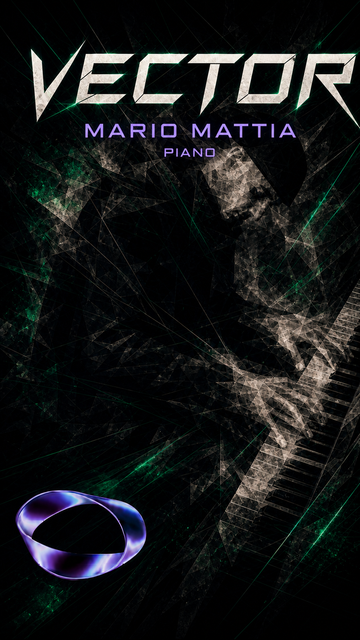
With “Vector“, Mario Mattia continues his exploration of real time solo piano improvisation, working within an evolving framework he describes through three overlapping worlds: meditative, abstract, and freeform. Each improvisation emerges without pre-composition or predetermined structure, unfolding in the moment and revealing its identity only in retrospect.
We are particularly delighted to have Mario return for another Video Voyageur, as his work continues to evolve and deepen across both musical and visual dimensions.
“Vector” sits firmly within the abstract strand of this practice. Brief, angular and intensely focused, it traces a compressed musical trajectory shaped by tension, velocity and fragmentation. Rather than illustrating a narrative or external idea, the work exists as a direct expression of motion and energy, translated into sound as it happens.
The accompanying visual language extends this approach. It offers a non-literal environment that mirrors the piece’s instability and intensity. Together, music and image form a unified space of abstraction – one that prioritises force, texture and perception over story or explanation.
Tell us the story of this piece. Why did you choose to visualize it specifically in this way?
“Vector” belongs to the abstract area of my work. My improvisations fall into three genres: meditative, abstract and freeform.
The meditative pieces tend to be spacious, tonal, inward, and contemplative. The abstract pieces are more angular, atonal, compressed, and exploratory, often emphasizing gesture, texture, rhythm, and intensity over conventional lyricism. The freeform pieces move between worlds. They may begin in a tonal or meditative space, pass through abstraction or dissonance, and return transformed, allowing the music to determine its own structure in real time.
Although I use these three categories to help listeners orient themselves, the improvisations are never planned in advance. Each one emerges spontaneously, and the genre becomes clear only afterwards. The improvisation emerged very clearly from the abstract genre. As with all of my piano improvisations, there was no prior plan, structure, or conception. I did not sit down intending to create an atonal piece, nor did I set out to make something intense or angular. It simply emerged that way in the moment. Looking back, I suspect it reflected the particular intensity of my inner state at the time – not in a literal or programmatic sense, but as a kind of emotional pressure translated directly into sound.
Because the music moves by tension, velocity, interruption and abstraction, I wanted the visual world to reflect that same character. Rather than using imagery that would soften or explain the piece, I chose visuals that would support its non-representational quality – something closer to motion, geometry, instability, and concentrated energy.
The goal was to illustrate a story, but to create a visual counterpart to the music’s abstract force.
What was the inspiration behind this new video (visuals, storyline, etc.)?
There is no storyline in the video, and I did not want to impose one on the music. “Vector” is an abstract, atonal improvisation, so the visual approach needed to remain non-literal. The inspiration was really the character of the piece itself: compressed, intense, angular, and unstable. I wanted the imagery to reflect those qualities without explaining them.
The visuals are meant to create an atmosphere
The video was assembled and edited in DaVinci Resolve. I began by searching for visual material that seemed to share something with the character of the piece itself: compressed, intense, angular, and unstable. I wanted the imagery to reflect those qualities without explaining them. The visuals are meant to create an atmosphere of abstraction and movement – something geometric, unsettled, and concentrated – rather than a narrative sequence. For me, the video functions as a visual environment for the music, not a story about it.
What was the process of making the video?
The video was assembled and edited in DaVinci Resolve. I began by searching for visual material that seemed to share something with the character of the improvisation – not literal images, but imagery that suggested abstraction, motion, tension and instability.
From there, the process became one of correlation. I tried to shape the visual flow so that it moved with the music: more active and fragmented through much of the piece, with a small amount of color to give it energy and contrast, and then somewhat calmer as the improvisation itself begins to release near the end.
I also included a brief image of myself at the piano, not as a focal point, but as context – a reminder that this is still a human, physical performance, even when the musical language is highly abstract.
The title “Vector” came afterward, as my titles always do. It seemed to reflect the underlying character of the improvisation: direction, force, motion, and a kind of concentrated trajectory.
About Mario Mattia
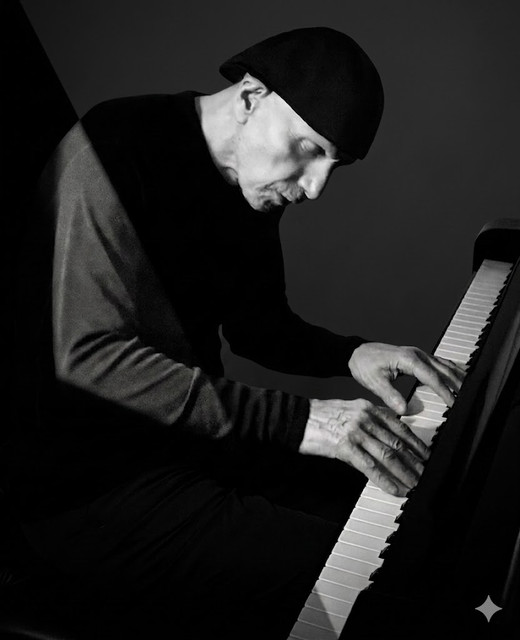
Mario Mattia is an improvisational pianist and graduate of the New England Conservatory whose work is rooted in spontaneity, deep listening and emotional presence. Drawing on influences ranging from Johann Sebastian Bach to Keith Jarrett and Brian Eno, his music bridges classical, jazz, progressive and ambient traditions.
Each performance is created entirely in the moment, without predetermined themes or structures. While his primary work centers on solo piano improvisation, Mattia also maintains an electronic studio practice that serves as a parallel and occasional extension of his explorations in sound.
Working from his rural studio, Mattia captures every nuance of sound, inviting listeners into immersive, contemplative spaces where music unfolds as lived experience.
Keep up with everything Mario Mattia on his Website
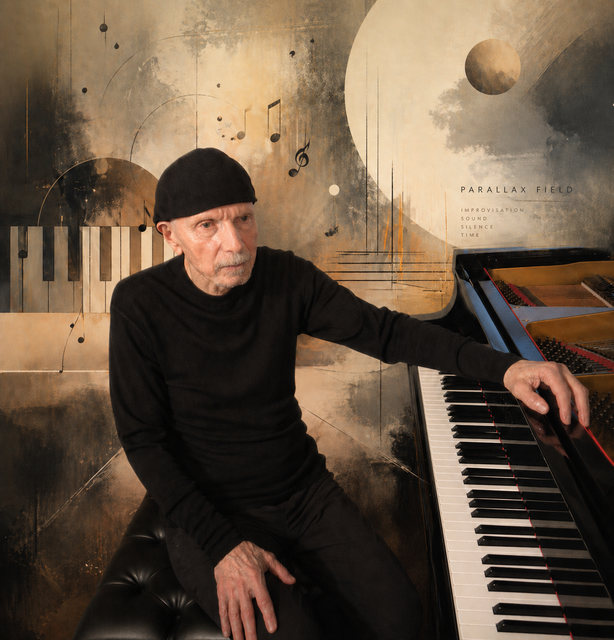
Improvisational pianist Mario Mattia continues to develop a deeply personal and exploratory musical language that exists somewhere between contemporary classical music, jazz improvisation and spontaneous composition. Rather than approaching improvisation as display or variation, Mattia treats it as a form of real-time architecture, shaping long form musical ideas through instinct, harmonic intuition, rhythm and emotional atmosphere.
His recent work has increasingly focused on the relationship between sound, abstraction, visual identity and spontaneous creation. With works such as Origin, Invention, The Unfolding Field, and now Abstract Boogie revealing different dimensions of his improvisational world.
In this exclusive feature, Mattia discusses the creation of Abstract Boogie, the tension between rhythmic propulsion and abstraction within the performance, and the visual language he has developed around his improvisational practice, including the symbolic Möbius imagery that connects his various musical forms.
The result is an artistic approach that is completely unique: grounded in the spontaneity of performance whilst also reaching towards something more immersive and deeply personal.
Tell us the story of this track. Why did you choose to visualize this it specifically in this way?
Abstract Boogie began spontaneously in my studio. It was not a preconceived composition, nor was it something I had planned in advance. I was recording in the moment, and the piece emerged from a chromatic, boogie-derived left-hand pattern that immediately took on a strong physical momentum. From there, the improvisation developed naturally, with the right hand moving in a more abstract, technically active direction above that driving foundation.
What interested me was the tension between that insistent left-hand engine and the more abstract, technically active right hand that emerged above it. It is not traditional boogie-woogie, but rather an improvisation that uses the rhythmic drive of boogie as a foundation for something freer, more chromatic, and more contemporary.
The visuals were chosen to reflect that intensity – the motion, pressure, and forward propulsion of the improvisation. The occasional glimpse of me at the piano is there to remind the viewer that this is a real-time performance, not something assembled or constructed afterward. I wanted the video to feel immersive, energetic, and slightly unstable, much like the music itself.
What was the inspiration behind this new video (visuals, storyline, etc.)?
The inspiration was less about creating a literal storyline and more about finding visuals that could reflect the internal energy of the improvisation. Abstract Boogie has a restless, driving quality – the left hand keeps pushing forward while the right hand moves in a more angular and unpredictable way – so I wanted the video to feel active, intense, and somewhat abstract.
The imagery is meant to mirror that sense of propulsion and tension rather than explain the music in a narrative way. I was drawn to visuals that had movement, contrast, and a slightly unstable quality, because that seemed closest to what the improvisation itself was doing. The occasional image of me at the piano gives the viewer a human point of reference and reinforces that this was a spontaneous, real-time performance.
What was the process of making the video?
The process began with searching for visual material that felt compatible with the intensity and motion of the improvisation. Because Abstract Boogie has such a strong physical drive, I wanted imagery that had energy, abstraction, and a sense of forward movement rather than anything too literal or decorative.
From there, I incorporated my abstract Möbius image, one of three Möbius images I use as visual signatures for the different improvisational areas I work in: meditative (blue), abstract (magenta), and freeform (green blend). Each image has its own distinct color identity, corresponding to the character of that particular genre. The meditative works tend to suggest stillness, depth, and inward motion; the abstract pieces are more angular, chromatic, and unstable; and the freeform improvisations are the most open-ended and exploratory. For Abstract Boogie, I used the abstract Möbius image because its color and visual character represents the intensity, tension, and unpredictability of the performance. The occasional images of me at the piano serve as a reminder that, beneath the abstraction, this is still a spontaneous real-time performance by a single musician responding in the moment.
I assembled and refined the video in DaVinci Resolve, working with the pacing, transitions, placement of images, and overall visual atmosphere until it felt aligned with the music. The goal was not to create a conventional storyline, but to build a visual environment that followed the momentum, intensity, and unpredictability of the performance.
About Mario Mattia
Mario Mattia is an improvisational pianist and graduate of the New England Conservatory whose work is rooted in spontaneity, deep listening and emotional presence. Drawing on influences ranging from Johann Sebastian Bach to Keith Jarrett and Brian Eno, his music bridges classical, jazz, progressive and ambient traditions.
Each performance is created entirely in the moment, without predetermined themes or structures. While his primary work centers on solo piano improvisation, Mattia also maintains an electronic studio practice that serves as a parallel and occasional extension of his explorations in sound.
Working from his rural studio, Mattia captures every nuance of sound, inviting listeners into immersive, contemplative spaces where music unfolds as lived experience.
Keep up with everything Mario Mattia on his Website
Solo piano music has long traded in mood: stillness, space, reflection. But more often than not, it leans heavily on familiar ideas to get there. A few well placed pauses, a gentle motif and the suggestion of depth can sometimes stand in for the real thing. It’s a style that risks becoming more about atmosphere than authenticity.
What makes “Silent Mountains” from Raffaele Scoccia feel different is that it never leans too hard on those expectations. Instead of constructing a mood, it seems to arrive fully formed, as if the music is simply being allowed to exist rather than shaped into something overly deliberate.
The opening moments set the tone perfectly with measured, spacious and quietly assured opening. The melody doesn’t push forward so much as unfold, finding its own path in a way that feels natural and unforced. It’s this sense of ease that defines the piece, giving it a kind of understated confidence that many more complex compositions lack.
As the track develops, there’s a gentle shift in energy, a widening of the emotional frame. Much like the changing light across a mountain landscape, it’s a subtle transformation – noticeable but never overstated. The piece remains grounded in its own sense of calm, never losing sight of the stillness at its center.
And while many piano works aim for a grand emotional payoff, “Silent Mountains” resists that pull. Instead, it circles back inward, returning to its quieter beginnings with a sense of balance and quiet resolution. It’s a decision that speaks to the strength of the composition – knowing when to hold back is often more powerful than pushing forward.
Piano minimalism isn’t new. Reflective, nature inspired compositions are hardly rare. But to find something that feels this genuine, this unforced and this quietly absorbing is exactly why “Silent Mountains” is worth a listen.
About Raffaele Scoccia
Raffaele Scoccia is an Italian composer, pianist and producer whose work moves between electronic music, contemporary composition and minimalist piano. Originally from Trento, he has spent several years in New York developing his sound and collaborating across a wide range of musical scenes, building an international perspective that continues to shape his work.
Alongside his solo material, he has released music under the name Moon Rocket, a project rooted in groove-driven, electronic production that has connected with audiences worldwide. More recently, Scoccia has turned back to the piano, focusing on a more stripped-back and immediate form of expression.
His current compositions are defined by clarity and space, often drawing inspiration from nature and moments of introspection.
Italian composer Marco Di Stefano has been recognized for his ability to blend classical orchestration, folk influences and cinematic scoring into music that feels both epic and deeply human.
His latest project Far Inside takes this skill a step further, pairing his orchestral compositions with striking visual narratives.
The new video for “Tarantella Noire”, a track on the new album, brings together live recording footage from the European Recording Orchestra in Sofia with AI generated cinematic clips, creating a tension between reality and imagination.
Inspired by the events in Palermo in 1992, particularly the murders of judges Falcone and Borsellino, the video balances historical drama with a fictionalized narrative, exploring the shadowy underworld of organized crime through a visual lens.
We spoke with Di Stefano who walks us through the creative decisions behind the video, the process of blending orchestral performance with cinematic storytelling, and how he translated a pivotal moment in history into music and imagery.
1.Tell us the story of this song, why did you choose to visualize this song specifically in this way?
The track was conceived with a strong cinematic and narrative focus, designed to evoke clear imagery and guide the listener through a story. Consequently, the visualization could not be merely an accompaniment; it had to function as a genuine narrative support.
I chose to merge two core elements: authentic footage from the recording session, which lends credibility and showcases the artistic genesis of the piece, and cinematic clips generated via artificial intelligence.
2. What was the inspiration behind this new video (visuals, storyline etc.)?
The inspiration for both the song and the video is rooted in a fictional narrative set against the real historical context of the events in Palermo in 1992, specifically the dramatic escalation leading to the murders of judges Falcone and Borsellino, who symbolized the fight against organized crime.
For the video, I adopted a visual approach that balances documentary style with a cinematic feel. The majority of the footage features the studio recording session with the European Recording Orchestra in Sofia, which highlights the high production value and orchestral commitment. I integrated short, AI-generated clips depicting an old, abandoned house in the Sicilian mountains, envisioned as a criminal hideout. This duality creates a visual tension that mirrors the historical drama of the story.
3. What was the process of making the video?
The process was guided by the dual objective of maximizing the musical performance and enriching it with an evocative visual context. The primary phase involved the meticulous editing of the recording session footage, selecting and assembling the most effective and dynamic moments of the orchestral execution.
Following this, I made the decision to incorporate the AI-generated clips. This was not merely filler, but a deliberate choice to elevate the video’s atmosphere beyond a simple making-of. The integration of these cinematic elements allowed us to create a richer visual texture, providing an implicit narrative backdrop that supports the epic quality of the music and demonstrates my ability to curate detail and the overall mood of the final product.
Pete Calandra’s latest release Night Mist is an album that doesn’t shout to be heard. It simply waits, patiently to be felt.
This eleven track collection is steeped in quietude, unfolding with the elegance of falling dusk and the emotional gravity of late-night introspection.
As both a skilled pianist and prolific composer across Broadway, film and television, Calandra brings a rare blend of technical finesse and emotional restraint to this work. It’s one that feels like a much needed breather in an overstimulated world.
Listen here:
The pieces on Night Mist are deceptively simple. On the surface, they present as minimal piano compositions touched by ambient textures and occasional soft orchestrations. But underneath that lies an exquisite sense of pacing and purpose. Tracks like “Whispers of the Dawn” and “The Heart of Mount Seleya” operate like emotional landscapes: sparse yet vivid, introspective yet expansive. And it is Calandra’s restraint, the space between notes, that becomes its own kind of melody.
What makes this album resonate so strongly is its consistency in tone without ever becoming over repetitive.
Each track brings a new shade of the same emotional spectrum. “Peaceful Valley” introduces cinematic string beds that evoke a pastoral calm, while “Autumn Nights” leans into the warmth of a felted piano to conjure a deeply intimate sense of place.
The ambient title track, “Night Mist” blends light electronics with improvisational phrasing, perfectly capturing the album’s thesis — serenity in the unknown.
Though best known to some for his work behind the scenes, including more than 100 film scores and music for global events like the FIFA World Cup and Kennedy Center Honors, Pete Calandra’s voice as a solo artist has become increasingly distinct over the last decade.
Night Mist builds on the aesthetic developed in ambient-forward albums like First Light and Carpe Noctem, but it lands with much more maturity and emotional clarity.
In an era defined by speed, distraction and technology burnout, Night Mist feels like a defiant gesture — an insistence on presence, on listening slowly, on valuing space.
It’s not just a collection of music, but also a gentle journey inward.



You must be logged in to post a comment.