VIDEO VOYAGEUR: 3 Q’s WITH MARIO MATTIA

parallaxfield

An improvisational pianist and composer, Mario Mattia lets instinct take the lead, creating music that takes shape in real time. In his new release “Parallax Field”, he gives us a closer look at the creative process behind that approach.

For most musicians, the process of creating a piece of music begins with an idea. There might be a melody, a chord sequence, a particular feeling or even a fragment of something that eventually develops into a finished composition. For Mario Mattia, the starting point is rather different. He sits at the piano without a predetermined structure, theme or destination, allowing the music to find its own direction as he plays. What emerges is impossible to plan in advance and, perhaps more importantly, impossible to recreate in exactly the same way.

An American pianist and composer with a background at New England Conservatory, Mario has built his musical practice around this freedom of expression. His improvisations move between lyrical, contemplative passages and more abstract explorations of harmony, texture and rhythm, often taking unexpected turns along the way. There is no fixed formula, only the instrument, the moment and the willingness to follow wherever the music leads.

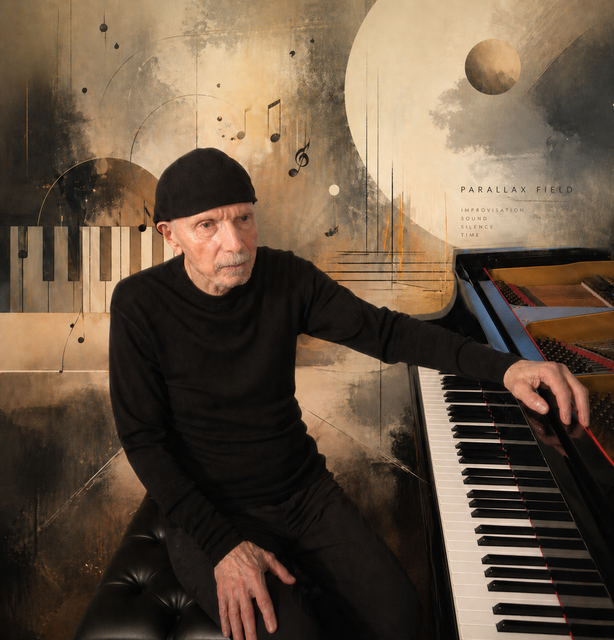
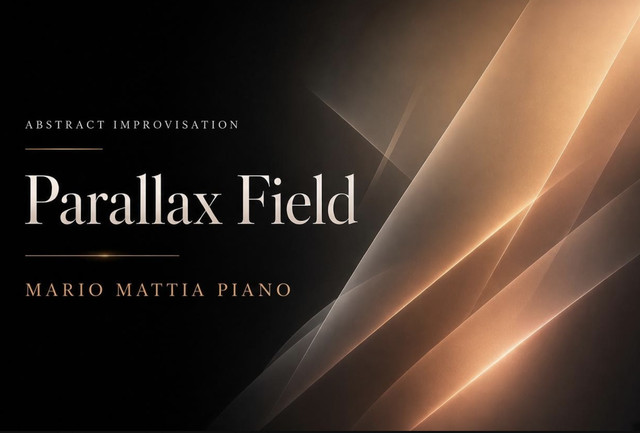
His new video, “Parallax Field”, offers an opportunity to see this process at close quarters. Filmed during an uninterrupted piano improvisation, it brings the physical act of creating the music into focus, while four abstract images introduce an additional visual dimension. It is an invitation to look beyond the finished recording and consider the decisions, movements and moments of expression that make up a spontaneous performance.

We spoke to Mario about the thinking behind “Parallax Field”, his relationship with improvisation, and why he believes some of the most interesting musical discoveries happen when you have no idea what is coming next.

Tell us the story of this track. Why did you choose to visualize the song specifically in this way?

“Parallax Field” is an entirely spontaneous piano improvisation, created without a predetermined theme, structure, or musical destination. What unfolds is a reflection of my emotional and intellectual state at that particular moment, expressed through the instrument in real time.

I chose to film myself performing because I wanted listeners to experience something beyond the music itself: to witness the actual process of spontaneous creation. Seeing the hands move across the keyboard, the interplay of technical facility and lyrical expression, and the immediacy of musical decisions offers a perspective that listening alone cannot provide.

I also incorporated four abstract images at various points throughout the seven minute performance. These provide visual contrast, complement the character of the music, and introduce another dimension without distracting from the central experience of watching the improvisation unfold.

What was the inspiration behind this video? (Visual, storyline, etc.)

There was no specific external inspiration or preconceived storyline, either for the music or its visual presentation. In fact, that absence of preconception is fundamental to my approach to improvisation.

When I sit at the piano, I allow the music to develop organically, guided by what I’m feeling and thinking in that particular moment. The result is often a musical journey that I could neither anticipate nor reproduce exactly.

My visual approach follows much the same philosophy. Rather than attempting to illustrate a particular narrative, I selected abstract imagery that resonated with the music’s evolving character. The images suggest possibilities rather than dictate interpretations, leaving viewers free to discover their own associations.

Ultimately, I wanted the visual experience to preserve the freedom, immediacy, and unpredictability that characterize the music itself.

What was the process of making this video?

The process began with a live, uninterrupted improvisation at the piano. I filmed the performance using my iPhone with the Blackmagic Camera app, while simultaneously recording the music through my dedicated, high-quality audio recording system. The iPhone was used exclusively for the video, not the audio.

Afterward, I mastered the audio recording to preserve its dynamic range, tonal character, and expressive nuances. I then selected four abstract images that I felt complemented different moments in the improvisation, created the cover artwork, and assembled the visual elements.

Using DaVinci Resolve, I synchronized the mastered audio with the performance footage, incorporated the abstract imagery, and refined the transitions and overall presentation.

Although the production process involved considerable attention to detail, the underlying musical performance remained entirely spontaneous and unaltered. That distinction is important to me: the video is carefully produced, but the music itself is an unplanned, authentic expression of a single moment in time.

Watch “Parallax Field” here:

Connect with Mario Mattia on his Website
VIDEO VOYAGEUR: 3 Q’s WITH MARIO MATTIA

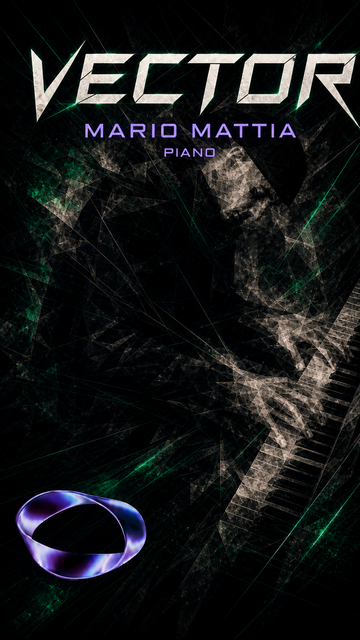
Vector Cover Corrected w name

With “Vector“, Mario Mattia continues his exploration of real time solo piano improvisation, working within an evolving framework he describes through three overlapping worlds: meditative, abstract, and freeform. Each improvisation emerges without pre-composition or predetermined structure, unfolding in the moment and revealing its identity only in retrospect.

We are particularly delighted to have Mario return for another Video Voyageur, as his work continues to evolve and deepen across both musical and visual dimensions.

“Vector” sits firmly within the abstract strand of this practice. Brief, angular and intensely focused, it traces a compressed musical trajectory shaped by tension, velocity and fragmentation. Rather than illustrating a narrative or external idea, the work exists as a direct expression of motion and energy, translated into sound as it happens.

The accompanying visual language extends this approach. It offers a non-literal environment that mirrors the piece’s instability and intensity. Together, music and image form a unified space of abstraction – one that prioritises force, texture and perception over story or explanation.

Tell us the story of this piece. Why did you choose to visualize it specifically in this way?

“Vector” belongs to the abstract area of my work. My improvisations fall into three genres: meditative, abstract and freeform.

The meditative pieces tend to be spacious, tonal, inward, and contemplative. The abstract pieces are more angular, atonal, compressed, and exploratory, often emphasizing gesture, texture, rhythm, and intensity over conventional lyricism. The freeform pieces move between worlds. They may begin in a tonal or meditative space, pass through abstraction or dissonance, and return transformed, allowing the music to determine its own structure in real time.

Although I use these three categories to help listeners orient themselves, the improvisations are never planned in advance. Each one emerges spontaneously, and the genre becomes clear only afterwards. The improvisation emerged very clearly from the abstract genre. As with all of my piano improvisations, there was no prior plan, structure, or conception. I did not sit down intending to create an atonal piece, nor did I set out to make something intense or angular. It simply emerged that way in the moment. Looking back, I suspect it reflected the particular intensity of my inner state at the time – not in a literal or programmatic sense, but as a kind of emotional pressure translated directly into sound.

Because the music moves by tension, velocity, interruption and abstraction, I wanted the visual world to reflect that same character. Rather than using imagery that would soften or explain the piece, I chose visuals that would support its non-representational quality – something closer to motion, geometry, instability, and concentrated energy.

The goal was to illustrate a story, but to create a visual counterpart to the music’s abstract force.

What was the inspiration behind this new video (visuals, storyline, etc.)?

There is no storyline in the video, and I did not want to impose one on the music. “Vector” is an abstract, atonal improvisation, so the visual approach needed to remain non-literal. The inspiration was really the character of the piece itself: compressed, intense, angular, and unstable. I wanted the imagery to reflect those qualities without explaining them.

The visuals are meant to create an atmosphere

The video was assembled and edited in DaVinci Resolve. I began by searching for visual material that seemed to share something with the character of the piece itself: compressed, intense, angular, and unstable. I wanted the imagery to reflect those qualities without explaining them. The visuals are meant to create an atmosphere of abstraction and movement – something geometric, unsettled, and concentrated – rather than a narrative sequence. For me, the video functions as a visual environment for the music, not a story about it.

What was the process of making the video?

The video was assembled and edited in DaVinci Resolve. I began by searching for visual material that seemed to share something with the character of the improvisation – not literal images, but imagery that suggested abstraction, motion, tension and instability.

From there, the process became one of correlation. I tried to shape the visual flow so that it moved with the music: more active and fragmented through much of the piece, with a small amount of color to give it energy and contrast, and then somewhat calmer as the improvisation itself begins to release near the end.

I also included a brief image of myself at the piano, not as a focal point, but as context – a reminder that this is still a human, physical performance, even when the musical language is highly abstract.

The title “Vector” came afterward, as my titles always do. It seemed to reflect the underlying character of the improvisation: direction, force, motion, and a kind of concentrated trajectory.

MARIO Edited

About Mario Mattia

Mario Mattia is an improvisational pianist and graduate of the New England Conservatory whose work is rooted in spontaneity, deep listening and emotional presence. Drawing on influences ranging from Johann Sebastian Bach to Keith Jarrett and Brian Eno, his music bridges classical, jazz, progressive and ambient traditions.

Each performance is created entirely in the moment, without predetermined themes or structures. While his primary work centers on solo piano improvisation, Mattia also maintains an electronic studio practice that serves as a parallel and occasional extension of his explorations in sound.

Working from his rural studio, Mattia captures every nuance of sound, inviting listeners into immersive, contemplative spaces where music unfolds as lived experience.

Keep up with everything Mario Mattia on his Website