There is something revealing about a song written from the perspective of someone who wants to be understood but cannot quite find the words to explain themselves. It is an emotional contradiction that sits at the heart of Miriam Armonie’s “You Should Know,” a single that explores the uncomfortable territory between attraction and avoidance, vulnerability and self-preservation, and the things we want from other people versus the things we feel equipped to give them.
Emerging from New York’s creative scene, Armonie is building a musical identity around atmosphere, and a willingness to let different influences inform her songwriting. Her latest single draws on personal experience, revisiting a relationship in which someone wanted more from her than she felt able to offer.
At the time, she was focused on establishing her career and lacked the emotional maturity and experience to navigate the situation with the sensitivity it deserved. The person in question was someone she cared about deeply, which only made the decision to distance herself more difficult. Rather than risk leading him on, she chose to cut contact altogether, a decision she now recognises could have been handled differently.
That backstory gives “You Should Know” its weight. This is a song shaped by hindsight, by the realisation that protecting yourself from a situation you do not know how to manage can leave another person hurt and unanswered questions lingering long after the moment has passed. There is an important distinction here between not wanting someone and not knowing how to make room for them in your life. Armonie is interested in exploring the possibility that feelings can be genuine even when the person experiencing them is unable to act on them in a healthy or constructive way.
The song also touches on the complicated relationship between avoidance and vulnerability. Sometimes, withdrawing feels easier than explaining yourself, particularly when you are still learning how to articulate your own insecurities. The difficulty is that silence can communicate something very different from what you intended. In looking back at her own behaviour, Armonie allows herself to acknowledge the hurt she may have caused without dismissing the reasons behind her decision. It is an honest, recognisable form of reflection, and one that gives the song more nuance than a straightforward tale of missed romantic opportunity.
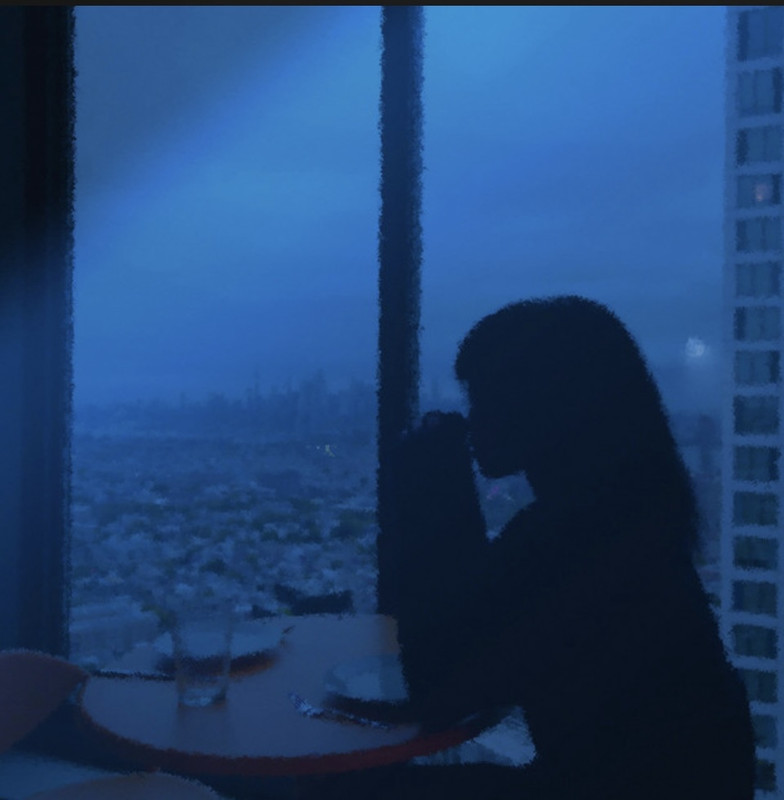
Musically, “You Should Know” carries the kind of soft and ambient rock landscape that is shaping Armonie’s forthcoming Blue Hour EP. The project takes its name from that fleeting period between day and night, a space that seems particularly suited to songs concerned with uncertainty, memory and emotional states. Armonie’s interest in combining genres also suggests an artist who sees sound as something to explore rather than a formula to repeat.
That curiosity is central to her approach. While Blue Hour leans towards softer, atmospheric rock, Armonie has already written material that moves into funk, groove, disco and punk. Her musical influences include Sade, Lana Del Rey, Anita Baker, Willow and Olivia Rodrigo, artists whose work demonstrates different ways of balancing a distinctive identity with an appetite for experimentation. Sade, in particular, represents an ideal for Armonie: a performer whose understated vocal delivery can convey enormous feeling without relying on theatrical excess. It is a useful reference point for an artist interested in the subtleties of emotional expression.
Beyond her own releases, Armonie is developing her work as a songwriter and producer with ambitions to create music for other artists. She is also outspoken about the importance of retaining creative control, particularly for women working in an industry where experience and authority can too easily be used to undermine their instincts. That determination to trust her own perspective is reflected in the personal nature of her writing. She is willing to revisit decisions she regrets, examine the less flattering parts of her own behaviour and consider what those experiences have taught her.
With “You Should Know,” Miriam Armonie turns an uncomfortable personal memory into an opportunity for understanding. The song’s tension lies in the gap between feeling something and knowing what to do with it, a space where good intentions can become tangled in fear, uncertainty and the inability to communicate.
As the Blue Hour project continues to take shape ahead of its 2027 release, “You Should Know” offers a compelling introduction to an artist whose songwriting is as interested in the questions we leave unanswered as it is in the emotions we find the courage to express.
Keep up with everything Miriam Armonie on her Website
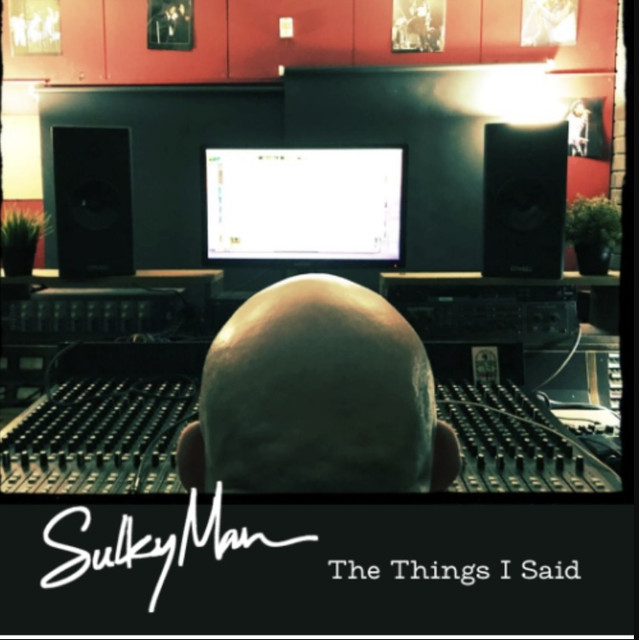
Three decades is a long time for a song to wait to be heard. Somewhere between the hiss of an old four-track recorder and the shifting currents of London’s underground music scene, Chris Pascoe captured a handful of ideas that would eventually slip out of view, leaving four recordings to gather dust while life took him in other directions. Now, as SulkyMan, he has brought them back into the light, and the results are a fascinating glimpse into a period when guitar music could be gloriously wayward, instinctive and unconcerned with staying in its lane.
Recorded around 1995 on a Yamaha MT50 four track analogue recorder, these songs have survived without losing the curious energy that made them worth recording in the first place. There are wiry guitars, restless rhythms, unexpected melodic turns and an appealing roughness that feels inseparable from their character. Rather than sounding like relics retrieved for nostalgia’s sake, the four tracks reveal a songwriter already comfortable following an idea wherever it leads. What emerges is not simply a document of Pascoe’s musical past, but a reminder that some songs can outlive the circumstances in which they were created and still have a few surprises left.
Listen here:
The title track opens the collection with shimmering jangling guitars and a beautifully measured bass part that gives the arrangement warmth and movement. There is a natural swing to the music, an ease in the way the melodic elements find their places, and spaciousness that allows the song to unfold without losing its infectious quality. It has the DNA of classic nineties indie, when guitar bands could be melodic without becoming predictable and atmospheric without disappearing into their own introspection. Yet there is something appealingly timeless about it, too. Had “The Things I Said” emerged during the original heyday of the Britpop era, it would not have sounded out of place. Heard now, it carries the pleasure of discovering a song that has somehow escaped the usual boundaries of its time.
“I Wonder Why” takes a more unsettled route. The guitars have a nervous, slightly careering quality, moving between melodic passages and rougher, more insistent textures. There are shadows of post punk in the atmosphere, with something of Echo & the Bunnymen’s brooding musicality and the ragged charm associated with Nikki Sudden. The bass deserves particular attention here, providing a fluid counterpoint to the guitars and giving the song much of its distinctive character. It is an arrangement that thrives on the interplay between its parts, with tension and melody pulling against one another in a way that keeps the listener engaged.
“Nothing Is Easy” brings a sharper edge to the collection. Its angular guitar work and snarling delivery suggest a song with little patience for easy answers, while unexpected melodic turns lend it a more playful character than the title might imply. There is a hint of the Beatles in the way the melody seems to emerge from within the song’s rougher exterior, a reminder that memorable pop instincts can survive even the most unconventional arrangements. Pascoe seems comfortable allowing these contrasting elements to coexist.
“Never Change” completes the quartet with a nod towards the more restless end of new wave and post-punk. There is a tautness to the song, a sense of unresolved movement that suits the material, while its melodic instincts keep it from becoming overly austere. Across these four recordings, that balance between accessibility and eccentricity becomes one of SulkyMan’s defining qualities. Pascoe understands that a song can be catchy without being obvious, and rough around the edges without sacrificing musical detail.
What makes the collection particularly interesting is the knowledge that these recordings represent an earlier stage in an ongoing creative life. Pascoe has travelled an unusual musical road, from his teenage years playing bass in London anarcho-punk band Part 1 to his later involvement in the underground tech-house scene, before developing SulkyMan into a solo project in which he writes, performs, records and produces his own material. Across those different worlds, he has consistently followed his own instincts rather than settling into one recognisable musical identity.
The songs collected here reveal the foundations of that independence. There is an instinctive understanding of arrangement, a willingness to let contrasting moods sit alongside one another, and a melodic sensibility that prevents the music from becoming an exercise in obscurity. The analogue limitations may have influenced the way these recordings were made, but they have not diminished their character. Instead, the music retains the sense of discovery that comes from an artist working things out for himself, following a line of thought wherever it happens to lead.
There is also something quietly moving about hearing music return after so much time. Thirty years can change the meaning of a song, even when the recording itself remains untouched. Lines written in one period of life inevitably acquire different shades of meaning when heard from another, while the sound of a younger self can become an unexpected conversation between past and present. Pascoe has spoken of his amazement at finding these recordings again, and it is easy to understand the appeal of bringing them into the world after believing they had disappeared from view.
The beauty of “The Things I Said” and its companion tracks is that they do not need their history to justify their existence. The story behind their recovery adds interest, certainly, but the music stands on its own merits. The guitars have character, the bass lines reward attention, and the melodies linger long after the songs have finished. More than anything, there is a sense of artistic freedom running through the collection, the sound of someone making music because the ideas are there and need to be followed.
Plenty of recordings from the nineties survive as nostalgic souvenirs of a particular scene or sound. SulkyMan’s rediscovered material offers something more satisfying. These four songs feel like fragments of an unfinished conversation, recovered from the past and given another chance to be heard. They are reminders that good songwriting does not necessarily come with an expiry date, and that the passage of time can occasionally turn a forgotten recording into a new beginning.
For Chris Pascoe, the past has proved to be a surprisingly fertile place to start again. With “The Things I Said”, SulkyMan brings a long-lost piece of musical history back into circulation, and finds that the songs still have plenty of life left in them.
About SulkyMan
SulkyMan is the solo project of London musician Chris Pascoe, a songwriter and multi-instrumentalist whose musical journey spans the worlds of anarcho-punk, underground electronic music and alternative guitar rock. Beginning his musical life as a teenage bass player in London anarcho-punk band Part 1, Pascoe went on to explore the underground tech house scene before developing SulkyMan as a space for his own songwriting, recording and production.
His music brings together melodic instinct, restless guitar work and a willingness to explore the space between indie rock, post-punk and pop. Unconcerned with genre boundaries, Pascoe follows his ideas wherever they lead, balancing angular arrangements and rough edged textures with memorable melodies.
SulkyMan’s latest release, The Things I Said, brings four recordings made around 1995 on a Yamaha MT50 four-track analogue recorder back into circulation. Rediscovered decades after their original creation, the tracks offer a glimpse into Pascoe’s earlier creative life, preserving the spontaneity and independent spirit of the era while revealing a songwriter whose musical instincts have stood the test of time. Rather than simply revisiting the past, SulkyMan gives these long-lost recordings a new life, allowing their distinctive character to find an audience in the present.
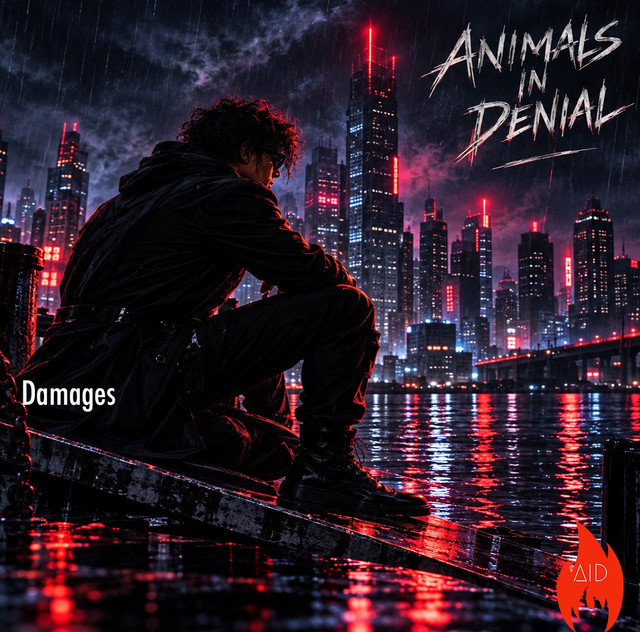
There is a kind of honesty that comes from looking back at difficult experiences without pretending they never happened, and without allowing them to define everything that follows. On “Damages,” the latest single from Animals in Denial, Christian Ines explores that difficult territory with a song that feels as much like a private reckoning as a piece of music. Intimate in its arrangement and deeply personal in its subject matter, it considers what happens when trust is broken, the foundations we have built our lives upon begin to shift, and we are left to work out what to do with the pieces.
Originally released on Millennial, “Damages” has now been revisited by Ines, who has taken the opportunity to restore vocal parts and harmonies that he had originally envisaged but could not fully realise with the recording equipment available at the time. The updated version brings the song closer to his original intentions, allowing its emotional subtleties to emerge while preserving the understated character that made the recording work in the first place.
Listen here:
Musically, the appeal lies in its simplicity. Built around a vintage Stratocaster and bass, the arrangement has an immediacy that more elaborate production might have obscured. Ines kept the very first guitar take, played on his ’50s Stratocaster using a capo and the neck pickup, trusting the instinctive quality of that initial performance rather than pursuing a technically polished alternative. The bass, played on his wife’s Rogue, brings its own character to the song and reflects a period in which he was beginning to understand the instrument as something more than a means of reinforcing the guitar.
There is no need for a conventional drum part or a towering wall of sound. Instead, the instruments occupy a space that feels almost domestic, as though the listener has arrived in a room where the song is unfolding in real time. A vinyl effect at the beginning creates the impression of tuning into a radio station just as the music starts, a small production detail that establishes the atmosphere without drawing attention away from the performance. It is an inviting introduction to a song whose emotional subject matter is considerably more complicated than its modest arrangement might initially suggest.
That contrast is central to the track’s appeal. Ines is more interested in the lasting effects of broken trust, and in the slow, often difficult process of understanding how those experiences have shaped the person he has become. The song draws on his experiences of relationships, people and institutions that have failed to live up to the trust he placed in them, including events that began early in his life and influenced how he came to understand the world around him.
Yet this is not simply a song about disappointment. Its deeper concern is what happens after the initial hurt, when the immediate crisis has passed but the consequences remain. How do you rebuild your sense of security? How do you learn to trust again without ignoring what experience has taught you? And how do you move forward when the person you become in the process is inevitably different from the person you were before?
Ines approaches these questions with a refreshing lack of sentimentality. Healing is not presented as a neat return to the way things were, nor does the song suggest that difficult experiences can simply be erased. Sometimes the pieces do not fit together as they once did. You have to find a different way of putting them together, accepting that change is part of the process rather than evidence that something has been lost forever.
The decision to revisit “Damages” also gives the song an interesting second life. Restoring the backing vocals and harmonies has allowed Ines to hear the track closer to the way he originally imagined it, but the process is about more than correcting the limitations of an earlier recording. It is also an opportunity to reconsider a deeply personal piece of work from a different point in his life. The song remains connected to the experiences that inspired it, but the perspective surrounding those experiences has evolved.
Ultimately, “Damages” is about acknowledging what has happened without surrendering the future to it. The title might suggest something broken beyond repair, but the song arrives at a more complicated and ultimately hopeful understanding. Damage can leave its mark. It can alter the way we see ourselves, the people around us and the possibilities ahead. But it does not have to determine the outcome.
Sometimes moving forwards means accepting that you will never be quite the same person again. “Damages” understands that, and finds something quietly powerful in the realisation that this need not be a bad thing.
Keep up with everything Animals In Denial on the Website
For Brooks John Martin, a song can begin with a guitar part and end up somewhere entirely unexpected. On his new single, “Ocean Breathes Salty“, the wave-like arpeggios of Mark Kozelek’s interpretation of the Modest Mouse original sparked an image of a windswept beach and an ash spreading ceremony, a scene that would eventually become the inspiration for the song’s accompanying video. Featuring Nashville singer-songwriter Lilly Hiatt, Martin’s version adds drums, bass and strings to create a melancholic, cinematic duet that honours the spirit of Kozelek’s arrangement.
The single offers a glimpse into the imaginative world of War All The Time, Martin’s forthcoming album and the first release to emerge from an extraordinary burst of songwriting that followed a period when he thought his musical journey might be over.
Blending the rootsy warmth of 1970s Laurel Canyon with orchestral arrangements, alternative rock and his own richly expressive baritone, Martin has created a collection shaped by musical curiosity and a gift for turning sounds into stories. We caught up with him to discuss the influence behind “Ocean Breathes Salty”, the making of its North Carolina beach video, and the creative resurgence that brought War All The Time into being.
Tell us the story of this song, why did you choose to visualize the song specifically in this way?
The song was originally written by Modest Mouse and Mark Kozalek reimagined the song with Sun Kil Moon. I always loved his arrangement and wanted to put my own spin on it. I added drums, bass, strings and sung it as a duet. I imagined the imagery of the song being on a beach at an ash spreading ceremony and the video made that a reality.
What was the inspiration behind this video? (visual, storyline, etc.)?
The inspiration for the song imagery was the guitar arpeggios Mark Kozalek came up with. They felt wave like to me and made me feel the sad beach vibe. The lyrics fit the imagery perfectly.
What was the process of making this video?
I had a preproduction meeting with Scotty Felix and we had to choose California or North Carolina to shoot. We decided on NC because it would be less crowded and I liked the dunes scenery. We flew everyone down and filmed it in one day on Oak Island. Had some great food and met some great people. Very nice part of the country.
Keep up with everything Brooks John Martin on his Website
David Diaz’s “Are We Gonna Talk?” began with a question that came from a very real place. After a friendship broke down and an attempt to ask for emotional support was met with silence, David found himself reflecting on a pattern of giving too much of himself to people who did not always give the same in return. Rather than leaving that frustration where it was, he turned it into a song, transforming hurt, anger and a few uncomfortable truths into something both personal and instantly relatable.
The video, however, takes that emotional story somewhere considerably more unexpected. Initially reluctant to make a video at all, David was persuaded by his friends and co-directors Abiesel “Abi” Baez and Kahlil Antonio to turn the song into an ’80s slasher movie, with David himself becoming the rather unlikely “Callback Killer.”
Shot over three days with a large cast and crew, the production became as much about collaboration and having fun as it was about telling the story. David describes the experience as feeling more like a camp getaway than a conventional music video shoot, with everyone from the directors and actors to the production and design teams contributing to the final result. Here, he talks about the personal experiences behind “Are We Gonna Talk?”, the unlikely inspiration for its horror-themed video, and why sometimes the best way to deal with being ignored is to become the killer everyone remembers.
Tell us the story of this song. Why did you choose to visualize the song specifically in this way?
“Are We Gonna Talk?” came from a falling out I had with a close friend of mine. Essentially, I came to understand that I was putting a lot more into the friendship than he was, and it wasn’t the first time that happened.
What initially brought everything on was that I was in a place where I needed something, and that one particular thing was just support. When I asked him for emotional support, it felt like it was too much or like I was an inconvenience to him, because when I asked him, he never answered me. Eventually, I found out he was prioritizing other things he thought were more important, and I felt like I wasn’t being prioritized.
In our relationship, I had given him a lot. I didn’t necessarily put everything on hold, but I did a lot for him and sacrificed a lot for him, and it just felt like he didn’t care about me at all. So I tried to reach out—nothing: no answer, no response, no conversation or explanation. I was completely in the dark.
At some point, I messaged him, “Are we gonna talk at all?” Still nothing. So I went home and made a song out of that line.
I felt like a complete idiot for putting myself in a position to be treated like that. It had happened to me a lot in the past because I was a people pleaser. I wanted people to like me, and I would do anything to try to keep them around, even if it hurt me. This was happening during a transitional period when I was starting to undo a lot of damage and unlearn things that didn’t benefit other people or me. So I got angry and made it into a song.
For the cover art and the general promotion, I knew I wanted it to be something along the lines of phones and people not getting a callback, and I wanted to be a little bit on the nose with it. Initially, it was going to be more modern—flip phones, smartphones, texting, whatever—but I was like, “That’s so boring.”
I want to say what I want to say, but I want to find a fun way to say it. If it’s going to be out there forever and people are going to hear this message, I think it’s more fun and more palatable for me, and hopefully for other people too, if it’s something familiar presented in a unique package. So, whenever you come back to it, see it or listen to it, you’re like, “Yeah, there’s that message that I know,” but you’re seeing it through this really unique, different lens of an ’80s world.
I really enjoy world-building, lore, and things like that, so that was really fun. My favorite color is blue, so I wanted to incorporate that into things too and put myself into the world.
It’s sort of a meta version of myself. It’s still David Diaz, the artist and the person, but more like a blank canvas so he can be whatever he needs to be for a particular song or situation. So yeah, it’s kind of me, but it’s also not at the same time. I had a lot of fun with it.
What was the inspiration behind this video? (visual, storyline, etc.)
I can’t take too much credit for the inspiration behind the video, because, initially, I didn’t even want to do a video for this song.
I usually find music videos to be very daunting and stressful. Even with shoots that I’ve really enjoyed in the past, they were still stressful for me because there’s so much involved and usually a very large crew. Mind you, these are amazing people who are so much more talented than I should be working with and have incredible vision and skill. It’s just such a different world for me. I appreciate it because I love films and movies, but these people actually know what they’re doing.
My friends and co-directors Abiesel “Abi” Baez and Kahlil Antonio came to me and asked, “If you were to do a music video for this song, what would you want to do?” And I was basically like, “I don’t really know.”
Then they said, “Okay, listen. Hear us out. What would you think about an ’80s slasher horror?”
And I was like, “Are you out of your f**king mind?” They know I hate scary movies. I can’t do anything involving supernatural horror because I will 100% get nightmares (I’m a lucid dreamer, so it makes them even a thousand times worse).
They were like, “Just think about it,” and I did. And I was basically like, “Yeah, no. Let’s do something else.”
Then, I think they showed me something, or showed me a plan with shots and different ideas, and somehow they managed to sell me on it, and I went through with it.
I remember one thing in particular. They were like, “Imagine this will technically be a sort of therapy for you.”
And I was like, “Uh, what do you mean?”
They said, “Instead of you being scared of anyone, you’ll be the one that’s scary.” And I was like, “You know what? I didn’t think about it like that. That’s actually funny.”
I’m so glad I listened to them because these guys absolutely know what they’re doing. They were incredible, and they came up with a lot of the story. I gave them the general direction I wanted and the inspiration behind some of the more specific parts of the story that inspired the song.
Even though the song was inspired by that one particular situation I mentioned, it’s happened to me multiple times with different people. So it’s really a collection of all of these different experiences. That’s why there are the friends who die and me as the killer – it’s the dramatization of the consequences of the actions of those particular people.
Visually, I really wanted to stick to the ’80s, and our entire production team did an amazing job. They were so much fun to be around and so much fun to watch and work with. I can’t wait to show everyone the behind-the-scenes footage, because what that place looked like before is absolutely not what it looked like during the shoot.
Abi and Kahlil came up with the rest of the sequence, the shot order, and everything along those lines. They would flesh everything out and run it by me. 99% of the time, I would approve everything on the first go because I really admire and respect their creativity and vision. I entertain it and run with it because I’ve learned to trust them and their process, and they’ve done the same with me.
They really understand me as a person, my art, and how I communicate artistically. I feel like we make a really good team, and I love working with them, even when it’s on fun little side projects that nobody might ever see, something you might see in the future, or things we’ve done in the past that I’m really happy we did.
I think this is the best thing we’ve done together, and I plan to work with them more in the future, whether it’s a music video or one of their projects, because they’re so much fun to be around and work with, and they’re awesome people overall.
The same goes for the crew and everyone they brought on and worked with on these projects. There’s a whole list of people who did amazing work on set during the video shoot, and I wish I could mention every single one of them by name here (which I will in the video credits, for sure). Abi and Kahlil were definitely the driving forces behind the storyline and the characters. Visually, I came in with ideas that the art and production design team, captained by the talented Ross Widener, brought to life so, so beautifully. Just wait until you see my blue scrapbook they made for the video; it’s hilarious.
What was the process of making this video?
The process of making the video was absolutely so much fun.
As I said before, we had already done multiple videos together, and I had done other videos before meeting them as well. The song itself had been finished for a long time, so by the time we started seriously talking about doing a video – and after they convinced me—we started booking everything far in advance.
Everything you see in the music video, including the location, was locked in about a year in advance. We had everything planned out to the day. We were ready.
They, along with my manager, Amanda Do Nascimento, got everyone on the crew on board, organized the schedule and logistics, and when we got there, it was a three-day shoot. Because we booked the location for multiple days, those of us who chose to stay could room there for the duration of the shoot, which was really cool. They were actual cabins that you could live in.
I really wanted to make sure that while we were shooting the video, everybody had a good time and that it was low-stress. I wanted it to feel more like a camp getaway than a job.
I was constantly taking people’s temperatures and asking how everybody was doing, if people were enjoying themselves, or if anybody was stressed out. Everyone kept saying they were having a really fun time, which I was relieved to hear.
Some people were coming off other shoots and really noteworthy projects, and working on some amazing things. They were tired or spent, and even though they still decided to come work on this, they were having a blast because the environment on set was very laid-back. That was really, really nice to hear, especially since I was internally freaking out because I felt responsible for everyone and everything. After all, my name was on it.
More than anything, I wanted everybody to feel comfortable and have a good time. I know this is a visual extension of my song, but I don’t have to make a music video. I’m doing it because it’s fun. After all, I love the art form and the medium, and I love the vision everyone brought to it.
Even though I’m responsible for the music, the song, and the basis of where the video came from, everything else is because of this crew, Abi, Kahlil, my manager, and every single person involved – from catering, to the production assistants, to people who came to visit, people running to get food or coffee, somebody getting me water, wardrobe, costuming, makeup—everyone. Everybody did such an incredible job, and I had such a blast. I’m so glad I got to meet everyone who was there. They all deserve so much credit.
The killing scenes were absolutely hilarious. Honestly, it wasn’t just those scenes—any time we were shooting, we would forget we were filming a music video because it started to feel like we were making an actual film. You’ll really see that more in the behind-the-scenes footage. These actors are screaming their heads off and acting their faces off. They did such an amazing job. If you muted the song and just listened to what was happening on set, it could have been a movie.
I absolutely want to highlight the actors because they were incredible and some of the most talented people I’ve worked with in my life. They brought so much life to these characters without having much to work with. Our main four are Carolina Lopez, who plays Gina, Jacob Stutchman, who plays Scooter, Marlene Zapien, who plays Wilma, and Sebastian Ortega, who plays Fernando, and then Joslyn Guzman and Christina Castillo play the other two characters, Daniela and Ellen, who get killed at the beginning of the video.
They all did an incredible job. They had to adapt and work through things with us at the last minute because we sometimes needed to change things around, and they were amazing. They also had fun with it, which was great, and they made really cool and funny choices that I’ll remember forever and always come back to the video to rewatch.
I also really want to highlight our director of photography, Carlos Irazabal. He did such an incredible job with these shots. I could not have asked for anything better visually. I don’t know anything about cameras, but Carlos absolutely knows what he’s doing, and he is so good and so talented. He’s also such a real person, and I could say the same about everybody else on the crew. Abi and Kahlil did such an incredible job directing everything together, and Carlos captured it all so beautifully. He really managed to let the characters shine and let the actors’ talents and interpretations come through. They took direction so well, and everyone did such an outstanding job.
I know this answer is already long (sorry), but everyone involved made this production what it was, and I couldn’t be more pleased with how it turned out. I feel so lucky to have been part of this production because of the people I got to work with. No artist can do something like this all alone. It takes a village, and everyone involved knocked it out of the park.
I’ll always remember the shoot fondly. At the end of every day, we would chill out, drink, eat, talk, be loud, and have a great time. Some of my favorite parts were sitting out in the grass or on the porch, stargazing, talking about life, hearing about projects everybody was working on and their passions, and just having a blast.
I hadn’t met some of these people before, so it was really cool to get to know them. It genuinely felt like a getaway—like camp, but no one gets murdered by the Callback Killer.
I felt like a kid again, if I were alive in the ‘80s, haha. It was the best.
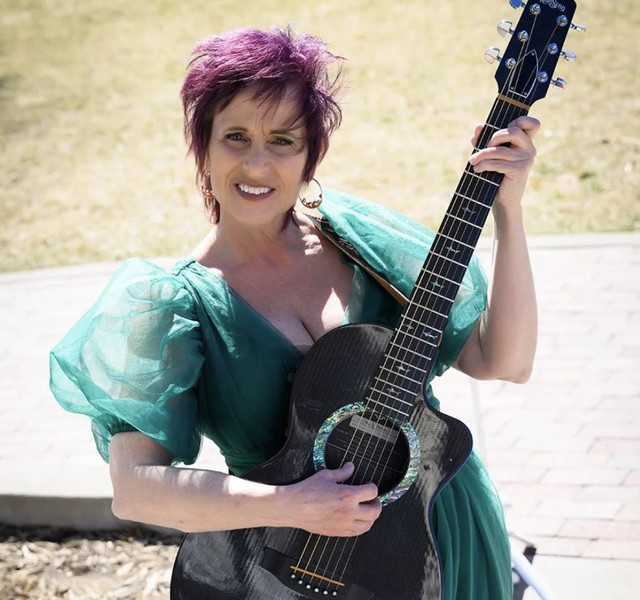
There are some heartbreaks that linger long after the person who caused them has disappeared. For award-winning Americana/Folk-Pop singer-songwriter Randie O’Neil, that feeling became the inspiration behind her latest release, “Ghost of Me”, a haunting song about loss, loneliness and finding your way back to the part of yourself that can feel lost when someone walks away. Released today alongside its atmospheric new music video, the track finds Randie exploring the darker side of emotional abandonment while still holding on to the resilience that has become such a defining part of her songwriting.
The video was filmed at dusk in New Hope, Pennsylvania, a town with its own reputation for ghost stories, making it the perfect setting for a song about being haunted by someone who is no longer there. Walking through the fading light and shadows, Randie captures the searching quality of the song, while the visual echoes the emotional journey at its heart.
Randie has never been afraid to explore the experiences that shape us. Here, she talks about the personal story behind “Ghost of Me”, creating the video without her usual team, filming at dusk in one of Pennsylvania’s most atmospheric towns, and turning an experience of rejection and hurt into something hauntingly beautiful.
Tell us the story of this track. Why did you choose to visualise it specifically in this way?
I was literally ghosted on my birthday. I felt so empty and lost. You think you found someone, take that chance and they just can’t give it back.
What was the inspiration behind this new video (visuals, storyline, etc.)?
I just wanted it to be haunting, searching so we waited until dusk in New Hope PA (a truly haunted town).
What was the process of making the video?
I didn’t have my usual team so I took a chance and they were great. Two videos in one day. This was the end of the day dusk shot. Tried to emote as I walked. “Shadows know your name” is an angry line that he will get what’s coming.




You must be logged in to post a comment.