VIDEO VOYAGEUR: 3 Q’S WITH KEN LOVERN

blindboone

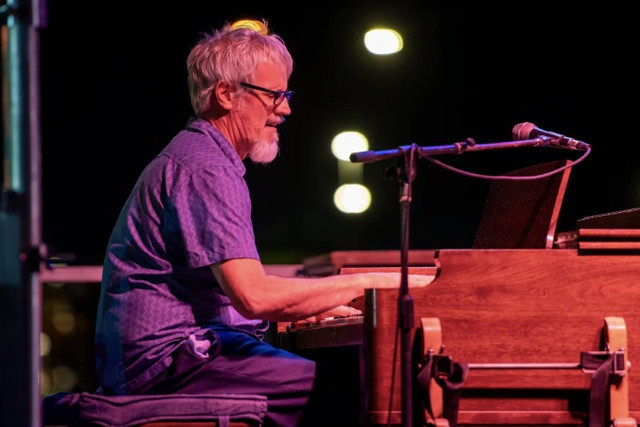
When Ken Lovern set out to create Blind Boone the Musical, he wasn’t simply writing songs. He was uncovering an overlooked chapter of American history. Through an ambitious blend of jazz, theatrical storytelling and historical research, the Kansas City composer and jazz organist is bringing the remarkable life of Missouri pianist John William “Blind” Boone to a whole new generation.

The project’s latest single, “Quindaro,” shifts the focus from Boone himself to the courageous journey of his mother, Rachel, bringing together the story of the Underground Railroad, the historic free state town of Quindaro, and the events that ultimately shaped one of America’s most extraordinary musicians. Accompanied by a striking visual narrative that combines original comic book artwork, archival imagery and footage from the recording sessions, the release demonstrates the scale and vision behind Blind Boone the Musical.

We caught up with Ken to discuss the inspiration behind “Quindaro,” the symbolism woven into its music, the creative process behind the video and why preserving stories like Blind Boone’s has never been more important than now.

Tell us the story of this track. Why did you choose to visualize it specifically in this way?

Quindaro is part of the story of Rachel Boone as told in the musical historical fantasy, “Blind Boone the Musical.” 

The song’s setting is just before sunset in late Summer 1863, near Miami, Missouri in north central Missouri.  A group of escaped and freed former enslaved persons, called “contrabands” by the Union Army, are heading west to Kansas in search of freedom and a better life.  Their immediate goal is to reach the river port town of Quindaro on the Kansas side of the Missouri river and a known stop on the Underground Railroad.  They sing to tell their story and their reasons for heading to the Free State of Kansas.

At dawn, the freedom seekers continue walking west to Quindaro.  Rachel twisted her ankle the previous day, and it has swollen through the night.  She is unable to walk.  She will remain in central Missouri and give birth to John William Boone, who will become the prodigy and performing legend “Blind Boone.”

The cowbell beat that begins Quindaro is a standard “bell pattern” that forms the basis for much of the music of sub-Saharan Africa.  The migration of this cross-rhythmic figure into the Americas introduced new rhythms to American music that did not exist in Europe.  Some musicologist trace the “swing” of American blues and jazz to this pattern.  

In the song Quindaro, the bell pattern remains consistent while the underlying pulse of the shaker and the bass drum alternate from a 6/8 beat to a 4/4 beat.  Shifting the underlying pulse from 6/8 to 4/4 symbolizes the forced migration of the Africans to the Americas.

What was the inspiration behind this new video (visuals , storyline, etc.)?

The video features art from the companion comic book, video from the recording sessions, photos, and historical maps and drawings.  My goal was to tell the story of the freedom seekers along with the experience of the musicians.  The viewer can see through the maps and drawings the perilous journey from the Missouri side of the river at Parkville to the Kansas side of the river at Quindaro.

What was the process of making the video?

To create the video, I drew on images from several sources.  To present the story of Blind Boone the Musical in a clear and linear manner, I collaborated with Gutter Studios to develop a comic book adaptation.

While recording Quindaro, I filmed videos of the musicians performing.  I interspersed those videos with the comic book images and vintage maps and drawings to visually tell the story.

The video represents the dramatic story of freedom seekers from one hundred and sixty-three years ago and the joy of musicians performing today. 

Connect with Ken Lovern and Blind Boone the Musical HERE

Where the Land Sings – Mapping Memory and Motion Across Todd Mosby’s “American Heartland”

American Heartland Todd Mosby

Instrumental albums are often framed as background music. Pleasant, technically impressive but rarely stepping forward as something that demands deeper emotional or intellectual engagement. And likewise, records rooted in tradition can sometimes feel content to stay within well worn boundaries, honoring their influences without necessarily expanding on them.

But every so often, an artist comes along who treats both form and feeling as open terrain, blending discipline with imagination to create something that resonates far beyond expectation. American Heartland is exactly that kind of album.

This is ultimately a record shaped by place, but not in any obvious or literal sense. Missouri isn’t simply depicted here. It is absorbed, internalized and re-expressed through a musical language that feels both grounded and far reaching. What begins as a personal reflection on landscape gradually unfolds into something more universal, a meditation on memory, movement and the quiet sense of where we come from.

If that sounds like it leans toward the pastoral or predictable, think again. While there is an undeniable sense of warmth and familiarity running through the album, it is constantly being refracted through a more expansive musical lens. Drawing on both Western traditions and the phrasing and tonal sensibilities of North Indian classical music, the compositions move in ways that feel fluid and alive, with melodies stretching and gliding, harmonies shifting with subtle but purposeful intent.

Take Clouds Above Golden Fields or A Full Moon Rising, where the music seems to hover in a kind of suspended state, anchored by tonal centers that allow melodies to breathe and wander. The phrasing in the vocals are there, aided by the use of open strings and drones, giving these pieces a sense of quiet introspection that does not tip over into stillness. They feel less performed than uncovered, as though they have always existed, waiting to be heard.

Elsewhere, the album finds a different kind of momentum. Tracks like Palomino, Land of Green and All The Stars Tonight introduce parallel harmonic movement that gently reshapes the terrain, adding lift and forward motion without ever overwhelming the core melodic voice. These are pieces that expand outward, drawing on contemporary jazz textures while maintaining a strong sense of narrative cohesion.

And then there are the moments of pure intimacy. On The Farm strips everything back to solo acoustic guitar, offering a closer, more immediate connection between player and listener. These are not interludes so much as anchors and reminders that, for all its breadth, the album remains deeply personal at heart.

Across the record, there’s a careful balance at play. Full ensemble arrangements sit comfortably alongside more sparse, folk-leaning textures, with each informing the other, each adding weight where needed or space where appropriate. The sequencing reflects this beautifully, guiding the listener through a series of shifting perspectives without ever losing its sense of direction.

But beyond its technical and structural strengths, what truly defines American Heartland is its sense of presence. This is music that feels lived-in, and brought to life through genuine human interaction. You can hear this come across in the phrasing, in the interplay, and in the way each piece seems to evolve organically rather than follow a rigid blueprint.

American Heartland is less about individual standout moments and more about the journey it creates as a whole. It’s an album that invites you in, asks you to stay and rewards that time with layers of detail.

2 Recording Session The Village Studios Todd Mosby photoby Andrew Matusik

About Todd Mosby

There are artists who follow tradition, and then there are those who expand it, quietly reshaping musical language through curiosity, discipline and a deep sense of purpose. Todd Mosby has spent his career doing exactly that, forging a distinctive voice that bridges continents, cultures and compositional philosophies.

Born and raised in Missouri, Mosby’s music remains deeply connected to the landscapes of his origin, yet it rarely stays confined to any one place. His work is defined by a seamless integration of Western guitar traditions with the tonal depth and expressive nuance of North Indian classical music, a path shaped through years of dedicated study and immersion. This cross-cultural approach informs not just his technique, but the very architecture of his compositions where melody leads and harmony follows with fluid, intentional grace.

Mosby’s playing is marked by clarity, space and a vocal-like phrasing that allows each note to resonate fully. Whether working within a single tonal center or exploring parallel harmonic movement, his music unfolds organically, guided as much by instinct as by structure.

A committed collaborator, Mosby has worked alongside some of the most respected musicians in contemporary jazz and beyond, valuing the immediacy and depth that only live interaction can provide. For him, music is not a solitary pursuit but a shared experience.

That vision reaches a new level of clarity on American Heartland. Anchored by Mosby’s guitar work and guided by two time Grammy-winning producer Jeffrey Weber, the album features contributions from some of the most respected players in contemporary music. Among them are Vinnie Colaiuta, whose drumming brings both precision and elasticity to the rhythmic foundation, and Leland Sklar, whose unmistakable bass tone adds warmth and depth. Tom Scott lends his signature woodwind voice, shaping the album’s melodic contours with a seasoned, expressive touch, while Michael Manring introduces a more fluid, almost orchestral approach to the instrument. The rhythmic and harmonic palette is further expanded by Luis Conte on percussion and Dapo Torimiro on piano and keys, whose playing helps shape the album’s tonal atmosphere. Around them, a wider ensemble, including brass, strings, and vocalists such as Lola Kristine and Laura Vall, adds texture, color, and emotional nuance to the broader sonic landscape.

Across his work, Mosby continues to balance structure with spontaneity, intimacy with scale. His compositions move effortlessly between solo acoustic reflections and full ensemble arrangements, always guided by a clear emotional throughline. With projects like American Heartland, he continues to refine this vision, crafting immersive, emotionally resonant works that invite listeners into a world shaped by memory, movement, and the enduring influence of place.

Keep up to date with Todd Mosby on his Website

Stream music on Spotify and Apple Music

VIDEO VOYAGEUR: 3 Q’S WITH AMANA MELOME’

New Cover art Con Calma

With her single “Con C.ALMA” and accompanying video, Amana Melome’ continues to create a space that is both deeply personal and quietly powerful.

“Con C.ALMA” is more than just a song. It’s a reflection of her philosophy on creativity, presence and moving through life at your own rhythm.

Filmed in the flower lined streets of Southern Spain and in her own creative studio, the video captures the calm, colour and intention that define this new chapter of her artistic journey. Rooted in themes of self-trust, patience and inner alignment, “Con C.ALMA” feels like a gentle invitation to slow down and reconnect both with ourselves and with the world around us.

We spoke with Melome’ about the symbolism behind the visuals, the spontaneous process of bringing the video to life and why flowers became the central metaphor for this beautifully unhurried release.

Tell us the story of this song, why did you choose to visualize this song specifically in this way?

Con C.Alma is a song about doing things on your own way at your own pace, without letting the world rush you. 

I felt flowers were very symbolic for the sentiment behind the song. You can’t rush a flower to bloom, and you can’t expect one flower to be exactly like another either! Just like people!

The intention was to create a video that felt elegant yet simple, colourful and calming like sunshine.

What was the inspiration behind this new video (visuals, storyline, etc.)?

I intentionally inserted flowers in all of the visuals for this song! I made a wire flower for the cover of the single, I am wearing big flower earrings in the video and I am walking and dancing around the beautiful flower lined streets of Andalusia in Southern Spain. 

There is a softness dancing with the boldness of the images, a calm and colourful sultry meets don’t mess with me vibe hahaha! I thought after waltzing around these beautiful streets, orange trees and fountains, ending up in my studio was the perfect ending to the story line.

Lighting my candles and painting, with flowers in my hair. This is my actual studio where I paint and record music, so it encapsulates my essence in a perfect way!

What was the process of making the video?

I had the vision of the vibe I wanted to create, and called in my good friend and amazing makeup artist Kirsten (shoutout to @kirstenpromakeup) who is always game to get creative together! 

I pulled the clothes and accessories from my closet. Once I explained my vision, she found a walking map of the flower-lined streets in the area, and off we went! 

2 iPhones in hand and a tripod! We walked through all of the areas, I sang the song through once (sometimes twice) at each, and we kept it moving. Once I left her, I drove to my studio…and it hit me:  that could be a perfect closing scene! Super unplanned I filmed all of the studio images by myself! Opening the door, to lighting the candles, to painting and dancing in the mirror. I was just imagining fun edits…and I happened to have two big white flowers in my studio (the last of a bouquet gifted to me on  my birthday a few days before).  I chose my favorite clips and the rest is history!

I am very happy with how the video turned out! 

Keep up with everything Amana Melome’ on her Website

Ending the Year on a High Note: Amana Melomé’s “Con C.ALMA”

Amana smize by Myra Vides

Amana Melomé closes out the year on a bright, soul lifting note with “Con C.ALMA,” a track that feels like both a celebration and a gentle exhale.

It’s the kind of song that fits perfectly into that reflective space between years. It’s upbeat without being frantic, warm without trying too hard and grounded in a sense of gratitude.

Listen here:

After several years away from releasing music, Melomé returns with a sound that’s joyful, relaxed and quietly confident. The groove carries an easy bounce, while her vocals glide with a calm assurance that suggests she’s exactly where she needs to be. Rather than pushing for attention, she lets the song’s energy speak for itself.

The title translates from Spanish as “with calm,” hints at the song’s deeper intention. By highlighting alma, the soul, Melomé frames the song as a reminder to move through life at your own pace, especially as the year winds down and reflection sets in. It’s an upbeat message delivered with softness – stay present, trust the timing and don’t let the noise rush you.

Jazz pianist Deron Johnson adds an elegant sparkle to the track, his playing light and responsive, giving the song lift without overwhelming its relaxed mood. The collaboration between Melomé and Johnson feels effortless, even more impressive knowing it was recorded across continents. Together they create a sound that is open, sun-touched and quietly celebratory.

“Con C.ALMA” works beautifully as a year end release. It’s a track that invites dancing and introspection in equal measure. It’s hopeful without being naive, joyful without being loud. As the first single from Melomé’s upcoming album Recalibration to be released in the new year, it sets the tone for what feels like a new chapter rooted in balance, ease and intention.

Follow Amana Melome’ on Instagram

Stream music on Spotify and Apple Music

Slow Burn Elegance – Lil’ Red & The Rooster Shine on Latest Single “Melancholy Mood”

Lil-Red-7-Cover-Digital-Media

Lil’ Red & The Rooster slow the pace and turn up the elegance on “Melancholy Mood,” the fourth single from their forthcoming album 7.

With a tip of the hat to blues greats T-Bone Walker and Dinah Washington, this track is a smoky and slow burning gem dripping with class, control and emotional finesse.

Jennifer “Lil’ Red” Milligan delivers the vocals with a velvet gloved hand, allowing every word linger in the air like perfume in a dimly lit club. There’s pain here for sure, but it’s the kind of pain worn like a tailored dress – graceful, knowing and timeless. Her phrasing moves with the same unhurried confidence as a singer who understands what it means to have restrain.

Pascal Fouquet’s guitar work is pure vintage cool. His tone is warm and articulate, never showy. It’s just the right bends, the right space and the kind of touch that makes the blues feel intimate and eternal.

Bobby Floyd’s B3 organ swells beneath the track with a soulful subtlety, while Jean Marc Despeignes (bass) and Pascal Mucci (drums) keep things locked in with a hushed, heartbeat rhythm section that lets the emotion breathe.

As part of 7, “Melancholy Mood” feels a lot like a candlelit centerpiece. A moment of reflection that invites listeners to lean in closer. It’s not just a love letter to classic blues, but a confident entry in that lineage, re-imagined with the Rooster’s signature “retro modern” touch.

In a world that often moves too fast, “Melancholy Mood” is a reminder that sometimes the deepest feeling comes in the quietest swing.

Lil’ Red & The Rooster’s upcoming album 7 is a rich blend of gospel, blues, retro soul, and pop jazz rooted in a distinctly 1960’s vibe. Featuring seven original tracks, including an instrumental and a gospel blues opener, the album explores themes of freedom and soulful transformation. With Grammy-nominated Bobby Floyd on B3 and piano, 7 is both elegant and gritty, nostalgic and fresh.

The full album drops August 22, 2025, with singles released every three weeks along the way!

Find out all about Lil’ Red & The Rooster on their Website

Nicki Richards Captures Timeless Beauty with “You Become More Beautiful”

Nicki-Richards

Nicki Richards’s latest single, “You Become More Beautiful” is a transcendent ode to love, gratitude and the quiet moments that leave a lasting impression on the heart.

Released just before the holiday season at the end of last year, the track is a really lush R&B ballad that wraps listeners in a warm embrace.

The origin of the song is as poignant as the track itself. While driving through the sunny streets of Florida with her mother, Nicki found herself enveloped in a moment of pure contentment and connection.

Inspired by the soft glow of sunlight and the blessings of life, the phrase “You Become More Beautiful Each Day” came to her, drawn from the spirit of Joe Sample’s Carmel album. That single lyric became the heart of a song that celebrates the profound beauty of relationships that continues to grow richer over time.

Musically, the single blends elements of classic R&B, jazz, and subtle Latin influences to create a sound that is both expansive and deeply grounded.

The rhythm section is driven by jazz-fusion legend Lenny White on drums and the iconic Marcus Miller on bass whose grooves provide a flawless foundation. Cyrus Chestnut’s piano work adds elegance, while percussionist Bashiri Johnson brings a gentle vibrancy to the arrangement. Acoustic guitarist Marcus Machado injects a soothing groove, layering the track with definite texture and heart.

Backing vocals from Catherine Russell, Carolyn Leonhart, and Everett Bradley create a choral warmth that complements Nicki’s voice, as she glides effortlessly between tenderness and power.

Her vocal delivery is nothing short of mesmerizing, balancing technical precision with true vulnerability. Every note feels deliberate, every lyric like a gift carefully unwrapped for the listener.

While “You Become More Beautiful” is infused with the festive spirit of the holiday season, its themes transcend the moment. It’s a song about cherishing the people who matter most, about finding beauty in life’s fleeting yet profound moments. This emotional resonance is what makes the song feel so deeply personal while still managing to speak to listeners on a broader scale.

About Nicki Richards

Nicki Richards’s has a talent for creating meaningful music, something that has ensured longevity in her music career.

From her early breakout on Star Search to her collaborations with legends like Madonna, Mariah Carey, and Whitney Houston, Nicki has consistently proven herself to be a creative force. Yet what really makes her music endure is the way she imbues it with her own experiences and insights, creating songs that are unique while also relatable.

“You Become More Beautiful” from Nicki Richards is a gift that will keep giving, long after the holiday season has passed.

Keep up with Nicki Richards on her Website.

Stream music on Spotify, and YouTube Music.