VIDEO VOYAGEUR: 3 Q’S WITH KEN LOVERN

blindboone

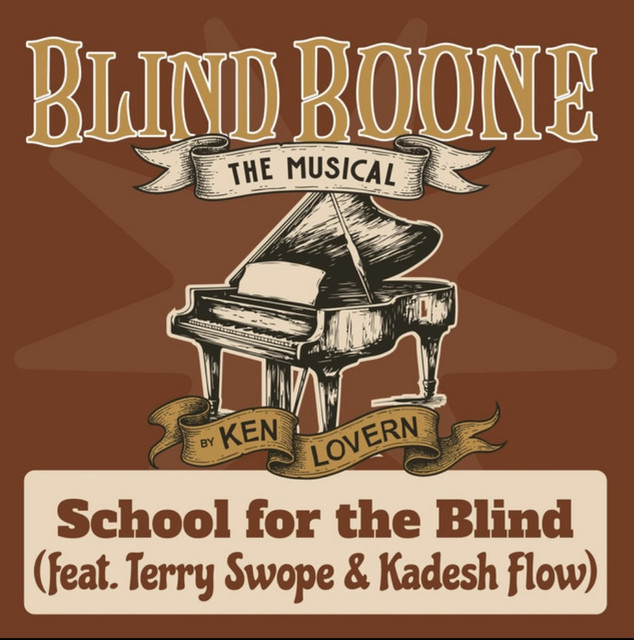
When Ken Lovern set out to create Blind Boone the Musical, he wasn’t simply writing songs. He was uncovering an overlooked chapter of American history. Through an ambitious blend of jazz, theatrical storytelling and historical research, the Kansas City composer and jazz organist is bringing the remarkable life of Missouri pianist John William “Blind” Boone to a whole new generation.

The project’s latest single, “Quindaro,” shifts the focus from Boone himself to the courageous journey of his mother, Rachel, bringing together the story of the Underground Railroad, the historic free state town of Quindaro, and the events that ultimately shaped one of America’s most extraordinary musicians. Accompanied by a striking visual narrative that combines original comic book artwork, archival imagery and footage from the recording sessions, the release demonstrates the scale and vision behind Blind Boone the Musical.

We caught up with Ken to discuss the inspiration behind “Quindaro,” the symbolism woven into its music, the creative process behind the video and why preserving stories like Blind Boone’s has never been more important than now.

Tell us the story of this track. Why did you choose to visualize it specifically in this way?

Quindaro is part of the story of Rachel Boone as told in the musical historical fantasy, “Blind Boone the Musical.” 

The song’s setting is just before sunset in late Summer 1863, near Miami, Missouri in north central Missouri.  A group of escaped and freed former enslaved persons, called “contrabands” by the Union Army, are heading west to Kansas in search of freedom and a better life.  Their immediate goal is to reach the river port town of Quindaro on the Kansas side of the Missouri river and a known stop on the Underground Railroad.  They sing to tell their story and their reasons for heading to the Free State of Kansas.

At dawn, the freedom seekers continue walking west to Quindaro.  Rachel twisted her ankle the previous day, and it has swollen through the night.  She is unable to walk.  She will remain in central Missouri and give birth to John William Boone, who will become the prodigy and performing legend “Blind Boone.”

The cowbell beat that begins Quindaro is a standard “bell pattern” that forms the basis for much of the music of sub-Saharan Africa.  The migration of this cross-rhythmic figure into the Americas introduced new rhythms to American music that did not exist in Europe.  Some musicologist trace the “swing” of American blues and jazz to this pattern.  

In the song Quindaro, the bell pattern remains consistent while the underlying pulse of the shaker and the bass drum alternate from a 6/8 beat to a 4/4 beat.  Shifting the underlying pulse from 6/8 to 4/4 symbolizes the forced migration of the Africans to the Americas.

What was the inspiration behind this new video (visuals , storyline, etc.)?

The video features art from the companion comic book, video from the recording sessions, photos, and historical maps and drawings.  My goal was to tell the story of the freedom seekers along with the experience of the musicians.  The viewer can see through the maps and drawings the perilous journey from the Missouri side of the river at Parkville to the Kansas side of the river at Quindaro.

What was the process of making the video?

To create the video, I drew on images from several sources.  To present the story of Blind Boone the Musical in a clear and linear manner, I collaborated with Gutter Studios to develop a comic book adaptation.

While recording Quindaro, I filmed videos of the musicians performing.  I interspersed those videos with the comic book images and vintage maps and drawings to visually tell the story.

The video represents the dramatic story of freedom seekers from one hundred and sixty-three years ago and the joy of musicians performing today. 

Connect with Ken Lovern and Blind Boone the Musical HERE

“Hell’s Kitchen at Christmas Time” – A Soulful Holiday Tribute to New York City

Hell-s-Kitchen-at-Christmas-Time-cover

“Hell’s Kitchen at Christmas Time” is a vivid and vibrant musical journey that celebrates the spirit of a New York neighborhood steeped in history and transformation.

Co-written by Sarah Pillow and Marc Wagnon, the track marries Pillow’s evocative, rich and genre defying vocals with Wagnon’s rhythms and textures, creating a holiday song that perfectly captures the magic of Hell’s Kitchen during this busy season.

Listen in here:

Sarah Pillow’s voice is the star of the song here. She offers a stunning blend of jazz sophistication, classical finesse and rich warmth. Her vocal delivery feels more like a conversation and draws the listener into her world that she paints with her words.

Pillow’s decades long connection to Hell’s Kitchen, where she has lived for nearly 30 years, imbues this song with an authentic edge. Her nuanced performance speaks of a deep love for the neighbourhood with each lyric having a personal touch.

Marc Wagnon’s arrangement brings this love letter to life with a rich, layered instrumental palette: the vibraphone glistens like freshly fallen snow, while his percussion adds a dynamic pulse that reflects the neighborhood’s ever-moving rhythm.

The brass section featuring Summer Camargo (trumpet), Coby Petricone-Berg (alto sax), and Cole Palensky (tenor sax) really infuses the song with warmth and vibrancy, echoing the bustling energy of Manhattan’s streets.

Eliane Amherd’s guitar provides a melodic anchor and balances the richness of the brass with a steady, grounding groove, while Jonathan Price’s bass ties it all together with depth.

The song’s lyrics are as much about Hell’s Kitchen as they are about the essence of the holidays. They capture the duality of the neighborhood: the electric buzz of midtown Manhattan softened by the quieter charm of brownstones adorned with festive lights and local cafes humming with life. It’s a place where the pulse of New York City merges with the heart of a close-knit community.

Lines like “in it all, but off to the side” speak to the unique identity of Hell’s Kitchen – a neighborhood that is part of the city’s relentless energy that retains its own quiet magic.

But where “Hell’s Kitchen at Christmas Time” transcends the typical holiday song is by offering a deeper narrative. It’s not just about twinkling lights or festive cheer – it’s about the people, the stories, and the ambience that make a neighborhood feel like home. The song reflects on the enduring spirit of Hell’s Kitchen, a place that has weathered decades of change while holding onto its identity.

You can almost see the snow-dusted streets, hear the muffled conversations in cozy cafés, and feel the unique warmth of a neighborhood that welcomes everyone.

“Hell’s Kitchen at Christmas Time” is a celebration of place, and a reminder of what makes the holidays special: community, tradition, and the ability to find wonder even in the most familiar corners.

About Sarah Pillow

Sarah-Pillow-Head-Shot-1

Sarah Pillow is a vocalist celebrated for her extraordinary versatility, blending jazz, classical, and early music influences into a style uniquely her own.

A graduate of Oberlin College’s prestigious music program, Sarah began her career as a jazz singer and quickly expanded her repertoire, performing as a solo artist and collaborating with renowned ensembles across the United States and Canada. Her projects include a jazz quartet, the crossover ensemble Nuove Musiche, and the early music group Galileo’s Daughters.

Her distinctive voice – rich and vivid, praised by The Washington Post as “genuinely genre-busting” – has graced the stages of legendary venues like the Lincoln Center and Carnegie Hall. Whether delivering an operatic aria or interpreting a jazz standard, she captivates audiences with her emotional depth and technical brilliance.

For nearly 30 years, Sarah has called Hell’s Kitchen home. This iconic New York City neighborhood is steeped in history and creativity and has been a profound source of inspiration for her work. From its roots as a gritty, working-class enclave to its evolution into a vibrant cultural hub, Hell’s Kitchen embodies the energy that Sarah channels into her music.

Sarah Pillow continues to redefine what it means to be an artist. Her work is a celebration of connection – between past and present, tradition and innovation, and the universal language of music.

Connect with Sarah Pillow here.

Stream music on Spotify, Apple Music, Soundcloud and YouTube Music.