Some of the most important moments in a person’s life happen before anyone knows what they will become. A child displays an unusual gift, someone takes notice and a single act of encouragement can alter the course of a life. For John William “Blind” Boone, one of America’s great musical pioneers, that moment came when a former Confederate general recognised something extraordinary in a young boy and decided he deserved the opportunity to develop it.
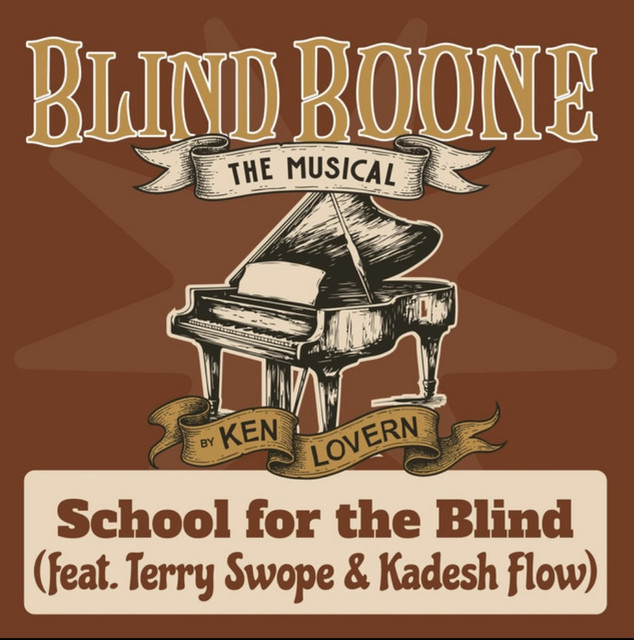
“School for the Blind,” the third single from Kansas City composer and jazz organist Ken Lovern’s Blind Boone the Musical, tells that remarkable chapter in Boone’s story. Set in post Civil War Missouri, the song explores Francis Cockrell’s efforts to persuade the people of Warrensburg to help nine-year-old Boone travel to St. Louis to study music at the Missouri School for the Blind.
The accompanying video brings that history into the present, combining artwork from the project’s companion graphic novel with archival photographs, historical imagery and footage of the musicians recording the song.
We caught up with Ken to talk about the remarkable relationship between Cockrell and Boone, the importance of showing the community that helped nurture the young musician’s talent, and the creative process behind bringing this pivotal chapter of Blind Boone the Musical to life on screen.
Tell us the story of this track. Why did you choose to visualize it specifically in this way?
In the song “School for the Blind,” former Confederate General Francis Cockrell is convincing the town of Warrensburg, Missouri to help young John Boone attend the Missouri State School for the Blind in St. Louis.
After the Civil War, Blind Boone’s mother, Rachel Boone, finds employment in the home of Francis Cockrell. Cockrell is immediately taken with young John Boone. Boone is a cheerful, charming, and enchanting child, and he imitates bird calls and other sounds he hears. Boone plays the tin whistle and forms a musical group with the other neighborhood children. He is a very talented child with a lot of potential.
Cockrell becomes a champion for Boone, and arranges for Boone to attend the Missouri School for the Blind in St. Louis where Boone can study music. Cockrell convinces the town elders to help him finance the education and the train fare to St. Louis. In the fall of 1872, nine-year-old Boone travels alone 225 miles to St. Louis. While Boone only attended this school for a few semesters, this time was instrumental in developing his ability to play piano. Francis Cockrell was correct when he realized that Boone had talents that deserved cultivating, and he convinced an entire town to help.
What was the inspiration behind this new video (visuals, storyline, etc.)?
I wanted to show the musicians creating the music for this track, and I also wanted to tell the story of the town of Warrensburg supporting young John Boone.
What was the process of making the video?
I used images from the Blind Boone the Musical comic book and historical images to help tell the story. I was particular interested in trying to explain Francis Cockrell’s motivation in helping this child of a former enslaved person.
I used video images captured during the recording of the track to show the musicians. My intent was to weave the musician images with the historical images and comic book art to convey the captivating story of Blind Boone.
Keep up with Ken Lovern and Blind Boone the Musical here.

