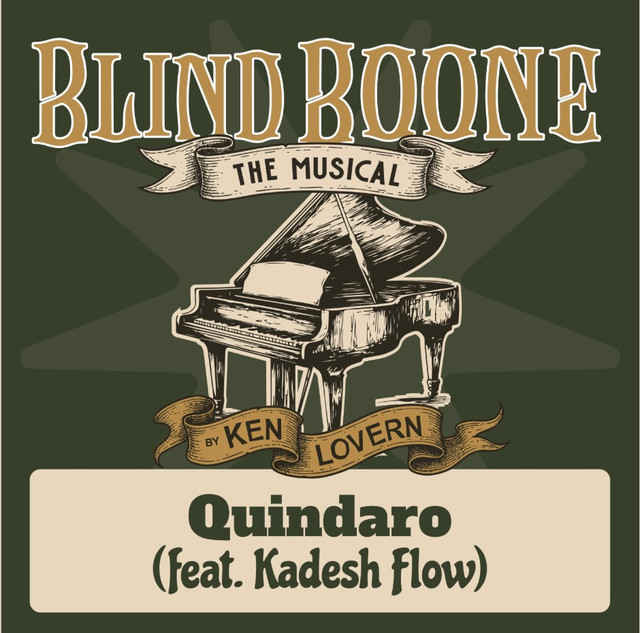
VIDEO VOYAGEUR: 3 Q’S WITH KEN LOVERN

blindboone

When Ken Lovern set out to create Blind Boone the Musical, he wasn’t simply writing songs. He was uncovering an overlooked chapter of American history. Through an ambitious blend of jazz, theatrical storytelling and historical research, the Kansas City composer and jazz organist is bringing the remarkable life of Missouri pianist John William “Blind” Boone to a whole new generation.

The project’s latest single, “Quindaro,” shifts the focus from Boone himself to the courageous journey of his mother, Rachel, bringing together the story of the Underground Railroad, the historic free state town of Quindaro, and the events that ultimately shaped one of America’s most extraordinary musicians. Accompanied by a striking visual narrative that combines original comic book artwork, archival imagery and footage from the recording sessions, the release demonstrates the scale and vision behind Blind Boone the Musical.

We caught up with Ken to discuss the inspiration behind “Quindaro,” the symbolism woven into its music, the creative process behind the video and why preserving stories like Blind Boone’s has never been more important than now.

Tell us the story of this track. Why did you choose to visualize it specifically in this way?

Quindaro is part of the story of Rachel Boone as told in the musical historical fantasy, “Blind Boone the Musical.” 

The song’s setting is just before sunset in late Summer 1863, near Miami, Missouri in north central Missouri.  A group of escaped and freed former enslaved persons, called “contrabands” by the Union Army, are heading west to Kansas in search of freedom and a better life.  Their immediate goal is to reach the river port town of Quindaro on the Kansas side of the Missouri river and a known stop on the Underground Railroad.  They sing to tell their story and their reasons for heading to the Free State of Kansas.

At dawn, the freedom seekers continue walking west to Quindaro.  Rachel twisted her ankle the previous day, and it has swollen through the night.  She is unable to walk.  She will remain in central Missouri and give birth to John William Boone, who will become the prodigy and performing legend “Blind Boone.”

The cowbell beat that begins Quindaro is a standard “bell pattern” that forms the basis for much of the music of sub-Saharan Africa.  The migration of this cross-rhythmic figure into the Americas introduced new rhythms to American music that did not exist in Europe.  Some musicologist trace the “swing” of American blues and jazz to this pattern.  

In the song Quindaro, the bell pattern remains consistent while the underlying pulse of the shaker and the bass drum alternate from a 6/8 beat to a 4/4 beat.  Shifting the underlying pulse from 6/8 to 4/4 symbolizes the forced migration of the Africans to the Americas.

What was the inspiration behind this new video (visuals , storyline, etc.)?

The video features art from the companion comic book, video from the recording sessions, photos, and historical maps and drawings.  My goal was to tell the story of the freedom seekers along with the experience of the musicians.  The viewer can see through the maps and drawings the perilous journey from the Missouri side of the river at Parkville to the Kansas side of the river at Quindaro.

What was the process of making the video?

To create the video, I drew on images from several sources.  To present the story of Blind Boone the Musical in a clear and linear manner, I collaborated with Gutter Studios to develop a comic book adaptation.

While recording Quindaro, I filmed videos of the musicians performing.  I interspersed those videos with the comic book images and vintage maps and drawings to visually tell the story.

The video represents the dramatic story of freedom seekers from one hundred and sixty-three years ago and the joy of musicians performing today. 

Connect with Ken Lovern and Blind Boone the Musical HERE
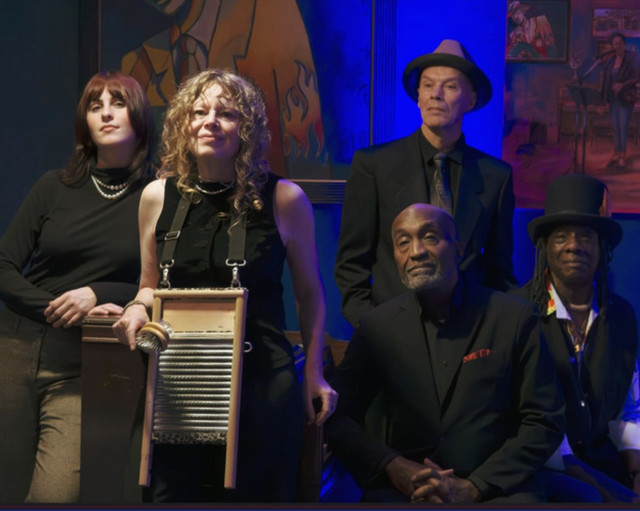
VIDEO VOYAGEUR: 3 Q’s WITH jen M

Jen M

With “Why Don’t You Do Right?”, jen M steps into a new artistic chapter while staying deeply rooted in the blues tradition that shaped Lil’ Red & The Rooster. Featuring Grammy nominated pianist Bobby Floyd alongside collaborators Lauren Tucker, G-Louis, and The Governor this track transforms a familiar jazz standard.

Built from the scratch of a washboard, the sway of bongos, a weathered upright piano, and the twang of a gitjo, the recording creates the atmosphere of a cold New York apartment where survival matters more than glamour. Rather than romanticizing wealth and escapism, jen M’s interpretation focuses on the emotional toll of hard times and the complicated tenderness of tough love. The accompanying video expands that idea visually, contrasting the elegance of a vintage jazz-club setting with the modern reality of working musicians, phone screens and a culture that often consumes art while undervaluing the artists who create it.

At once intimate and socially observant, “Why Don’t You Do Right?” marks the debut of jen M as a solo project and signals an exciting evolution in her creative voice: genre fluid, collaborative, and driven by instinct, storytelling and atmosphere rather than convention.

Tell us the story of this track. Why did you choose to visualize it specifically in this way?

When I hear the lyrics of “Why Don’t You Do Right?” I imagine a young woman demanding her man become her sugar daddy to drape her in diamonds and furs. I don’t relate to that. I imagine a NYC apartment with high ceilings and a bone chill in the air — radiators clanking, electricity flickering. A woman frustrated with her partner worn down into laziness by an oppressive world. Starving, tough love is all she has left to give to get him back on his feet. 

To create this soundscape in the studio I layered the scratch of a washboard with bongos to create the atmosphere. There was a perfectly out-of-tune upright in the corner that Bobby Floyd brought to life. It was like listening to a 1920’s barroom. G-Louis added a soft simple bass line and his banjo guitar with the perfect twangy texture. I wanted to turn the song into a duet. We didn’t think too much about why there are two women in this situation, we leave that up to your imagination. I didn’t need to give Lauren much direction we entwined our voices instinctively in the moment. It only took two takes. That created the music. 

I’m a very intuitive creator. I love puzzles. In grad school at Naropa University, I studied a technique for theatre creation called Moment Work by Moises Kauffman. In this technique you start with a story or idea or question or theme and then instead of writing a story you create moments that relate to the theme. They can be anything. Once you have them you weed them and then arrange them like pearls on a string. I love this way of working. It doesn’t have to be linear or necessarily clear point to point. It can be a series of impressions, senses and experiences. So, for this project, I didn’t want to tell the story of the lyrics or my impression of them. I think it’s strong enough in the music. I didn’t want to explain. I want it to be a different experience for everyone. 

What was the inspiration behind this new video (visuals, storyline, etc.)?

I wanted to play with the dichotomy between the musicians on stage making the same hundred bucks a gig they did in the 80’s and a wealthy public of art lovers. They all love music and that love becomes the excuse for a culture to starve their artists because … well, “they love what they do.” And we do, and we’d love to live better without begging for each dollar. So we have that artist cry for culture to do better and get us some money too. 

So, I asked our fans to come to our favorite coffee shop Java Central in my home town Westerville, Ohio dressed to the nines. I told them to not hold back, bring out those diamonds and pearls and they did, including my mom. We put white table cloths on the tables with crystal wine and cocktail glasses. Dimmed the lights and turned it into a NYC jazz club vibe. 

I’m also fascinated by the new phone filming art trend. I’m not anti or pro, I accept it for what it is, a new way of sharing art with others. I wanted to bring that element into the video like a veil over being present in the moment. Veil’s can have their beauty too. 

Another element I wanted to explore was using black & white of the past in contrast to vivid color of now.

What was the process of making the video?

Our friend and videographer Bill Jingo helped me set up a GoPro, iPad and iPhone as three static full scene camera angles. Then he shot close-ups with a hand-held iPhone holder. The venue has stage lighting and a really beautiful blue wall next to brick and an old upright piano. I chose the space for that blue wall. There’s also a painting of a dear friend and fellow musician who passed away a few years back. 

The band came dressed for a high-end gig. I played the recording live and we doubled it with voices and instruments, which meant we all had to relearn our parts. It’s not as easy as it sounds. The fans sat down in front of the stage and played their part. We did three takes plus close-ups. One take I asked them to get their phones out and film the soloists. They got really into it with one guy doing a selfie with the band in the background. The footage is really quite beautiful when layered over like that veil I was referring to. 

My favorite moment is a slow motion money grabbing moment. I took the tip jar and grabbed all the money and threw it in the air. All the musicians grabbed for it while the audience was filming it with their phones. Funny thing, one bill got stuck in the ceiling panels.  

Another funny moment, while filming Bobby’s closeup on his solo, G-Louis started playing his gitjo behind his head like an electric guitar. The public started laughing of course and Bill caught Bobby and Governor’s expression of delight and surprise. I didn’t use the behind the head shot, but the shot of Bobby and The Governor is in the video. Look for it during the guitar solo. 

Bill did such a beautiful job with the filming that editing was effortless. It was all intuitive. When I finished I realized I’d naturally bookended the video in black & white with the washboard. 

Video Voyaguer: 3 Q’s with Sarah Pillow

Nestled just steps away from the dazzling lights of Times Square and the world-famous Rockefeller Center Christmas Tree, Hell’s Kitchen offers a striking contrast to Midtown Manhattan’s holiday frenzy.

It’s a neighborhood that pulses with history, resilience, and creativity – a vibrant mix of artists, shopkeepers, and locals who form the backbone of its enduring charm.

In her latest holiday single music video, “Hell’s Kitchen at Christmas Time,” Sarah Pillow and the team at Buckyball Music captures the spirit of this unique corner of New York City.

Part love letter, part festive celebration, the video is a heartfelt tribute to the small businesses, quiet streets, and resilient community that make Hell’s Kitchen feel like home. Even as the chaos of the holidays unfolds just a few blocks away.

With playful nods to iconic New York traditions, from the Macy’s Thanksgiving Day Parade to the glittering Fifth Avenue window displays, the video weaves together a narrative that celebrates both the hustle and the haven that define Hell’s Kitchen. Featuring a talented ensemble of musicians, actors, and local shopkeepers, it’s a project that shines a light on the people and places that keep the neighborhood alive.

Watch here:

We asked Sarah to tell us about the inspiration behind the song, the challenges of filming in the heart of Manhattan, and why shopping locally is more important than ever during the holiday season.

1.Tell us the story of this song, why did you choose to visualize this song specifically in this way?

I’ve lived in Hell’s Kitchen since 1996, and while the neighborhood has evolved over the years, it has managed to retain its unique charm. I was reading about how local businesses are struggling due to reduced foot traffic as more people turn to online shopping.

This inspired us to create a fun holiday video celebrating our neighborhood – the artists, the community, and the small businesses that make it special.

The holidays are an especially meaningful time here, as we’re right next door to one of the busiest places in the world during this season.

2.What was the inspiration behind this new video (visuals, storyline, etc.)?

    We were inspired by the juxtaposition of our quiet neighborhood nestled right next to Times Square – the center of the world, especially during the holidays – which led to the lyric, “you’re in it all, but off to the side.” 

    The storyline follows me navigating the chaos of Midtown Manhattan – Times Square, Rockefeller Center, and Saks – while also highlighting the anchors of my neighborhood: Hudson River Park, Restaurant Row, and long-standing local businesses that have been part of the community for decades.

    It’s a celebration of their resilience and enduring spirit.

    3.What was the process of making the video?

      We invited some actor friends to play the roles of crazy holiday shoppers and collaborated with our colleague Eliane Amherd – also a Hell’s Kitchen local – to play guitar and sing with me. For the horn section, we enlisted three excellent horn players who were students at the time (one has since joined the band of Saturday Night Live). The marching at the beginning of the video is a nod to the Macy’s Thanksgiving Day Parade.

      We visited some of our favorite local businesses and asked if they’d like to participate, celebrating the importance of shopping locally.

      We also wanted to feature the musicians, highlighting the artists and performers who make New York City so vibrant. Filming took place in our studio, along the West Side Highway, driving through the streets of Hell’s Kitchen, on our rooftop, and even in front of Saks Fifth Avenue (who were surprisingly cool about it). To add to the festive spirit, we included Manhattan holiday window displays in one segment of the song.

      Hell’s Kitchen at Christmas Time

      Sarah Pillow, vocals

      Marc Wagnon, drums, percussion and vibraphone.

      Eliane Amherd, guitar and vocals

      Summer Camargo, trumpet

      Coby Petricone-Berg, alto sax

      Cole Palensky, tenor sax

      Jonathan Price, bass

      Holiday Shoppers:

      Carol Scudder

      Robert Arthur Altman

      Justin Anderson Taylor 

      Thank you to these Hell’s Kitchen shopkeepers:

      Garden Hardware, 10th Avenue

      Westside Animal Hospital, 10th Avenue

      Poseidon Bakery, 9th Avenue

      Sullivan Street Bakery, West 47th Street

      Thriftway Pharmacy, 10th Avenue

      Spoiled Brats, West 49th Street

      Fine and Dandy, West 49th Street

      Ismael Cruz, West 49th Street Caretaker

      Skyline Deli, 10th Avenue

      Find out more about Sarah Pillow on her Website