There is a kind of honesty that comes from looking back at difficult experiences without pretending they never happened, and without allowing them to define everything that follows. On “Damages,” the latest single from Animals in Denial, Christian Ines explores that difficult territory with a song that feels as much like a private reckoning as a piece of music. Intimate in its arrangement and deeply personal in its subject matter, it considers what happens when trust is broken, the foundations we have built our lives upon begin to shift, and we are left to work out what to do with the pieces.
Originally released on Millennial, “Damages” has now been revisited by Ines, who has taken the opportunity to restore vocal parts and harmonies that he had originally envisaged but could not fully realise with the recording equipment available at the time. The updated version brings the song closer to his original intentions, allowing its emotional subtleties to emerge while preserving the understated character that made the recording work in the first place.
Listen here:
Musically, the appeal lies in its simplicity. Built around a vintage Stratocaster and bass, the arrangement has an immediacy that more elaborate production might have obscured. Ines kept the very first guitar take, played on his ’50s Stratocaster using a capo and the neck pickup, trusting the instinctive quality of that initial performance rather than pursuing a technically polished alternative. The bass, played on his wife’s Rogue, brings its own character to the song and reflects a period in which he was beginning to understand the instrument as something more than a means of reinforcing the guitar.
There is no need for a conventional drum part or a towering wall of sound. Instead, the instruments occupy a space that feels almost domestic, as though the listener has arrived in a room where the song is unfolding in real time. A vinyl effect at the beginning creates the impression of tuning into a radio station just as the music starts, a small production detail that establishes the atmosphere without drawing attention away from the performance. It is an inviting introduction to a song whose emotional subject matter is considerably more complicated than its modest arrangement might initially suggest.
That contrast is central to the track’s appeal. Ines is more interested in the lasting effects of broken trust, and in the slow, often difficult process of understanding how those experiences have shaped the person he has become. The song draws on his experiences of relationships, people and institutions that have failed to live up to the trust he placed in them, including events that began early in his life and influenced how he came to understand the world around him.
Yet this is not simply a song about disappointment. Its deeper concern is what happens after the initial hurt, when the immediate crisis has passed but the consequences remain. How do you rebuild your sense of security? How do you learn to trust again without ignoring what experience has taught you? And how do you move forward when the person you become in the process is inevitably different from the person you were before?
Ines approaches these questions with a refreshing lack of sentimentality. Healing is not presented as a neat return to the way things were, nor does the song suggest that difficult experiences can simply be erased. Sometimes the pieces do not fit together as they once did. You have to find a different way of putting them together, accepting that change is part of the process rather than evidence that something has been lost forever.
The decision to revisit “Damages” also gives the song an interesting second life. Restoring the backing vocals and harmonies has allowed Ines to hear the track closer to the way he originally imagined it, but the process is about more than correcting the limitations of an earlier recording. It is also an opportunity to reconsider a deeply personal piece of work from a different point in his life. The song remains connected to the experiences that inspired it, but the perspective surrounding those experiences has evolved.
Ultimately, “Damages” is about acknowledging what has happened without surrendering the future to it. The title might suggest something broken beyond repair, but the song arrives at a more complicated and ultimately hopeful understanding. Damage can leave its mark. It can alter the way we see ourselves, the people around us and the possibilities ahead. But it does not have to determine the outcome.
Sometimes moving forwards means accepting that you will never be quite the same person again. “Damages” understands that, and finds something quietly powerful in the realisation that this need not be a bad thing.
Keep up with everything Animals In Denial on the Website
Lila Forde isn’t trying to sound like anyone else. She’s too busy becoming herself.
With a voice steeped in jazz, soul, folk, and old-school American songcraft, the Seattle-born, Los Angeles-based singer/songwriter has always carried a deep sense of self through her music. But on Life Can Still Be Sweet, her sophomore album, that self comes into fuller focus: A little older, a little wiser, more instinctive, and more firmly in command of the world she’s building. Warm, whimsical, and full of growing pains, the record captures Forde in the thick of her twenties – chasing songs, learning lessons, finding her people, and holding onto beauty even when life gets hard.
“I think I have a really unique voice – not just my literal voice, but my proverbial voice,” Forde says. “In this day and age, and in this industry, there’s a lot of trend following, and there’s a lot of homogeny. I’m just really trying to be my own artist.”
That individuality has been there from the beginning. Raised in a spiritual, music-filled household in Seattle, Forde grew up without a television and with her feet in the dirt – the daughter of a musician and meditation teachers who encouraged her to stay curious, grounded, and creatively free. She sang in choirs, studied jazz in college, and steeped herself in the classics, from Bonnie Raitt and Carole King to Ella Fitzgerald and Nancy Wilson, while developing a soulful Californian sound that feels unmistakably her own.
Her 2025 debut album Vessel introduced that world with grace and intention. A confident, cathartic coming-of-age record, it arrived after Forde’s Top 5 run on Season 24 of The Voice, but it was never defined by the television spotlight. If anything, Vessel affirmed what had already been true: “I want to be a vessel for the music,” she said at the time. “I’m here to serve it.”
A year later, Forde sees that debut as both a milestone and a mirror. “You put out a record and it’s like a past version of yourself,” she says. “As time goes on, you start to view the record in a different way, almost as a diary entry.” She remains proud of Vessel – proud to hand the vinyl to fans on the road, proud to call it her first record – but she also hears the distance between who she was then and who she is now. “It does feel like a different Lila at this point,” she reflects. “It feels like a very special debut marker on my career.”
Life Can Still Be Sweet is the sound of that next Lila arriving in real time. Where Vessel was recorded before The Voice and released after a long gestation, this new record feels present in her hands – immediate, timely, and deeply connected to the life she’s living now. “I feel really excited, like it’s an alive thing,” Forde says.
The past year, for Forde, can be summed up in one word: Collaboration. Since releasing Vessel, her world has “exploded like a garden blooming,” full of new friendships, new creative relationships, and new musical possibilities. Unlike her debut, which was made with producer Aidan Carroll, Life Can Still Be Sweet came together through a wider constellation of players and co-writers, including Joey Dosik, Marcel Camargo, Kaveh Rastegar, Larry Goldings, Ryan Lerman, Eva Scow, Misha Adair, her brother, and the band she formed and toured with over the past year.
Yet for all its moving parts, Life Can Still Be Sweet is unmistakably Forde’s record. “It’s produced by me,” she says. “There’s a bunch of different producers and collaborators throughout the whole thing, but I am the one who put the baby together, and is fully holding the baby.” In making it, she learned she did not need to hand the songs off to someone else and hope they came back sounding like her. She could trust her instincts, make the final decisions, and steer the boat herself.
That confidence lends Life Can Still Be Sweet its shape. The record glows with Laurel Canyon warmth, old-school soul, country twang, jazz-rooted phrasing, Hammond organ, three-part harmonies, and live-band richness – a mature, cohesive sound that feels both easygoing and deeply considered. “We had just gotten off the road, and we had two days in the studio, so we just went in there and recorded all the songs as we had just played them on the road,” she says. “My band is such a huge part of this record.” This lived-in energy is the album’s pulse. These are songs made by real people in rooms together, shaped by chemistry, instinct, and the kind of trust that only comes from playing night after night.
The title track sits at the heart of it all. Forde began writing “Life Can Still Be Sweet” while she was on The Voice, stuck in hotel rooms in Burbank, singing the same songs over and over, her creative bandwidth stretched thin. A verse slipped out anyway: “Where’d all the time go? / I’ve been looking out this window for way too long.” The rest came later, but the feeling stayed the same – a reminder that even inside chaos, uncertainty, and exhaustion, life can still be “the most delicious thing.”
“The 20s are a very wild and exciting time,” Forde says. “They’re strange and they’re unfamiliar, and it’s just full of growth… You’re like a toddler outside, and you’re just figuring out who you are as a person.” For her, the song came to represent this entire chapter: Living in Los Angeles, making music for a living, learning how to stand on her own, and finding sweetness inside the scramble. “There’s devastation, and there’s change, and there’s heartbreak, and there’s all this stuff,” she says. “But through it all, life can still be sweet.”
That phrase holds even deeper meaning in the context of Forde’s family. Her mother, a classical pianist, was diagnosed with Parkinson’s three years ago – a reality that has reshaped the past few years of Forde’s life and found its way into the emotional core of the album. Watching her mother navigate the disease has been “really sobering,” she says, but it has also illuminated the title’s truth in a more profound way. “Life for her is so different now, and it’s so challenging,” Forde reflects. “And yet, she said to me, life can still be sweet, you know? You walk the dog, you eat a delicious meal. She comes to my concerts and my shows.”
Forde’s love for her mother comes through most directly on “Molly,” the album’s aching, heart-on-sleeve ballad. Written for the woman she calls her role model – “a little firecracker, very charismatic, like, the belle of the ball” – the song rises into a wailing chorus that calls out her name with tenderness and grief. It’s the record’s most devastating moment, but also one of its purest expressions of love: A daughter singing toward the person who helped make her who she is.
Elsewhere, Life Can Still Be Sweet captures the lighter, stranger, funnier edges of growing up. “No Space” turns the beautiful impossibility of cohabitation into a twangy, hook-filled release, written after a tense moment in a crowded Glassell Park house with roommates, girlfriends, dog hair, dishes in the sink, and rain outside with nowhere to escape. “There’s all these little stories in this record that I feel like encapsulate what it’s like to be, like, a 20-something girl,” Forde says. “Having roommates is one of them.”
“Do It All Over,” written with Marcel Camargo and Joey Dosik, may be her favorite track on the album – a breezy, playful groove born from a beach day and the desire to bottle that feeling of waves, friends, lovers, and sunlit nostalgia. The song’s chemistry reflects the joy of its creation, bringing together Camargo’s Brazilian guitar sensibility, Dosik’s soulful craft, and Forde’s own warmth into what she describes as “just like a party.” “My music is not gonna make you rage,” she says. “It’s not necessarily gonna make you cry, but it’s just gonna make you feel really good. Like, you’re sitting on the porch.”
On “Fantasies,” co-written and recorded with Kaveh Rastegar, Forde flirts with indie pop while letting her imagination run wild. Built around an acoustic bass percussion part Rastegar played by literally knocking on the instrument, the song captures the dizzy, looping feeling of wanting someone whose real-world presence cannot quite live up to the version in your head. “This song is sort of about thinking about somebody more than they’re thinking about you,” Forde says, “and just running and running and running in your head with the fantasies.”
Forde turns inward on “Wildflowers,” a simmering, jazz-kissed realization that something has reached its end. Originally written about the dissolution of a female friendship, the song has continued to shift meaning for Forde over time, opening itself to romantic endings and other moments when the truth suddenly becomes impossible to avoid. “It’s just that sort of feeling when you see clearly, all of a sudden,” she says. “And it’s tragic, and it’s so sad, but it’s just like, the truth is the truth.”
That willingness to let songs keep changing is part of what makes Life Can Still Be Sweet feel so alive. “Life Can Still Be Sweet” means something different to Forde now than it did when she wrote it. “Wildflowers” has grown beyond the friendship that inspired it. Vessel already feels like a diary entry from another self. For Forde, music becomes a series of snapshots – not fixed monuments, but living documents of who she was, who she is, and who she is becoming.
Right now, that becoming feels golden. Forde describes this chapter as her “Roaring Twenties,” a sweet, scrappy era of development before everything gets bigger, heavier, and more complicated. “I know I’m going to look back at this point in my life and recognize it as a really sweet era of development,” she says. “It feels very feminine and girly, but it’s sort of girl becomes woman in some ways. I’m learning the lessons that will cement me into womanhood.”
Life Can Still Be Sweet is full of those lessons: Love should lift you, not drag you uphill. Home is a place full of ghosts, stories, and characters. Friendship can break your heart. Desire can make fools of us. Family illness can change everything without taking away beauty. Life can be wild, strange, and hard, and still offer a walk with the dog, a delicious meal, a room full of music, a gorgeous day.
“I hope that listeners can see the world in that way,” Forde smiles. “That even when the walls are caving in, everything’s crashing down. You can still look up and realize that life can still be sweet.”
That is the gift of this record: Not false optimism, not denial, not sweetness as an escape from struggle, but sweetness as something that survives inside it. With Life Can Still Be Sweet, Lila Forde captures herself in motion – growing, grieving, laughing, loving, leading, and learning to trust the voice that has always been hers. It’s a coming-of-age record for the moment when girl becomes woman, artist becomes architect, and the life you’re building starts to feel undeniably your own
10/18 – Los Angeles, CA – Zebulon (w/ Anna Ash)
10/28 – San Diego, CA – Soda Bar (w/ Anna Ash)
11/7 – Portland, OR – The Jack London Revue (Zan Fiskum supporting)
11/9 – Seattle, WA – Fremont Abbey (Zan Fiskum supporting)
11/11 – San Francisco, CA – The Lost Church – (Hazle Nova supporting)
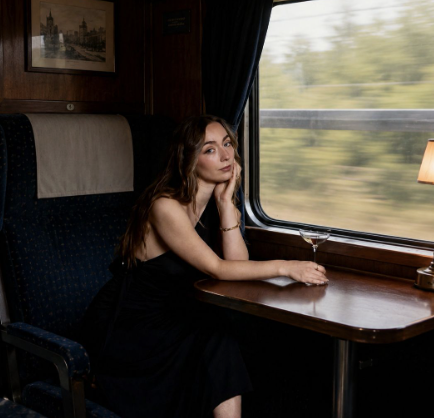
Canadian independent artist and songwriter Tilsen shares “Train To Vienna,” a bittersweet and emotionally charged alt-pop single inspired by the true story of ending a relationship aboard a train bound for Vienna. Pairing intimate autobiographical storytelling with an arrangement that steadily expands into something bigger and more cathartic, the track captures the difficult realization that loving someone doesn’t always mean a relationship is healthy enough to survive.
While its title sounds like the setup for a film, its cinematic quality comes directly from real life. Turning the experience into a song allowed Tilsen to return to that pivotal moment with the distance necessary to see both sides of it, finding compassion and perspective within a decision that had initially been incredibly painful.
The setting is as literal as it sounds. While travelling by train to Vienna with her then-boyfriend, Tilsen reached a breaking point after realizing his insecurity had begun consuming too much of their relationship. Though she still cared deeply for him, she knew staying together was no longer right for either of them.
“The song captures that moment of knowing you have to leave someone even when you still care about them, and trusting that eventually, you’ll both be better off,” Tilsen explains.
That complexity is central to Tilsen’s approach to songwriting. Rather than reducing relationships to heroes and villains, she gravitates toward the complicated psychology behind the ways people love, hurt, need, and ultimately leave one another. “I’m rarely interested in making someone completely the villain or myself completely the victim,” she says. “Even in painful stories, I’m usually looking for some kind of understanding, growth or humanity.”
For “Train To Vienna,” that process was particularly collaborative. Tilsen wrote the song alongside Bryn McCutcheon and Kirstyn Johnson as well as Jules/444BOY, a close friend she met abroad who had been with her immediately before the fateful train ride and knew what was about to happen. Their proximity to the story helped transform an intensely personal memory into something larger and more universal.
The production follows a similar trajectory. Blending live instrumentation with electronic pop elements, the arrangement was designed to continually expand, allowing the intimate details of the verses to gradually give way to the scale and emotional release of a full-bodied pop record.
“We wanted the production to feel like it was continually expanding,” Tilsen shares. “I wanted it to feel organic and emotional without losing the scale and energy of a pop record.”
Ultimately, “Train To Vienna” isn’t about regretting a relationship or resenting the person left behind. Instead, it captures the courage required to recognize when love alone is no longer enough and to trust that walking away can sometimes be an act of compassion for everyone involved.
“I had a hard time leaving at the right time in previous relationships, but this time I really listened to myself,” Tilsen says. “I’m happy to have captured that moment for me.”Canadian independent artist and songwriter Tilsen shares “Train To Vienna,” a bittersweet and emotionally charged alt-pop single inspired by the true story of ending a relationship aboard a train bound for Vienna. Pairing intimate autobiographical storytelling with an arrangement that steadily expands into something bigger and more cathartic, the track captures the difficult realization that loving someone doesn’t always mean a relationship is healthy enough to survive.
The setting is as literal as it sounds. While travelling by train to Vienna with her then-boyfriend, Tilsen reached a breaking point after realizing his insecurity had begun consuming too much of their relationship. Though she still cared deeply for him, she knew staying together was no longer right for either of them.
“The song captures that moment of knowing you have to leave someone even when you still care about them, and trusting that eventually, you’ll both be better off,” Tilsen explains.
While its title sounds like the setup for a film, its cinematic quality comes directly from real life. Turning the experience into a song allowed Tilsen to return to that pivotal moment with the distance necessary to see both sides of it, finding compassion and perspective within a decision that had initially been incredibly painful.
That complexity is central to Tilsen’s approach to songwriting. Rather than reducing relationships to heroes and villains, she gravitates toward the complicated psychology behind the ways people love, hurt, need, and ultimately leave one another. “I’m rarely interested in making someone completely the villain or myself completely the victim,” she says. “Even in painful stories, I’m usually looking for some kind of understanding, growth or humanity.”
For “Train To Vienna,” that process was particularly collaborative. Tilsen wrote the song alongside Bryn McCutcheon and Kirstyn Johnson as well as Jules/444BOY, a close friend she met abroad who had been with her immediately before the fateful train ride and knew what was about to happen. Their proximity to the story helped transform an intensely personal memory into something larger and more universal.
The production follows a similar trajectory. Blending live instrumentation with electronic pop elements, the arrangement was designed to continually expand, allowing the intimate details of the verses to gradually give way to the scale and emotional release of a full-bodied pop record.
“We wanted the production to feel like it was continually expanding,” Tilsen shares. “I wanted it to feel organic and emotional without losing the scale and energy of a pop record.”
Ultimately, “Train To Vienna” isn’t about regretting a relationship or resenting the person left behind. Instead, it captures the courage required to recognize when love alone is no longer enough and to trust that walking away can sometimes be an act of compassion for everyone involved.
“I had a hard time leaving at the right time in previous relationships, but this time I really listened to myself,” Tilsen says. “I’m happy to have captured that moment for me.”
Alternative artist Em Armstrong returns with “Steal My Heart,” a sultry, energetic, and emotionally charged new single that captures the complicated aftermath of a breakup when someone who walked away suddenly wants back in. Driven by moody alternative production and Em’s powerhouse vocals, the track explores the tension between lingering attraction and hard-earned self-protection, turning emotional whiplash into something bold, direct, and cathartic.
Written in her early twenties following the end of a relationship, “Steal My Heart” came from the frustration of watching someone leave, only to return once Em had begun putting herself back together.
“You took my heart and shattered it, but now that I’ve fixed it, you want to steal it all over again,” she explains.
That push and pull sits at the centre of the song. Rather than romanticizing the possibility of reconciliation, “Steal My Heart” captures the uneasy realization that wanting someone back does not undo the damage already done. The title becomes both an accusation and a warning, reflecting the emotional contradiction of still feeling something for a person while knowing exactly what they are capable of taking from you.
Em first wrote “Steal My Heart” after winning She’s The One Canada, an opportunity that connected her with songwriter and producer Derek Hoffman. Their collaboration happened during the COVID-19 pandemic, forcing the pair to write remotely over Zoom.
“Derek sent me three instrumental snippets before the session and we just dove right in,” Em recalls. “It was a very therapeutic session that I have only replicated once before.”
For Em, instinctive honesty is less a stylistic choice than a guiding principle. Her songs function like open diary entries, capturing experiences as they felt in the moment rather than smoothing them into something safer or more palatable.
“I’m always going to write my truth,” she says. “My songs are like diary entries that I leave open on my nightstand so anyone can see how I’m feeling. I’d rather be open and honest than make things up when life is full of crazy stories.”
Continuing a run of adventurous standalone releases, Strange Plants unveil “You Say Falling,” a hypnotic and anthemic psych-pop single that challenges conventional ideas of success, stability, and what it means to truly thrive. Wrapped in dreamy melodies, bouncy rhythms, and the band’s signature blend of retro-pop hooks and psychedelic textures, the track offers an uplifting reminder that the lives others misunderstand are often the ones lived most authentically.
At its heart, “You Say Falling” is about embracing a path that may look unconventional from the outside. Rather than conforming to expectations, the song celebrates the freedom that comes from trusting your own instincts, even when others mistake that journey for failure.
“The idea is that what looks like falling to you is flying to me,” explains songwriter Matt Brannon. “It’s about living a life that might be uncomfortable for those who witness and don’t understand yet it’s how you thrive.”
That reversal of perspective forms the emotional core of the song. Instead of treating uncertainty as something to fear, Strange Plants present it as a source of possibility, reframing vulnerability as liberation. The result is a song that feels both reflective and quietly defiant, encouraging listeners to define success on their own terms rather than through someone else’s expectations.
Musically, “You Say Falling” continues the band’s distinctive sonic evolution. Rooted in retro-pop, indie, and psychedelic rock, the track balances infectious melodies with richly textured arrangements, blending vintage influences with a modern sensibility that feels unmistakably Strange Plants.
“Our sound is retro pop with lots of rock and psych influences,” Matt says. “There’s always a healthy dose of weird without robbing it of its fun and listenability.”
While “You Say Falling” stands confidently on its own, it also forms part of a growing body of work that may eventually become the band’s next full-length record. Together with their recent releases, it continues to expand Strange Plants’ kaleidoscopic musical world while pushing their songwriting into increasingly adventurous territory.
Canadian singer-songwriter Shiloh Lindsey shares “Failing Hail,” a tender, bittersweet, and quietly hopeful alt-country ballad drawn from one of the most personal moments on her forthcoming album, The Western Veil, set for release on November 6th, 2026. Blending the warmth of Canadiana, indie folk intimacy, and roots rock restraint, the single transforms a late-night message between siblings into a moving meditation on resilience, compassion, and the ways we carry one another through life’s darkest seasons.
The song began not with a guitar, but with a text message. While Shiloh was recovering from the devastating motorcycle accident that nearly claimed her leg, her oldest brother found himself awake at two in the morning wrestling with demons of his own. Hoping, as he later told her, to “fool them with some nicer thoughts,” he wrote a poem and sent it to his younger sister.
Deeply moved by his words, Shiloh eventually transformed the poem into a song. “It became about the quiet ways we carry one another through difficult times,” she explains, “Sometimes hope comes from someone else when you’re having trouble finding it yourself.”
Its title comes directly from one of the poem’s most striking images: The bad times will fail like melting hail. The metaphor immediately resonated with Shiloh, who saw something profoundly comforting in the idea that even life’s fiercest storms cannot last forever. “Hail can arrive violently and suddenly and feel overwhelming while you’re caught in it,” she says. “But it can’t sustain itself – it melts.”
That perspective makes “Failing Hail” unlike any other song in her catalogue. While much of Shiloh’s songwriting emerges from her own lived experience, this track began through someone else’s eyes. “I wanted to preserve the spirit and much of the language of what my brother originally sent me,” she explains. “It’s someone who loves me looking in from the outside and saying, ‘I see what you’re going through, and I believe you’re going to make it through.’”
The recording itself arrived just as unexpectedly. Originally absent from the sessions for The Western Veil, “Failing Hail” entered the picture after the band found themselves with unexpected studio time. Producer Jesse Waldman asked whether Shiloh had another song worth trying. The musicians had never rehearsed it together. Hearing the song for the very first time, they recorded only a handful of takes before discovering what would become the final performance.
“There was something really special about not having the chance to overthink it,” Shiloh recalls. “Everyone was simply listening to each other and responding to the song in the moment.” That spontaneity became central to the production. Rather than polishing away the imperfections, the band embraced the loose, organic performance, allowing warmth and emotional honesty to guide every decision. The understated arrangement leaves space for the lyrics to breathe, balancing melancholy with quiet optimism rather than dramatic catharsis.




You must be logged in to post a comment.