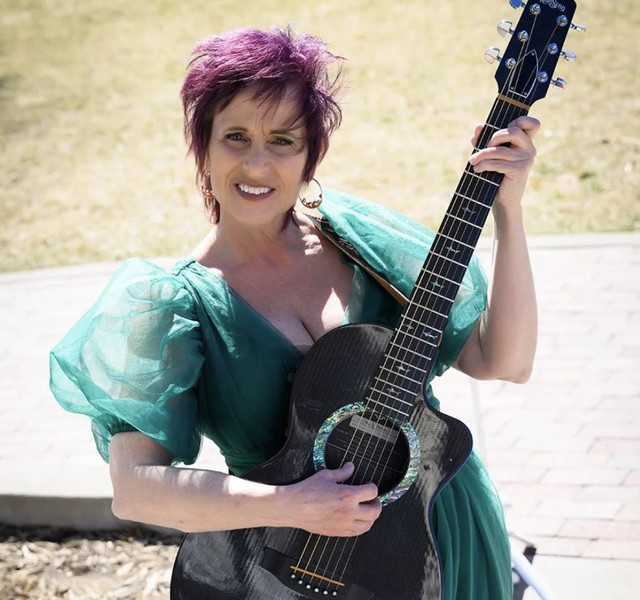
There are some heartbreaks that linger long after the person who caused them has disappeared. For award-winning Americana/Folk-Pop singer-songwriter Randie O’Neil, that feeling became the inspiration behind her latest release, “Ghost of Me”, a haunting song about loss, loneliness and finding your way back to the part of yourself that can feel lost when someone walks away. Released today alongside its atmospheric new music video, the track finds Randie exploring the darker side of emotional abandonment while still holding on to the resilience that has become such a defining part of her songwriting.
The video was filmed at dusk in New Hope, Pennsylvania, a town with its own reputation for ghost stories, making it the perfect setting for a song about being haunted by someone who is no longer there. Walking through the fading light and shadows, Randie captures the searching quality of the song, while the visual echoes the emotional journey at its heart.
Randie has never been afraid to explore the experiences that shape us. Here, she talks about the personal story behind “Ghost of Me”, creating the video without her usual team, filming at dusk in one of Pennsylvania’s most atmospheric towns, and turning an experience of rejection and hurt into something hauntingly beautiful.
Tell us the story of this track. Why did you choose to visualise it specifically in this way?
I was literally ghosted on my birthday. I felt so empty and lost. You think you found someone, take that chance and they just can’t give it back.
What was the inspiration behind this new video (visuals, storyline, etc.)?
I just wanted it to be haunting, searching so we waited until dusk in New Hope PA (a truly haunted town).
What was the process of making the video?
I didn’t have my usual team so I took a chance and they were great. Two videos in one day. This was the end of the day dusk shot. Tried to emote as I walked. “Shadows know your name” is an angry line that he will get what’s coming.
Singer-songwriter Dan Pallotta shares Children and Ghosts, an intimate new folk/Americana album that offers a contemplative reprieve from the noise and chaos of everyday life. Across nine songs and just 25 minutes, Pallotta meditates on coming and going, existence and absence, memory and impermanence, creating what he describes as “one cozy lullaby made of nine ideas.”
Recorded entirely on an iPhone in his bedroom over two days, Children and Ghosts is deliberately simple in both sound and presentation. Pallotta sat in the same chair, with the same guitar and the same mood, capturing the songs with as little distance as possible between the moment of performance and the listener. All of the songs were played on a 1930s mahogany Martin 2-17 parlor guitar, and the album was purposely mixed in mono to enhance the simplicity, with the reverb mixed in stereo to give it a touch of modernity.
“I’d wanted to make something like this for several years – a simple little record with a simple sound, inspired by old Hank Williams recordings,” Pallotta says. “I made this to be listened to in a quiet space. It’s best on headphones, and most affecting when listened to start to finish.”
At the heart of the record is “Abandoned Mansion,” a quiet meditation on the lives that once occupied the spaces we now pass without a second thought. Beginning with the familiar experience of driving past an old house and wondering who once lived there, the song imagines a forgotten estate that was once alive with wealth, parties, ambition, laughter, love, and dreams before gradually falling silent.
That sense of transience runs throughout Children and Ghosts. With two exceptions, its songs were written over several months last year, but they share a singular atmosphere, contemplating the traces people leave behind and the strange space between presence and absence. Rather than approaching those ideas with grand arrangements, Pallotta strips them down to their essentials: a voice, an acoustic guitar, a room, and the questions that remain when everything else grows quiet.
“Abandoned Mansion” brings those questions into particularly sharp focus. Who once filled those forgotten rooms with laughter? Who fell in love there? Who imagined a future from inside those walls? By constructing a life around a place now defined by its emptiness, Pallotta turns the abandoned home into a reflection on mortality and memory.
“It’s a reminder that, in the end, every life leaves behind stories,” he says. “The question is whether someone will still be listening.”
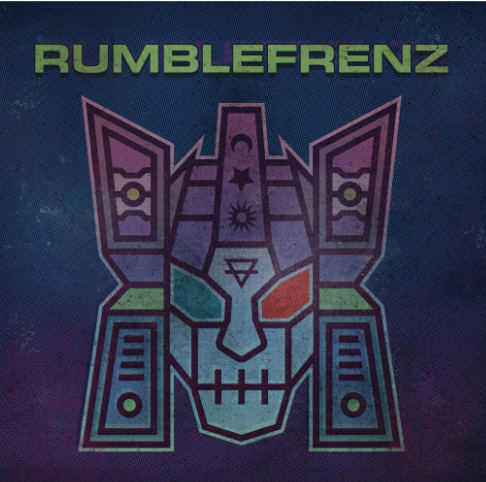
Continuing the cosmic journey first launched with WE ARE ONE and expanded on WE WILL FREE YOU FROM YOUR BODY TONIGHT, RUMBLEFRENZ return with their third release, WE EXIST IN THE REALM OF INFINITE POSSIBILITIES. Led by the exhilarating focus track “HIT THE ROAD,” the album finds the band leaning further into guitar-driven alternative rock while retaining the adventurous spirit, infectious hooks, and boundless creativity that have defined the project from the beginning. Across its runtime, the record becomes both a celebration of possibility and an invitation to make your own luck.
While previous releases embraced sprawling collaborations and synth-heavy experimentation, WE EXIST IN THE REALM OF INFINITE POSSIBILITIES offers a tighter, more focused experience. Written largely during the band’s annual winter songwriting sessions, the album transforms the isolation of cold December days into something vibrant and uplifting, collecting spontaneous riffs, melodies, and ideas into songs that encourage listeners to take chances, follow their instincts, and create the life they want.
“We wanted to make another fun record that represented where we were at the moment,” Rumble explains. “When it came time to curate the tracks for this album, it was clear that the prevailing theme of the album is to do your thing, shoot your shot, and to make your own luck and opportunities.”
That philosophy finds its purest expression in “HIT THE ROAD,” an energetic anthem inspired by countless late-summer evenings spent cruising aimlessly through small towns with the windows down and the radio turned all the way up. Capturing the excitement of creating your own adventure when there isn’t much else to do, the song taps into a feeling that transcends nostalgia, celebrating the freedom that comes from saying yes before you know exactly where you’re headed.
“Every single evening as a youth, we spent driving around with the windows down, blasting the radio and getting especially excited when one of our favourite songs came on,” Rumble recalls. “We wanted to capture the feeling of boredom and looking for something to do in a small town. Having to make your own adventure, going out, hitting the road for an evening drive with the windows down and the music blasting. Make the night yours!”
Built around explosive guitars, singalong hooks, handclaps, dynamic breakdowns, and moments designed for audiences to scream back every word, “HIT THE ROAD” perfectly embodies the spirit of the album. Beneath its carefree exterior, however, lies a message that quietly runs throughout the entire record: if there’s something you want, chase it. Whether it’s love, friendship, creativity, or simply the next adventure, nothing happens until you decide to move.
That same balance of immediacy and intention shaped the recording process. The band intentionally embraced a 1997-inspired alternative rock aesthetic, drawing from the records that defined their youth while allowing each song to evolve naturally. Longtime collaborator Gregory Harrison returned to mix and master the album, while bassist Michael Small (Meligrove Band, Rich Aucoin, Loviet, Kellie Loder) was encouraged to improvise his parts with fresh ears, resulting in spontaneous moments that quickly became some of the album’s highlights.
Together, WE EXIST IN THE REALM OF INFINITE POSSIBILITIES and “HIT THE ROAD” represent RUMBLEFRENZ at their most confident. Guitar-forward, endlessly catchy, and powered by an infectious sense of optimism, both the album and its centrepiece encourage listeners to embrace uncertainty, chase possibility, and remember that every great adventure begins by simply deciding to go.
RUMBLEFRENZ is the creative project of Rumble, best known as the drummer of the viral Transformers tribute band Cybertronic Spree. Conceived as an outlet for fearless experimentation alongside a rotating cast of close collaborators, the project has evolved into an annual tradition of ambitious concept-driven releases that blend infectious songwriting with an anything-goes creative philosophy.
After introducing listeners to their dance-rock universe on WE ARE ONE and expanding it through the genre-hopping adventure of WE WILL FREE YOU FROM YOUR BODY TONIGHT, RUMBLEFRENZ now turn toward a more guitar-centric alternative rock sound without sacrificing the playful curiosity that defines the band’s identity. Joined by longtime collaborators Shaun Hatton and Michael Small, with additional contributions from Chad Thompson (BANDEAU, Johnny Headband), the group continues building a catalogue that rewards repeat listens through interconnected songs, hidden callbacks, and a spirit of limitless musical exploration.
With WE EXIST IN THE REALM OF INFINITE POSSIBILITIES, RUMBLEFRENZ continue their mission of making music that both rocks and slaps. Joyfully nostalgic yet relentlessly forward-looking, the album reminds listeners that the future belongs to those willing to chase it. Sometimes the most meaningful journeys begin with nothing more than rolling down the windows and hitting the road.
Continuing her unfolding musical journey, Scarlett Macfarlane returns with “Where There’s Smoke, There’s Fire,” a dark, smoky pop-rock single that transforms betrayal into resilience. Equal parts cinematic and cathartic, the track channels the slow burn of heartbreak into a powerful story of intuition, self-trust, and ultimately reclaiming one’s own strength. Blending singer-songwriter storytelling with brooding pop production and subtle Americana influences, the song reframes the familiar “woman scorned” narrative into something unexpectedly empowering.
Inspired by a close friend’s difficult breakup, the song grew from Scarlett’s long-standing fascination with the phrase “where there’s smoke, there’s fire.” While none of the events are strictly autobiographical, witnessing someone question their instincts sparked a vivid story about the quiet power of women’s intuition. Interestingly, the song evolved from an earlier composition that explored similar emotional territory before ultimately giving way to something stronger.
“I had another song called ‘I Don’t Wish You Well’ that came first, but this one became its successor,” Scarlett explains. “I don’t think this song would be as good as it is if I hadn’t written that one first.”
While the title draws from a familiar expression about trusting your instincts, Scarlett uses it as the foundation for a more nuanced emotional journey. One of the song’s most distinctive storytelling devices arrives through its shifting perspective. It begins in the first person, immersing listeners in the protagonist’s immediate pain, before a pivotal moment of realization in the bridge allows her to step back from the experience. By the final chorus, the narrative shifts into the third person, reflecting a newfound emotional distance and the clarity that comes from finally trusting herself.
That transformation also reshapes the meaning of the song’s central metaphor. Fire initially represents secrets exposed and relationships consumed by dishonesty, but by the closing moments it becomes something entirely different: the quiet strength that has existed within the protagonist all along.
Sonically, Scarlett set out to create a world unlike anything in her catalogue. Drawing inspiration from the outlaw spirit of Johnny Cash and the cinematic atmosphere of Lana Del Rey, she and Grammy–winning producer Scott Jacoby infused the track with subtle Americana textures while maintaining its pop-rock foundation. A defining element comes from guitarist and bassist Eli Menenez, whose evocative Southwestern guitar work gives the song its dusty, smoldering character, particularly during its soaring final chorus.
Capturing the right vocal performance required equal dedication. Scarlett envisioned a lower, raspier delivery that felt lived-in and emotionally weathered, but because the song sits at the very bottom of her vocal register, that quality proved surprisingly elusive. After an initial recording session felt too polished, she returned for a second attempt with an unusual plan.
“I made a point not to warm up or speak at all after waking up so that my voice would be as low and raspy as possible,” she reveals.
“Where There’s Smoke, There’s Fire” stands confidently on its own while also marking the 10th chapter in Scarlett’s forthcoming 15-song body of work. As the project has taken shape, she has discovered an unexpected thread running through the collection: songs rooted in resilience, inner fortitude, and the quiet strength that emerges after life’s most difficult moments.
New York–based alternative singer-songwriter Lauren Minear shares “Ghost,” a driving, emotionally charged new single that explores the instinct to disappear when life becomes overwhelming. Blending alternative, singer-songwriter, and indie-pop influences with an energetic pulse and soaring, hook-laden chorus, the track examines the quiet struggle between emotional withdrawal and genuine connection. Honest, vulnerable, and ultimately cathartic, “Ghost” captures the exhausting tension of wanting to escape while desperately longing to remain present.
The song grew from Lauren’s own experience of navigating intense emotions, particularly within the demands of parenthood. Feeling everything deeply can sometimes create an urge to numb, isolate, or retreat, but over time she’s come to recognize that distance rarely brings the relief we’re searching for. Instead, “Ghost” became an act of confronting those impulses head-on.
The title arrived almost immediately through the song’s opening lyric: How long can you live with a ghost? While initially inspired by the feeling of sharing space with someone who is physically present but emotionally absent, the image ultimately became a reflection of Lauren’s own internal landscape, exploring what happens when we become disconnected from ourselves as much as the people we love.
Rather than smoothing over those uncomfortable emotions, Lauren embraced them. She intentionally wanted the performance to feel slightly raw and imperfect, allowing her inner child to take centre stage. That emotional honesty reaches its peak during the song’s explosive bridge, an unexpected burst of tension and release that she describes as “angsty and self-indulgent” in the best possible way.
The production evolved through a collaborative process with Grammy–winning producer Scott Jacoby. While Scott initially gravitated toward electric guitar arrangements and Lauren envisioned something more acoustic, the song found its defining voice through an unexpected contribution from guitarist Ben Butler. During a session, Ben began playing a small cigar-box guitar, immediately catching everyone’s attention.
“Scott and I both had a visceral reaction,” Lauren recalls. “We tracked it, and it became that enigmatic something special that defines the sound of the song. I love how it drives the track but is hard to identify. It reinforces the feelings of confusion and disconnection that come through the lyrics.”
While “Ghost” stands powerfully on its own, it also offers another glimpse into Lauren’s forthcoming body of work, a collection of songs inspired by the many faces of grief that emerge while approaching middle age. Continuing the deeply personal songwriting that has defined her recent work, the single transforms private emotional struggles into something universally recognizable, creating space for listeners to feel understood in their own moments of uncertainty.
London, ON-based folk artist Willem James Cowan shares “Not For You, Not For Us,” an upbeat yet introspective folk rock single that transforms the emotional uncertainty of a breakup into something unexpectedly hopeful. Driven by warm acoustic textures, subtle electronic flourishes, and Willem’s vivid storytelling, the track explores the complicated space between personal truth and emotional fiction, revealing how songwriting can sometimes tell a deeper truth by inventing its own story.
Written shortly after the end of a long-term relationship, “Not For You, Not For Us” began as Willem’s attempt to understand his own emotions while settling back into life at home. Rather than documenting the relationship itself, the song gradually drifted into imagined territory, constructing the aftermath of a fictional toxic relationship while drawing emotional inspiration from real experiences.
“I was trying to understand why I made the choices I made and explain myself through songwriting,” Willem shares. “Most of the relationship details in this song are fabricated. There are truths and parallels to my own life, but I made up a story to express my feelings through.”
That balance between fact and fiction extends even to the title. Rather than referencing a lyric, Willem chose “Not For You, Not For Us” as a quiet disclaimer, acknowledging that while the emotions behind the song are genuine, its narrative shouldn’t be mistaken for autobiography.
“I usually write about myself,” he explains. “I wanted to make sure that people, mainly the person who inspired this song, knew that I’m not trying to make up lies about our relationship or anything. I even asked for ideas for new names when I played shows. Eventually I just gave in. Nothing felt quite right the way this name does.”
Musically, the single finds Willem broadening his folk foundation without abandoning its intimacy. Inspired initially by Buck Meek’s “Haunted Mountain,” he sought to capture a similar sense of effortless momentum while developing a sound that remained distinctly his own. To achieve that, he subtly layered programmed hi-hats, electronic percussion, and arpeggiated textures beneath the acoustic arrangement, gently propelling the song forward without disrupting its organic feel.
“Not For You, Not For Us” serves as the final single before the release of Willem’s forthcoming album, What Should Happen Next?, arriving September 18. Throughout the record, themes of loss, transition, new beginnings, and cautious optimism weave together into a larger reflection on rebuilding life after periods of uncertainty. While earlier singles explored grief and displacement, “Not For You, Not For Us” offers perhaps the album’s clearest glimpse toward moving forward.



You must be logged in to post a comment.