Remembering Blind Boone: Ken Lovern Turns History Into Music

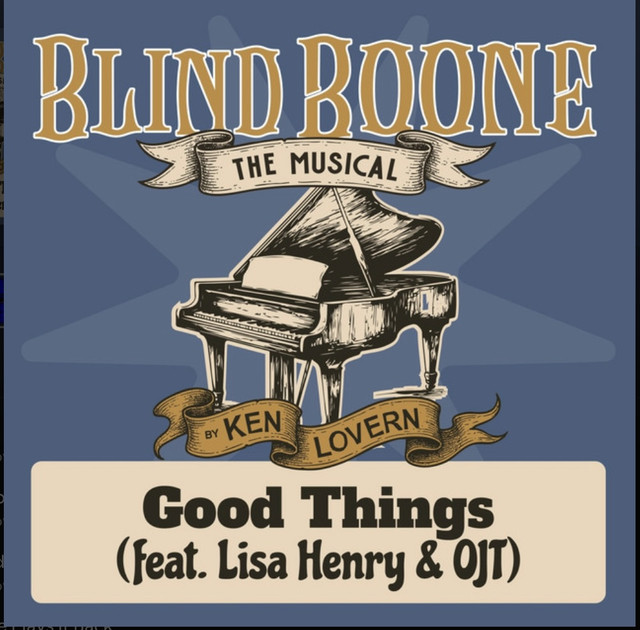
Good Things

There is something fitting about ending a story with a song called “Good Things.” After the hardship, uncertainty and extraordinary circumstances explored throughout Blind Boone the Musical, Ken Lovern’s fourth and final single arrives with a sense of warmth and forward motion. It settles into the groove and lets the music do what it does best – brings people together.

At the centre of the track is Lisa Henry, whose vocals give “Good Things” its human warmth. There is an easy to her performance that immediately draws you in. She is surrounded by the unmistakable sound of OJT (Organ Jazz Trio), the Kansas City organ-jazz outfit with whom Lovern spent more than thirteen years performing at the city’s Green Lady Lounge.

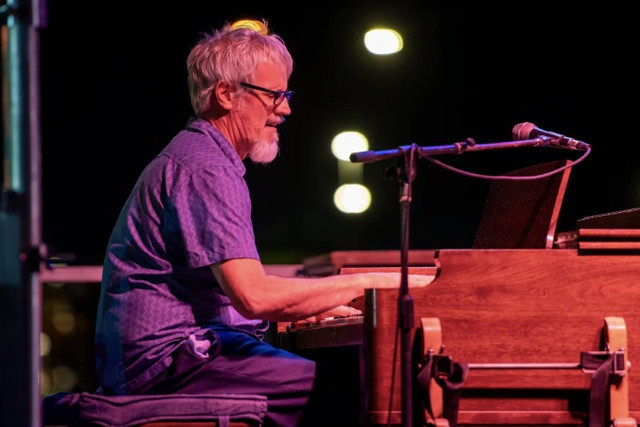
That history matters. Lovern isn’t approaching organ jazz as an aesthetic borrowed for the occasion; it is part of his musical vocabulary. The Hammond organ sits comfortably at the heart of the arrangement, giving the track its earthy character while the rhythm section keeps everything moving with the relaxed confidence of musicians who know exactly where the groove is. And then there is Robert Rebeck’s shaker.

It might sound like a small detail, but it is precisely those details that give “Good Things” its personality. The shaker adds another rhythmic layer to the arrangement, contributing to the sense that this is music made to be experienced physically. You can feel the pulse as much as hear it.

Listen here:

The emphasis on groove is central to Lovern’s wider approach. His work on Blind Boone the Musical has never been about creating a museum piece reconstruction of nineteenth-century music. Instead, he takes the history of Boone and filters it through the musical traditions that have shaped his own life: jazz, ragtime, blues, gospel, classical music and contemporary American sounds. “Good Things” perhaps captures that philosophy better than any of the previous singles.

The earlier releases have taken listeners through very different chapters of Boone’s story. “Quindaro” looked towards his family’s history and the search for freedom. “School for the Blind” explored the young Boone’s developing musical abilities. “Boone Plays It Back” introduced the virtuoso and the extraordinary talent that would eventually make him a celebrated performer. Here, the atmosphere is different.

That doesn’t mean the track ignores the complexity behind Boone’s story. Quite the opposite. The warmth of “Good Things” feels more meaningful because we know what has come before it. Boone’s achievements existed alongside blindness, racism, exploitation and the many barriers faced by Black performers in nineteenth and early twentieth-century America. To end the project’s sequence of singles with a song that embraces optimism feels less like glossing over those realities and more like acknowledging the resilience that allowed Boone to overcome them.

There is also a pleasing circularity to the release. Lovern began this project after discovering Boone’s story almost by accident, becoming fascinated by a musician who had once been famous enough for a Kansas City theatre to bear his name but had since slipped from popular memory. Now, through these songs, Boone’s story is being placed back into the musical conversation. “Good Things” works because Lisa Henry’s vocals, OJT’s organ driven groove and Rebeck’s percussion combine into something loose, soulful and unmistakably alive.

And perhaps that is exactly how this chapter should end. Not with a solemn farewell, but with real groove. Not with the past being put to bed, but with the feeling that there is more music still to discover. With “Good Things,” Ken Lovern closes the singles campaign for Blind Boone the Musical on an uplifting note.
kenlovern

About Ken Lovern

Ken Lovern is a Kansas City based composer, jazz organist and storyteller whose work blends the influences of jazz, ragtime, blues, gospel, classical and American roots music. He is the creator, composer and lyricist behind Blind Boone the Musical, an original historical musical fantasy exploring the life of Missouri pianist and composer John William “Blind” Boone.

Lovern has spent more than three decades performing and composing across a wide range of musical styles. For more than thirteen years, he played Hammond organ with his group OJT (Organ Jazz Trio) at Kansas City’s legendary Green Lady Lounge, performing four or five nights a week and becoming a familiar presence in the city’s celebrated jazz scene. His jazz compositions can also be heard across numerous OJT releases, including the album Ground Level.

With Blind Boone the Musical, Lovern combines his experience as a live jazz musician with theatrical storytelling to bring the remarkable story of Blind Boone to contemporary audiences. The full project, including vinyl and CD editions and a companion graphic novel, is set for release September 2, 2026.

VIDEO VOYAGEUR: 3 Q’s WITH REVVNANT

As climate change accelerates and the planet edges toward catastrophe, there are few artists willing to confront the crisis with complete honesty. Revvnant, led by Eliphaz Costus, formerly the drummer ofThe Flying Eyes and Black Lung, has always blurred genre boundaries drawing from trip-hop, dream pop, industrial and doom to create immersive and emotionally charged soundscapes.

His latest single “Rise”, with a striking visualizer by artist Morgan Beringer, channels fear, despair and urgency into a haunting meditation on environmental collapse.

In this feature, Eliphaz walks us through the beginnings of the song, and the process of collaborating with Beringer to translate its themes into a trippy, morphing visual experience.

Watch the visualizer to “Rise” here:

1. Tell us the story of this song, why did you choose to visualize this song specifically in this way?

“Rise” is purely about the existential threat of climate change, witnessing the chaos, and how bearing witness affects me emotionally. It’s a complex mix of fear, despair, rage, and eventually apathy to be able to move forward with the day. The tone of the song treads the line between hopelessness, and a call to action…We need to rise up to stop this madness and save our planet.

2. What was the inspiration behind this new video (visuals, storyline, etc.)?

I worked with an incredible video artist from the UK named Morgan Beringer (https://www.morganberinger.com/), and I let him run with it. After explaining themes of the song, he came up with the concept of using idyllic images of healthy nature devolving into degraded, industrial landscapes. This worked really well with his signature, trippy style where visuals bloom and morph into each other. 

3. What was the process of making the video?

That was pretty much all Morgan Beringer’s doing. I gave a few notes here and there, but mostly I stepped aside and let him do his thing. Which I was happy to do after how hard I had already worked on the music.

Listen to “Rise” on Spotify

VIDEO VOYAGEUR: 3 Q’s WITH GEORGE COLLINS

7

With its bittersweet lyricism and warm Americana tone, George Collins’s “By the Time” has already earned praise as one of his most evocative tracks to date.

Now, the newly released music video gives the song a cinematic heartbeat, placing Collins in a dimly lit Prague steakhouse as he strums, sings and pens a final farewell letter to a soon-to-be ex.

Directed by Thomas Cruz and Jarda Malina, and featuring a cameo by Max Munson – the real-life owner of Max’s Steakhouse – this video is full of intimate details. From the half-finished whiskey glass to the knowing glances of a friendly bartender.

Look closer, and you’ll even spot a Dave Matthews Band poster tucked into the scenery, a nod to one of Collins’s lifelong inspirations, and hear his previous single Open Up drifting faintly in the background.

In this conversation, Collins opens up about the song’s origins, the creative choices behind the video and why capturing its acoustic, roots-driven soul on screen was just as important as getting every chord change right.

Watch the Official Music Video here:

Tell us the story of this song, why did you choose to visualize this song specifically in this way?

I came up with the riff while I was noodling around on my acoustic guitar many years ago, and it immediately struck me as extremely catchy.

The opening line, “By the time you’ll be getting ’round to reading this,” popped into my head at the same time, as those lyrics seemed to fit the riff very well in rhythmic terms.

I filed it away for a long time and started writing the song in earnest last year.

The chord changes are quite interesting, full of unresolved tension by deliberately moving outside the key and employing lots of seventh chords, to match the troubled tone of the lyrics.

From the outset, I was hearing the influence of Tom Petty on this tune, and when I started working with my producer to bring the song to life in the studio, I specifically suggested we aim for a similar Americana vibe as Tom Petty’s “Wildflowers,” which was produced by the legendary Rick Rubin, who is an absolute genius and one of my favorite producers.

As we developed the track, the influence of other great songwriters such as Chris Stapleton, Steve Earle, Johnny Cash, George Strait, Ray Davies (one of the finest storytellers in all of music) and Jimmy Buffett (ditto) also became apparent.

Although I have written almost all my songs on my acoustic guitar, this is the first fully produced acoustic track that I have released.  In the past, we took my acoustic demos and fleshed them out with a band in the studio, and I have recorded stripped-down acoustic versions of my previous singles, but this is the first time I deliberately kept the track close to its acoustic roots, to better capture the Americana/Outlaw Country vibe of the song. So you’ll hear many influences in this song, but I also hope that “By the Time” is recognizably me.

What was the inspiration behind this new video (visuals, storyline, etc.)?

In my mind’s eye I imagined a scene like that of the cover art for Led Zeppelin’s last studio album, “In Through the Out Door,” in which a man is sitting on a stool in a dingy dive bar burning a “Dear John” letter.

With the phrase “By the time you’ll be getting ’round to reading this” in my head, I realized that the narrator of my song would not be reading or burning a “Dear John” letter, but rather writing one to his soon-to-be-Ex.

In a bar, of course.Once I imagined the scenario, the lyrics flowed quite naturally — fortunately, and unlike most of my other songs, this one has no autobiographical connotations whatsoever!

What was the process of making the video?

One of my closest friends in Prague, Max Munson, owns Max’s Steakhouse, a classic steakhouse modeled on those from his native Chicago.

He runs a lot of great ads for his establishment, which are created in conjunction with Thomas Cruz of Thomas Cruz Studio and Jarda Malina of Moneyshot Studio in Prague.

Once I decided that I wanted a live music video for “By the Time” (rather than the animated lyric videos for my other tracks to date), and that I wanted it to be shot in a bar, I knew that Max’s Steakhouse would be the perfect location, and that Thomas and Jarda, with their previous experience of filming in the Steakhouse, would be perfect for creating this video.

I met with Thomas several times to discuss the song and exchange ideas for the video, and I invited Max to make a cameo appearance as the friendly bartender.  We agreed early on that there would be two major features of the video:  Me singing the song with my guitar, and me writing the letter at the bar.

I arrived early at the Steakhouse early on a Saturday morning, when the restaurant was closed.  Thomas and Jarda were already setting up lights in the main dining room, and I helped move tables and chairs away to clear a space for my solo performance.  I’d brought several of my guitars and a variety of shirts, which Thomas tested under the lights before choosing a creamy color that would match the warm hues of the room.

With Jarda handling the lights, I sat on a barstool and sang “By the Time” over and over as Thomas filmed me from a variety of angles – I probably played the song fifty times before Thomas was satisfied that he had enough to work with.

Then we moved into the barroom. Max and I chose a bottle of Elijah Craig as a prop – I actually drank apple juice during the filming, though Max did have to pour several glasses of whiskey so we could show the bottle getting progressively emptier.  I enjoyed those glasses, however, only after the filming was completed.

I had written several versions of the lyrics on parchment, each showing the “letter” in various stages of completion.  Again, with Jarda manning the lights, Thomas filmed me from numerous angles as I sat and sipped and wrote and pondered:  Close-ups of my hand moving across the page, close-ups of me stroking my chin and staring off into space, long shots of Max carrying a rack of glasses from the kitchen to the bar before offering me a refill of my bourbon.

Overall, we must have filmed for eight hours for what was eventually edited into a video that clocks in under four minutes.

In the editing process, Thomas had the brilliant idea to have my previous single, “Open Up,” playing in the background as I’m sitting at the bar.  That song, about remaining vulnerable and open to love in spite of disappointments, is the perfect setup for “By the Time,” which is ultimately about liberation and moving hopefully into the future.

I am grateful to Thomas, Jarda and Max for capturing this vibe and helping me bring my song to life so beautifully.

Keep up with George Collins on his Website

VIDEO VOYAGEUR: 3 Q’s WITH MOLLY THOMAS

MOLLY-THOMAS

When a life altering moment changes everything, some artists retreat. Others write. For Molly Thomas, the aftermath of a devastating car accident in August 2023 became both a period of deep healing and unexpected creative clarity.

Her new single “Crash,” co-written with longtime collaborator Ken Rose, captures that raw emotional journey with rare honesty and grace.

Quiet, luminous, and haunting in its simplicity, “Crash” tells the story of survival, acceptance and the deep gratitude that follows being kept on this earth by the kindness of others.

In this interview, Ken Rose opens up about the inspiration behind the song, the process of writing and recording it, and the symbolism behind the intimate video that accompanies its release.

1. Tell us the story of this song, why did you choose to visualize this song specifically in this way?

Crash was the only song we wrote after Molly’s accident. We were sitting on Captain Tom’s dock, in the hammocks. Molly was still in recovery, and the song just flowed naturally.

It’s always been a favorite because of its honesty, and I love the free, easy ’70s vibe we captured. “Crash” is essentially a documentary that encapsulates Molly’s accident — not just the physical experience, but the emotional and spiritual journey as well.

It’s also a reflection of the deep gratitude we feel for the community and circle of friends who showed up when Molly needed support the most. I asked Molly to record a simple, neutral, and unaffected vocal video on the porch because I wanted to capture her emotional strength. It was a gamble — it was either going to work or completely fall flat.

Since Molly and I were writing and recording the album before, during, and after the crash, I witnessed her pain, joy, and growth firsthand. I wanted to capture her “survival” in the video — and I think we did.

2. What was the inspiration behind this new video (visuals, storyline, etc.)?

The inspiration for the video was to capture the essence of “pure” Molly, combined with the feeling of movement — driving — to represent her journey and recovery. The clarity of Molly’s emotions, contrasted with a blurry, surreal night drive through a foreign country (I filmed it in Casablanca, Morocco), felt like the right metaphor.

3. What was the process of making the video?

The process of making the video was simple: don’t overthink anything.

We had just half a day to create something, so it had to be all about trust and flow. That’s how our creative partnership has always worked — trusting that whatever we make together will be honest.

Find out more about Molly Thomas on her Website

VIDEO VOYAGEUR: 3 Q’s WITH CLEMENTINE MOSS

As a founding member of the all female Led Zeppelin tribute band ZEPPARELLA, and the force behind introspective solo projects like Nothing Will Keep Us Apart and Clem & Clearlight, Clementine Moss has long balanced raw rock power with a spiritual depth.

Her latest work continues this exploration, blending poetic songwriting with personal transformation.

In this exclusive interview, Clementine opens up about the emotional and spiritual shifts that inspired one of her most evocative songs called “Coming to Meet The Blues”.

Created during her journey toward sobriety, the track and its accompanying music video captures the ache of existential questioning and the haunting beauty of roads not taken. Working closely with visual artist Luigi Florente of Blackstars Studio, Clementine brings to life a narrative of romantic memory, longing and awakening. All framed through a vintage lens that echoes the soul of the song.

Here, she walks us through the heart of the piece, the vision behind the visuals and how art continues to help her meet life without the veil:

1. Tell us the story of this song, why did you choose to visualize this song specifically in this way?

I wrote the album, and this song in particular, as my life was shifting and I was becoming sober. The songs on the record ended up being a kind of love letter to the life I was leaving behind, the late nights in bars, substance-induced hazy moments where judgment was maybe not present. Those moments could be beautiful and creative, but also illusory and over time I began to be more excited by meeting life without a veil.

This song is about that feeling of longing that is existential, when alcohol takes over and you begin to question all the choices that brought you to this point. The narrator of the song sees someone across the bar and paths not taken come into view and amplify the question… have I made the right choices? Is this where I thought I was going? Is the uncertainty I feel about myself truth or mistake?

2. What was the inspiration behind this video (visuals, storyline, etc.)?

I work with Luigi Florente of Blackstars Studio in Spain to do the videos for the album. I ask that he work with clips and footage without AI generation, and he has a wonderful way of getting inside the song and telling the story. He chose to tell the story of lost love here, and we loved the romantic visuals.

3. What was the process of making the video?

Luigi finds the clips and puts the story together, and then I bring the video into Wondershare and add some lighting and texture. I love working in that program, as there are so many options to use so easily. I love things to look vintage, and the various options of light leak filters really add to the romance.

VIDEO VOYAGEUR: 3 Q’s WITH KRISTY CHMURA

Kristy-Chmura-FO3139908-C243-3000-1

In a powerful tribute to Earth Day, singer, harpist and songwriter Kristy Chmura releases a re-imagined version of her song “Wake Up”. This is a heartfelt environmental anthem that brings together music, activism and visual storytelling.

Originally released on her 2018 debut solo album “Stained…Glass Heart”, the song now returns with a fresh cinematic arrangement and a compelling music video that shines a spotlight on the urgency of protecting our planet.

Deeply rooted in her love for nature and her decade-long commitment as a volunteer with her town’s Shade Tree Commission, Kristy’s passion for trees, forests and wildlife pulses through every frame of this video.

Collaborating with world-class musicians Christian Eigner and Niko Stoessl, along with longtime creative partner Damien Musto, Kristy brings new life to “Wake Up” through haunting melodies, stunning visuals and a message that resonates deeply in today’s climate.

In this interview, Kristy shares the story behind the song, the inspiration for the video and the creative process that brought this urgent and moving project to life:

1.Tell us the story of this song, why did you choose to visualize this song specifically in this way?

    The seed for my song “Wake Up” was planted a while ago. I released my original version of “Wake Up” with my longtime creative partner, Damien Musto back in 2018 on my debut solo album, “Stained…Glass Heart”.

    I’ve always felt a deep connection to nature, a sense of belonging that resonates in my soul especially whenever I’m surrounded by trees, and I was becoming increasingly worried and distressed by what I would see in the media: the destruction and attacks on our environment, and how greed and thoughtlessness towards the planet hurts us all.  

    All these things overwhelmed me – the images of deforestation, the oil spills, the sheer disregard for our planet, even seeing things in my own community like clear cutting properties for new construction – I reached a point where the the inner activist in me became ignited.  It wasn’t just about the planet; it was a personal ache, a sense of loss. I had to do something, I couldn’t stand by any longer, so I used what I have: my voice.”

    “Wake Up” is a call to action to myself and to anyone, reminding us we need to look within ourselves and become more conscious of how our actions affect one another. We’re all part of a giant ecosystem.  If we each do something, no matter how big or small, that contributes to solutions and creating health and balance for our environment – that’s a step in the right direction, and we need to keep going in that direction one step at a time. Sometimes that first step is just becoming more self-aware.

    This newly reimagined version of “Wake Up” came to be because one summer, the smoke from the Canadian forest fires drifted south, casting a pall over New Jersey. The air hung heavy, and the poor air quality made it challenging to breathe.  The sun was a hazy orange disk in the sky, and you could smell the wood burning from hundreds of miles away.  Experiencing that broke my heart, thinking of the acres of trees and the extreme impact on the entire ecosystem.

    This reignited the pull inside me to want to do something to help, so I turned to my music once again. I reached out to my team of music collaborators—Christian Eigner, Niko Stoessl, and Damien Musto—and told them I had this idea to rearrange my original version of “Wake Up” into something new and bigger, because I felt the song had an important message that needed to be heard. They were all on board, and there was an electric energy between us as we created this more pop/alternative style of “Wake Up”.

    I decided to visualize this song in this specific way because I wanted to make the video more about delivering the message and bringing this important global issue about the health of our planet to the spotlight.

    2. What was the inspiration behind this new video (visuals, storyline, etc.)?

    The inspiration behind this new video came from many things – I like watching documentaries about the environment on Pattrn TV, and I’ve always been incredibly moved by Michael Jackson’s video for “Earth Song.” However, I had to narrow it down and keep my budget in mind, so I chose a source of inspiration from a past experience – a concert I had attended, which was the Live Earth concert organized by Al Gore when he released his documentary, “The Inconvenient Truth.”

    That concert was so inspiring, with such an important message raising awareness about climate change, that it has always stuck with me. Melissa Etheridge did a music video for her song that she created for the film, “I Need to Wake Up,” and so I gathered inspiration to create my own version of what they created back then. I decided to try to focus on one climate issue that I feel passionate about, which is our forests, and try to highlight how they are such an important ecosystem that we need for maintaining the health of our planet.

    3. What was the process of making the video?

    Creating the video was a long process. This video is the culmination of many ideas. It was challenging to create something with such an important message, as there are many different environmental issues warranting attention, so I needed to narrow it down to just one. I didn’t want to be the focus of this video; instead, I wanted the message of the song to be in the spotlight. So I worked with my video team at Sunbeam Productions LLC, and we brainstormed many ideas.

    I had a strong vision about gathering many different environmental images and text with different facts to create a story in the form of a mini-documentary, but I still wanted to have shots of me singing interwoven within those images. I researched the text that appears in the video from many different sources, like the Arbor Day Foundation and the Audubon Society, etc. I then put together the text story within the visual story of the images I gathered.

    I came up with the idea of projecting all these images onto a large backdrop. We then scouted a location with a cyclorama wall and shot the singing scenes there, and it all worked out perfectly. I have Julia Schnarr and her team at Sunbeam Productions LLC to thank for putting all the pieces of my vision together into this video.

    Keep up to date with Kristy Chmura on her Website