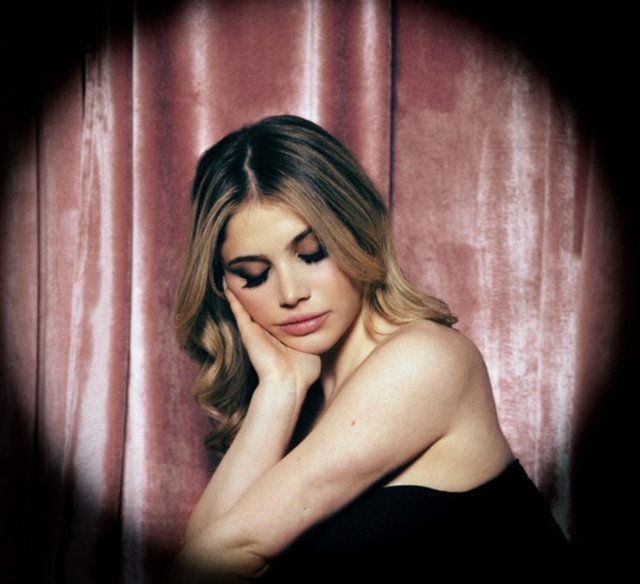
For Zoey Madison, music has never been confined to what we hear. The New York based R&B-pop artist approaches her work as a complete creative world, where sound, imagery, storytelling and personal experience all have a place. With her latest single, Love Like You, that vision becomes particularly vivid.
A beautifully arranged piano ballad that grows into a sweeping production of strings and layered vocals, the song traces the experience of finding yourself through relationships – and confronting just how much of yourself you can sometimes give away in the process. But the story doesn’t stop when the music ends. Madison has created an accompanying visual world drawing on her fascination with 1920s design, classic Hollywood and the surreal, otherworldly atmosphere of The Twilight Zone.
It’s an aesthetic that reflects an artist who has a clear idea of where she wants her music to take her. From the initial mood board to the finished video created with graphic artist Monique Mendoza, every frame has been considered as part of a larger artistic identity.
We caught up with Zoey to talk about the story behind love like you, the meaning of its pivotal bridge, her fascination with old Hollywood and why building a visual language around her music is just as important as the songs themselves.
Tell us the story of this track. Why did you choose to visualize it specifically in this way?
The song is a journey of finding yourself through new relationships culminating in my favorite part of the song, the bridge which demonstrates that sometimes we put ourselves through a lot to stay with people we love. I chose to visualize it through compilations of things I love like 1920’s type graphics, old Hollywood which I’m very passionate about and images reminiscent of the twilight zone to give it another worldly feeling.
What was the inspiration behind this new video (visuals, storyline, etc.)?
I have always had a very particular view of what I want my brand and artistry to look like concerning my music. Visuals are very important to me. The various frames of the video were put together intentionally in such a way as to capture not only the mood of the song but advance the image I am trying to achieve.
What was the process of making this video?
I put together a mood board reflecting the images I found to represent my brand and what images of my brand I wanted my song “Love Like You” to convey. Working with graphic artist Monique Mendoza, we were able to put together a video which felt authentic to me as an artist.
Keep up with everything Zoey Madison on her Website
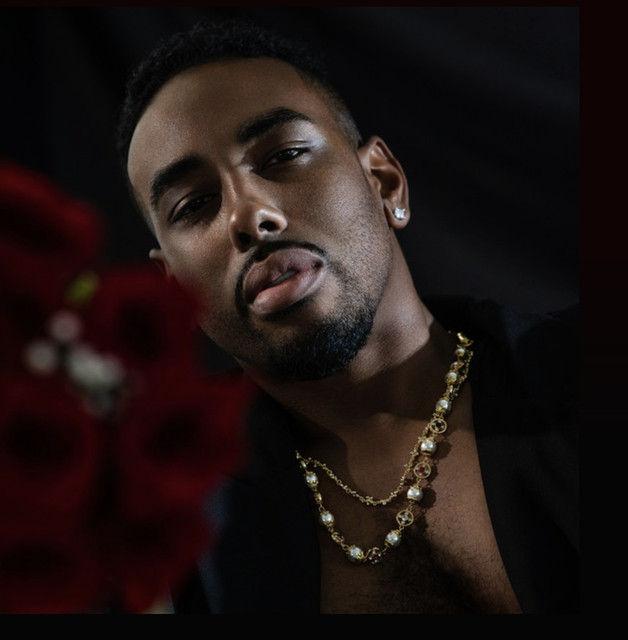
There are certain artists whose music feels connected to a much larger conversation. Artists who understand that every generation adds another layer to the sounds that came before it. With his latest single, “10th Floor,” the Detroit singer-songwriter Apropos draws from decades of soul tradition while creating something that is unmistakably his own.
From the opening moments, “10th Floor” establishes a world of warmth and atmosphere. The track moves with smooth confidence, built around rich piano melodies, subtle grooves and Apropos’s distinctive vocals. His voice has the character of classic soul – full of texture, full of emotionv-vwhile the production places the song firmly within the landscape of contemporary R&B.
“10th Floor” explores the memories attached to certain places and the way a shared moment can transform an ordinary space into something meaningful. It is a song about connection, and the comfort found in creating a private world with another person.
Apropos understands that some of the most powerful emotions exist in quieter moments. In the conversations after the excitement has faded, the familiar routines and the memories that continue to return long after an experience has passed. He captures those feelings with sincerity.
Produced by Jake Bass, “10th Floor” brings together organic soul influences and contemporary production techniques with impressive balance. The arrangement is carefully considered, from the layered harmonies to the subtle instrumental details, to contribute to the overall mood. The song creates an atmosphere that honours the emotional foundation of soul music.
Apropos’s journey adds another layer of meaning to this release. After gaining national attention with his appearance on The Voice, he stepped away from the spotlight to focus on rebuilding his voice and refining his artistic direction. That time of reflection has led to music that feels more focused and confident, shaped by experience and a deeper understanding of his own creative identity. Throughout his career, Apropos has embraced the idea of being a bridge between generations of music. The influence of Detroit soul, gospel traditions and classic R&B can be felt throughout, but they are woven into a contemporary sound that speaks to today’s listeners.
Apropos demonstrates clarity here. “10th Floor” is very much a statement of artistic purpose from a musician who understands where he comes from while continuing to explore where he can go.
There is something wonderfully underestimated about a genuinely happy song. Not a song that simply throws a few optimistic words over a predictable melody, but a song that understands that joy requires honesty. Happiness is most powerful when it has been earned; when it comes after uncertainty, disappointment and the inevitable twists and turns that life throws our way.
George Collins understands this perfectly. With “Happiness Looks Good on You,” he avoids the trap of writing a simple feel good anthem. Forget trying to box it neatly into one genre. Americana? Soul? Roots? Gospel? New Orleans rhythm and blues? The truth is that great songs rarely care about the labels we attach to them. They simply find their own space, and Collins’s latest offering does exactly that. Drawing inspiration from the timeless sounds of artists such as The Staple Singers, Dr. John, Allen Toussaint, and The Neville Brothers, he creates a track that feels both familiar and completely alive.
Listen in here:
From the opening moments, “Happiness Looks Good on You” carries a warmth that is impossible to resist. The Hammond organ rolls gently beneath the arrangement, the horns add flashes of colour and excitement and the groove settles into that rare space where sophistication and pure enjoyment exist side by side. It’s music made by people who understand that sometimes the best songs are the ones that make you instinctively move before you even realise you’re doing it.
But beneath the irresistible rhythm sits the real strength of the song: the writing. Collins is not interested in pretending that happiness is effortless. Here, he celebrates the people who have endured difficult chapters and come out stronger on the other side. It is a song about friendship, encouragement and the quiet victories that deserve to be recognised.
And then comes the gospel choir, taking the track from uplifting to genuinely celebratory. The handclaps, soaring harmonies and joyful energy of the finale make it feel like a room full of people gathering together to celebrate life itself. It is impossible not to smile as the song reaches its conclusion.
With his latest single, “Happiness Looks Good on You,” Collins has created a cheerful song, reminding us that optimism is not naïve, and joy is not superficial.
And with New Ways of Getting Old showcasing even more of his thoughtful songwriting, there has never been a better time to discover an artist who understands that great songs don’t need to shout. They simple need to connect with the listener.
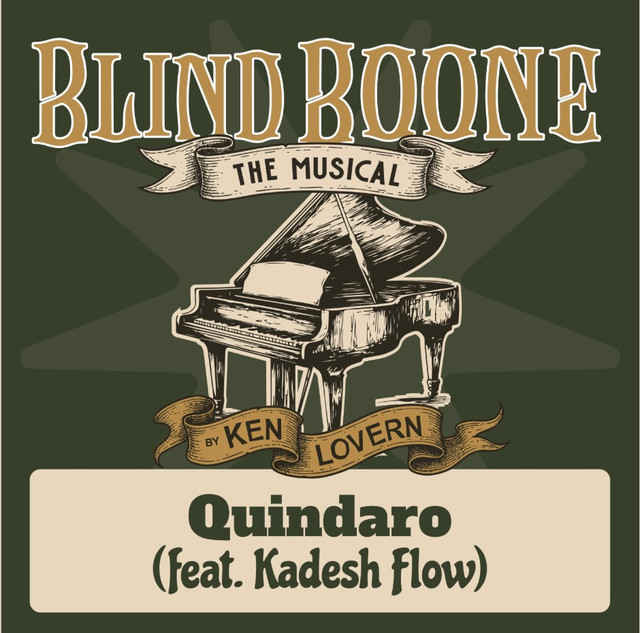
When Ken Lovern set out to create Blind Boone the Musical, he wasn’t simply writing songs. He was uncovering an overlooked chapter of American history. Through an ambitious blend of jazz, theatrical storytelling and historical research, the Kansas City composer and jazz organist is bringing the remarkable life of Missouri pianist John William “Blind” Boone to a whole new generation.
The project’s latest single, “Quindaro,” shifts the focus from Boone himself to the courageous journey of his mother, Rachel, bringing together the story of the Underground Railroad, the historic free state town of Quindaro, and the events that ultimately shaped one of America’s most extraordinary musicians. Accompanied by a striking visual narrative that combines original comic book artwork, archival imagery and footage from the recording sessions, the release demonstrates the scale and vision behind Blind Boone the Musical.
We caught up with Ken to discuss the inspiration behind “Quindaro,” the symbolism woven into its music, the creative process behind the video and why preserving stories like Blind Boone’s has never been more important than now.
Tell us the story of this track. Why did you choose to visualize it specifically in this way?
Quindaro is part of the story of Rachel Boone as told in the musical historical fantasy, “Blind Boone the Musical.”
The song’s setting is just before sunset in late Summer 1863, near Miami, Missouri in north central Missouri. A group of escaped and freed former enslaved persons, called “contrabands” by the Union Army, are heading west to Kansas in search of freedom and a better life. Their immediate goal is to reach the river port town of Quindaro on the Kansas side of the Missouri river and a known stop on the Underground Railroad. They sing to tell their story and their reasons for heading to the Free State of Kansas.
At dawn, the freedom seekers continue walking west to Quindaro. Rachel twisted her ankle the previous day, and it has swollen through the night. She is unable to walk. She will remain in central Missouri and give birth to John William Boone, who will become the prodigy and performing legend “Blind Boone.”
The cowbell beat that begins Quindaro is a standard “bell pattern” that forms the basis for much of the music of sub-Saharan Africa. The migration of this cross-rhythmic figure into the Americas introduced new rhythms to American music that did not exist in Europe. Some musicologist trace the “swing” of American blues and jazz to this pattern.
In the song Quindaro, the bell pattern remains consistent while the underlying pulse of the shaker and the bass drum alternate from a 6/8 beat to a 4/4 beat. Shifting the underlying pulse from 6/8 to 4/4 symbolizes the forced migration of the Africans to the Americas.
What was the inspiration behind this new video (visuals , storyline, etc.)?
The video features art from the companion comic book, video from the recording sessions, photos, and historical maps and drawings. My goal was to tell the story of the freedom seekers along with the experience of the musicians. The viewer can see through the maps and drawings the perilous journey from the Missouri side of the river at Parkville to the Kansas side of the river at Quindaro.
What was the process of making the video?
To create the video, I drew on images from several sources. To present the story of Blind Boone the Musical in a clear and linear manner, I collaborated with Gutter Studios to develop a comic book adaptation.
While recording Quindaro, I filmed videos of the musicians performing. I interspersed those videos with the comic book images and vintage maps and drawings to visually tell the story.
The video represents the dramatic story of freedom seekers from one hundred and sixty-three years ago and the joy of musicians performing today.
Connect with Ken Lovern and Blind Boone the Musical HERE
Zoey Madison’s new single love like you doesn’t try to compete with the seasonal noise of summer playlists, and that’s why it stands out. While much of the current pop landscape leans into upbeat, sun drenched production, Madison offers us a grounded piano led ballad.
Built around a simple but expressive piano motif, the song introduces Madison’s vocal in an uncluttered space. And there is much clarity to the musical arrangement too which feels intentional from the outset. Instead of rushing into a hook or chasing a beat, love like you reveals itself in a more subtle way, allowing emotion and instrumentation to build in tandem.
Listen in here:
Producer, mixer and co-writer Matt Chiaravalle shapes love like you with a song first approach, and guides its evolution from intimate piano sketch to a sweeping, string-laden ballad without losing any of its emotion. Charlie Paxson on drums adds a subtle momentum without disrupting the song’s intimacy, while the inclusion of live strings featuring Dave Eggar on cello and Ada Pasternack on violin expands the emotional scope more.
At the centre of it all are Madison’s stunning vocals. Possessing both technical control and a natural sense of phrasing, she resists the temptation to over perform, although with her power she certainly could, but here the space and silence allows her to rise into more powerful moments. The song doesn’t require additional embellishment to prove its impact.
love like you isn’t a “summer song” in the conventional sense as there are no glossy hooks built for poolside playlists or immediate radio hooks. It does sound like the kind of track that stays outside of trends. A piano ballad rewards listeners who give it time.
There’s also a strong sense of storytelling running through the performance. The layered vocals add depth without much clutter, and reinforce the song’s central theme of connection without going into melodrama.
Recorded between Flux Studios and Mercy Sound in New York’s East Village and mastered by Joe Lambert, love like you carries a polished production finish that leans into warmth, space and dynamic movement. A reminder that simplicity when handled with care, is far more powerful than pure excess.
Zoey Madison may be an emerging name in pop, but love like you definitely suggests an artist with a clear sense of direction. She is building atmosphere, emotion and longevity into her sound and this piano ballad is ultimately more enduring.
Keep up with everything Zoey Madison on her Website
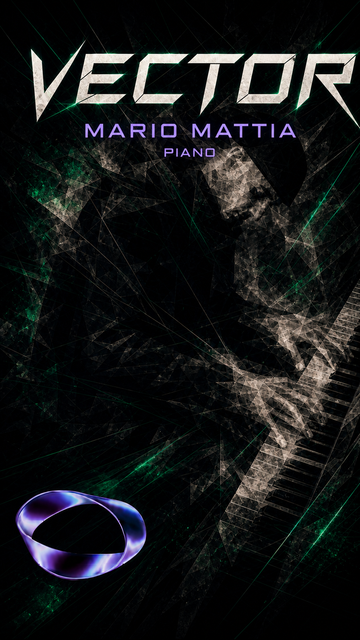
With “Vector“, Mario Mattia continues his exploration of real time solo piano improvisation, working within an evolving framework he describes through three overlapping worlds: meditative, abstract, and freeform. Each improvisation emerges without pre-composition or predetermined structure, unfolding in the moment and revealing its identity only in retrospect.
We are particularly delighted to have Mario return for another Video Voyageur, as his work continues to evolve and deepen across both musical and visual dimensions.
“Vector” sits firmly within the abstract strand of this practice. Brief, angular and intensely focused, it traces a compressed musical trajectory shaped by tension, velocity and fragmentation. Rather than illustrating a narrative or external idea, the work exists as a direct expression of motion and energy, translated into sound as it happens.
The accompanying visual language extends this approach. It offers a non-literal environment that mirrors the piece’s instability and intensity. Together, music and image form a unified space of abstraction – one that prioritises force, texture and perception over story or explanation.
Tell us the story of this piece. Why did you choose to visualize it specifically in this way?
“Vector” belongs to the abstract area of my work. My improvisations fall into three genres: meditative, abstract and freeform.
The meditative pieces tend to be spacious, tonal, inward, and contemplative. The abstract pieces are more angular, atonal, compressed, and exploratory, often emphasizing gesture, texture, rhythm, and intensity over conventional lyricism. The freeform pieces move between worlds. They may begin in a tonal or meditative space, pass through abstraction or dissonance, and return transformed, allowing the music to determine its own structure in real time.
Although I use these three categories to help listeners orient themselves, the improvisations are never planned in advance. Each one emerges spontaneously, and the genre becomes clear only afterwards. The improvisation emerged very clearly from the abstract genre. As with all of my piano improvisations, there was no prior plan, structure, or conception. I did not sit down intending to create an atonal piece, nor did I set out to make something intense or angular. It simply emerged that way in the moment. Looking back, I suspect it reflected the particular intensity of my inner state at the time – not in a literal or programmatic sense, but as a kind of emotional pressure translated directly into sound.
Because the music moves by tension, velocity, interruption and abstraction, I wanted the visual world to reflect that same character. Rather than using imagery that would soften or explain the piece, I chose visuals that would support its non-representational quality – something closer to motion, geometry, instability, and concentrated energy.
The goal was to illustrate a story, but to create a visual counterpart to the music’s abstract force.
What was the inspiration behind this new video (visuals, storyline, etc.)?
There is no storyline in the video, and I did not want to impose one on the music. “Vector” is an abstract, atonal improvisation, so the visual approach needed to remain non-literal. The inspiration was really the character of the piece itself: compressed, intense, angular, and unstable. I wanted the imagery to reflect those qualities without explaining them.
The visuals are meant to create an atmosphere
The video was assembled and edited in DaVinci Resolve. I began by searching for visual material that seemed to share something with the character of the piece itself: compressed, intense, angular, and unstable. I wanted the imagery to reflect those qualities without explaining them. The visuals are meant to create an atmosphere of abstraction and movement – something geometric, unsettled, and concentrated – rather than a narrative sequence. For me, the video functions as a visual environment for the music, not a story about it.
What was the process of making the video?
The video was assembled and edited in DaVinci Resolve. I began by searching for visual material that seemed to share something with the character of the improvisation – not literal images, but imagery that suggested abstraction, motion, tension and instability.
From there, the process became one of correlation. I tried to shape the visual flow so that it moved with the music: more active and fragmented through much of the piece, with a small amount of color to give it energy and contrast, and then somewhat calmer as the improvisation itself begins to release near the end.
I also included a brief image of myself at the piano, not as a focal point, but as context – a reminder that this is still a human, physical performance, even when the musical language is highly abstract.
The title “Vector” came afterward, as my titles always do. It seemed to reflect the underlying character of the improvisation: direction, force, motion, and a kind of concentrated trajectory.
About Mario Mattia
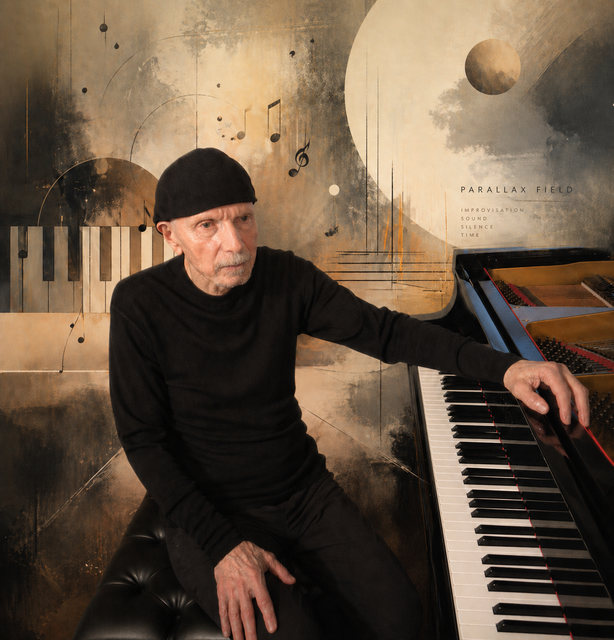
Mario Mattia is an improvisational pianist and graduate of the New England Conservatory whose work is rooted in spontaneity, deep listening and emotional presence. Drawing on influences ranging from Johann Sebastian Bach to Keith Jarrett and Brian Eno, his music bridges classical, jazz, progressive and ambient traditions.
Each performance is created entirely in the moment, without predetermined themes or structures. While his primary work centers on solo piano improvisation, Mattia also maintains an electronic studio practice that serves as a parallel and occasional extension of his explorations in sound.
Working from his rural studio, Mattia captures every nuance of sound, inviting listeners into immersive, contemplative spaces where music unfolds as lived experience.
Keep up with everything Mario Mattia on his Website



You must be logged in to post a comment.