VIDEO VOYAGEUR: 3 Q’s WITH KEN LOVERN

Schoolfortheblind

Some of the most important moments in a person’s life happen before anyone knows what they will become. A child displays an unusual gift, someone takes notice and a single act of encouragement can alter the course of a life. For John William “Blind” Boone, one of America’s great musical pioneers, that moment came when a former Confederate general recognised something extraordinary in a young boy and decided he deserved the opportunity to develop it.

“School for the Blind,” the third single from Kansas City composer and jazz organist Ken Lovern’s Blind Boone the Musical, tells that remarkable chapter in Boone’s story. Set in post Civil War Missouri, the song explores Francis Cockrell’s efforts to persuade the people of Warrensburg to help nine-year-old Boone travel to St. Louis to study music at the Missouri School for the Blind.

The accompanying video brings that history into the present, combining artwork from the project’s companion graphic novel with archival photographs, historical imagery and footage of the musicians recording the song.

We caught up with Ken to talk about the remarkable relationship between Cockrell and Boone, the importance of showing the community that helped nurture the young musician’s talent, and the creative process behind bringing this pivotal chapter of Blind Boone the Musical to life on screen.

Tell us the story of this track. Why did you choose to visualize it specifically in this way? 

    In the song “School for the Blind,” former Confederate General Francis Cockrell is convincing the town of Warrensburg, Missouri to help young John Boone attend the Missouri State School for the Blind in St. Louis.  

    After the Civil War, Blind Boone’s mother, Rachel Boone, finds employment in the home of Francis Cockrell.  Cockrell is immediately taken with young John Boone. Boone is a cheerful, charming, and enchanting child, and he imitates bird calls and other sounds he hears.  Boone plays the tin whistle and forms a musical group with the other neighborhood children. He is a very talented child with a lot of potential.  

    Cockrell becomes a champion for Boone, and arranges for Boone to attend the Missouri School for the Blind in St. Louis where Boone can study music.  Cockrell convinces the town elders to help him finance the education and the train fare to St. Louis.  In the fall of 1872, nine-year-old Boone travels alone 225 miles to St. Louis.  While Boone only attended this school for a few semesters, this time was instrumental in developing his ability to play piano.  Francis Cockrell was correct when he realized that Boone had talents that deserved cultivating, and he convinced an entire town to help. 

    What was the inspiration behind this new video (visuals, storyline, etc.)? 

    I wanted to show the musicians creating the music for this track, and I also wanted to tell the story of the town of Warrensburg supporting young John Boone.

    What was the process of making the video?

    I used images from the Blind Boone the Musical comic book and historical images to help tell the story.  I was particular interested in trying to explain Francis Cockrell’s motivation in helping this child of a former enslaved person.  

    I used video images captured during the recording of the track to show the musicians. My intent was to weave the musician images with the historical images and comic book art to convey the captivating story of Blind Boone. 

    Keep up with Ken Lovern and Blind Boone the Musical here.
    Apropos Brings Soul Music’s Past and Future Together on Latest Single “10th Floor”

    apropos

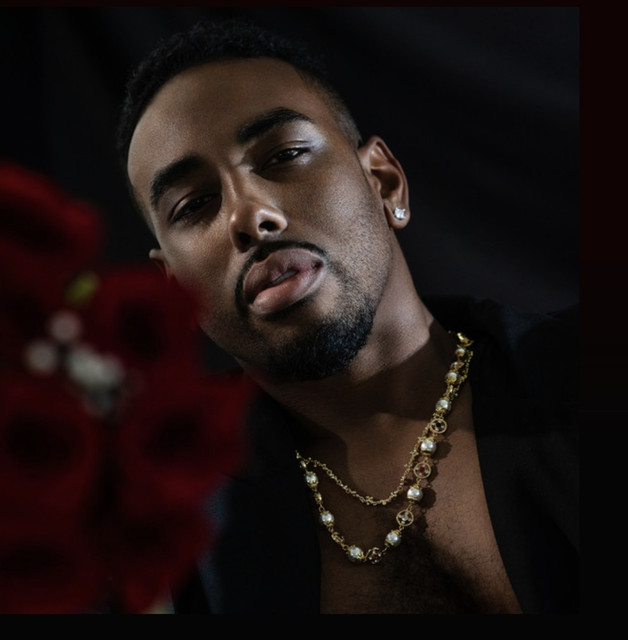
    There are certain artists whose music feels connected to a much larger conversation. Artists who understand that every generation adds another layer to the sounds that came before it. With his latest single, “10th Floor,” the Detroit singer-songwriter Apropos draws from decades of soul tradition while creating something that is unmistakably his own.

    From the opening moments, “10th Floor” establishes a world of warmth and atmosphere. The track moves with smooth confidence, built around rich piano melodies, subtle grooves and Apropos’s distinctive vocals. His voice has the character of classic soul – full of texture, full of emotionv-vwhile the production places the song firmly within the landscape of contemporary R&B.

    “10th Floor” explores the memories attached to certain places and the way a shared moment can transform an ordinary space into something meaningful. It is a song about connection, and the comfort found in creating a private world with another person.

    Apropos understands that some of the most powerful emotions exist in quieter moments. In the conversations after the excitement has faded, the familiar routines and the memories that continue to return long after an experience has passed. He captures those feelings with sincerity.

    Produced by Jake Bass, “10th Floor” brings together organic soul influences and contemporary production techniques with impressive balance. The arrangement is carefully considered, from the layered harmonies to the subtle instrumental details, to contribute to the overall mood. The song creates an atmosphere that honours the emotional foundation of soul music.

    Apropos’s journey adds another layer of meaning to this release. After gaining national attention with his appearance on The Voice, he stepped away from the spotlight to focus on rebuilding his voice and refining his artistic direction. That time of reflection has led to music that feels more focused and confident, shaped by experience and a deeper understanding of his own creative identity. Throughout his career, Apropos has embraced the idea of being a bridge between generations of music. The influence of Detroit soul, gospel traditions and classic R&B can be felt throughout, but they are woven into a contemporary sound that speaks to today’s listeners.

    Apropos demonstrates clarity here. “10th Floor” is very much a statement of artistic purpose from a musician who understands where he comes from while continuing to explore where he can go.

    Keep up with everything Apropos on his Website

    George Collins Turns Happiness Into a Groove with Soulful New Single “Happiness Looks Good on You”

    happinesslooksgoodonyou

    There is something wonderfully underestimated about a genuinely happy song. Not a song that simply throws a few optimistic words over a predictable melody, but a song that understands that joy requires honesty. Happiness is most powerful when it has been earned; when it comes after uncertainty, disappointment and the inevitable twists and turns that life throws our way.

    George Collins understands this perfectly. With “Happiness Looks Good on You,” he avoids the trap of writing a simple feel good anthem. Forget trying to box it neatly into one genre. Americana? Soul? Roots? Gospel? New Orleans rhythm and blues? The truth is that great songs rarely care about the labels we attach to them. They simply find their own space, and Collins’s latest offering does exactly that. Drawing inspiration from the timeless sounds of artists such as The Staple Singers, Dr. John, Allen Toussaint, and The Neville Brothers, he creates a track that feels both familiar and completely alive.

    Listen in here:

    From the opening moments, “Happiness Looks Good on You” carries a warmth that is impossible to resist. The Hammond organ rolls gently beneath the arrangement, the horns add flashes of colour and excitement and the groove settles into that rare space where sophistication and pure enjoyment exist side by side. It’s music made by people who understand that sometimes the best songs are the ones that make you instinctively move before you even realise you’re doing it.

    But beneath the irresistible rhythm sits the real strength of the song: the writing. Collins is not interested in pretending that happiness is effortless. Here, he celebrates the people who have endured difficult chapters and come out stronger on the other side. It is a song about friendship, encouragement and the quiet victories that deserve to be recognised.

    And then comes the gospel choir, taking the track from uplifting to genuinely celebratory. The handclaps, soaring harmonies and joyful energy of the finale make it feel like a room full of people gathering together to celebrate life itself. It is impossible not to smile as the song reaches its conclusion.

    With his latest single, “Happiness Looks Good on You,” Collins has created a cheerful song, reminding us that optimism is not naïve, and joy is not superficial.

    And with New Ways of Getting Old showcasing even more of his thoughtful songwriting, there has never been a better time to discover an artist who understands that great songs don’t need to shout. They simple need to connect with the listener.

    Follow George Collins on his Website HERE

    VIDEO VOYAGEUR: 3 Q’S WITH KEN LOVERN

    blindboone

    When Ken Lovern set out to create Blind Boone the Musical, he wasn’t simply writing songs. He was uncovering an overlooked chapter of American history. Through an ambitious blend of jazz, theatrical storytelling and historical research, the Kansas City composer and jazz organist is bringing the remarkable life of Missouri pianist John William “Blind” Boone to a whole new generation.

    The project’s latest single, “Quindaro,” shifts the focus from Boone himself to the courageous journey of his mother, Rachel, bringing together the story of the Underground Railroad, the historic free state town of Quindaro, and the events that ultimately shaped one of America’s most extraordinary musicians. Accompanied by a striking visual narrative that combines original comic book artwork, archival imagery and footage from the recording sessions, the release demonstrates the scale and vision behind Blind Boone the Musical.

    We caught up with Ken to discuss the inspiration behind “Quindaro,” the symbolism woven into its music, the creative process behind the video and why preserving stories like Blind Boone’s has never been more important than now.

    Tell us the story of this track. Why did you choose to visualize it specifically in this way?

    Quindaro is part of the story of Rachel Boone as told in the musical historical fantasy, “Blind Boone the Musical.” 

    The song’s setting is just before sunset in late Summer 1863, near Miami, Missouri in north central Missouri.  A group of escaped and freed former enslaved persons, called “contrabands” by the Union Army, are heading west to Kansas in search of freedom and a better life.  Their immediate goal is to reach the river port town of Quindaro on the Kansas side of the Missouri river and a known stop on the Underground Railroad.  They sing to tell their story and their reasons for heading to the Free State of Kansas.

    At dawn, the freedom seekers continue walking west to Quindaro.  Rachel twisted her ankle the previous day, and it has swollen through the night.  She is unable to walk.  She will remain in central Missouri and give birth to John William Boone, who will become the prodigy and performing legend “Blind Boone.”

    The cowbell beat that begins Quindaro is a standard “bell pattern” that forms the basis for much of the music of sub-Saharan Africa.  The migration of this cross-rhythmic figure into the Americas introduced new rhythms to American music that did not exist in Europe.  Some musicologist trace the “swing” of American blues and jazz to this pattern.  

    In the song Quindaro, the bell pattern remains consistent while the underlying pulse of the shaker and the bass drum alternate from a 6/8 beat to a 4/4 beat.  Shifting the underlying pulse from 6/8 to 4/4 symbolizes the forced migration of the Africans to the Americas.

    What was the inspiration behind this new video (visuals , storyline, etc.)?

    The video features art from the companion comic book, video from the recording sessions, photos, and historical maps and drawings.  My goal was to tell the story of the freedom seekers along with the experience of the musicians.  The viewer can see through the maps and drawings the perilous journey from the Missouri side of the river at Parkville to the Kansas side of the river at Quindaro.

    What was the process of making the video?

    To create the video, I drew on images from several sources.  To present the story of Blind Boone the Musical in a clear and linear manner, I collaborated with Gutter Studios to develop a comic book adaptation.

    While recording Quindaro, I filmed videos of the musicians performing.  I interspersed those videos with the comic book images and vintage maps and drawings to visually tell the story.

    The video represents the dramatic story of freedom seekers from one hundred and sixty-three years ago and the joy of musicians performing today. 

    Connect with Ken Lovern and Blind Boone the Musical HERE

    Zoey Madison’s New Single “love like you” is a Summer Slow Burn Worth Stopping For

    ZOEYFINAL

    Zoey Madison’s new single love like you doesn’t try to compete with the seasonal noise of summer playlists, and that’s why it stands out. While much of the current pop landscape leans into upbeat, sun drenched production, Madison offers us a grounded piano led ballad.

    Built around a simple but expressive piano motif, the song introduces Madison’s vocal in an uncluttered space. And there is much clarity to the musical arrangement too which feels intentional from the outset. Instead of rushing into a hook or chasing a beat, love like you reveals itself in a more subtle way, allowing emotion and instrumentation to build in tandem.

    Listen in here:

    Producer, mixer and co-writer Matt Chiaravalle shapes love like you with a song first approach, and guides its evolution from intimate piano sketch to a sweeping, string-laden ballad without losing any of its emotion. Charlie Paxson on drums adds a subtle momentum without disrupting the song’s intimacy, while the inclusion of live strings featuring Dave Eggar on cello and Ada Pasternack on violin expands the emotional scope more.

    At the centre of it all are Madison’s stunning vocals. Possessing both technical control and a natural sense of phrasing, she resists the temptation to over perform, although with her power she certainly could, but here the space and silence allows her to rise into more powerful moments. The song doesn’t require additional embellishment to prove its impact.

    love like you isn’t a “summer song” in the conventional sense as there are no glossy hooks built for poolside playlists or immediate radio hooks. It does sound like the kind of track that stays outside of trends. A piano ballad rewards listeners who give it time.

    There’s also a strong sense of storytelling running through the performance. The layered vocals add depth without much clutter, and reinforce the song’s central theme of connection without going into melodrama.

    Recorded between Flux Studios and Mercy Sound in New York’s East Village and mastered by Joe Lambert, love like you carries a polished production finish that leans into warmth, space and dynamic movement. A reminder that simplicity when handled with care, is far more powerful than pure excess.

    Zoey Madison may be an emerging name in pop, but love like you definitely suggests an artist with a clear sense of direction. She is building atmosphere, emotion and longevity into her sound and this piano ballad is ultimately more enduring.

    Keep up with everything Zoey Madison on her Website

    Stream music on Spotify and Apple Music

    VIDEO VOYAGEUR: 3 Q’s WITH SCARLET AYLIZ

    say I

    Every artist has that one song that refuses to be left behind. For rising rock artist Scarlet Ayliz, that song is “Say I.”

    Originally written when she was just seventeen during an impromptu basement jam session, the song lay dormant for years before being rediscovered and transformed into the powerful alt-rock statement it is today. Drawing inspiration from 90’s grunge, classic rock, and the trials and tribulations of growing up, “Say I” captures the raw emotions of youth while showing an artist determined to carve out a sound entirely her own.

    With an accompanying music video created alongside Ikon Media, vibrant visuals, and a renewed sense of artistic purpose, Scarlet Ayliz is entering an exciting new chapter in her musical journey. We caught up with her to discuss the origins of the song, the creative process behind the video, her influences and why “Say I” represents far more than just another single release.

    Tell us the story of this track. Why did you choose to visualize it specifically in this way?

    My new song ‘Say I’ was written by me when I was seventeen. I had gone through multiple bands, and the pandemic hit shortly after. The band I was with was having a jam session in my basement, so I took control of what I heard, shot out a few directions, and sang a bunch of nonsense until something started to hit me. I had just wanted to rant about how crappy life had been recently with regards to growing up, having crushes on douchebags, and being scared of falling back into the loop of fake friends, and unrequited feelings.

    The initial recording was a voice memo of me and my old band having a jam session, I had liked what they were fooling around with and decided to give them some directions in hopes they’d like what I came up with to give the song more structure. The demo came out great, but after we split I completely forgot about it until I was looking through my files and began to listen to it again. I presented the recording to my executive producer, and we redid the track with all new instruments and a clean final mix. We switched up some of the format, but the heart of the song remains the same. 

    What was the inspiration behind this new video (visuals, storyline, etc.)?


    I was heavily inspired by 90’s grunge and 2000’s “dad rock” for the sound. My band and I at the time played mostly covers that leaned into a classic rock genre, but decided to shift gears once I started presenting more songs to them to learn. I wanted to fuse genres and make my own rock sound. Say I marks the end of fitting a mould, and the beginning of putting together my own unique sound.

    What was the process of making the video?

    For my new MV, Say I, I partnered with Ikon Media to bring to life a fun summer-esque vibe, that has a bit of edge to it—the bright colors and rocker edge are meant to paint a picture of moving forward into brighter days, while remembering how tough the past was in certain aspects.

    Keep up with Scarlet Ayliz on her Website