George Collins Turns Happiness Into a Groove with Soulful New Single “Happiness Looks Good on You”

happinesslooksgoodonyou

There is something wonderfully underestimated about a genuinely happy song. Not a song that simply throws a few optimistic words over a predictable melody, but a song that understands that joy requires honesty. Happiness is most powerful when it has been earned; when it comes after uncertainty, disappointment and the inevitable twists and turns that life throws our way.

George Collins understands this perfectly. With “Happiness Looks Good on You,” he avoids the trap of writing a simple feel good anthem. Forget trying to box it neatly into one genre. Americana? Soul? Roots? Gospel? New Orleans rhythm and blues? The truth is that great songs rarely care about the labels we attach to them. They simply find their own space, and Collins’s latest offering does exactly that. Drawing inspiration from the timeless sounds of artists such as The Staple Singers, Dr. John, Allen Toussaint, and The Neville Brothers, he creates a track that feels both familiar and completely alive.

Listen in here:

From the opening moments, “Happiness Looks Good on You” carries a warmth that is impossible to resist. The Hammond organ rolls gently beneath the arrangement, the horns add flashes of colour and excitement and the groove settles into that rare space where sophistication and pure enjoyment exist side by side. It’s music made by people who understand that sometimes the best songs are the ones that make you instinctively move before you even realise you’re doing it.

But beneath the irresistible rhythm sits the real strength of the song: the writing. Collins is not interested in pretending that happiness is effortless. Here, he celebrates the people who have endured difficult chapters and come out stronger on the other side. It is a song about friendship, encouragement and the quiet victories that deserve to be recognised.

And then comes the gospel choir, taking the track from uplifting to genuinely celebratory. The handclaps, soaring harmonies and joyful energy of the finale make it feel like a room full of people gathering together to celebrate life itself. It is impossible not to smile as the song reaches its conclusion.

With his latest single, “Happiness Looks Good on You,” Collins has created a cheerful song, reminding us that optimism is not naïve, and joy is not superficial.

And with New Ways of Getting Old showcasing even more of his thoughtful songwriting, there has never been a better time to discover an artist who understands that great songs don’t need to shout. They simple need to connect with the listener.

Follow George Collins on his Website HERE

VIDEO VOYAGEUR: 3 Q’S WITH KEN LOVERN

blindboone

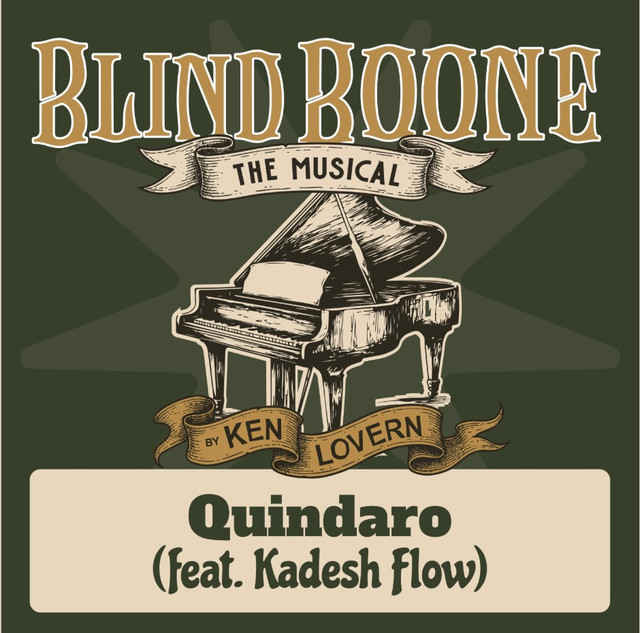
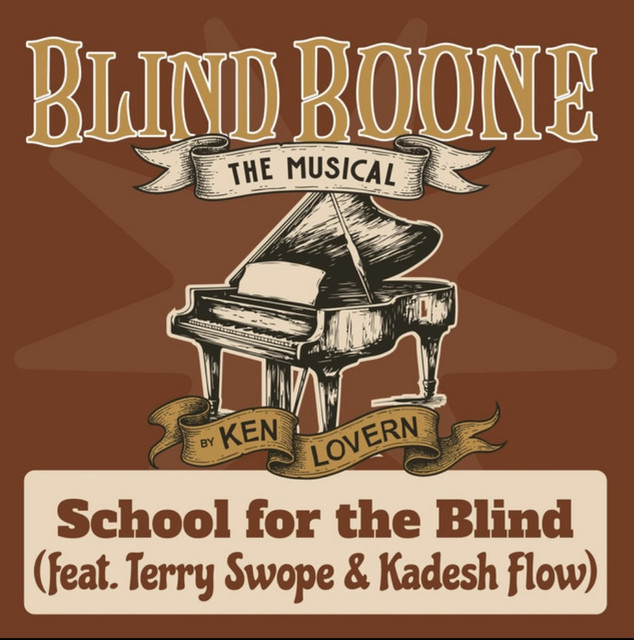
When Ken Lovern set out to create Blind Boone the Musical, he wasn’t simply writing songs. He was uncovering an overlooked chapter of American history. Through an ambitious blend of jazz, theatrical storytelling and historical research, the Kansas City composer and jazz organist is bringing the remarkable life of Missouri pianist John William “Blind” Boone to a whole new generation.

The project’s latest single, “Quindaro,” shifts the focus from Boone himself to the courageous journey of his mother, Rachel, bringing together the story of the Underground Railroad, the historic free state town of Quindaro, and the events that ultimately shaped one of America’s most extraordinary musicians. Accompanied by a striking visual narrative that combines original comic book artwork, archival imagery and footage from the recording sessions, the release demonstrates the scale and vision behind Blind Boone the Musical.

We caught up with Ken to discuss the inspiration behind “Quindaro,” the symbolism woven into its music, the creative process behind the video and why preserving stories like Blind Boone’s has never been more important than now.

Tell us the story of this track. Why did you choose to visualize it specifically in this way?

Quindaro is part of the story of Rachel Boone as told in the musical historical fantasy, “Blind Boone the Musical.” 

The song’s setting is just before sunset in late Summer 1863, near Miami, Missouri in north central Missouri.  A group of escaped and freed former enslaved persons, called “contrabands” by the Union Army, are heading west to Kansas in search of freedom and a better life.  Their immediate goal is to reach the river port town of Quindaro on the Kansas side of the Missouri river and a known stop on the Underground Railroad.  They sing to tell their story and their reasons for heading to the Free State of Kansas.

At dawn, the freedom seekers continue walking west to Quindaro.  Rachel twisted her ankle the previous day, and it has swollen through the night.  She is unable to walk.  She will remain in central Missouri and give birth to John William Boone, who will become the prodigy and performing legend “Blind Boone.”

The cowbell beat that begins Quindaro is a standard “bell pattern” that forms the basis for much of the music of sub-Saharan Africa.  The migration of this cross-rhythmic figure into the Americas introduced new rhythms to American music that did not exist in Europe.  Some musicologist trace the “swing” of American blues and jazz to this pattern.  

In the song Quindaro, the bell pattern remains consistent while the underlying pulse of the shaker and the bass drum alternate from a 6/8 beat to a 4/4 beat.  Shifting the underlying pulse from 6/8 to 4/4 symbolizes the forced migration of the Africans to the Americas.

What was the inspiration behind this new video (visuals , storyline, etc.)?

The video features art from the companion comic book, video from the recording sessions, photos, and historical maps and drawings.  My goal was to tell the story of the freedom seekers along with the experience of the musicians.  The viewer can see through the maps and drawings the perilous journey from the Missouri side of the river at Parkville to the Kansas side of the river at Quindaro.

What was the process of making the video?

To create the video, I drew on images from several sources.  To present the story of Blind Boone the Musical in a clear and linear manner, I collaborated with Gutter Studios to develop a comic book adaptation.

While recording Quindaro, I filmed videos of the musicians performing.  I interspersed those videos with the comic book images and vintage maps and drawings to visually tell the story.

The video represents the dramatic story of freedom seekers from one hundred and sixty-three years ago and the joy of musicians performing today. 

Connect with Ken Lovern and Blind Boone the Musical HERE

Zoey Madison’s New Single “love like you” is a Summer Slow Burn Worth Stopping For

ZOEYFINAL

Zoey Madison’s new single love like you doesn’t try to compete with the seasonal noise of summer playlists, and that’s why it stands out. While much of the current pop landscape leans into upbeat, sun drenched production, Madison offers us a grounded piano led ballad.

Built around a simple but expressive piano motif, the song introduces Madison’s vocal in an uncluttered space. And there is much clarity to the musical arrangement too which feels intentional from the outset. Instead of rushing into a hook or chasing a beat, love like you reveals itself in a more subtle way, allowing emotion and instrumentation to build in tandem.

Listen in here:

Producer, mixer and co-writer Matt Chiaravalle shapes love like you with a song first approach, and guides its evolution from intimate piano sketch to a sweeping, string-laden ballad without losing any of its emotion. Charlie Paxson on drums adds a subtle momentum without disrupting the song’s intimacy, while the inclusion of live strings featuring Dave Eggar on cello and Ada Pasternack on violin expands the emotional scope more.

At the centre of it all are Madison’s stunning vocals. Possessing both technical control and a natural sense of phrasing, she resists the temptation to over perform, although with her power she certainly could, but here the space and silence allows her to rise into more powerful moments. The song doesn’t require additional embellishment to prove its impact.

love like you isn’t a “summer song” in the conventional sense as there are no glossy hooks built for poolside playlists or immediate radio hooks. It does sound like the kind of track that stays outside of trends. A piano ballad rewards listeners who give it time.

There’s also a strong sense of storytelling running through the performance. The layered vocals add depth without much clutter, and reinforce the song’s central theme of connection without going into melodrama.

Recorded between Flux Studios and Mercy Sound in New York’s East Village and mastered by Joe Lambert, love like you carries a polished production finish that leans into warmth, space and dynamic movement. A reminder that simplicity when handled with care, is far more powerful than pure excess.

Zoey Madison may be an emerging name in pop, but love like you definitely suggests an artist with a clear sense of direction. She is building atmosphere, emotion and longevity into her sound and this piano ballad is ultimately more enduring.

Keep up with everything Zoey Madison on her Website

Stream music on Spotify and Apple Music

VIDEO VOYAGEUR: 3 Q’s WITH jen M

Jen M

With “Why Don’t You Do Right?”, jen M steps into a new artistic chapter while staying deeply rooted in the blues tradition that shaped Lil’ Red & The Rooster. Featuring Grammy nominated pianist Bobby Floyd alongside collaborators Lauren Tucker, G-Louis, and The Governor this track transforms a familiar jazz standard.

Built from the scratch of a washboard, the sway of bongos, a weathered upright piano, and the twang of a gitjo, the recording creates the atmosphere of a cold New York apartment where survival matters more than glamour. Rather than romanticizing wealth and escapism, jen M’s interpretation focuses on the emotional toll of hard times and the complicated tenderness of tough love. The accompanying video expands that idea visually, contrasting the elegance of a vintage jazz-club setting with the modern reality of working musicians, phone screens and a culture that often consumes art while undervaluing the artists who create it.

At once intimate and socially observant, “Why Don’t You Do Right?” marks the debut of jen M as a solo project and signals an exciting evolution in her creative voice: genre fluid, collaborative, and driven by instinct, storytelling and atmosphere rather than convention.

Tell us the story of this track. Why did you choose to visualize it specifically in this way?

When I hear the lyrics of “Why Don’t You Do Right?” I imagine a young woman demanding her man become her sugar daddy to drape her in diamonds and furs. I don’t relate to that. I imagine a NYC apartment with high ceilings and a bone chill in the air — radiators clanking, electricity flickering. A woman frustrated with her partner worn down into laziness by an oppressive world. Starving, tough love is all she has left to give to get him back on his feet. 

To create this soundscape in the studio I layered the scratch of a washboard with bongos to create the atmosphere. There was a perfectly out-of-tune upright in the corner that Bobby Floyd brought to life. It was like listening to a 1920’s barroom. G-Louis added a soft simple bass line and his banjo guitar with the perfect twangy texture. I wanted to turn the song into a duet. We didn’t think too much about why there are two women in this situation, we leave that up to your imagination. I didn’t need to give Lauren much direction we entwined our voices instinctively in the moment. It only took two takes. That created the music. 

I’m a very intuitive creator. I love puzzles. In grad school at Naropa University, I studied a technique for theatre creation called Moment Work by Moises Kauffman. In this technique you start with a story or idea or question or theme and then instead of writing a story you create moments that relate to the theme. They can be anything. Once you have them you weed them and then arrange them like pearls on a string. I love this way of working. It doesn’t have to be linear or necessarily clear point to point. It can be a series of impressions, senses and experiences. So, for this project, I didn’t want to tell the story of the lyrics or my impression of them. I think it’s strong enough in the music. I didn’t want to explain. I want it to be a different experience for everyone. 

What was the inspiration behind this new video (visuals, storyline, etc.)?

I wanted to play with the dichotomy between the musicians on stage making the same hundred bucks a gig they did in the 80’s and a wealthy public of art lovers. They all love music and that love becomes the excuse for a culture to starve their artists because … well, “they love what they do.” And we do, and we’d love to live better without begging for each dollar. So we have that artist cry for culture to do better and get us some money too. 

So, I asked our fans to come to our favorite coffee shop Java Central in my home town Westerville, Ohio dressed to the nines. I told them to not hold back, bring out those diamonds and pearls and they did, including my mom. We put white table cloths on the tables with crystal wine and cocktail glasses. Dimmed the lights and turned it into a NYC jazz club vibe. 

I’m also fascinated by the new phone filming art trend. I’m not anti or pro, I accept it for what it is, a new way of sharing art with others. I wanted to bring that element into the video like a veil over being present in the moment. Veil’s can have their beauty too. 

Another element I wanted to explore was using black & white of the past in contrast to vivid color of now.

What was the process of making the video?

Our friend and videographer Bill Jingo helped me set up a GoPro, iPad and iPhone as three static full scene camera angles. Then he shot close-ups with a hand-held iPhone holder. The venue has stage lighting and a really beautiful blue wall next to brick and an old upright piano. I chose the space for that blue wall. There’s also a painting of a dear friend and fellow musician who passed away a few years back. 

The band came dressed for a high-end gig. I played the recording live and we doubled it with voices and instruments, which meant we all had to relearn our parts. It’s not as easy as it sounds. The fans sat down in front of the stage and played their part. We did three takes plus close-ups. One take I asked them to get their phones out and film the soloists. They got really into it with one guy doing a selfie with the band in the background. The footage is really quite beautiful when layered over like that veil I was referring to. 

My favorite moment is a slow motion money grabbing moment. I took the tip jar and grabbed all the money and threw it in the air. All the musicians grabbed for it while the audience was filming it with their phones. Funny thing, one bill got stuck in the ceiling panels.  

Another funny moment, while filming Bobby’s closeup on his solo, G-Louis started playing his gitjo behind his head like an electric guitar. The public started laughing of course and Bill caught Bobby and Governor’s expression of delight and surprise. I didn’t use the behind the head shot, but the shot of Bobby and The Governor is in the video. Look for it during the guitar solo. 

Bill did such a beautiful job with the filming that editing was effortless. It was all intuitive. When I finished I realized I’d naturally bookended the video in black & white with the washboard. 

A Song in Motion -Wayward Sparrow Finds Form in “Gravel and Broken Glass”

waywardsparrow

If there’s one thing that runs through certain strands of Americana and modern folk songwriting, it’s the sense that stories don’t always arrive in straight lines. Many of them settle into meaning slowly. “Gravel and Broken Glass,” which is the latest single from Wayward Sparrow, leans into that idea with confidence creating a song that is as much about atmosphere and suggestion as it is about traditional song structure.

Detroit-based songwriter Rich Clark continues to develop Wayward Sparrow as a fully independent project, self producing and self recording the material with a deliberately stripped back approach to the arrangements. What emerges is not an attempt to recreate a genre in its polished form so much as to engage with its origin: storytelling, space, emotion.

On “Gravel and Broken Glass,” that philosophy is immediately apparent. The song did not begin in its final form. Originally written around a different chord structure, it shifted significantly during the recording process when Clark began experimenting with a new rhythm guitar part. That change re-directed the entire track. What was once a more conventional idea gradually became something darker and more atmospheric, shaped in real time rather than imposed from the outset.

he acoustic guitar carries a steady forward motion, and a Telecaster solo enters midway through not as a climactic moment, but as a tonal shift, slightly distant and bridging sections with a sense of mood rather than spectacle.

Vocally and lyrically, the song continues Clark’s focus on imagery and implication. Rather than spelling everything out directly, the writing leans into suggestion, letting meaning form gradually through repetition and reflection. It’s a style that feels closely tied to the broader intent behind Wayward Sparrow: lyrics that reward patience where interpretation is part of the listening experience rather than something resolved immediately.

Like much of Wayward Sparrow’s work, it feels less concerned with arrival than with the actual journey, much more about capturing the moment a song decides what it wants to be.

Wayward Sparrow copy

About Wayward Sparrow

Wayward Sparrow is the independent music project of Detroit-based singer-songwriter Rich Clark. Self-recorded, self-produced, and self-funded, the project embraces sparse arrangements that put honest storytelling and atmosphere at the forefront. 

With a sound centered in folk, Americana, and subtle bluegrass influences, Wayward Sparrow explores the darker, often unspoken corners of life through music that is intimate and deeply human. Clark’s work has been described as “whiskey lamentations and hymns of the hopeless.”

Follow Wayward Sparrow on Instagram

Stream music on Soundcloud and YouTube Music

Animals in Denial Channels Chaos and Cultural Friction on Latest Release “We’re Dangerous”

AID

“We’re Dangerous” arrives like a signal bleeding through from somewhere slightly off-grid. It’s too loud, too dense, too emotionally charged to behave itself in the way modern alt-rock often politely insists it should.

Animals in Denial don’t seem interested in that politeness anyway. Christian Imes builds this thing like he’s holding multiple ideas in his hands at once and refusing to drop any of them, even if they clash, even if they spark, even if they threaten to overload the system.

There’s an almost basement level urgency running through the track, the kind you used to hear when bands had something to prove and not much interest in smoothing the edges for wider consumption. Guitars are stacked and slightly unruly, not in a sloppy way, but in a way that feels human with small variations left in the mix, textures allowed to overlap instead of being neatly separated into their own lanes. It doesn’t sound “produced” so much as assembled under pressure like the song might have broken out of the room if it had been given just one more pass.

And yet, for all that abrasion, there’s something strangely controlled underneath it. The drums hold steady like a metronome refusing to be dragged into chaos. The bass sits deeper in the structure, doing its job without calling attention to itself. It’s the tension between those grounding elements and the surrounding noise that gives the track its shape. Without that discipline, it would collapse into pure distortion.

“We’re Dangerous” is a song about being misread. About generational friction. About the way language gets flattened when one group looks at another and decides it already understands them. But unlike a lot of modern “statement” tracks, it doesn’t reduce that idea into slogans or clean takes.

There’s a moment in the track where everything feels like it’s pushing slightly out of alignment with layers pressing against each other, vocals cutting through. That’s where the song really clicks.

And that’s something a lot of modern alternative music seems to have forgotten how to do. “We’re Dangerous” does the opposite. It leans into friction. It lets the rough edges stay visible. It trusts that intensity doesn’t need to be smoothed in order to be understood.

Is it chaotic? Absolutely.
Is it controlled? Just enough.
Is it necessary? That’s the real question.

Because somewhere inside all that distortion and density, there’s a clarity and the sense that this is what it sounds like when someone refuses to simplify themselves for easy interpretation.

It’s loud, it’s uncomfortable, and it doesn’t apologize for either of those things.

Keep up with Animals In Denial on the Website

Stream music on Spotify and YouTube Music