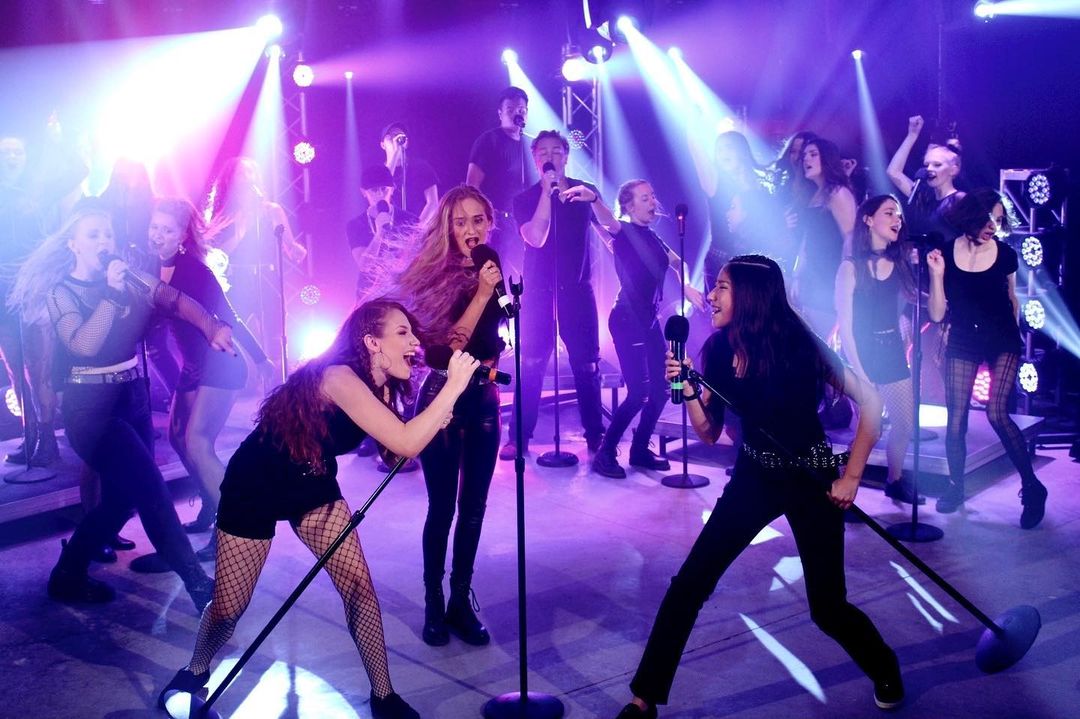
New Jersey’s own RockNRoll Chorus is an acapella group run by singer/songwriter and composer Joe Cantaffa. The RockNRoll Chorus launched its first tour and full length album, What They Didn’t Teach Us In School, in 2007 and since then have been blessed with amazingly talented singers and performers over more than 15 casts.
RNRC has performed with, and opened for, Bruce Springsteen, Darlene Love, Jacquie Lee, Judy Collins, Gavin DeGraw, Colbie Caillat, Sara Bareilles, Jefferson Airplane, Foreigner, Kenny Loggins, The Chieftains, Classic Albums Live: Pink Floyd, The Wall, Willie Nile, Max Weinberg, Jay Leno, Danu, Jill Tirrell, The Chicago Children’s Choir, and many studio recordings as a guest choir.
The RockNRoll Chorus’ newest acapella song, “Heaven In My Soul,” is a moving and uplifting tribute to the power of love and the human spirit in the face of loss. The song, which speaks to the pain of losing a loved one and finding solace in memories and the support of others, is a testament to the power of music to heal and inspire.
The song’s opening notes immediately set the tone, with a haunting and soulful melody that sets the stage for the group’s signature harmonies to take center stage. As the song progresses, the lyrics evoke a sense of hope and optimism, celebrating the strength and resilience of the human spirit in the face of adversity.
What is particularly striking about “Heaven In My Soul” is the sheer power and emotion that the RockNRoll Chorus is able to convey through their voices alone. The lack of instrumentation only serves to highlight the strength and beauty of the group’s vocal arrangements, which are nothing short of breathtaking.
This is a song that speaks to the heart, and one that is sure to resonate deeply with anyone who has experienced loss and the pain of grief. The RockNRoll Chorus has once again proven themselves to be among the most talented and innovative acapella groups working today, and “Heaven In My Soul” is a true masterpiece.
Just in time for the Easter and Solstice holidays, Sonic Butterfly features Star Goes Nova in this moving spiritual piece.
An unusual giant instrument, Sonic Butterfly is an acoustic harp with strings, at minimum 60ft long, that span out over the audience, transforming buildings and natural environments into a stunning, immersive musical instrument. Listeners describe it “like being inside YoYo Ma’s cello.”
Star Goes Nova, an electronica composer known for blending genres, in a feat of recording engineering, captures the giant harp and adds piano against a cathedral ambiance, creating images of a medieval Spring dance amongst the strings.
Hear the newly awakened butterfly alight amongst the starburst of Easter, Solstice, May Day and all of the Spring celebrations.
“Eye” has a simple and hypnotic melody that builds up slowly with the addition of various layers of electronic beats and sounds, leading to a climactic and satisfying drop. The vocals are delicate and ethereal, adding a spiritual quality to the track. The lyrics are abstract and poetic, creating a sense of mystery and introspection.
The production of the song is impressive, with a great attention to detail and a careful balance between different elements. The electronic beats are crisp and dynamic, while the atmospheric sounds are immersive and transportive. The mix is clean and spacious, allowing each element to shine without overwhelming the others.
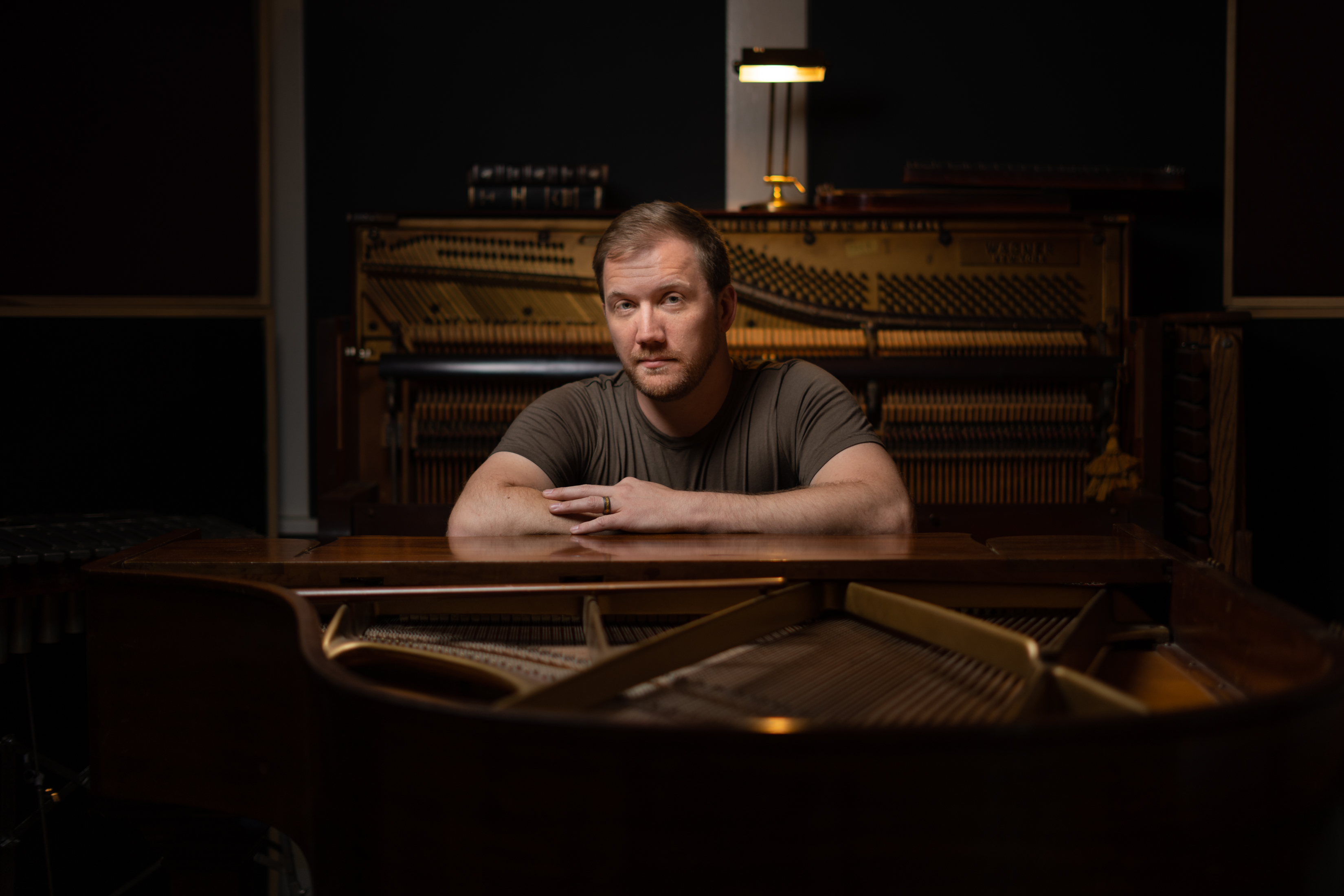
“I’ve always thought of myself as an intrinsic soul, finding meaning in space and time and thought,” says Star Goes Nova. “I create epic stories that combine real instruments with electronica, transcending past and future, told through my 115 year old piano, power drums and deep bass music. These sonic manifestations are empathic spaces to stargaze, gather personal power or share thoughts from other worlds.”
Ford Photographs – Nashville Architectural Photographer
Josiah Mann’s debut album, Grace, is an indie pop and adult contemporary concept album that tells a love story from beginning to end. The album has been in the making for 15 years, and it shows in the carefully crafted songs and emotional journey portrayed through the music.
From the upbeat and passionate “Angel” to the heartbreaking “Rainy Day,” Josiah Mann’s vocals and piano work capture the emotional depth of the protagonist’s journey. The sound is reminiscent of Snow Patrol and John Mayer, blending electric guitar and piano riffs with driving percussion and soulful lyrics.
What sets Grace apart is the accompanying mini-film consisting of 10 music videos that bring the album’s narrative to life. Each video corresponds to a track on the album, showcasing the highs and lows of the relationship as well as the protagonist’s emotional journey.
The album’s story has a happy ending, with Josiah Mann himself having found love and support for his artistic goals. “This has never been about getting famous, it’s been about translating and expressing what is in my heart in the sincerest way I can,” he says.
Grace is a well-crafted album that takes the listener on a journey of love, heartbreak, and self-discovery. It’s a promising debut for Josiah Mann, and one that is sure to resonate with fans of indie pop and adult contemporary music.
Singer/songwriter, author, and poet Moses Mikheyev, released his new alternative folk pop ballad “Fernanda, It’s All Right.”
Moses wrote the song after a particularly tough breakup, using writing songs, poems, and a novel titled “This Time Next Summer,” to help him get through it.
“I process emotional trauma by writing about it,” he reveals. “I tend to turn everything into a poem, a novel, or a song. Music is therapy. It saved my life, and I hope it can save yours, too.”
The song itself is similar to Lighthouse, Coldplay, or The Fray in its cinematic essence and poetic lyricism. The song is sung from the male character’s perspective, longing for the Fernanda. He imagines that a breakup never happened. In his mind, they are still happy.
The opening refrain goes “In her room she’s busy putting on her dress/ But in my mind she’s naked and she’s on my bed/ Somewhere in Seattle she is getting loved/ But in my mind I still think it’s the both of us.”
“Soren Kierkegaard once said, ‘What is a poet? An unhappy man who hides deep anguish in his heart, but whose lips are so formed that when the sigh and cry pass through them, it sounds like lovely music…’ I think that’s very true in the case of ‘Fernanda, It’s All Right,'” explains Moses. “The music was made possible through pain.”
Kristen Rae Bowden’s work is a penchant for clever metaphorical turns of phrases, raw emotionality, and imaginative musical arrangements. Her musicality stretches through adventurous journeys with a dramatic flair, melding classic rock and prog-rock melodies to highly personal emotional explorations. She counts as inspiration such diverse artists as Led Zeppelin, Fleetwood Mac, Primus, Radiohead, Joni Mitchell, John Prine, and legendary musical theater composer Stephen Sondheim.
Her new single “Hard to Love” was actually written with an unanswered question in mind: Can you restart a heart? Kristen didn’t have the answer at the time of writing this which is why the song never answers the question definitively.
The video visually pulses alongside the music. When the chorus arrives, there’s a depiction a woman forming in the lines of the beating heart. She breaks out, shattering the heart and finds freedom. Set in a magenta hue, Kristen is seen singing the verses, almost like she trying to find the answer to her question.
We spoke with Kristen about her video, what it means, and how she came up with the idea of the video:
Tell us the story of this song, why did you choose to visualize this song specifically in this way?
When I wrote “Hard to Love” I was grappling with what you might call “post-broken-heart syndrome”. Just like a physical wound scars over with harder, less flexible skin, I felt my broken heart had healed in many ways, but I felt numb, hardened, and incapable of intimacy. I thought, is this my new normal? Feeling so much less alive than I used to? And I realized I was hiding, dimming my light on purpose, so I couldn’t get hurt again.
The story of “Hard to Love” is all about that feeling: hardening your heart after a breakup like it’s a fortress, not letting anyone all the way in. And at the same time missing how it felt when your heart was open and you were vulnerable, but free. You can’t have both. You can’t shore up your defenses so you don’t get hurt and live life to it’s fullest simultaneously.
The song is centered around a metaphorical question: “Can you restart a heart?” Given its inspiration, when I wrote the song I knew I wanted it to be centered sonically around a heartbeat. And then when it came to the video, I was excited to get to see that heart beating. So I knew I wanted animation to be the vehicle.
I also wanted the world of the video to be different from the real world, to express how alien, fake, and two dimensional the world can feel when you’re anxious and hiding yourself.
What was the inspiration behind this video (visuals, storyline, etc.)?
I wanted to metaphorically express the way “post-broken-heart syndrome” feels, and I knew the heart would be the central image. So I came up with the idea of a girl hiding inside of her heart, which she’s turned into a fortress of protection. No one is allowed in, but no one is allowed out either, so she has essentially imprisoned herself for her own safety. Veins turn to vines and wrap around her wrists and ankles like shackles.
She grows weary of her self-imposed cage and breaks the heart in order to be free, but even then she finds herself on a cliff, alone. All of this imagery, to me, really works to express the feelings of a fear of intimacy.
I also thought the video should have a human aspect. I’m there singing the song in this pink x-ray landscape where a human is out of place and shouldn’t really exist. That’s how I felt when I wrote the song, lost in uncharted territory.
The storyline shifts in the bridge of the song, and I love that you can see my human frustration in that “I can’t go on this way” moment.
The lyrics of the song never offer any hope or assurance that yes, you can “restart a heart”, but the musical section after the bridge has the feeling of hope and triumph. I wanted the video imagery to push that feeling into a certainty. So I went with the idea of growth and blooming to represent that hope, and I love watching the glowing heart grow into a garden.
What was the process of making this video?
I had been playing with the FlipaClip app (flip-book style animation) while dreaming up the conceptual images for this video, so I learned a little bit about how time consuming animation can be and what an awesome skill it is. I knew I wanted the finished video to look more artistically advanced than anything I was going to be able to do.
Through a mutual friend I was very lucky to find Pat Bradley, award-winning animator and illustrator at Spring Shoe Animation. I was thrilled when he signed on for the animated portions, and to edit the video into the imaginary pink x-ray world. I sent him the storyboard I’d made with pieces of amateur animation and drawings of the girl in the heart, and we set up the video shoot together through more mutual friends, Sanjay Suchak and Stephen Thomas.
The video shoot itself was a lot of fun. I sang along with the song in front of a green screen, and though it took me a couple hours to loosen up, eventually I was able to let go of my inhibitions and really express some of that frustration and movement you see in the final product.
Pat did an incredible job taking my crudely drawn ideas and putting them into cohesive, flowing lines that tell the story of the song. He also integrated me into the animated world in a way that I hadn’t imagined.
Low Tide Levee is the newly emerging band of seasoned musicians featuring singer/songwriter, composer, drummer, pianist, and former marine biologist Amy Brookes as the primary creative force. She writes the songs, sings lead vocals and harmonies, and plays drums, percussion, and keyboard. Her husband, Sasha Ames, is the band’s bassist and, sometimes, studio guitarist, and the trio is rounded out by a guitarist.
The band just released their new single “Dang Diggy” and it’s accompanying video. The 60’s pop and progressive rock song was written during one of Amy’s jaunts to a local tea shop she used to frequent to get the creative juices flowing. She came up with this tune, not really expecting much from it, but it ended up being a band favorite.
The fun Claymation video depicts the character of Dang Diggy as an almost divine entity, throwing pies down onto the man below. This man is in a boat with nowhere to run from the pies, his only options are to jump out and swim or sit and take it. It’s a clear depiction of life through whatever it has down on you, good and bad.
We spoke to Amy about the video and what her ideas were:
Tell us the story of this song. Why did you choose to visualize this song specifically in this way?
Dang Diggy came to me during one of my jaunts to my local tea shop that I used to frequent, a unique kind of place to gather and chat with random strangers, while enjoying the subtleties and meditation of gongfu tea ceremony. I often used my walks there and my time sipping tea to invite in the creative process, and many a gem came and was captured with my voice memo or note app on my phone.
The words just came into my head, and I thought it was a fun, silly, trippy song that could be a camp song. Little did I know that my band would love it and we would turn it into a rock anthem. Each pie is a ridiculous stoner dream of an over- the-top kind of dessert that exceeds all reason and just sounds like heaven, even if it would in reality be too much. Eventually, I realized that this incredible mask we found for our music studio (aka the “Funk Palace”) *was* Dang Diggy, and that Dang Diggy was absolutely this non-gendered deity that hung about in the sky throwing down pies to whomever might be fortunate enough to receive them.
What was the inspiration behind this video (visuals, storyline, etc.)?
It was my dream to have a Claymation video showing the story of this character Dang Diggy, a deity-like being who hangs about in the sky throwing down all the different pies. I found someone on Fiverr (Aleksej Pezzi) who did really cool Claymation music videos, and we worked together on filling out the rest of the story and visuals. He proposed a number of different characters for the little creature receiving the pies, and I fell in love with one of them that was sort of Gumby-like with this big heart on its chest. I liked the idea of the creature being in a boat since our band is very inspired by the ocean.
What was the process of making this video?
I wrote to Aleksej about the Dang Diggy mask (and sent photos) and the idea of a Claymation version of it throwing down pies, and we went through a process of sketches and proposals for each character’s look – starting with a sketch and progressing to a clay version. He sent me a mock-up for each scene and we ironed out the details. I wasn’t exactly keen on having Dang Diggy’s pie come out of its nose bathed in snot in one verse, but he kept it in and I just went with it (lol!!). In the end, I wound up loving the whole little movie, it was beyond the sum of its parts and I was so delighted with the expression Aleksej created in each character as the story progresses. No matter how many times I’ve viewed it now, it still cracks me up!

 Modern Mystery
You must be logged in to post a comment.