Where the Land Sings – Mapping Memory and Motion Across Todd Mosby’s “American Heartland”

American Heartland Todd Mosby

Instrumental albums are often framed as background music. Pleasant, technically impressive but rarely stepping forward as something that demands deeper emotional or intellectual engagement. And likewise, records rooted in tradition can sometimes feel content to stay within well worn boundaries, honoring their influences without necessarily expanding on them.

But every so often, an artist comes along who treats both form and feeling as open terrain, blending discipline with imagination to create something that resonates far beyond expectation. American Heartland is exactly that kind of album.

This is ultimately a record shaped by place, but not in any obvious or literal sense. Missouri isn’t simply depicted here. It is absorbed, internalized and re-expressed through a musical language that feels both grounded and far reaching. What begins as a personal reflection on landscape gradually unfolds into something more universal, a meditation on memory, movement and the quiet sense of where we come from.

If that sounds like it leans toward the pastoral or predictable, think again. While there is an undeniable sense of warmth and familiarity running through the album, it is constantly being refracted through a more expansive musical lens. Drawing on both Western traditions and the phrasing and tonal sensibilities of North Indian classical music, the compositions move in ways that feel fluid and alive, with melodies stretching and gliding, harmonies shifting with subtle but purposeful intent.

Take Clouds Above Golden Fields or A Full Moon Rising, where the music seems to hover in a kind of suspended state, anchored by tonal centers that allow melodies to breathe and wander. The phrasing in the vocals are there, aided by the use of open strings and drones, giving these pieces a sense of quiet introspection that does not tip over into stillness. They feel less performed than uncovered, as though they have always existed, waiting to be heard.

Elsewhere, the album finds a different kind of momentum. Tracks like Palomino, Land of Green and All The Stars Tonight introduce parallel harmonic movement that gently reshapes the terrain, adding lift and forward motion without ever overwhelming the core melodic voice. These are pieces that expand outward, drawing on contemporary jazz textures while maintaining a strong sense of narrative cohesion.

And then there are the moments of pure intimacy. On The Farm strips everything back to solo acoustic guitar, offering a closer, more immediate connection between player and listener. These are not interludes so much as anchors and reminders that, for all its breadth, the album remains deeply personal at heart.

Across the record, there’s a careful balance at play. Full ensemble arrangements sit comfortably alongside more sparse, folk-leaning textures, with each informing the other, each adding weight where needed or space where appropriate. The sequencing reflects this beautifully, guiding the listener through a series of shifting perspectives without ever losing its sense of direction.

But beyond its technical and structural strengths, what truly defines American Heartland is its sense of presence. This is music that feels lived-in, and brought to life through genuine human interaction. You can hear this come across in the phrasing, in the interplay, and in the way each piece seems to evolve organically rather than follow a rigid blueprint.

American Heartland is less about individual standout moments and more about the journey it creates as a whole. It’s an album that invites you in, asks you to stay and rewards that time with layers of detail.

2 Recording Session The Village Studios Todd Mosby photoby Andrew Matusik

About Todd Mosby

There are artists who follow tradition, and then there are those who expand it, quietly reshaping musical language through curiosity, discipline and a deep sense of purpose. Todd Mosby has spent his career doing exactly that, forging a distinctive voice that bridges continents, cultures and compositional philosophies.

Born and raised in Missouri, Mosby’s music remains deeply connected to the landscapes of his origin, yet it rarely stays confined to any one place. His work is defined by a seamless integration of Western guitar traditions with the tonal depth and expressive nuance of North Indian classical music, a path shaped through years of dedicated study and immersion. This cross-cultural approach informs not just his technique, but the very architecture of his compositions where melody leads and harmony follows with fluid, intentional grace.

Mosby’s playing is marked by clarity, space and a vocal-like phrasing that allows each note to resonate fully. Whether working within a single tonal center or exploring parallel harmonic movement, his music unfolds organically, guided as much by instinct as by structure.

A committed collaborator, Mosby has worked alongside some of the most respected musicians in contemporary jazz and beyond, valuing the immediacy and depth that only live interaction can provide. For him, music is not a solitary pursuit but a shared experience.

That vision reaches a new level of clarity on American Heartland. Anchored by Mosby’s guitar work and guided by two time Grammy-winning producer Jeffrey Weber, the album features contributions from some of the most respected players in contemporary music. Among them are Vinnie Colaiuta, whose drumming brings both precision and elasticity to the rhythmic foundation, and Leland Sklar, whose unmistakable bass tone adds warmth and depth. Tom Scott lends his signature woodwind voice, shaping the album’s melodic contours with a seasoned, expressive touch, while Michael Manring introduces a more fluid, almost orchestral approach to the instrument. The rhythmic and harmonic palette is further expanded by Luis Conte on percussion and Dapo Torimiro on piano and keys, whose playing helps shape the album’s tonal atmosphere. Around them, a wider ensemble, including brass, strings, and vocalists such as Lola Kristine and Laura Vall, adds texture, color, and emotional nuance to the broader sonic landscape.

Across his work, Mosby continues to balance structure with spontaneity, intimacy with scale. His compositions move effortlessly between solo acoustic reflections and full ensemble arrangements, always guided by a clear emotional throughline. With projects like American Heartland, he continues to refine this vision, crafting immersive, emotionally resonant works that invite listeners into a world shaped by memory, movement, and the enduring influence of place.

Keep up to date with Todd Mosby on his Website

Stream music on Spotify and Apple Music

Wayward Sparrow Introduces a Story Driven Sound with Latest Release “Wayward Sparrow”

Wayward Sparrow Album Cover

Songs get written for all sorts of reasons. Sometimes they’re just there to pass the time, sometimes they’re chasing a feeling and sometimes they’re built around nothing more than the urge to tell a story and see where it lands. “Wayward Sparrow,” the new track from Rich Clark’s project of the same name, is one of those songs that started with a simple idea and trusted itself enough not to overcomplicate things.

It began as an attempt to write something in that bluegrass tradition. Something certainly narrative driven, something that moves. The story itself is a familiar one: an innocent young girl who ends up heading down the wrong path without really meaning to. No big dramatic twist here, but very much a story that is something you have heard before. And this is what makes it work.

Musically, the single stands out as the most rhythmically driving track on the album. While the forthcoming record Devil By My Side as a whole leans more into sparse, atmospheric acoustic arrangements, “Wayward Sparrow” introduces a subtle forward momentum without compromising on its stripped down identity. Acoustic guitar remains the focus here, supported by understated vocal harmonies that drift in and out like texture. Small details that add depth without disrupting the minimal framework.

This atmosphere carries over into the recording process itself. Each song on Devil By My Side was self-recorded and self-produced by Clark, who chose early on to invest his time into learning the craft of recording rather than relying on traditional studio environments. This comes across in how honest the music is in its execution and being completely self-made.

“I create music mostly for myself because I enjoy writing,” Clark says. “That said, I hope people connect with these songs as something made passionately and genuinely – something they want to return to and listen to again.”

That ethos runs through Wayward Sparrow as a whole: music built on instinct, space and clarity over perfection. Slight imperfections become part of the overall language, giving the songs a sense of character that polished production often smooths away. And in the case of “Wayward Sparrow”, it’s exactly that balance. – between movement and stillness, story and space, that sets it apart.

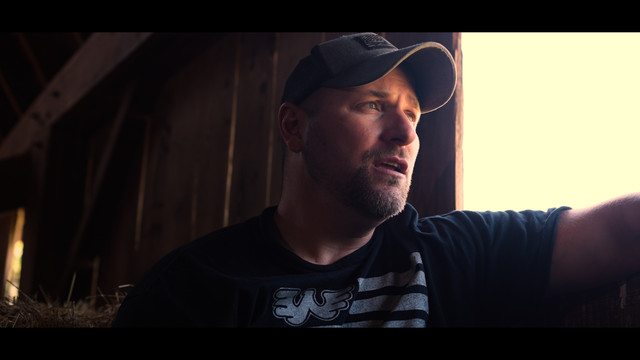
Richard Solo Barn (1 of 1)

About Wayward Sparrow

Wayward Sparrow is the independent project of Detroit based songwriter Rich Clark. Originally starting out as a heavy metal guitarist, Clark gradually found his way into country, folk, and Americana drawn to the storytelling and simplicity of the form. That shift shaped a sound built around space and atmosphere rather than layered production.

All music under the Wayward Sparrow name is self-recorded and self-produced, reflecting a deliberate choice to learn the craft and keep the process entirely hands-on.

Connect with Wayward Sparrow on Instagram

Stream music on Soundcloud and YouTube Music

Life Between the Lines: Bobbo Byrnes and the Reality of the Touring Musician

toomanymiles2

Despite spending more than two decades on the road, and playing everywhere from living rooms to festival stages across the U.S. and Europe, Bobbo Byrnes has largely remained just outside the traditional spotlight. Therefore, it feels appropriate that his memoir, Too Many Miles: On the Road with an Unofficial Rock & Roll Goodwill Ambassador, doesn’t focus on a single breakthrough moment or career peak, but instead captures the long, winding road of a working musician who has built his life one show, one connection and one mile at a time.

This is not a typical rock memoir filled with tales of excess or industry mythology, nor is it strictly a travelogue. Alhough it does contain elements of both. While Byrnes does recount the expected stories the book quickly expands into something broader. It becomes a reflection on what it means to exist in that middle space of the music world: not unknown but not quite mainstream either, working within a global network of small venues, house concerts and grassroots connections.

Byrnes’s early years and evolution as a musician are touched on throughout, from his beginnings in the Boston music scene to his eventual relocation to Southern California and the formation of his band, The Fallen Stars. These formative experiences are presented as part of an ongoing continuum, one that includes constant touring, creative partnerships and the gradual shaping of his identity as both an artist and a storyteller.

A significant portion of the book focuses on Byrnes’s experiences touring internationally, particularly in Europe where his role often extends beyond performer. Much like the best travel writing, these sections highlight not just where he goes but how he is received along the way.

Encounters with audiences frequently shift from music to conversations about American culture, politics and identity, placing Byrnes in an unexpected position of informal ambassador. These moments, including a tense radio interview in Germany and performances for diverse audiences, underscore the idea that music can serve as a bridge in ways that more formal channels often cannot.

Parallel to these stories is the recurring theme of connection and how fleeting interactions with strangers can leave lasting impressions. Whether it’s a conversation after a show, a shared meal or a collaborative moment with fellow musicians, Byrnes emphasizes the communal aspect of a life on the road. In doing so, he subtly pushes back against the notion of the lone artist, instead illustrating how his career has been shaped by countless individuals along the way.

Stylistically, the book mirrors Byrnes’s songwriting with its direct and conversational tone. There is little attempt to mythologize events or even elevate them beyond what they are. Instead, the strength lies in accumulation, in the gradual layering of stories that, taken together, form a clear picture of a life defined not by a sigular achievement but by persistence.

While the book stands out on its own, it also exists alongside a companion album which echoes many of the same themes. Much like the memoir, Byrnes’s music draws from years of travel and observation, reinforcing the idea that Byrnes’ songs and stories are inseparable parts of the same narrative.

If there is an overarching takeaway, it is that careers like this rarely follow a straight line. There is not a single defining moment or arrival point but just the work itself: the writing, the traveling, the performing and the decision to keep on going. If the realities of independent touring, the intersection of culture and songwriting and the quieter stories that exist beyond the mainstream music industry are of interest, then Too Many Miles is well worth the journey.

Connect with Bobbo Byrnes on his Website

When Feelings Catch You Off Guard – A Is for Atom’s Brand New Single “Out of the Blue”

outoftheblue

If you’ve ever found yourself drawn to songs that deal in nostalgia but don’t get stuck there, songs that understand the past is only really useful when it collides with the present, then A Is for Atom might already be on your radar. And if not, the new single Out of the Blue, which is the title track of the upcoming album, is as good a place as any to start.

We’ve all heard songs about that moment. The sudden shift, the emotional plot twist, the “how did I not see this before?” realization. But what makes “Out of the Blue” work is that it lingers in the build up, in the shared history and in the small, seemingly insignificant details.

Listen in here:

Trying to pin the sound down is a bit like trying to describe a memory you’re not quite sure you remember correctly. There are shades of indie rock, of course, but also a gentle electronic undercurrent subtle enough to shape the mood. Guitars shimmer rather than shout, rhythms move with a quiet insistence.

“Out of the Blue” isn’t really about a big moment of realization. It’s about that in between space when something has shifted, but you’re still figuring out what it means and what to do with it. The song looks back to childhood, to shared experiences and the kinds of bonds of friendship that only time builds, but it also acknowledges that life does not stand still long enough for you to examine these feelings deeply. Things change. People change. And sometimes, those changes arrive without any warning and ask you to catch up emotionally.

What does that all mean? It means “Out of the Blue” is one of those rare songs that could easily be about your life. It’s about recognition, not just of someone else but of yourself and how you have changed without noticing.

Mike

About A is For Atom

A Is for Atom is the creative project of songwriter, producer, and multi instrumentalist Mike Cykoski. His music is thoughtful indie rock mixed with subtle electronic textures and a strong sense of atmosphere.

With a background that includes a Master’s in Music Technology from New York University, as well as time spent at The Juilliard School, Harvest Works and Dubspot, Cykoski brings technical precision and creative instinct to his work. That balance is a defining part of the A Is for Atom sound – structured but exploratory and polished.

Over the years, he has performed internationally, with highlights including shows in Ireland, Mexico City and Toronto (NXNE and Canadian Music Week), alongside appearances in major U.S. music hubs such as New York City and Austin. Releases like Song for You and Last Man on the Moon have earned critical acclaim for their depth and detail, establishing A Is for Atom as a quietly distinctive voice in the indie music landscape.

Siren Finds Grace in Grief on Premiere of the Music Video to “February’s Son”

Februarys Son

On their latest single, “February’s Son,” Siren deliver one of the most sincere and emotionally grounded songs of their career to date. Rooted in personal loss and shaped by compassion, the song is a quiet testament to the power of music to honor memory and transform pain into connection.

Written by frontman Rob Phillips, “February’s Son” was inspired by the passing of his family member Reese Puckett, who died at age 20 due to fentanyl. Rather than framing the story through metaphor or distance, Phillips approaches the subject with real openness and humility.

Complementing the song is a lyric video directd by Wayne Joiner, who brings a symbolic and understated visual language to the project. Centered on the image of an old chest releasing photographs and memories, the video mirrors the song’s reflective tone. And rather than illustrating the lyrics directly, it creates an atmosphere of quiet reverence, inviting viewers to engage on a personal level.

From the opening bars, “February’s Son” establishes its emotional tone with soft guitar lines and understated rhythms creating a warm, open space where the song can unfold naturally. There is no rush toward dramatic peaks or sweeping climaxes. Instead, Siren allows the music to move at the pace of memory itself.

Phillip’s vocals are central to the impact of the song. His voice balances sorrow with tenderness. Ths subtlety gives the song its authenticity. It feels honest because it doesn’t try too hard to be profound – it just is. The recording, completed at Madison Studios and engineered by Wyatt Oates, reflects this same philosophy. The production preserves the natural textures of the performance.

What makes “February’s Son” especially compelling is its emotional balance. While the theme of the song is grief and loss, the song never becomes overwhelmed by it. Instead, it focuses on love, legacy, and on the bonds that endure beyond loss. It acknowledges pain without being defined by it, offering listeners a sense of comfort rather than despair.

With the release of this new music video, Siren remind us that some of the most powerful songs are sometimes the quietest ones. The songs that speak softly, listen closely and stay with us for a long time when words fall short.

SIREN February s Son

About SIREN

With a history dating back to the 1980s, Siren is known for their fusion of melodic rock, progressive, and blues influences. Since their formation in the 80s, the band has built a dedicated fan base and earned critical acclaim for their innovative sound. 

Led by Rob Phillips and drummer/engineer Mike Cupino, Siren have continued to evolve. 

Siren recently released their latest album “Listen”, building on the success of their previous work. Phillips and Cupino embarked on a journey to explore a Middle American roots rock sound, crafting songs that capture the essence of everyday experiences, from youth’s innocence to adulthood’s complexities. 

They recorded in Atlanta’s Madison Studios with engineer Wyatt Oates, and the result was the release of their single ‘Small Town’.  The response to the “Small Town” video was immediate, with over 1 Million views on TikTok and critical acclaim from within the Industry.    

Connect with Siren via:

Website I Instagram I Facebook I Twitter I YouTube I Spotify I Soundcloud

“Palomino”: Where Memory, Movement and Melody Converge

Palomino

With a light footed blend of samba rhythms, bossa nova elegance and personal storytelling, Todd Mosby releases “Palomino,” a buoyant, memory soaked single that dances gracefully between nostalgia and forward motion. It’s joyful, reflective and quietly philosophical.

Taken from his forthcoming album American Heartland, “Palomino” captures the spirit of Mosby’s early years growing up on his family’s farm, where mornings were shaped by animals, open skies and unspoken lessons in patience and trust. Inspired by the horse he first learned to ride, the song becomes a metaphor for learning when to guide, when to follow, and when to simply listen.

Musically, all the familiar Mosby hallmarks are present and correct. There’s the gentle propulsion of a fast bustling samba groove, the galloping pulse of classic bossa nova, and those signature harmonic twists that refuse to settle for the obvious route. Influenced by the elegant tradition of Brazilian bossa nova, yet filtered through Mosby’s own sophisticated lens, the track feels both timeless and quietly adventurous.

Layered over this rhythmic shimmer are Mosby’s nimble electric guitar lines, weaving in and out of the arrangement like sunlight through trees, and the soaring vocals of Lola Kristine, which adds lift and an emotional clarity. Together, they have created an effortless sound, even though every note has been clearly placed with care and intention.

But “Palomino” is more than just an exercise in musical elegance. As with much of Mosby’s work, the real magic lies in how the sound serves the story. Close your eyes, and the imagery unfolds naturally; dust rising from hooves, early morning light across open land, a quiet dialogue between rider and horse. It’s music that describes a scene and then asks you to step inside it.

And in that sense, the song becomes a perfect introduction to the wider world of American Heartland. While the album as a whole explores landscapes, history and regional identity, “Palomino” focuses on something smaller and more intimate – a single relationship, a single moment, a single lesson that echoes through a lifetime.

There’s also a subtle philosophy at work here. The track reflects Mosby’s belief in grace through awareness, in learning through observation rather than domination.

In transforming a childhood experience into a richly layered musical narrative, Todd Mosby once again shows why he remains such a compelling voice in contemporary instrumental music. “Palomino” simply rides alongside you for a while, painting a scene you can step into.

Todd Mosby

About Todd Mosby

Todd Mosby is an award winning composer, guitarist and musical innovator based in St. Louis, Missouri. His music brings together elements of jazz, folk, New Age, blues, rock, bossa nova, and North Indian classical music to create richly textured landscapes.

A multiple Global Music and Zone Music Reporter Award winner, Mosby has spent more than a decade developing immersive, place inspired conceptual albums that translate memory, landscape and culture into music. His acclaimed discography includes the “elements” trilogy, beginning with Eagle Mountain (2016), and Land of Enchantment (2023), both celebrated for their emotional depth and visual storytelling.

Mosby studied at the Berklee College of Music and Webster University and spent thirteen years studying classical North Indian music with Ustad Imrat Khan, becoming the only guitarist inducted into the prestigious Imdadkhani Gharana. He also played a key role in designing the Imrat guitar, an 18 string hybrid instrument that bridges Eastern and Western musical traditions. Throughout his career, Mosby has collaborated with many of the world’s most respected studio musicians and released seven albums to date.

Find out more about Todd Mosby on his Website

Stream music on Spotify and Apple Music