Video Voyager: Best Not Broken’s “I Don’t Belong”

Best Not Broken

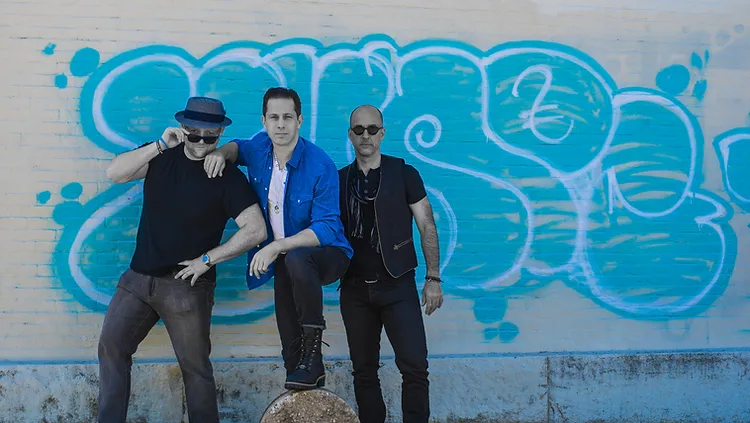
Boston’s Best Not Broken has built a reputation for high energy shows and catchy, power pop/rock original songs. Drawing from Brit Pop, Alternative Rock, New Wave, and their own unique brand of singer-songwriter sensibility, the band crafts soundscapes that appeal to fans of artists ranging from The Killers to Ed Sheeran.

Their thoughtful and, at times amusing, lyrics match the upbeat nature of the instrumentation, creating a fresh musical odyssey that is infectiously fun.  Their live performances showcase the band’s contagious energy and often evolve into interactive dance parties where the onstage antics compel fans to rock out and let loose.

Their new song “I Don’t Belong,” and the video, explores adolescence and finding where you belong. It’s a tribute to those that never quite fit in in high school, but ultimately find their way. It’s also tribute to the many aspiring rock stars that never quite make it but have a treasure trove of memories to look back on.

We got the chance to speak with Best Not Broken about their fun and relatable video for “I Don’t Belong”:

Tell us the story of this song, why did you choose to visualize this song specifically in this way? ​

The song “I Don’t Belong” is a satire of a boy who graduates in the 90s, doesn’t align fully with any particular clique, dreams of being a rock star, but turns out to be just an average guy – which ultimately isn’t that bad! The song is intended to shine a spotlight on our inevitable silly high school regrets. The lyrics inspired the light-hearted, nostalgic video… which kind of wrote itself!

What was the inspiration behind this video (visuals, storyline, etc.)? 

This song was dripping nostalgic references to the 80s and 90s and we felt compelled to bring them to life in the video. There was no shortage of visuals to choose from – from the Rubiks cube to the mullets… sadly they all felt to natural! 

What was the process of making this video?

We knew we wanted the video to be shot in a high school. So the first challenge was finding a high school that would actually let us do it. We had the good fortune of getting access to Souhegan High School in Amherst, New Hampshire, which really was designed perfectly for our intended scenes. We hired 106 Studios to handle the video production and collectively brought in our actors and built out the drama. We pre-ordered a bung of 80s and 90s paraphernalia, and after two days of camera work, we had enough footage to tell our little story. We were so lucky to find all the awesome actors and contributors. If you haven’t yet tried to shoot an era-specific nostalgia video, we highly recommend it.. ha!

Connect with Best Not Broken via:

Website / Instagram / Facebook / Twitter / YouTube / Spotify / Soundcloud / Apple Music

“I Got What I Got” Shows George Collins’ Skill as a Singer/Songwriter

George Collins’ new pop rock track “I Got What I Got” is a testament to the joys of gratitude and redemption. With a bluesy swagger reminiscent of Eric Clapton or Steely Dan, Collins draws on his experience as a screenwriter and novelist to craft literate and insightful narratives that are both thought-provoking and boldly vulnerable. The song is the first release from his upcoming sophomore EP, Songs for Grown-Ups.

George’s story is one of perseverance and determination. Having received his first guitar at the age of four, he pursued both guitar and piano throughout his childhood and beyond. However, in his late 20s, he encountered many older musicians who were unhappy with their lack of success and had fallen into toxic patterns with alcohol and drugs. Determined to avoid this fate, George pursued a successful career as an investment consultant and financial executive, but ultimately chose to leave it all behind to nurture his creative world and be a dedicated full-time parent after the birth of his first child in 2012.

“I Got What I Got” is a reflection on the journey of life and the importance of appreciating the good things that come our way. The song was inspired by a night of reminiscing with an old friend about their wild days in Prague in the early 1990s and how far they’ve come with the wonderful wives they married.

George explains: “’I Got What I Got’ is a song of gratitude for returning to life after a long time in the emotionally-barren wilderness, of finding redemption through the love of a perceptive and patient woman.”

The song’s catchy pop hooks, bluesy guitar riffs, and his soulful vocals make for a highly enjoyable listening experience that shows his unmistakable talents as a songwriter and musician and serves as a strong introduction to his upcoming EP.

Connect with George Collins

Website // Instagram // Facebook // Twitter // YouTube // Spotify // Soundcloud

Video Voyager: Kristen Rae Bowden’s Video for “Hard to Love”

Kristen Rae Bowden

Kristen Rae Bowden’s work is a penchant for clever metaphorical turns of phrases, raw emotionality, and imaginative musical arrangements. Her musicality stretches through adventurous journeys with a dramatic flair, melding classic rock and prog-rock melodies to highly personal emotional explorations. She counts as inspiration such diverse artists as Led Zeppelin, Fleetwood Mac, Primus, Radiohead, Joni Mitchell, John Prine, and legendary musical theater composer Stephen Sondheim.

Her new single “Hard to Love” was actually written with an unanswered question in mind: Can you restart a heart? Kristen didn’t have the answer at the time of writing this which is why the song never answers the question definitively.

The video visually pulses alongside the music. When the chorus arrives, there’s a depiction a woman forming in the lines of the beating heart. She breaks out, shattering the heart and finds freedom. Set in a magenta hue, Kristen is seen singing the verses, almost like she trying to find the answer to her question.

We spoke with Kristen about her video, what it means, and how she came up with the idea of the video:

Tell us the story of this song, why did you choose to visualize this song specifically in this way?

When I wrote “Hard to Love” I was grappling with what you might call “post-broken-heart syndrome”. Just like a physical wound scars over with harder, less flexible skin, I felt my broken heart had healed in many ways, but I felt numb, hardened, and incapable of intimacy. I thought, is this my new normal? Feeling so much less alive than I used to? And I realized I was hiding, dimming my light on purpose, so I couldn’t get hurt again. 

The story of “Hard to Love” is all about that feeling: hardening your heart after a breakup like it’s a fortress, not letting anyone all the way in. And at the same time missing how it felt when your heart was open and you were vulnerable, but free. You can’t have both. You can’t shore up your defenses so you don’t get hurt and live life to it’s fullest simultaneously. 

The song is centered around a metaphorical question: “Can you restart a heart?” Given its inspiration, when I wrote the song I knew I wanted it to be centered sonically around a heartbeat. And then when it came to the video, I was excited to get to see that heart beating. So I knew I wanted animation to be the vehicle. 

I also wanted the world of the video to be different from the real world, to express how alien, fake, and two dimensional the world can feel when you’re anxious and hiding yourself.

What was the inspiration behind this video (visuals, storyline, etc.)?

I wanted to metaphorically express the way “post-broken-heart syndrome” feels, and I knew the heart would be the central image. So I came up with the idea of a girl hiding inside of her heart, which she’s turned into a fortress of protection. No one is allowed in, but no one is allowed out either, so she has essentially imprisoned herself for her own safety. Veins turn to vines and wrap around her wrists and ankles like shackles. 

She grows weary of her self-imposed cage and breaks the heart in order to be free, but even then she finds herself on a cliff, alone. All of this imagery, to me, really works to express the feelings of a fear of intimacy.

I also thought the video should have a human aspect. I’m there singing the song in this pink x-ray landscape where a human is out of place and shouldn’t really exist. That’s how I felt when I wrote the song, lost in uncharted territory.

The storyline shifts in the bridge of the song, and I love that you can see my human frustration in that “I can’t go on this way” moment. 

The lyrics of the song never offer any hope or assurance that yes, you can “restart a heart”, but the musical section after the bridge has the feeling of hope and triumph. I wanted the video imagery to push that feeling into a certainty. So I went with the idea of growth and blooming to represent that hope, and I love watching the glowing heart grow into a garden.

What was the process of making this video?

I had been playing with the FlipaClip app (flip-book style animation) while dreaming up the conceptual images for this video, so I learned a little bit about how time consuming animation can be and what an awesome skill it is. I knew I wanted the finished video to look more artistically advanced than anything I was going to be able to do.

Through a mutual friend I was very lucky to find Pat Bradley, award-winning animator and illustrator at Spring Shoe Animation. I was thrilled when he signed on for the animated portions, and to edit the video into the imaginary pink x-ray world. I sent him the storyboard I’d made with pieces of amateur animation and drawings of the girl in the heart, and we set up the video shoot together through more mutual friends, Sanjay Suchak and Stephen Thomas.

The video shoot itself was a lot of fun. I sang along with the song in front of a green screen, and though it took me a couple hours to loosen up, eventually I was able to let go of my inhibitions and really express some of that frustration and movement you see in the final product.

Pat did an incredible job taking my crudely drawn ideas and putting them into cohesive, flowing lines that tell the story of the song. He also integrated me into the animated world in a way that I hadn’t imagined. 

Connect with Kristen Rae Bowden via:

Website // Instagram // Facebook // Twitter // YouTube // TikTok // Spotity // Soundcloud

Low Tide Levee Premiere Their Playful New Single “Dang Diggy”

Low Tide Levee

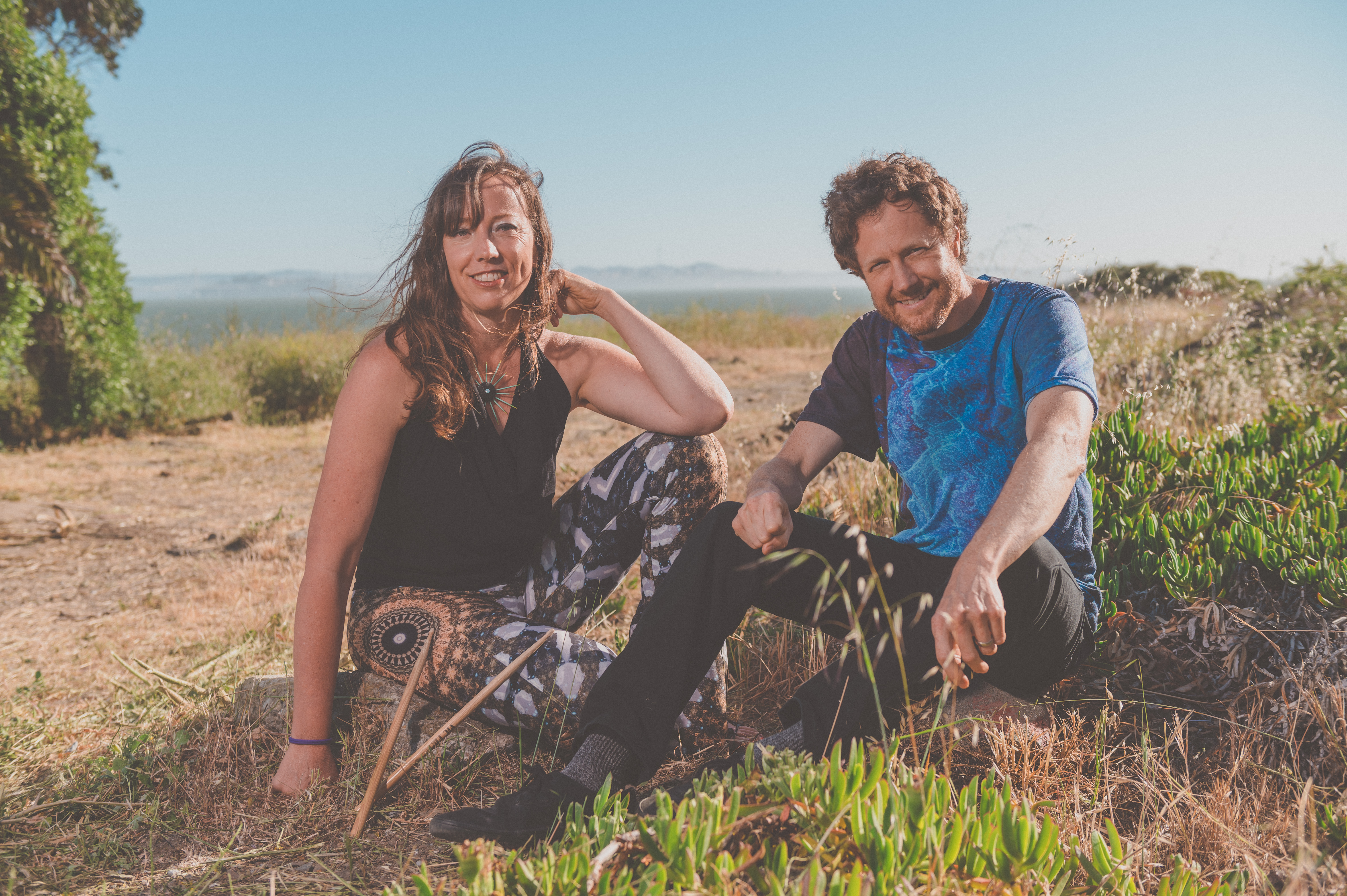
Low Tide Levee is the rising band featuring seasoned musicians and lead by singer/songwriter, composer, drummer, pianist, and former marine biologist Amy Brookes. She writes the songs, sings lead vocals and harmonies, and plays drums, percussion, and keyboard. Her husband, Sasha Ames, is the band’s bassist and, sometimes, studio guitarist, and the trio is rounded out by a guitarist. Formerly, Low Tide Levee has included Chris Amato on guitar, engineering, and production, and Harold Spiva on guitar.

Their trippy and transformative music is fun and exciting with heavy, blues-based riff rock, stanky funk, and sneaky adventures into sprawling psychedelia. Lyrically, the songs can be mystical, playfully irreverent, and enlightening—sometimes in the same song. “A lot of the subjects we write about are things bubbling inside of me—themes of finding one’s power, and rising like a phoenix as an allegory. I’ve been through a lot of trauma in my life, and I am waking up to seeing the things that held me back,” Amy shares. 

Their new single, “Dang Diggy,” is a whimsical 1960s garage-rock single with an ABBA meets The Beatles sound that came to Amy during one of her creative sessions at a local tea she frequented. The lyrics came to her quite quickly, but she never expected the band to love it. The song boasts a sing-a-long refrain and oozes mystical overtones.

“Eventually, I realized that this incredible mask we found for our music studio (the “Funk Palace”) *was* Dang Diggy, and that Dang Diggy was absolutely this non-gendered deity that hung about in the sky throwing down pies to whomever might be fortunate enough to receive them,” says Amy. “These days in band practice, we use Dang Diggy both as a great warm-up, and as a sort of casting of the circle for our ritual of music creation, offering homage to Dang Diggy as it hangs out above my drum throne on the wall. After this musical ritual, I can’t help but laugh, every time.”

“Dang Diggy’s” hallucinatory charms come to life via its silly and fun claymation video. The video depicts the character of Dang Diggy throwing pies down on someone alone in a boat, almost like Dang Diggy symbolizes a God or life and the person down below in the boat represents you and your reality. This figure sits there letting life throw everything they’ve got, good and bad.

Connect with Low Tide Levee via:

Website / Instagram / Facebook / TikTok / YouTube / Spotify / Soundcloud

Merlot Embargo Shares Their New Indie Pop Single “Not Gonna”

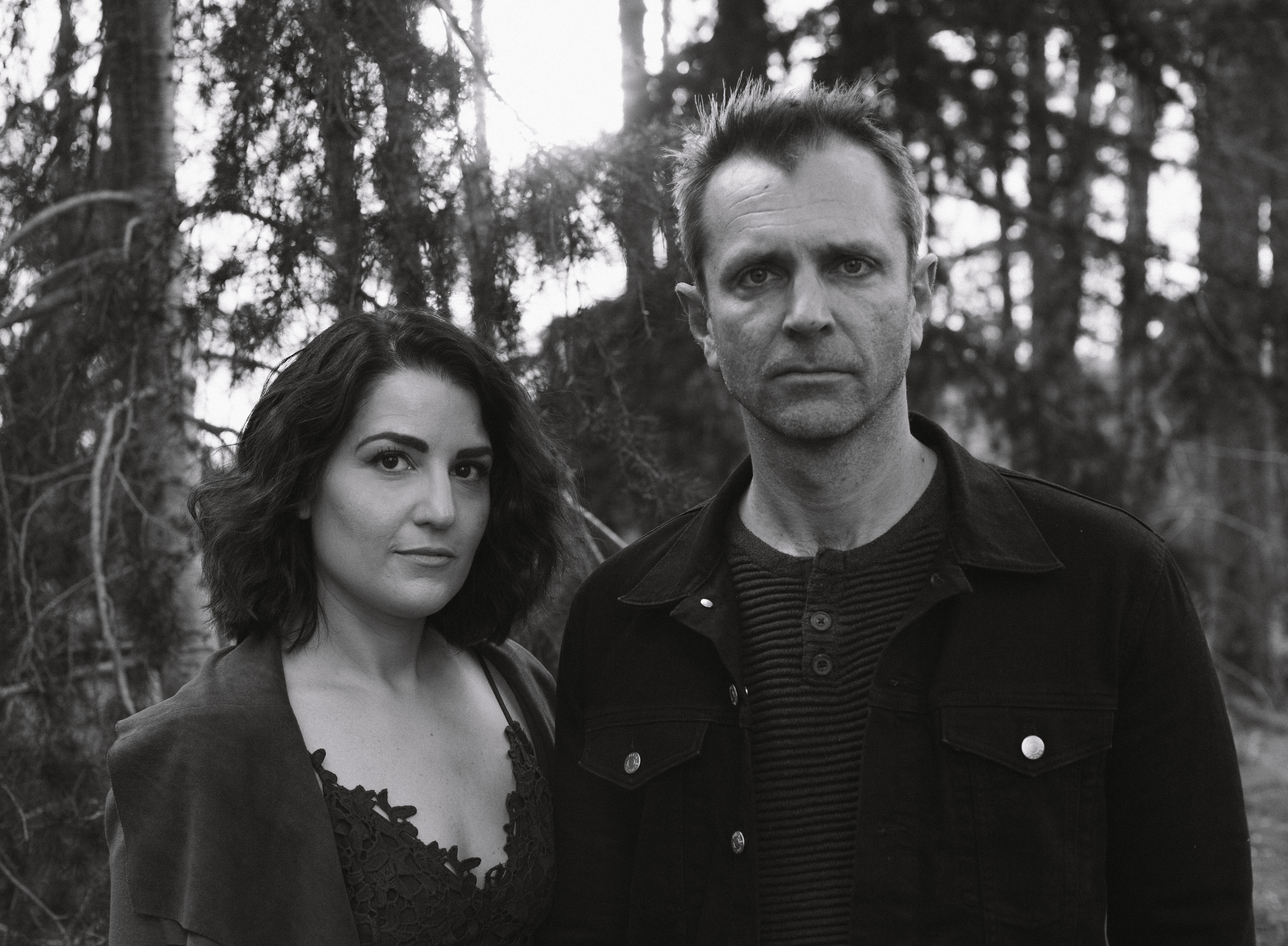
Merlot Embargo is the self-produced and independent indie pop duo recording music out of our home studio in LA, where they’re also raising their daughter Joanna. Their music is diverse but rooted in the classics. While they strive to make each song something unique and fresh, Scarlet’s sultry voice and Geoff’s groovy guitar-ing make it all feel like Merlot Embargo.

Some might even consider Scarlet and Geoff an unlikely duo: a seat-of-the-pants, army brat singer-songwriter, paired with a native Californian music school nerd and engineer by day. But the blending of their different approaches to music (and life) has helped them create music that’s provocative, but also real and approachable. They temper each other’s worst tendencies, and in their good moments, bring out the best qualities in each other.  Throw in their band, and it’s a collab made in heaven.

Merlot Embargo just released their new upbeat and catchy pop rock single, “Not Gonna,” a song that takes down their own inner demons about ageism in the music industry. The music tells a story of fun and excitement while the lyrics tell a story of resistance and obstacles. Together, it reflects the message of being outwardly fine, but battling setbacks in pursuit of a goal on the inside.

Scarlet’s voice is familiar, almost like a Brandi Carlile meets Ingrid Michaelson. The music and beat is instantly recognizable as uniquely Merlot Embargo with it’s clear influence of Coldplay and The Beatles.

“Hopefully, this song inspires people to keep persevering and following their dreams,” share the duo. “They may be closer than they realize.”

Connect with Merlot Embargo

Website / Instagram / Facebook / Twitter / TikTok / YouTube / Spotify / Soundcloud

Puppets of Castro’s “Living the Dream” is Witty and Catchy

Puppets of Castro is the Los Angeles-based musical project of Andrew Lorand. An eclectic satirist and keen observer of the humor and pathos found around the darker edges of the human condition, Puppets of Castro takes his listeners on an often humorous, and often contemplative ride.

His song, “Living The Dream,” comes from his album, Nude Descending an Elevator. It’s got a great, catchy hook that immediately grabs your attention, and the song contains seven musical references from rock classics. See if you can find them all.

“My first band was the Kiwi’s, back in 5th grade, though technically in 3rd grade I was a member of the 007s, and we had only one song  (we would lip sync to ‘Wipeout’, which of course was an instrumental). Nobody looked at us and thought these guys are really going places,” quips Puppets of Castro. “This song is for all the bands and musicians who stuck with it long after dreams of riding in limos, appearing on The Midnight Special, and getting their Star on Hollywood Blvd. had faded.”

Connect with Puppets of Castro and stream his music via:

Bandcamp / Facebook / YouTube / Spotify / Website