VIDEO VOYAGEUR: 3 Q’S WITH MAD AGNES

The trio, Mad Agnes, is well known for their captivating on-stage charisma and presence as well as their jaw-dropping musicianship. This unique blend has enchanted listeners worldwide for decades, and the group has built a reputation on their uniquely charming and intriguing sound. 

Mad Agnes, (Margo Hennebach, Adrienne Jones, and Mark Saunders), combines elements of folk, Americana, and acoustic styles with intricate harmonies that entice the ear with lyricism and wit, pointing the listener towards internal introspection.   

Their latest album release, “Likely Story” shows how each song carries a real intellectual depth, exploring universal themes like love, loss, change and reinvention in a very original way. The arrangements are rich with guitars, mandolin, ukulele, and piano alongside inventive three-part harmonies that infuse each track of this release. 

Mad Agnes’ sophisticated vocal harmonies and impeccable musical arrangements have long enraptured music critics, garnering them comparisons to esteemed folk groups such as Steeleye Span and Fairport Convention. 

We caught up with Mad Agnes to discuss the music video to accompany their new single release, “Beauty of this World,” written by Margo Hennebach. 

Tell us the story of this song. Why did you choose to visualize it specifically in this way?

Because I wrote the song while hiking on the trails around our house in rural CT, I wanted to focus on the beauty I see around me everyday—a beauty that needs no fanfare, flowering trees, sunsets, or dramatic waterfalls.  Mark filmed 95% of the video in our backyard on a misty day in early spring.  The only scene away from our home is of a group of singers gathered from around the world blessing a table of food, captured from our time in Italy last June.  It fit the song’s lyric too perfectly to ignore.

1
Beauty-03-3-4-1

What inspired this video (visuals, storyline, etc.)?

When I take a moment to slow down, I’m inspired by living in such an extraordinary world. 

I’m surrounded by beauty, wildlife and flora, and I hear music everywhere.  I’m especially grateful for the humans I can share this with including my larger community, dear friends, and my special someone. 

Beauty-02-2-3-1

What was the process of making this video?

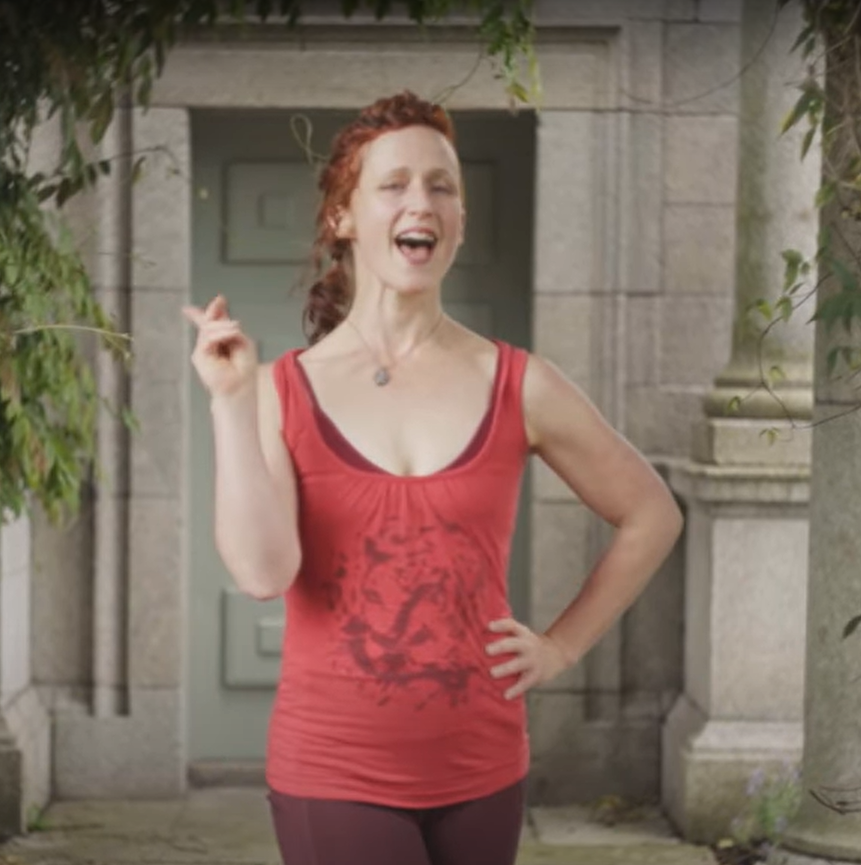
Originally I wanted the video to be artistically animated with watercolors or oils–colorful and lighthearted–but then we had a deadline!   Looking out the window and seeing the misty rain, we both knew how great the light would be, so we sprang into action.  I grabbed my red top, we went outside for some test videos and realized very quickly that we had what we wanted.  For good measure, we brought out the piano and filmed the beginning and end of the song.  

Mark moved the camera around me so I could interact with it more naturally and he could capture more of the setting.  We worked quickly because of the threat of heavier rain, and we both knew what we wanted.  The video was filmed and edited that day.

Beauty-05-2-3-2

With grand piano, cello, double bass, acoustic guitar and unexpected background vocals, “Beauty of This World” is a wonderful introduction to spring and summer as nature blooms once again. 

Having enchanted audiences across the globe and graced the stages of prestigious venues such as The Bitter End (NYC) and festivals like The Kerrville Folk Festival (TX) and Fairport’s Cropredy Convention (UK), Mad Agnes’ performances are nothing short of spectacular and leave an unforgettable impression wherever they go. 

Catch up with their latest album “Likely Story” out now! 

Stay up to date with Mad Agnes on their Website. 

Check out all of Mad Agnes’  music on Spotify, Apple Music and YouTube music. 

Experience the Raw Power of Maryen Cairns’ Latest Single “Give To The Chase”

Singer-songwriter Maryen Cairns’ latest single, “Give To The Chase” explores a profound connection to nature and her dual roles as both a mother and an artist. 

The vivid imagery of her residing in an off-the-grid yurt while nurturing her children adds a layer of authenticity to her music.

Her choice to record the song in the solace of her home reflects the intimacy and personal nature of the track. This marked the start of a transformative journey which culminated in her 2002 album “Stories from the Red Tent” which explored women’s narrative and bonds within the sanctuary of The Red Tent.

The lyrics of “Give To The Chase” carry a poignant message about humanity’s relationship with the Earth, urging environmental consciousness and stewardship. Maryen’s solo performances amplify this message, transforming it into a rallying cry for a sustainable future.

Maryen’s adeptness at rhythm as well as owning a profound affinity with nature really shine through in her unique performance style. Her talent as both musician and storyteller is evident:

“Give to the Chase” is performed as a solo percussion & vocal piece… shamanic sound ringing in this song for our Mother Earth. Maryen is perched on a cajun with her feet utilising two pedals whilst wearing a rattle on one ankle, simultaneously playing a medicine drum & shaker whilst she sings.

Give to the Chase personifies Mother Earth herself, moving between singing as Mother Earth & singing as a member of the human race. A story of generations working to save the environment and live within nature, knowing that human’s race to survive, with only the fittest/strongest/smartest making it for the human race itself to survive.

Maryen Cairns’ has received widespread acclaim over the past three decades, and is well known for her allegorical themes. She has most famously been guided under the mentorship of Rolling Stones producer, Chris Kimsey.

With her brand new album “One Woman Band, Live at Echotown Studios Vol. 1” due to be released on May 3rd, fans will be delighted to listen to a collection of songs that truly encapsulate her unique sound as well as offer a glimpse into her captivating solo performances.

Maryen Cairns’ music continues to captivate and inspire audiences, offering a reflection on life, nature, and our interconnectedness with the world around us which is often forgotten in the fast paced world today.

Keep up to date with Maryen Cairns:

Website / Facebook / Instagram / Spotify / Apple Music / YouTube Music

Listen to Maryen’s New Single “Give To The Chase” on Spotify!

Video Voyager: Deirdre Murphy’s “Sweet and Strong”

Singer/songwriter Deirdre Murphy is the creator of many original works of music, dance, theatre, circus, and performance art. It’s evident in the music video for her neo-folk song “Sweet and Strong.”

The video is a depiction of a beautiful, light hearted, and sweet celebration of life and friendship. It’s a pure showing of loving life through dance and movement. There has never been a more lively, happy, or delightful music video. It’s freeing to watch these friends interact with each other in such a loving and open way.

We got a chance to speak with Deirdre about the music video and her intentions behind hit:

Tell us the story of this song, why did you choose to visualize this song specifically in this way?

This song has always called for a really physical video, in my mind. My friends and co-performers, Sean and Zsofia, are my training partners and former students. Zsofia asked me one day if her sister could come to class – she said, “She’s only 16 but she is sweet and she is strong.”  And I went home and wrote the song. So it has that neat little tie-in, but also the song is about feeling really secure, really good, in your body and your surroundings which I wanted to get across in the video. My relationship with them routinely involves handstand training, acroyoga, many jokes, and bodywork/massage. I love the physicality of the practices themselves – the movement just feels good and practicing together is always great fun. I knew if I could get those elements captured, they would speak for themselves and they would speak visually for the song.  

What was the inspiration behind this video (visuals, storyline, etc.)? 

Last summer I took up a new hobby with a friend, of rose smelling. We centered our efforts in the rose garden nearest my friend’s house – the one in the video. 

A little known fact that is after about 30 or 40 minutes of smelling the roses, you are absolutely drunk on them. Heady. Our extensive research found that not only does it make you drunk, but also that about one in every ten roses smells exquisite (while some barely have any scent at all!). We further noted that about one in every twenty is magical beyond explanation – transcendent. These are the ones that cause a person to stagger. I remember one particular rose that we couldn’t stop smelling for a full 15-20 minutes, knowing that when we left it we would most probably never find it again. As we spent more time there it occurred to me that it’d be the perfect place to shoot a video for this particular song – it’s very much about stopping to smell the roses and appreciating the little moments. 

I would fully recommend rose smelling as a hobby, by the way. It’s free, it makes you drunk, and there’s no learning curve – you walk in at the top of your game! 

What was the process of making this video? 

The process was just as fun as it looks! We were lucky to work with the wonderful Hannah Bloom, who has a real eye for movement and did a beautiful job with the edit. She used a vintage lens – which I think really adds to the feel – sort of old timey, and highly textured what with all the leaves and vines. I was able to work closely with Hannah on the edit and it was really lovely – she was a pleasure to work with. Sean and Zsofia were in fine form and a lot of craic was had, as is always the case with those two.  

Connect with Deirdre Murphy via:
Website / Instagram / Facebook / Twitter / YouTube / Spotify / Apple Music

Video Voyager: Stephen Jaymes’ “Chief Inspector”

Singer-songwriter Stephen Jaymes might be best described as Charles Bukowski ditching whiskey for psychedelic mushrooms while feverishly ingesting Rumi poetry and Phil Ochs records. The LA-based artist is a punk poet; a wounded-romantic; a sonic noir auteur and a post-apocalyptic hippie. He is a gifted multi-instrumentalist, songwriter, singer, and producer. His music exudes the stylish playfulness of Prince with clever turns of phrases and occasional funk flashes, but it also conjures the stateliness and mystique of Leonard Cohen. Film and television editor Christal Khatib (ScandalTransparent) hears “both of those ghosts and Johnny Cash too – all visiting the same body.”

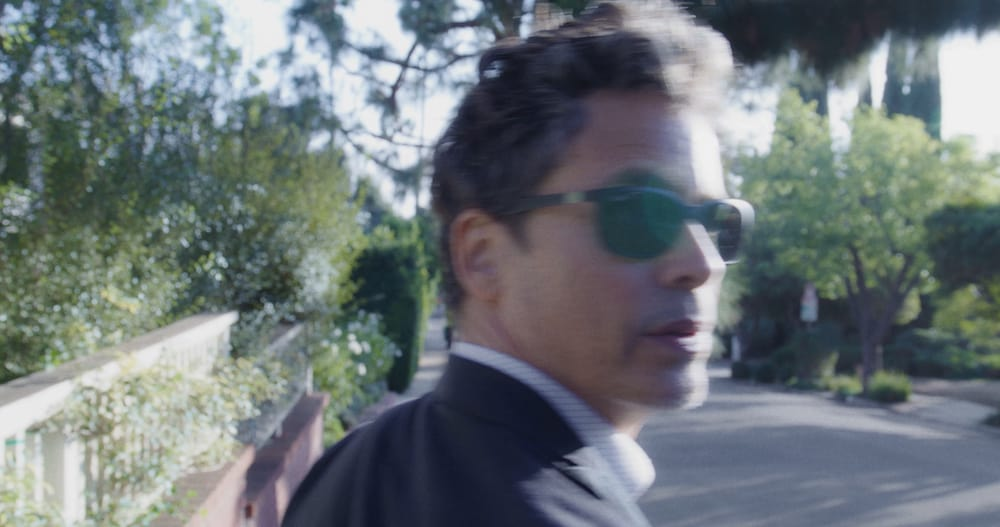
His newest song “Chief Inspector,” and the accompanying video, is a noir inspired Jungian tale of a man who once locked up his shadow and is now hunted by it.The video reaches back in time to say a little something about the present moment. Wanting to evoke the LA noir imagery used in the song’s lyrics, the singer and the video’s producer Ross Kolton, were drawn to the iconic 1973 Robert Altman classic “The Long Goodbye” for its visually unique take on noir in the sunshine.

Easter eggs and direct references include a shot of Jaymes leaving the same tower apartment complex where Elliott Gould’s Philip Marlowe eked out a living. The film classic is noteworthy for looking back to the 40s to shine a light on the (then) current 70s culture. Similarly, Kolton and Jaymes look back to the 70s to indirectly reflect a modern Instagramed world, where a noir thriller of dark realities continues to unfold, now through millions of sunny lenses.

We spoke with Stephen Jaymes about the new video for “Chief Inspector,” which you can watch below:

Tell us the story of this song, why did you choose to visualize this song specifically in this way?

In a nutshell, this is what happens when you start digging deeper into Jung while watching the Inspector Morse series. The song is about the choice we make to lock up a part of ourselves to achieve our (often stupid) objectives, and how that shadow part always escapes and hunts us down later. Morse is a hero of mine, the original “true detective” of modern television who is chased as much by his own ghosts as he is by the flesh and blood criminals. It was a rare instance where the lyrics all pretty much fell out in one go. I’d pay to have that experience every time. And what fell out was a “Cape Fear” scenario: Robert Mitchum is not happy; and he’s out to get you; and he’s you. In my case, I later realized, my shadow was hunting me down to demand I start writing and playing more music.

What was the inspiration behind this video (visuals, storyline, etc.)? 

The video is the result of my collaboration with LA-based filmmaker and music video producer Ross Kolton. We both have a deep love of noir, so we were looking for a reference point that we could use. We wanted to literalize the song’s dark noir imagery and psychological tension, but also reflect how noir films frequently juxtapose that darkness against sunny LA. Our eureka moment came in the form of Ross’s idea to use the location from Robert Altman’s 1973 “The Long Goodbye” in the video. From that seed of an idea we found our story, and the video ended up being an homage to that film in many ways (toxic suitcase MacGuffin notwithstanding). 

What was the process of making this video? 

The goal was to make a tight doppelgänger drama that reaches back to “The Long Goodbye” to illustrate the tension between today’s dark realities and their sunny, Instagrammed exterior. Ross is super organized, so many of the shots were his ideas that we basically tested in the field. He has an approach to film that really synchronizes with my approach to songwriting: both of us leave a ton of room to capture the magical accidents in our creative process. On shoot day we started in the Hollywood hills where we paired a condo interior with the actual exterior of Elliott Gould’s apartment complex. We had a location waiting on the Westside for the “arrival” part of the story, so we literally worked our way east to west through Hollywood, stopping at some planned places and others that jumped out at us as we drove around. By the time we had finished with all the exterior “story” shots, we were exhausted. After he put together the first cut, Ross decided that the lip sync performance shots reflected that exhaustion. So we reshot the performance, weeks later, after I’d buzzed my head. This resulted not only in a treatment that better reflected our “sunny noir” aesthetic, but also emphasized better the doppelgänger theme because I look so different. Just another example of staying loose and allowing experimentation (and some director perfectionism) to work its magic. Thankfully I had no deadline as we hadn’t set a release date for the song yet.

Video Voyager: Tadgh Billy King’s “sit and wait”

Irish alt-rocker Tadgh Billy King (pronounced like “Tiger” without the “er”) is a multi-faceted an actor, writer, director, a composer for theatre, and an award-winning classical singer. He didn’t set out to re-create the sound of frustrated punk rock in his song “sit and wait,” instead he’s unapologetically adding to the conversation through a modern lens with this new release. The result is a blistering, blunt and rousing ride through noisy hardcore, math-y punk and gazy walls of sound. At times brash, at times sublimely ethereal.

Tadgh’s immersive artistry speaks to its conception during times of deep introspection. His cathartic musicality spans post-punk, goth, noisy hardcore, and math-y punk, and is inspired by such artists as Bauhaus, Drive Like Jehu, Fugazi, Joy Division, Nirvana, Radiohead, and contemporary Irish bands such as Fontaines D.C., The Murder Capital, Gilla Band and Just Mustard.

The video for “sit and wait” depicts Tadgh’s blunt outlook on the world that surrounds with us bright colors and moving images over stagnant objects that reveals the subtle undertones of confusion and frustration that sits with a lot of younger people today.

We got the chance to speak with Tadgh about a more in depth look into his music video. Watch and read below:

Tell us the story of this song, why did you choose to visualize this song specifically in this way?

The song is trying to encapsulate a feeling, which seems to be pretty rampant among late-teen to early-to-mid twenty year olds. It’s a sort’ve existential dread that is hard to articulate. I think it comes from a recognition that there’s a lot of problems in the world today and there doesn’t seem to be a whole lot of clear, viable ways to fix them. So it can feel like people can find themselves sitting and waiting for something catastrophic to happen. While, at the same time, they’re just trying to figure out their own lives. The song is about that frustration. We are left discussing the things that disappoint us, but some of these things are completely out of our control. And then, sometimes, these discussions we have with each other can cause internal rifts within friendships and relationships. 

With this video, I wanted to try and capture these feelings. I felt that by filming people in their late teens and early twenties moving through their own emotions and navigating relationships, while also projecting some weird, beautiful and disturbing imagery that falls within the themes I’m talking about in the song onto them, I could capture and convey this strange feeling we all have for our collective future.

What was the inspiration behind this video (visuals, storyline, etc.)?

I always thought that projection onto a body was really cool. There’s a really interesting theatre/dance company in Australia called Chunky Move and I remember watching a video for this piece they did called Mortal Engine and just being completely enamoured by it. My video is very different to that piece, but it sparked my interest in using projection onto people. I got a hold of a little projector and thought “this is perfect.”

I also really enjoy art that on the surface is really colourful, vibrant, attractive and interesting to watch, but if someone was to look deeper or read into it more they could start discovering multiple layers or narratives to the piece. In this video, try following the couples and seeing what narratives you put onto them from just the emotion you see on screen. What overall narrative or storyline jumps out at you when all the elements (the couples interacting, the emotional expressions from the performers, the lyrics and music, the images being projected) are combined? I know what I was trying to say with the song and video, but that doesn’t matter anymore. What’s really interesting to me is how my intention with the art isn’t important after a certain point. What really matters is what the audience or the viewers pick up and what they project (haha get it) onto the video. 

Late in the process came the idea of adding the first scene of me coming into my room and the last scene of me waking up. This is part of a larger narrative that will unfold across my music, but you’ll just have to follow along to see where it goes.

What was the process of making this video?

When I decided that I wanted a lot of people for the video I just started asking my friends. Everyone you see in the video (all credited in the video description) are artists themselves who are either studying or working (or both) in Dublin and Ireland, creating work that helps to make the city and country more vibrant every day.

For the background video that was projected onto the performers I compiled footage of anything that was interesting to me and fit the vibe of the song. Then I messed around with the colours to make them more vibrant and built the video around the song.

I wrangled as many people as I could together and did a few takes with them in front of the camera and projection, trying out different things that I, or they, thought could be interesting. I directed them through different emotions, asked them to just stare deadpan into the camera, asked them to debate a few different things with each other (nothing incredibly serious), took them to extremes and just kinda had fun with it.  Once everyone else was recorded I filmed myself singing the song. Ultimately, I wanted to let the imagery and people in my video do the talking. Editing it took a little bit of time, just because there was so much footage, but it was a very fruitful experience that allowed me to create something interesting to watch.

The lasting message I want this video to have is that despite life’s challenges, building a positive community and creating art that inspires you is the way forward. The making of this video itself is an example of that. I hope this inspires others to make cool art with the people around them.

Connect with Tadgh Billy King via:
Website // Instagram // Facebook // Twitter // YouTube // TikTok // Spotify

Video Voyager: Kristen Rae Bowden’s Video for “Hard to Love”

Kristen Rae Bowden

Kristen Rae Bowden’s work is a penchant for clever metaphorical turns of phrases, raw emotionality, and imaginative musical arrangements. Her musicality stretches through adventurous journeys with a dramatic flair, melding classic rock and prog-rock melodies to highly personal emotional explorations. She counts as inspiration such diverse artists as Led Zeppelin, Fleetwood Mac, Primus, Radiohead, Joni Mitchell, John Prine, and legendary musical theater composer Stephen Sondheim.

Her new single “Hard to Love” was actually written with an unanswered question in mind: Can you restart a heart? Kristen didn’t have the answer at the time of writing this which is why the song never answers the question definitively.

The video visually pulses alongside the music. When the chorus arrives, there’s a depiction a woman forming in the lines of the beating heart. She breaks out, shattering the heart and finds freedom. Set in a magenta hue, Kristen is seen singing the verses, almost like she trying to find the answer to her question.

We spoke with Kristen about her video, what it means, and how she came up with the idea of the video:

Tell us the story of this song, why did you choose to visualize this song specifically in this way?

When I wrote “Hard to Love” I was grappling with what you might call “post-broken-heart syndrome”. Just like a physical wound scars over with harder, less flexible skin, I felt my broken heart had healed in many ways, but I felt numb, hardened, and incapable of intimacy. I thought, is this my new normal? Feeling so much less alive than I used to? And I realized I was hiding, dimming my light on purpose, so I couldn’t get hurt again. 

The story of “Hard to Love” is all about that feeling: hardening your heart after a breakup like it’s a fortress, not letting anyone all the way in. And at the same time missing how it felt when your heart was open and you were vulnerable, but free. You can’t have both. You can’t shore up your defenses so you don’t get hurt and live life to it’s fullest simultaneously. 

The song is centered around a metaphorical question: “Can you restart a heart?” Given its inspiration, when I wrote the song I knew I wanted it to be centered sonically around a heartbeat. And then when it came to the video, I was excited to get to see that heart beating. So I knew I wanted animation to be the vehicle. 

I also wanted the world of the video to be different from the real world, to express how alien, fake, and two dimensional the world can feel when you’re anxious and hiding yourself.

What was the inspiration behind this video (visuals, storyline, etc.)?

I wanted to metaphorically express the way “post-broken-heart syndrome” feels, and I knew the heart would be the central image. So I came up with the idea of a girl hiding inside of her heart, which she’s turned into a fortress of protection. No one is allowed in, but no one is allowed out either, so she has essentially imprisoned herself for her own safety. Veins turn to vines and wrap around her wrists and ankles like shackles. 

She grows weary of her self-imposed cage and breaks the heart in order to be free, but even then she finds herself on a cliff, alone. All of this imagery, to me, really works to express the feelings of a fear of intimacy.

I also thought the video should have a human aspect. I’m there singing the song in this pink x-ray landscape where a human is out of place and shouldn’t really exist. That’s how I felt when I wrote the song, lost in uncharted territory.

The storyline shifts in the bridge of the song, and I love that you can see my human frustration in that “I can’t go on this way” moment. 

The lyrics of the song never offer any hope or assurance that yes, you can “restart a heart”, but the musical section after the bridge has the feeling of hope and triumph. I wanted the video imagery to push that feeling into a certainty. So I went with the idea of growth and blooming to represent that hope, and I love watching the glowing heart grow into a garden.

What was the process of making this video?

I had been playing with the FlipaClip app (flip-book style animation) while dreaming up the conceptual images for this video, so I learned a little bit about how time consuming animation can be and what an awesome skill it is. I knew I wanted the finished video to look more artistically advanced than anything I was going to be able to do.

Through a mutual friend I was very lucky to find Pat Bradley, award-winning animator and illustrator at Spring Shoe Animation. I was thrilled when he signed on for the animated portions, and to edit the video into the imaginary pink x-ray world. I sent him the storyboard I’d made with pieces of amateur animation and drawings of the girl in the heart, and we set up the video shoot together through more mutual friends, Sanjay Suchak and Stephen Thomas.

The video shoot itself was a lot of fun. I sang along with the song in front of a green screen, and though it took me a couple hours to loosen up, eventually I was able to let go of my inhibitions and really express some of that frustration and movement you see in the final product.

Pat did an incredible job taking my crudely drawn ideas and putting them into cohesive, flowing lines that tell the story of the song. He also integrated me into the animated world in a way that I hadn’t imagined. 

Connect with Kristen Rae Bowden via:

Website // Instagram // Facebook // Twitter // YouTube // TikTok // Spotity // Soundcloud