
With “Becoming America”, violist Rose Wollman brings together five composers and five distinct perspectives in an album that explores identity, heritage, belonging and the meaning of home.
Music has always been a way of telling stories that might otherwise go unheard. It carries the memories of families, the traditions of communities and the experiences of people whose lives rarely find their way into the grand narratives of history. It can speak across generations, preserve a sense of where we come from and, perhaps most importantly, help us understand the lives of people whose experiences are different from our own.
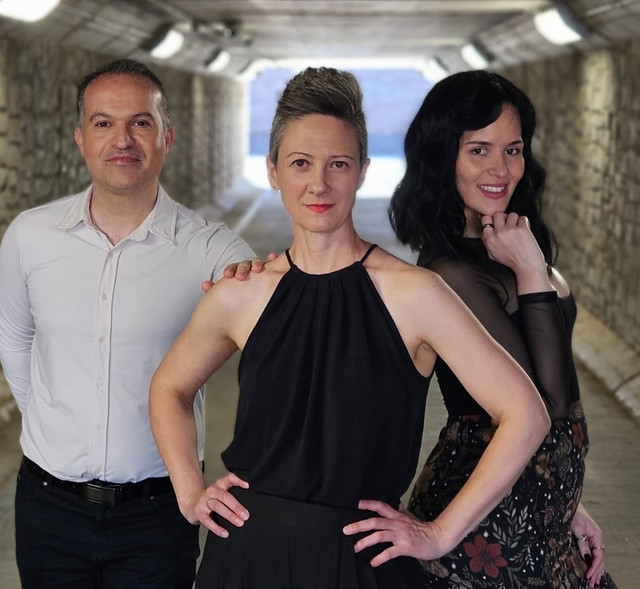
That very sense of connection runs through Becoming America, the new album from violist Rose Wollman, alongside soprano Maria Brea and pianist Dror Baitel. Bringing together five newly commissioned works, the album takes a subject as vast as the American experience and approaches it through something much more intimate: the individual stories of five composers and the histories, cultures and identities that have shaped them.
There is an interesting musical proposition at the heart of this project. Rather than asking a group of composers to write variations on a single theme, Wollman has given each of them the opportunity to explore what America means through their own background and perspective. The resulting works draw on African American, Asian American, Indigenous Cree, Jewish and Latin American experiences, creating a collection that moves between personal reflection, historical memory and the possibility of a different future.
What makes this particularly engaging is the variety of musical voices involved. Art song, opera, traditional music and jazz all find their place within the album, with the combination of viola, soprano and piano providing a common thread. There is an intimacy to this arrangement that suits the subject matter. The voice brings words and human expression to the foreground, the piano offers a changing musical landscape, while the viola moves between the roles of melodic companion, storyteller and expressive voice in its own right.
The five composers take the project in very different directions.
Nailah Nombeko, working with librettist Mary McCallum, explores the history of the African diaspora in the United States in Illumination Amidst the Darkness. It is a subject that demands an acknowledgement of suffering but also of the endurance, creativity and humanity of those who have lived through it. The work looks towards a history that cannot be comfortably separated from the present, while recognising the hope that has survived through generations.
Cris Derksen approaches the subject from another perspective in Declaration of Interdependence. A Cree composer from Ontario, she writes from the perspective of Mother Earth, turning the album’s questions of responsibility and belonging towards the natural world. It is a reminder that our relationship with home extends beyond borders and buildings. There is a much larger environment of which we are all a part, and one that requires care rather than exploitation.
In Our Collective Heart, Israeli-American jazz singer and composer Tamuz Nissim looks towards peace, drawing on English and Hebrew to express a longing for a better future. Her musical language brings jazz influences into the ensemble, adding another dimension to an album that is never content to remain within the boundaries of one tradition.
Rene Orth’s Today I Remember considers the complicated experience of immigration and assimilation. Drawing on poetry from the walls of Angel Island, a haiku by Murakami Kijo and writing created in response to anti-Asian violence during the pandemic, the work connects the experiences of people separated by generations but joined by questions of identity and belonging. It is a particularly thoughtful reminder that the journey towards a new life does not necessarily mean leaving the past behind.
Then there is Alabanza, composed by Francisco Cortés-Álvarez and inspired by Martín Espada’s poem remembering the Latin American kitchen workers who lost their lives at the World Trade Center on September 11, 2001. The piece begins with the busy rhythmic energy of an ordinary working kitchen, before that familiar movement gives way to an eerie stillness. As the music develops, the pulse returns in a darker form, its earlier everyday rhythm transformed into something more ominous. It is a striking musical way of remembering the people whose lives existed beyond the historical event that would eventually define their final moments.
Across these five works, the voice is particularly important. This is music that has something to say, but it never feels as though the words are simply being placed over an instrumental accompaniment. The relationship between soprano, viola and piano allows the text and music to develop together, each contributing to the emotional character of the story. There is room for lyrical expression, rhythmic movement and moments of uncertainty, and that variety gives the album its sense of individuality.
Wollman’s own role in bringing these works into existence is central. As a performer and champion of contemporary composition, she has spent much of her career encouraging composers to explore the possibilities of the viola. Here, that commitment becomes part of a wider purpose. She has created the conditions for five different artistic voices to be heard, while allowing their differences to remain intact.
There is also a personal connection behind the project. Wollman’s family history encompasses different waves of European immigration, Jewish heritage and a marriage to an immigrant from Brazil. Her daughter’s identity brings together several generations of that story. It is easy to understand why the idea of America as a place continually shaped by the people who arrive, settle and make lives there would hold such significance for her.
But Becoming America is not simply a celebration of cultural diversity. It asks us to consider the distance between the ideals a country promotes and the experiences of the people living within it. The American Dream, the melting pot and the promise of freedom are familiar ideas, but they do not describe everyone’s reality equally. The album acknowledges that contradiction without allowing it to become the whole story.
What emerges instead is a belief in the importance of listening. Five composers have been invited to bring their own experiences into the room, and the result is not a single definition of America, but a much richer collection of perspectives. There are difficult histories here, questions that remain unresolved and memories that cannot be separated from the present. Yet there is also warmth, creativity and a genuine sense of possibility.
Perhaps the most interesting thing about the title is that Becoming America describes an ongoing process rather than a finished identity. A country is never simply the sum of its founding principles or its official history. It is shaped every day by the people who live in it, the stories they tell, the traditions they carry and the futures they hope to build.
Music cannot solve the inequalities that this album brings into focus, but it can make us listen differently. It can give an individual story the attention it deserves and remind us that behind every broad description of a community there are people with their own memories, relationships and ambitions.
About Rose Wollman
Acclaimed violist Rose Wollman has built a career around championing new music and expanding the expressive possibilities of her instrument. Described as “innovative” and “stylish” by the Chicago Classical Review, she has performed at venues including Carnegie Hall, Suntory Hall and KKL Switzerland, and has commissioned and premiered more than 20 works for viola.
Her recordings include Loop: Ligeti’s Inspiration & Legacy, Partita Party and Breaking Glass Ceilings: Music by Unruly Women. She is Assistant Professor of Viola at Colorado State University and serves on the board of the American Viola Society.
Connect with Rose Wollman on her Website

