Toronto indie artist and producer ARK IDENTITY (Noah Mroueh) unveils “Signals,” a tense, surreal, and emotionally immersive alternative single that embraces uncertainty both sonically and thematically. Blending atmospheric dream pop, indie electronic textures, and an explosive post-hardcore finale, the track unfolds like a constantly shifting landscape, refusing to settle into any one genre while rewarding listeners with each unexpected turn.
“Signals” wasn’t the song Noah Mroueh and Andrew Polychronopoulos initially intended to create. Paired together to write for a sync brief, the two spent hours developing a blues-rock track before realizing it simply wasn’t resonating.
“It was solid, but neither of us was super excited about it,” Noah recalls. “Things got interesting when we decided to scrap the brief and just create something for ourselves.” That decision became the catalyst for everything that followed.
After picking up a guitar and running it through a chorus effect (one of Noah’s favourite sounds), he began casually fingerpicking what would become the song’s unmistakable opening. Andrew immediately started building rhythmic loops and ambient textures around the progression. Rather than forcing it toward a predetermined destination, the song evolved naturally over the nearly next few hours.
“The song took on a life of its own,” Noah explains. “Layer by layer, it kept building toward something more immersive. We were in such a flow state that we didn’t overthink things.”
That same instinct ultimately led to one of the song’s defining moments: an unexpected finale driven by distorted guitars and post-hardcore intensity. Rather than feeling disconnected from the dreamy opening, the heavier conclusion feels like a natural emotional release, transforming the track into something both unpredictable and deeply cathartic.
“To me, ‘Signals’ speaks to the way we’re constantly trying to read people, moments and emotions,” Noah says. “We send signals, we receive them, and sometimes we misread them or miss them completely. There’s something really interesting in that uncertainty.”
“Signals” also marks an important creative milestone for ARK IDENTITY. While it fits within the larger emotional world Noah has been building, its willingness to embrace heavier, more explosive moments signals an exciting evolution of the project.
“It surprised me,” Noah says. “It didn’t end up being the song we set out to make, but that’s what made it feel special. It came from letting go of the original plan and following what felt right in the moment. While we didn’t meet the sync brief, I’m proud of what we created together that day.”
The ASCAP Foundation, under the leadership of President Paul Williams and Executive Director Patricia Leonard, partners with the DC Jazz Festival, headed by President & CEO Sunny Sumter, to support the next generation of jazz creatorsfor a fourth year.
The 2026 DC JazzFest is set to take place September 2-6, 2026 and supports DC250’s celebration of the nation’s 250th anniversary through the quintessential American art form. This year’s lineup features The ASCAP Foundation Herb Alpert Young Jazz Composer Award recipient Hannah Marks alongside jazz’s most influential players from Kurt Elling & Yellow Jackets to Lisa Fischer. Marks will take the DC JazzFest stage at Pearl Street Warehouse at 33 Pearl Street SW, Washington, DC on Saturday, September 5 at 4:15 pm.
“As we commemorate 250 years of America, there is no better way to celebrate than by supporting the emerging creators who are shaping the future of one of our nation’s most storied art forms,” said ASCAP Foundation President Paul Williams. “We are honored to partner for a fourth year with DC Jazz Fest to champion the next generation of jazz composers.”
“Jazz is a living art form, sustained by extraordinary artists who honor its rich legacy while boldly shaping its future. At The ASCAP Foundation, we’re proud to support creators throughout their artistic journeys, which is why our partnership with DC JazzFest is so important. Providing this opportunity to one of our Herb Alpert Young Jazz Composer Award recipients reflects our shared commitment to the future of jazz,” said The ASCAP Foundation Executive Director Patricia Leonard.
The Hannah Marks Quartet featuresMarks on bass, Jonathan Paik on keyboard, Mark Valdes on drums and Max Light on guitar. Earlier that day, Marks will join “ASCAP FOUNDATION CONVERSATION: NEXT VOICES,” a free “Meet The Artists” discussion at DC’s Arena Stage. She will also be a featured guest on “VERSED: The ASCAP Podcast” in August.
Hannah Marks
Marks, who is recognized on DownBeat magazine’s 2026 Critic’s Poll Rising Star Bassist list, is a bassist, composer and educator living in New York City. She currently leads a risk-taking acoustic jazz quartet that features NYC’s most in-demand sidemen and has showcased her musical projects at the Detroit Jazz Festival, Hyde Park Jazz Festival, 80-35 Music Festival, Mary Lou Williams Jazz Festival, Iowa City Jazz Festival and Indy Jazz Festival. Produced by Jason Moran, her second album, Feed the Fire, will be released in June 2026 on Endectomorph. Marks’ debut album, Outsider, Outlier (2023), is an explosive rendering of her search for belonging and empowerment. In a nod to her love for punk, noise and free improvisation, Citizen Jazz called Outsider, Outlier “…a very mature record from a young artist with very strong ideas who does not hold back anything.” As a side-woman, Marks has been described as having “a fresh, modern, and original approach to playing the bass” by trumpeter Marcus Printup. She tours internationally with NEA Jazz Master Dee Dee Bridgewater’s project “We Exist!” and has performed with Geoffrey Keezer, Nasheet Waits, Terri Lyne Carrington, Anna Webber, Miles Okazaki, Ingrid Jensen, Kalia Vandever, Matt Wilson, Ted Nash, Morgan Guerin, Marcus Printup and Sasha Berliner. Marks’ discography includes performances on Geoffrey Keezer’s Grammy Award-winning composition “Refuge,” Amanda Ekery’s Grammy-nominated Arabé, Kristen Lee Sergeant’s Falling with saxophonist Ted Nash, and Heartland Trio’s debut album Year One.
Marks is passionate about jazz education, serving on faculty at Fordham University during the academic year, and at Interlochen Arts Camp, Stanford Jazz Workshop and Jazz Camp West during the summer. She has also presented masterclasses at universities across the country and adjudicated at the Reno Jazz Festival, Clark College Jazz Festival and Simpson College Jazz Festival. Several organizations have funded Marks’ creative endeavors, including Chamber Music America, South Arts, The Jazz Gallery and the Boulder County Arts Alliance. She has been a composer in residence at Virginia Center for the Creative Arts (2025), Yaddo (2024) and MacDowell (2023). Marks is an alumna of the Stanford Jazz Workshop Mentor Fellow program (2022-23), the Woodshed Network (2021), Betty Carter Jazz Ahead (2019) and the Banff International Workshop in Jazz and Creative Music (2018). She holds a Master’s degree from New England Conservatory, where she studied with Jason Moran, Anna Webber, Joe Morris and Frank Carlberg. A native of Des Moines, Marks received a Bachelor’s degree from Indiana University’s Jacobs School of Music, where she studied with Walter Smith III, Kurt Muroki and Jeremy Allen.
The Herb Alpert Young Jazz Composer Awards were established by The ASCAP Foundation in 2002 to encourage gifted jazz composers up to the age of 30. The program carries the name of the great trumpeter and ASCAP member Herb Alpert in recognition of The Herb Alpert Foundation’s multi-year financial commitment to support this unique program. The recipients, who receive cash awards, are selected through a juried national competition.
The ASCAP Foundation was founded in 1975. It is a 501(c)(3) charitable organization established as a separate entity from ASCAP, dedicated to supporting and encouraging American music creators through music education, talent development and humanitarian programs. Included in these are songwriting workshops, scholarships, awards, recognition and community outreach programs. The ASCAP Foundation is supported by contributions from ASCAP members and from music lovers throughout the United States. www.ascapfoundation.org
About DC Jazz Festival (DCJF)
DC Jazz Festival (DCJF) is a 501(c)3 nonprofit organization founded by renowned jazz producer Charles Fishman and his wife, attorney Stephanie Peters, in 2004. The organization aims to provide enriching and entertaining jazz performances and programs which introduce students and adults from all walks of life to jazz, our nation’s singular original art form. DCJF presents a selection of the jazz genre’s most acclaimed artists as well as emerging artists and provides enhanced exposure for the rich treasure trove of musicians from the Washington, DC area. For more information, visit https://www.dcjazzfest.org/
Toronto songwriter Brodie Christ shares “16 & 9 Lives,” an uplifting and defiant alternative Canadiana single that questions the stories we inherit, repeat, and use to define ourselves. Built around warm acoustic instrumentation, conversational lyricism, and a reflective country-tinged sound, the track explores memory, identity, and the freedom that comes from realizing we are not bound to the versions of ourselves we once believed were permanent.
At its core, “16 & 9 Lives” examines the unreliable narratives we create about our own past. The song reflects on how memories are shaped by the moments when we need them most, and how the stories we tell about who we were can become limiting if we allow them to define who we are now.
“Your memories betray you,” Brodie explains. “You were not as kind, as cool, as embarrassing, as wild, or as ugly as you thought you were.”
The song found its meaning after an unexpected moment of reflection at Brodie’s high school reunion. Returning to a place filled with old stories and familiar faces, he found himself reconsidering how people hold onto the past.
“Stories were recounted to me over that weekend – some flattering, some embarrassing, some prideful,” he shares. “All of them were lies, or at best exaggerations. I decided I wasn’t interested in being defined by any of it, and it was incredibly liberating.”
That realization became the emotional foundation of “16 & 9 Lives.” The title itself represents the many versions of ourselves we carry throughout life. 16 represents a specific moment in time when memories can become deeply tied to identity, while 9 lives symbolizes the countless different versions of ourselves we experience along the way.
“I’ve had at least 9 lives and am hoping for 9 more,” Brodie explains. “The number isn’t important, but the idea that you aren’t tethered to any of them is.”
The recording process for “16 & 9 Lives” was an exercise in spontaneity and trust. Brodie booked a pop-up studio session with seven–timeJUNO Award–winning producer Steve Dawson and a group of veteran Nashville musicians at Revolution Recording in Toronto. The concept was simple: send a rough demo, walk into the studio a month later, and capture the song live with the band in only a few takes.
Originally written and performed with only acoustic guitar and harmonica, Brodie was open to expanding the arrangement while preserving the song’s natural energy. Rather than over-directing the musicians, he allowed the band to interpret the track in their own way, focusing instead on maintaining the emotional honesty at its centre.
The session features Steve Dawson on guitar and pedal steel, Steve O’Connor on keyboards, John Dymond on bass, and Gary Craig on drums. “Sometimes you get lucky with a group of people and things just feel good,” Brodie says. “It didn’t hurt that the band was full of experienced fellows without egos.”
Alternative artist Em Armstrong shares “Behind,” an angsty and emotionally charged new single that transforms heartbreak into hard-earned clarity. Raw, unfiltered, and unapologetically honest, the track captures the moment disappointment gives way to empowerment, reminding listeners that moving forward sometimes means leaving the past exactly where it belongs.
Inspired by the unexpected sting of hearing a song allegedly written about her by someone she’d long since moved on from, “Behind” became an outlet for emotions Em thought she’d already left behind. While she had promised herself she was finished writing about that chapter of her life, the experience reopened old wounds and ultimately sparked one final response.
“I swore I’d stop writing songs about this person,” Em explains. “But after hearing it, and knowing all who were affected by the actions and intent of the song, I needed to release my disappointment and get my feelings out. This is a reminder to said person that I’m what you left behind. If you aren’t careful, you’ll get left behind too.”
While producing the track, Em battled severe allergies and expected to re-record her lead vocals once she recovered. Instead, every subsequent take lacked the urgency and vulnerability captured in her original demo, ultimately leading her to keep those first performances.
“I felt like Christina Aguilera recording ‘Beautiful,’” Em laughs. “Nothing we recorded afterward could top the demo.”
The production also hides subtle storytelling details beneath its driving alternative pop-rock foundation. Carefully placed vocal harmonies throughout the second verse reinforce the song’s emotional perspective, rewarding repeat listens while quietly emphasizing the message at the heart of the lyrics.
Like all of Em’s music, “Behind” is rooted in radical honesty. She approaches songwriting as an open invitation into her own experiences, believing that authentic storytelling creates space for listeners to discover pieces of themselves within someone else’s journey. Even when the details differ, the emotions remain universal.
Singer-songwriter Ariana Fig shares “I Hope You Love Me,” a fast-moving, emotionally candid pop-folk single lifted from her upcoming debut album, So Long, Sinnerstate! (out August 14th). Written at the edge of a new relationship, the track captures the fragile, electric moment where excitement and fear collide: when falling in love feels like both a leap forward and a quiet plea for acceptance.
“I wrote the song the day before I went on my first date with my partner,” Fig explains. “It’s all about acknowledging how scary yet exciting new love can be, and hoping that someone new can learn to love you and your flaws.”
That emotional tension distills into the song’s title, which serves as both mantra and confession. For Fig, it reflects the internal dialogue of early love and the repetition of hope, uncertainty, and self-awareness that accompanies opening yourself up to someone new. “I would repeat it to myself during the early days of my relationship,” she says.
Written in collaboration with Emma Whale at Catherine North Studios in Hamilton, ON, the track began as a conversation about fear and the specific hesitation that comes from watching relationships around you fall apart. Instead of leaning into that anxiety, the pair shifted toward optimism, reframing vulnerability as possibility.
“We wrote about the exciting possibility of finding yourself in someone else, and learning to love yourself while being with someone,” Fig shares.
“I Hope You Love Me” leans into a bright, early-2000s-leaning pop energy fused with modern folk songwriting. Built around fast-moving rhythms, warm acoustic textures, and nostalgic melodic sensibilities, the track echoes the feeling of racing thoughts and emotional momentum. Its buoyant arrangement is elevated by layered gang vocals, a signature element that will appear throughout So Long, Sinnerstate!
The forthcoming full-length record is a body of work centered on self-discovery in your twenties; navigating relationships, identity, and the evolving understanding of self through connection with others.
“I Hope You Love Me” captures the nervous brilliance of new love in motion; honest, imperfect, and unguarded.
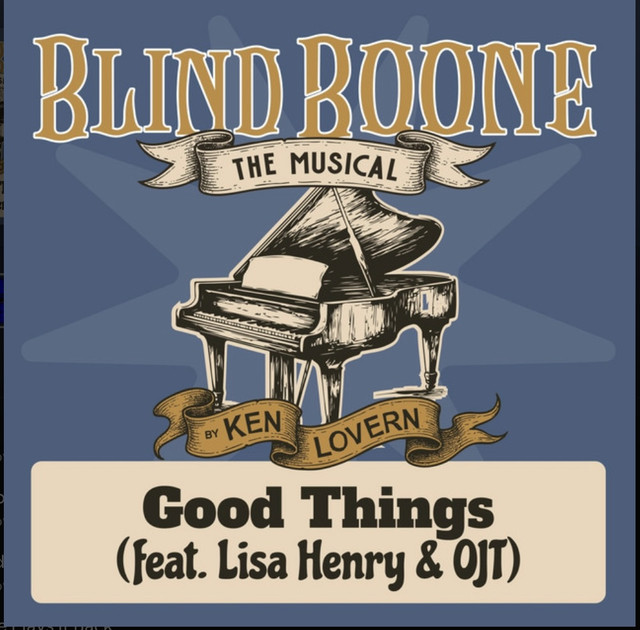
There is something fitting about ending a story with a song called “Good Things.” After the hardship, uncertainty and extraordinary circumstances explored throughout Blind Boone the Musical, Ken Lovern’s fourth and final single arrives with a sense of warmth and forward motion. It settles into the groove and lets the music do what it does best – brings people together.
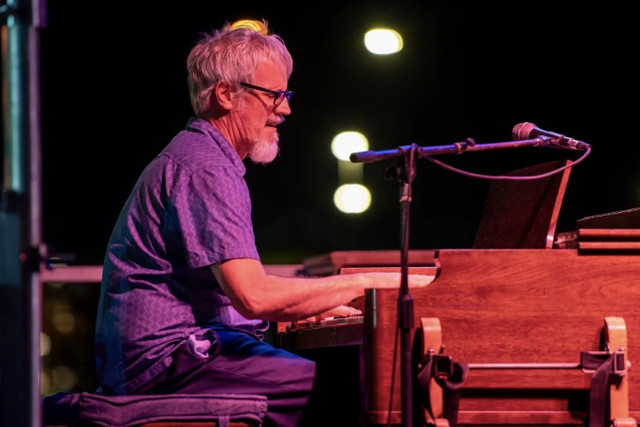
At the centre of the track is Lisa Henry, whose vocals give “Good Things” its human warmth. There is an easy to her performance that immediately draws you in. She is surrounded by the unmistakable sound of OJT (Organ Jazz Trio), the Kansas City organ-jazz outfit with whom Lovern spent more than thirteen years performing at the city’s Green Lady Lounge.
That history matters. Lovern isn’t approaching organ jazz as an aesthetic borrowed for the occasion; it is part of his musical vocabulary. The Hammond organ sits comfortably at the heart of the arrangement, giving the track its earthy character while the rhythm section keeps everything moving with the relaxed confidence of musicians who know exactly where the groove is. And then there is Robert Rebeck’s shaker.
It might sound like a small detail, but it is precisely those details that give “Good Things” its personality. The shaker adds another rhythmic layer to the arrangement, contributing to the sense that this is music made to be experienced physically. You can feel the pulse as much as hear it.
Listen here:
The emphasis on groove is central to Lovern’s wider approach. His work on Blind Boone the Musical has never been about creating a museum piece reconstruction of nineteenth-century music. Instead, he takes the history of Boone and filters it through the musical traditions that have shaped his own life: jazz, ragtime, blues, gospel, classical music and contemporary American sounds. “Good Things” perhaps captures that philosophy better than any of the previous singles.
The earlier releases have taken listeners through very different chapters of Boone’s story. “Quindaro” looked towards his family’s history and the search for freedom. “School for the Blind” explored the young Boone’s developing musical abilities. “Boone Plays It Back” introduced the virtuoso and the extraordinary talent that would eventually make him a celebrated performer. Here, the atmosphere is different.
That doesn’t mean the track ignores the complexity behind Boone’s story. Quite the opposite. The warmth of “Good Things” feels more meaningful because we know what has come before it. Boone’s achievements existed alongside blindness, racism, exploitation and the many barriers faced by Black performers in nineteenth and early twentieth-century America. To end the project’s sequence of singles with a song that embraces optimism feels less like glossing over those realities and more like acknowledging the resilience that allowed Boone to overcome them.
There is also a pleasing circularity to the release. Lovern began this project after discovering Boone’s story almost by accident, becoming fascinated by a musician who had once been famous enough for a Kansas City theatre to bear his name but had since slipped from popular memory. Now, through these songs, Boone’s story is being placed back into the musical conversation. “Good Things” works because Lisa Henry’s vocals, OJT’s organ driven groove and Rebeck’s percussion combine into something loose, soulful and unmistakably alive.
And perhaps that is exactly how this chapter should end. Not with a solemn farewell, but with real groove. Not with the past being put to bed, but with the feeling that there is more music still to discover. With “Good Things,” Ken Lovern closes the singles campaign for Blind Boone the Musical on an uplifting note.
About Ken Lovern
Ken Lovern is a Kansas City based composer, jazz organist and storyteller whose work blends the influences of jazz, ragtime, blues, gospel, classical and American roots music. He is the creator, composer and lyricist behind Blind Boone the Musical, an original historical musical fantasy exploring the life of Missouri pianist and composer John William “Blind” Boone.
Lovern has spent more than three decades performing and composing across a wide range of musical styles. For more than thirteen years, he played Hammond organ with his group OJT (Organ Jazz Trio) at Kansas City’s legendary Green Lady Lounge, performing four or five nights a week and becoming a familiar presence in the city’s celebrated jazz scene. His jazz compositions can also be heard across numerous OJT releases, including the album Ground Level.
With Blind Boone the Musical, Lovern combines his experience as a live jazz musician with theatrical storytelling to bring the remarkable story of Blind Boone to contemporary audiences. The full project, including vinyl and CD editions and a companion graphic novel, is set for release September 2, 2026.




You must be logged in to post a comment.