Earthquake Debuts Brilliant Release “Too Late” (feat. Nicole Zuraitis)

Ahead of their upcoming fourth studio album’s 2027 arrival, New York’s Earthquake Lights share “Too Late” (feat. Nicole Zuraitis), a soulful, sophisticated new single that pairs timeless songwriting with modern alternative rock production. Drawing equally from classic soul, neo-classical composition, and contemporary rock, the track tells the story of two people drifting apart, with each voice offering a different perspective on the same relationship. The result is a poignant meditation on longing, regret, and the quiet realization that some moments cannot be reclaimed.

Inspired by the music of Norah Jones and vintage soul records, “Too Late” began as a melody at the piano before gradually revealing the emotional story it wanted to tell. Rather than approaching the lyrics first, the band allowed the music to dictate the narrative, ultimately shaping a duet that feels both intimate and universal.

“We always write the music first and fit the lyrics into the melody,” vocalist/pianist Myles Rodenhouse explains. “This one started at the piano, sung to gibberish and the phrase ‘It’s too late.’ I further fleshed it out with the band before we asked Nicole to collaborate and sing on the track.”

Listen to “Too Late” (feat. Nicole Zuraitis) HERE.

The title arrived only after the emotional framework had taken shape, becoming a simple yet powerful expression of the song’s central truth. Rather than assigning blame or searching for easy answers, “Too Late” explores the bittersweet space where love, timing, and acceptance intersect, allowing both perspectives to exist with equal weight.

Musically, the single embraces an approach rarely heard in contemporary rock. Instead of relying on repetitive four-bar loops, the composition unfolds through evolving neo-classical chord progressions inspired by mid-20th-century songwriting. That timeless foundation is paired with lush modern production, creating a sound that feels simultaneously nostalgic and strikingly current.

The collaboration with two-time GRAMMY Awardwinning vocalist Nicole Zuraitis became one of the recording’s defining moments. After hearing the completed chorus, Nicole penned the verse lyrics from her character’s perspective, adding emotional depth and completing the conversation between the song’s two protagonists. Together, the performances transform “Too Late” into something that feels less like a duet and more like two parallel stories finally meeting.

The production itself reflects the band’s ongoing commitment to craftsmanship. Mixed entirely in analogue by acclaimed engineer Russell Elevado, the recording preserves a wide dynamic range that recalls classic soul and jazz records while retaining the clarity and impact of contemporary recordings. The single also marks Earthquake Lights’ first release with co-producer Phil Joly, whose experience as Chief Engineer at Electric Lady Studios brought a renewed sonic depth to the sessions.

Too Late” offers an early glimpse into Earthquake Lights’ latest full-length album, arriving in early 2027. Like much of the band’s work, the single places musicianship, collaboration, and enduring songwriting above fleeting trends, continuing their pursuit of recordings designed to resonate long after the final note fades.

Tennyson Debuts Epic Release “Safe Travels”

Toronto-based, Hong Kong-born songwriter Tennyson King shares “Safe Travels,” the latest single from his forthcoming album 100 Cities 百城 (out November 6th), a warm and uplifting indie folk anthem inspired by years of solo travel, touring, and the meaningful connections formed along the way. Blending contemporary folk songwriting with traditional Chinese instrumentation, the track reflects on the beauty of impermanent relationships, the joy of embracing the unknown, and the quiet hope that every goodbye might one day become another hello.

Inspired by backpacking across Eastern Europe and Africa, motorcycle journeys through Vietnam, and scuba diving in Indonesia, “Safe Travels” draws from the countless friendships and romances that naturally arise while exploring the world alone. Rather than mourning their inevitable endings, the song embraces their fleeting nature, celebrating the way travel allows us to discover both others and ourselves.

“It’s inspired by the joy of solo travelling and all the relationships you make during the journey,” Tennyson explains. “They’re bittersweet as they usually come to an end and it’s always hard saying goodbye.”

The song’s title stems from a farewell Tennyson first encountered during his earliest backpacking adventure through Eastern Europe. After days spent travelling alongside newfound friends, they parted not with “goodbye,” but with the words “safe travels.” The phrase lingered with him for years because it carried something more hopeful than farewell; the quiet belief that their paths would eventually cross again.

“To me, when somebody says ‘safe travels,’ there’s an intention that you’ll see this person again in the future and share stories of everything that happened while you were apart,” he says. “It’s a beautiful sentiment that I’ve always wanted to write a song about.”

That sense of openness and optimism mirrors the broader spirit of 100 Cities 百城, an album rooted in movement, cultural rediscovery, and the people encountered along the way. While previous singles have explored identity, ancestry, and relationships, “Safe Travels” shifts the focus toward the transformative power of travel itself, finding freedom not only in unfamiliar places but in the willingness to embrace impermanence.

Musically, the track continues Tennyson’s distinctive fusion of Western indie folk and traditional Chinese music. “Safe Travels” marks the first song he ever wrote on the zhongruan 中阮 , employing a fingerpicked approach rarely heard on the instrument. The arrangement is further enriched by Lina Cao (曹丽娜) on guzheng and renowned Taiwan-based pipa player Clara Liang (梁家寧), whose performances intertwine naturally with acoustic guitar rather than existing as separate musical traditions.

Produced by longtime collaborator Dan Hosh, the recording deliberately avoids overproduction in favour of something earthy and immediate. To preserve the feeling of open landscapes and spontaneous adventure, drummer Peter Landi performed the snare and cymbals entirely with his hands instead of sticks, while Tennyson created additional percussion by striking the body of the zhongruan itself. The result is an organic, playful arrangement that feels as though it could have been written around a campfire before carrying listeners toward the next destination.

Sia Shells Closes Out Summer with “No Bad Days”

Continuing to build her vibrant, sun-soaked world, Baja California-based singer-songwriter Sia Shells shares “No Bad Days,” a shimmering, tropical pop single inspired by the everyday magic of life on Mexico’s East Cape. Blending dreamy electro-pop production with island rhythms and vivid coastal imagery, the track captures the carefree feeling of surrendering to the ocean, slowing down, and discovering that happiness can be found in life’s simplest moments.

Inspired by the local philosophy synonymous with Baja California Sur, “No Bad Days” takes its title from a phrase seen throughout Los Cabos – painted across businesses, bumper stickers, and storefronts as a gentle reminder to embrace each day with gratitude. For Sia Shells, it became more than a slogan, and she embraced it as a way of life.

Written during a sunny afternoon at the beach, the song emerged directly from its surroundings. The crashing waves, warm breeze, and endless coastline inspired lyrics filled with distinctly Baja imagery from refreshing agua fresca and wild horses roaming the dunes to glowing East Cape sunsets. Rather than simply describing a place, Sia Shells set out to transport listeners there, inviting them to experience the same sense of peace and wonder that inspired the song itself.

That immersive quality extends into the production. Built around breezy tropical textures and buoyant electro-pop grooves, “No Bad Days” was intentionally crafted to mirror its lyrical landscape. Every rhythmic pulse and sunlit melody complements the song’s coastal atmosphere, creating a soundtrack equally suited for dancing barefoot on the sand or dreaming of your next escape to the sea.

“The ocean is truly my favourite song,” Sia Shells says. “I dance to her rhythm every day.”

Even beyond its postcard-worthy imagery, “No Bad Days” offers something deeper: a reminder to slow down, reconnect with nature, and embrace joy without overthinking it. In a world that often moves too fast, Sia Shells invites listeners to breathe in the salt air, feel the warmth of the sun, and remember that sometimes the best moments are the ones lived fully in the present.

VIDEO VOYAGEUR: 3 Q’s WITH GEORGE COLLINS

There is something really infectious about a song that simply wants to make you feel good. With “Happiness Looks Good on You,” George Collins set out to do exactly that, deliberately stepping away from the more reflective and introspective territory that has characterised much of his songwriting to create a joyful, celebratory track steeped in vintage soul and Gospel influences.

Inspired by childhood memories of watching Soul Train, as well as a lifelong admiration for The Staple Singers, the song channels the warmth, optimism and irresistible spirit of classic soul. The accompanying video takes that nostalgia a step further, taking inspiration from Billy Joel’s wonderfully retro “Tell Her About It” and imagining Collins performing with a vintage soul band on a 1960’s television show.

Created in collaboration with visual artist Marta Vorontsova, the video brings together Collins’ love of classic music, his playful sense of humour and a distinctly old-school visual aesthetic. We caught up with George to talk about the inspiration behind “Happiness Looks Good on You,” the making of the video, his love of vintage soul and the process of bringing the two together.

Tell us the story of this track. Why did you choose to visualize it specifically in this way?

As I was reviewing my catalog and planning my latest album “New Ways of Getting Old,” I realized that many of my songs are reflective and introspective and that I had very few “happy” songs. This was surprising to me, as I am generally an upbeat and happy person! So I intentionally set out to write a happy song. From the outset, I knew that I wanted it to be a celebratory song with a vintage soul vibe and a Gospel choir. I used to watch the TV show “Soul Train” when I was young, and I loved the Staple Singers – I thought Pops Staples was the coolest old dude in the world! I listened to their music continuously while I was writing and recording “Happiness Looks Good on you.”

What was the inspiration behind this new video (visuals, storyline, etc.)?

I am a huge fan of Billy Joel, and he, like me, is also a huge fan of vintage music – as evidenced by his wonderful retro album, “An Innocent Man.” He has a video of a track from that album, “Tell Her About It,” in which he plays a singer backed by a soul band performing on The Ed Sullivan Show in the 1960s. I love that song and the video, and I wanted to do something similar for my song.

What was the process of making the video?

I have been working with an amazing visual artist, Marta Vorontsova, for several years – she has created many of my lyric videos, and her work is absolutely first rate. (https://www.instagram.com/_imagikali_/) So I sent her the track and my basic ideas and she got to work creating the video. It was an iterative, interactive process, and after a lot of back and forth we ended up with a video we could both be proud of – and that I sincerely hope my audience will enjoy!

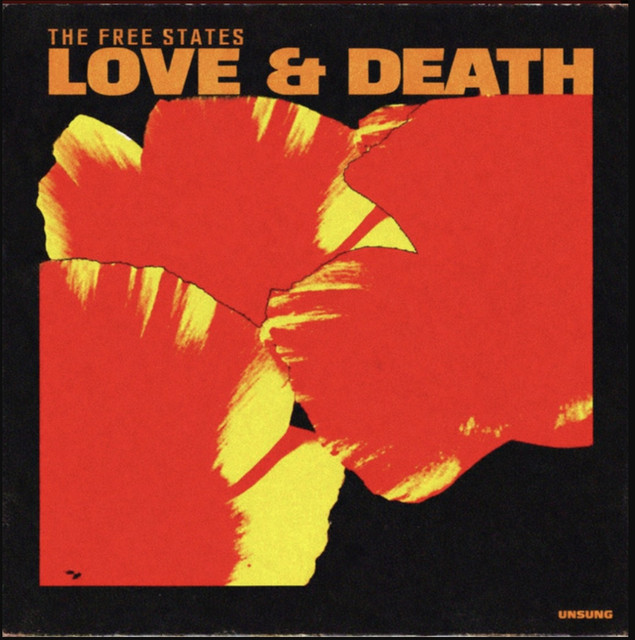
The Free States Let the Songs Do the Talking on “Love & Death”

thefreestates

There is something to be said for music that doesn’t immediately tell you what it is. In a world of genre tags, carefully curated aesthetics and songs apparently designed to make perfect sense within the first fifteen seconds, it is rather nice to encounter an album that seems perfectly happy to wander off and see what happens. No map or flashing neon sign saying this is the important bit, just a collection of ideas allowed to develop at their own pace. And that, in a nutshell, is rather what The Free States are doing on Love & Death.

The project of American songwriter Shaun Lyons, now based in Athens, Greece, The Free States has always been difficult to squeeze into one particular musical box, and frankly, why would you want to? There are traces of rock, soul, alternative music, experimental rhythms and a healthy appreciation of melody, but attempting to reduce all of that to a convenient label would miss the point. Lyons is interested in songs first.

“Definite” is a particularly good example. Built around the wonderfully human problem of being indecisive at a crucial moment in a relationship, it moves in 7/4, which is not generally the time signature one reaches for when trying to make uncertainty sound comfortable. But it works. There is an ease here that makes the unusual rhythm feel natural, while the song itself manages to be thoughtful.

Then there is the opening track “Most of All,” apparently born at three in the morning while Lyons’s electric guitar was lying beside him with the amplifier still switched on. Which is probably proof that sometimes the best songwriting advice is simply to leave the equipment where it is and see what happens. The song has a lovely sense of longing running through it, while strings, a refrain and a guitar solo give it a little more space and help distinguish Love & Death from the more guitar driven album that came before it.

Elsewhere, “Man the Baddies” brings considerably more muscle to the proceedings. What began around thoughts of war, friends being conscripted and the complicated question of what it actually means to move forward. It is energetic, rhythmically unusual and probably the heaviest thing The Free States have recorded, but there is no neatly packaged political statement waiting at the end of it. Lyons is more interested in the uncomfortable business of making decisions, which is rather more interesting than having the songwriter hand you a conclusion and ask you to tick a box.

Lyons has talked about songwriting as something that needs to happen before consciousness starts getting in the way, and there is freedom in that approach.

There is a similar freedom in the way the album was made. Recorded largely in Athens, with drums captured in several different rooms and vocals recorded together in another, Love & Death is clearly more interested in capturing a good performance than in constructing some immaculate sonic monument. Lyons makes much of the music himself, working with trusted collaborators when required, and there is something appealingly old fashioned about that. You have an idea, you make the record, you listen to it and you decide whether it works. Revolutionary stuff apparently.

Love & Death is an album that can groove, can rock and it can become rhythmically peculiar, it can pull back and allow a melody to carry the weight and it can occassionally make you wonder where on earth Lyons is taking you before realising that you rather like the journey. The Free States have remembered that the scenic route is where the interesting stuff happens.

Listen here:

Ariana Fig Looks Back to Move Forward on Debut Album So Long, Sinnerstate!, Helmed by Heartfelt Title Track

Hamilton, ON-born singer-songwriter Ariana Fig shares her debut full-length album, So Long, Sinnerstate!, a vibrant folk-pop collection that explores identity, ambition, and the winding road between who we are and who we’re still becoming. Marking her first full-length release after two independently released EPs, the record finds Fig expanding both her songwriting and sonic palette, pairing deeply personal reflections with stories inspired by literature, film, and imagined perspectives to create her most universal body of work to date.

“In a time for music where it seems like pumping out quick and fast singles is the way to go, I think there’s something pretty punk rock about releasing an album independently in 2026,” Fig says. “I’ve made two EPs under my own label, and I thought it was time to tell a larger story and let people know more about who Ariana Fig the artist is through my music.”

The album’s lead single and title track, “So Long, Sinnerstate!,” was inspired by the music she was listening to while writing, particularly MJ Lenderman’s Manning Fireworks and Briston Maroney’s JIMMY. It’s a nostalgic track that reflects on the dreams of her younger self while looking toward the future with equal parts uncertainty and hope.

Centred on navigating identity, So Long, Sinnerstate! marks a turning point in Fig’s songwriting. Rather than writing solely from personal experience, she drew inspiration from books, films, and imagined perspectives, allowing the songs to speak beyond autobiography and resonate on a broader level.

“I want my listeners to see that my writing has grown to a place that feels more universal and less autobiographical,” she says. “These songs hit a nerve with everyone who has listened thus far, and that’s all I’m really looking for as a songwriter.”

While listeners have questioned whether ‘Sinnerstate’ is a place or simply a state of mind, Fig prefers to think of it as representing “…a highway, one that you need to travel to get to who you want to become.”

Produced by Sarah MacDougall, the album’s title track also became one of Fig’s most experimental recordings. Portions of the vocals were tracked through a vintage SHURE 520DX harmonica microphone for added grit, while acoustic guitar was recorded outside the studio to capture a natural ambience. Featuring no digital instruments and pedal steel from Tennessee musician Conner West, the track embraces an organic warmth that mirrors its reflective lyricism.

Together, So Long, Sinnerstate! and its title track capture an artist embracing growth without losing sight of where she began. The album broadens Fig’s songwriting into her most expansive work yet, while its lead single offers a fitting look into the heart of the record.

“As soon as I finished writing this song, I told myself that if this was the last song I ever made, I’d be so happy,” she shares. “Sometimes I still can’t believe that it’s mine.”