Salt Spring Island singer-songwriter Nicky MacKenzie shares Morals, a deeply introspective and emotionally layered EP that traces the tension between distraction and self-awareness, chaos, and growth. Blending sleek pop production with confessional singer-songwriter honesty, the project captures the internal conversations people rarely say out loud; the dark thoughts, quiet revelations and uncomfortable truths that shape personal evolution.
Developed over several years, many of the songs on Morals first began as fragments written when Nicky was in her early twenties. Voice memo ideas and unfinished thoughts eventually resurfaced years later, allowing her to revisit them through the lens of lived experience and emotional maturity. “It’s kind of a cool marriage between my younger self and my present self,” she explains. “Taking old experiences and sprinkling them with the learned lessons and flavours of my current life.”
Morals is helmed by its reflective and soulful lead single, “Lost and Found,” a raw pop ballad that captures the emotional comedown after distraction fades away.
“‘Lost and Found’ is about the feeling after the party, when all the lights and noise have died down, and all you have is yourself and your loud thoughts,” Nicky shares. “It’s the lonely feeling of realizing you’ve been acting willingly delusional, and you’re aware of the fact that you still want a distraction from yourself.”
That emotional honesty sits at the centre of both the song and the wider EP. Rather than focusing on romance, Nicky’s writing turns inward, exploring self-awareness, emotional avoidance, and the difficult process of confronting what lives beneath the surface. “The theme in most of my music is more about self awareness and growth,” she says. “The curiosity about what’s really going on beneath the mask, and the internal dialogue you have with yourself that you don’t share with anyone else.”
Written on her grandfather’s old classical acoustic guitar, “Lost and Found” carries an atmosphere shaped by imperfection. The instrument refused to stay in tune, but that flawed texture became essential to the song’s emotional identity. “It was kind of the perfect flawed sound I needed to inspire the feeling of this song,” Nicky explains. That raw foundation is contrasted by atmospheric production choices, including a thick, angelic vocoder hook designed to feel suspended above the track like a drifting thought.
Across Morals, Nicky embraces an instinctive songwriting process untethered from rigid structure. “Every feeling has a different colour palette, a different flavour and a different sound,” she says. “I find having a step by step writing system puts my creativity in a box personally.” The result is a project that feels emotionally fluid and deeply human, balancing melancholy, and reflection with moments of clarity and release.
Hamilton, ON’s Thomas Duxbury and New Mother Nature unveil Night is Young, a sprawling and deeply personal garage rock album released alongside its optimistic title track. Rooted in blues rock grit and indie rock exploration, the record captures the disorienting, often contradictory experience of navigating change, distance, and identity while learning to embrace both the chaos and beauty of the journey.
Written across years of transition (from busking through Spain to living abroad in Scotland), Night is Young documents a period of movement and emotional upheaval. “This album is about being on a journey,” Duxbury explains. “A lot of it comes from that feeling of being in the passenger seat of your own life sometimes. It’s that weird space where everything is kind of moving whether you’re ready for it or not.”
The album unfolds as a loose narrative arc, moving from early excitement and possibility into isolation, uncertainty, and eventual grounding. Themes of loneliness, mental health, and disconnection run throughout, but so does a persistent drive toward exploration and self-discovery. Rather than resolving neatly, Night is Young leans into contradiction as a reflection of real life in motion.
At the centre of the release is its title track, a song that encapsulates the album’s emotional core. Originally written in 2018 following a formative trip to Spain, “Night is Young” began as an upbeat, carefree anthem before evolving into something more complex. Years later, while living abroad, Duxbury revisited the track after receiving a distressing call from home; a moment that reshaped the song’s meaning entirely.
“It became a conversation between two versions of myself,” he says. “One that’s optimistic and ready to see the world, and another that’s a bit more worn down, trying to make sense of everything that comes with that.”
That duality defines the track. Bright, beachy garage rock textures and buoyant, singalong-ready energy collide with heavier lyrical undercurrents, creating a tension that feels both immediate and honest. The result is a song that holds two truths at once: carefree and burdened, open and uncertain.
Musically, both Night is Young and its title track embrace a raw, exploratory approach. Recorded over several years with a rotating cast of collaborators, the LP blends analog warmth with digital experimentation, incorporating recordings from multiple spaces and moments in time. From cassette-tracked textures to drums recorded in the attic of a Scottish pub, the album reflects a patchwork of lived experience.
“There’s a lot of different parts of my life in this record,” Duxbury says. “It really felt like bringing everything together and trying to make sense of it.”
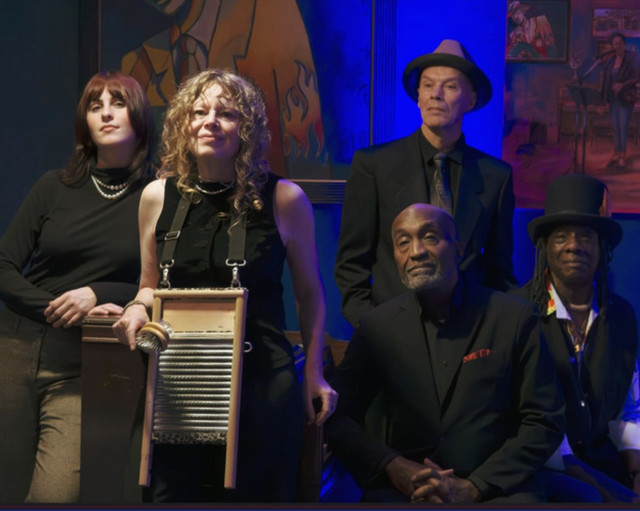
With “Why Don’t You Do Right?”,jen M steps into a new artistic chapter while staying deeply rooted in the blues tradition that shaped Lil’ Red & The Rooster. Featuring Grammy nominated pianist Bobby Floyd alongside collaborators Lauren Tucker, G-Louis, and The Governor this track transforms a familiar jazz standard.
Built from the scratch of a washboard, the sway of bongos, a weathered upright piano, and the twang of a gitjo, the recording creates the atmosphere of a cold New York apartment where survival matters more than glamour. Rather than romanticizing wealth and escapism, jen M’s interpretation focuses on the emotional toll of hard times and the complicated tenderness of tough love. The accompanying video expands that idea visually, contrasting the elegance of a vintage jazz-club setting with the modern reality of working musicians, phone screens and a culture that often consumes art while undervaluing the artists who create it.
At once intimate and socially observant, “Why Don’t You Do Right?” marks the debut of jen M as a solo project and signals an exciting evolution in her creative voice: genre fluid, collaborative, and driven by instinct, storytelling and atmosphere rather than convention.
Tell us the story of this track. Why did you choose to visualize it specifically in this way?
When I hear the lyrics of “Why Don’t You Do Right?” I imagine a young woman demanding her man become her sugar daddy to drape her in diamonds and furs. I don’t relate to that. I imagine a NYC apartment with high ceilings and a bone chill in the air — radiators clanking, electricity flickering. A woman frustrated with her partner worn down into laziness by an oppressive world. Starving, tough love is all she has left to give to get him back on his feet.
To create this soundscape in the studio I layered the scratch of a washboard with bongos to create the atmosphere. There was a perfectly out-of-tune upright in the corner that Bobby Floyd brought to life. It was like listening to a 1920’s barroom. G-Louis added a soft simple bass line and his banjo guitar with the perfect twangy texture. I wanted to turn the song into a duet. We didn’t think too much about why there are two women in this situation, we leave that up to your imagination. I didn’t need to give Lauren much direction we entwined our voices instinctively in the moment. It only took two takes. That created the music.
I’m a very intuitive creator. I love puzzles. In grad school at Naropa University, I studied a technique for theatre creation called Moment Work by Moises Kauffman. In this technique you start with a story or idea or question or theme and then instead of writing a story you create moments that relate to the theme. They can be anything. Once you have them you weed them and then arrange them like pearls on a string. I love this way of working. It doesn’t have to be linear or necessarily clear point to point. It can be a series of impressions, senses and experiences. So, for this project, I didn’t want to tell the story of the lyrics or my impression of them. I think it’s strong enough in the music. I didn’t want to explain. I want it to be a different experience for everyone.
What was the inspiration behind this new video (visuals, storyline, etc.)?
I wanted to play with the dichotomy between the musicians on stage making the same hundred bucks a gig they did in the 80’s and a wealthy public of art lovers. They all love music and that love becomes the excuse for a culture to starve their artists because … well, “they love what they do.” And we do, and we’d love to live better without begging for each dollar. So we have that artist cry for culture to do better and get us some money too.
So, I asked our fans to come to our favorite coffee shop Java Central in my home town Westerville, Ohio dressed to the nines. I told them to not hold back, bring out those diamonds and pearls and they did, including my mom. We put white table cloths on the tables with crystal wine and cocktail glasses. Dimmed the lights and turned it into a NYC jazz club vibe.
I’m also fascinated by the new phone filming art trend. I’m not anti or pro, I accept it for what it is, a new way of sharing art with others. I wanted to bring that element into the video like a veil over being present in the moment. Veil’s can have their beauty too.
Another element I wanted to explore was using black & white of the past in contrast to vivid color of now.
What was the process of making the video?
Our friend and videographer Bill Jingo helped me set up a GoPro, iPad and iPhone as three static full scene camera angles. Then he shot close-ups with a hand-held iPhone holder. The venue has stage lighting and a really beautiful blue wall next to brick and an old upright piano. I chose the space for that blue wall. There’s also a painting of a dear friend and fellow musician who passed away a few years back.
The band came dressed for a high-end gig. I played the recording live and we doubled it with voices and instruments, which meant we all had to relearn our parts. It’s not as easy as it sounds. The fans sat down in front of the stage and played their part. We did three takes plus close-ups. One take I asked them to get their phones out and film the soloists. They got really into it with one guy doing a selfie with the band in the background. The footage is really quite beautiful when layered over like that veil I was referring to.
My favorite moment is a slow motion money grabbing moment. I took the tip jar and grabbed all the money and threw it in the air. All the musicians grabbed for it while the audience was filming it with their phones. Funny thing, one bill got stuck in the ceiling panels.
Another funny moment, while filming Bobby’s closeup on his solo, G-Louis started playing his gitjo behind his head like an electric guitar. The public started laughing of course and Bill caught Bobby and Governor’s expression of delight and surprise. I didn’t use the behind the head shot, but the shot of Bobby and The Governor is in the video. Look for it during the guitar solo.
Bill did such a beautiful job with the filming that editing was effortless. It was all intuitive. When I finished I realized I’d naturally bookended the video in black & white with the washboard.
Arriving as a deeply personal and expansive body of work, Walk Right Through finds Jont at a creative and spiritual peak. Rooted in singer-songwriter, indie, and folk traditions, the album unfolds as a living document of presence, transformation, and emotional truth. It’s an offering shaped by years of perseverance, reflection, and hard-won clarity.
“I’m deep in the jubilation dancing that goes on when it’s gone right and your prayer of gratitude, your anthems to celebrate the essence of your being, are now somehow larger and more energetically witnessed by The Universe,” Jont shares. “In that space, all one can think and feel is ‘you know what? I actually did it. I did create one of those ones. One that will really count.’”
The project emerged during an intense and almost inexplicable creative surge. At the beginning of 2024, 10 songs arrived in 10 weeks, each carrying what Jont describes as the same urgent message: “Get me out. I want to be sung and heard now.” Rather than forcing the process, he followed it, allowing the material to reveal itself in real time.
Anchoring the album is its lead single, “Ride On,” a song that arrived under particularly meaningful circumstances. Written on the day of Jont’s dear friend Barbara’s passing, it carries both grief and release; an emotional threshold that sets the tone for the recording process that followed.
Walk Right Through itself was captured during a singular, almost fated session. Recorded in one day at Sonic Temple Studio just before its closure, the session brought together Jont and his core collaborators in what he describes as a uniquely aligned state. “If you detect a special vibe in this album, that’s part of it,” he explains. “This was played by human beings in a certain state of mind. It’s us, on that day, in the studio.”
That immediacy remains central to the record’s sound. While later expanded with subtle production from Jont’s extended creative collective, the foundation is raw, present, and deeply human. The performances lean into openness and vulnerability, favouring emotional truth over perfection.
Self-proclaimed cottage core rockstar Kari Lyn unveils “Killing Time (the Fish Song),” a hopeful, theatrical folk-country rocker that marks the beginning of a brand new era. The first single from an upcoming six-song EP, the track embraces spontaneity, adventure, and the joy found in life’s in-between moments. Equal parts playful and reflective, “Killing Time (the Fish Song)” feels like driving into the sunset with the windows down; cinematic, pulsing, full of possibility.
The song was written during a summer spent back in Kari Lyn’s hometown of North Rustico, PEI, where she challenged herself to write as much as possible while soaking in the fresh air, familiar landscapes, and temporary freedom from day-to-day work. “I believe I finished 11 songs that summer that I was willing to share,” she explains. “Killing Time (the Fish Song)” was one of them. Being home stirred deeper reflection too. “I was thinking about how proud little Kari Lyn would be and how I’ve become someone she would have looked up to.”
Though initially written as a playful experiment with chord progressions and tongue-in-cheek lyrics, the song quickly took on a life of its own. After performing it casually for friends, fans, and at a few live shows, one thing became clear: people wanted “the Fish Song.” “They’ve been asking for it for almost two years now,” Kari Lyn says.
At its core, “Killing Time (the Fish Song)” is about embracing the moments that quietly shape who we become. “Life is all about the moments in between,” Kari Lyn explains. “The moments we are ‘Killing Time’ are what make us who we become.” That idea is woven throughout the song’s freewheeling spirit, capturing both the rush of adventure and the clarity that often arrives when you least expect it.
The track’s production leans fully into that sense of fun. Built around a descending chorus progression that became the song’s anchor, “Killing Time (the Fish Song)” moves with full-band energy, anthemic momentum, and a touch of mischievous theatricality. One of the standout additions came just two days before entering the studio, when Kari Lyn unexpectedly recruited a fiddle player she ran into at an afterparty. “A few beers deep, I asked if she was available that Thursday and wanted to hop on the song,” Kari Lyn laughs. “She agreed and now we have a killer fiddle part.”
The accompanying lyric video ties Kari Lyn’s past and present together. Using footage shot on her video camera during last summer’s Home tour, the visuals trace an 18-show run across the East Coast with her sister. “We were having fun, killing time and making waves,” she says. It’s a fitting bridge between the introspective tone of her last chapter and the more playful, unguarded energy of this one.
Even with its buoyant, feel-good exterior, “Killing Time (the Fish Song)” carries a deeper undercurrent of resilience. “I really hope to inspire people,” Kari Lyn says. “To remind them that it gets better, and not to sweat the petty stuff.” For an artist whose music has always been rooted in honesty and vulnerability, this single feels less like a departure than a fuller expression of who she is. “I’m generally a high energy, happy-go-lucky person,” she adds. “It was about time I released a fun-loving rocker.”
Revelstoke, BC’s PICKLE JUICE returns with “A Little More Time,” a heartfelt and emotionally exposed new single that sees the alt-rock outfit stepping into their most vulnerable territory yet. Known for their high-energy, unhinged live shows and gritty, adrenaline-fuelled sound, the group takes a more reflective turn here, exploring grief, loss, and the longing for moments that never quite felt finished. It’s the second single to drop from PICKLE JUICE’s upcoming sophomore EP, The Whiteroom, officially out June 12th, 2026, and follows “Halfway” which garnered multiple spins on Hockey Night in Canada.
“The song pays homage to loved ones taken from us far too soon,” explains drummer Pete Lavery. “It began as lyrics written through personal loss, and when it resurfaced to the rest of the band, the music grew around that same emotion. It was difficult to work on, but it helped us heal through the process.”
For vocalist Tim van der Krogt, the track is deeply personal. “For me, it’s about one specific person that had an enormous impact on my life… a beautiful human that shined so bright,” he shares. “We were all going through similar experiences of grief and loss while writing it. We wanted to do justice to the friends we lost, and we’re really proud.”
What sets “A Little More Time” apart is its emotional openness. Stripping back the bravado that often defines their earlier work, the band leans into tenderness and restraint without losing their sonic weight. “There’s nowhere to hide in this one,” Tim adds. “It’s added a whole new dynamic to our live set and shows a bit of growth after years of singing about getting a little bit drunk and a little bit high.”
The song’s evolution was anything but straightforward. Initially written in fragments, PICKLE JUICE struggled to unify its sections. “The chorus and verses felt like different songs,” Tim recalls. “We had all these sections of a song but didn’t have anything to glue it together.” With guidance from producer David Ziehr, the band reworked the melody, lifting it into a higher register and reshaping the structure until it finally clicked. “That started a chain reaction that brought everything together cohesively.”
From a production standpoint, the track draws subtle inspiration from artists like The War on Drugs and Sam Fender, blending expansive indie rock textures with grounded emotional weight. A vibraphone tucked into the second verse adds a delicate, almost nostalgic shimmer, while a Neil Peart-inspired groove in the chorus injects momentum and lift where the song once held back.




You must be logged in to post a comment.