Creating Beats with Javelin


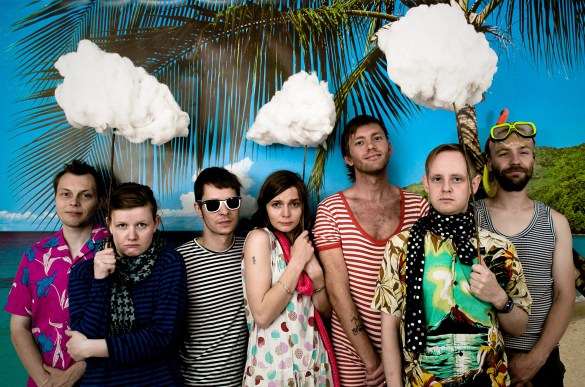
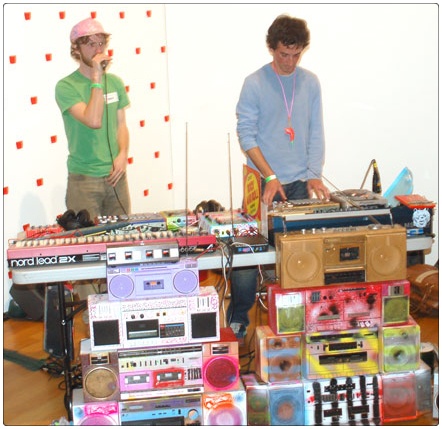
I first saw Javelin back at CMJ 2009. One of my friends and fellow Modern Mystery writer, Joe, told me I just “Had to hear these guys.” Curious, we headed out to see the chill wave duo at the Knitting Factory in Brooklyn. It was noon time on a weekday. As intimate as it was, it was one of the highlights of my CMJ. The cousins who are currently residing in Brooklyn are getting bigger by the day. Today I had the pleasure of speaking with George Langford who was waiting to pick up Javelin’s new tour ride. Their debut album titled No Mas drops on David Byrne’s label Luaka Bop on April 20th. Be prepared for one of the hits of the summer.

Modern Mystery:The first time I saw you guys was at CMJ last year. At the Knitting Factory in Brooklyn at an early afternoon show. How has things changed for you since then?

George Langford: We played a lot more shows since then. We finished our full length that’s coming out in a few weeks, we just did a tour in the UK with Yeasayer. It’s a new experience. It’s been a barage since then, and we’ve had increase in activity, more opportunities and better shows. Things have been good since then.

MM: How does art play a role in your songs, stage performance, and overall image of the group?

Langford: Tom and I would both agree that a visual experience for us is a valid one in the way music is produced. What we draw inspirations from are musicians and other music but also visual things. We spend a lot of time at record stores and thrift shops and its not always the music but sometimes the cover. The two go hand and hand, the visual and sonic.

MM: Do you find it hard to bring what you created in the studio onto the live stage?

Langford: All the time, its pretty much the constant battle. It’s the fun of the challenge of the band. You’re in the studio and make this song, you try to create them and you can’t. You play that element and try to portray it live and jump around onstage.  It’s a learning process . We’re just two people. It’s a challenge.

MM: How do you create and write your songs? Where does your inspiration come from?

Langford: In the past it had been like two chemists working in the same lab, working on different projects and working with each other. Some of the best stuff we ever made are the instances we work together. Sometimes we make things together or bring it to the other guy and flush it out together. In the beginning we had very different styles and now its more similar. In the start for me it wasn’t competition to out do the other one but try to impress the other one. To come up with something better , try to impress the other person. That’s how it was in the early days.

MM: Have you ever been on the tour this much? Did you think a year ago that is where you would be?

Langford: We’ve never had to tour this much, its always been looming,. Like if we are going to do the music thing we’ll have to be road dogs at some points. Compared to some bands we’re hardly that. The next couple of months we’re going to be on the road a lot and it’s going to change the live show and format, getting loose with it and finding new ways to t do it

MM: Are you excited about the release of No Mas or more nervous?Langford: I’m so excited. So many songs we’ve been sitting on for years, some of the material is brand new, and some is old and reworked. It’s pretty bizarre. It’s like murder to me waiting for this to come out.

MM: How did you get involved with David Byrne’s label?Langford: It was just a lucky thing. We have been burning these cd-rs and selling them at shows, giving them to friends.  This one cd Jamz N Jemz just got in the hands of the people at the label, and here we are. I guess it doesn’t happen like that to a lot of people. We weren’t very active in the pursuits of labels.

MM:  What do you like more? Being in the studio or being on stage?Langford: In the past I’ve been very much of a studio type person. I’m a total hermit and I love being at my house, but it is a tremendous rush I get from performing. I used to have paralyzing stage fright but it went away…like panic attacks and anxiety. It’s now excitement .I could never understand this foreign idea of getting up there and performing but it feels so good. So I guess at the moment I enjoy being on stage. I don’t know how to compare.

Javelin- Oh! Centra by modernmysteryblog

Bear Hands Clawed Their Way Through CMJ, Now Preps for Upcoming Release of Debut LP, “Paper”

You hear a name like Bear Hands and you think what? Cute and cuddly? Or has the ability to gnaw your face off and rip you in two? Well with this particular band, you’re half right on both ends.

            Punk-alt quartet Bear Hands make the nightly New York rounds, finding new venues to rock and new fans to woo. But it all started in 2006, just a couple of Metro North rides away, when singer Dylan Rau, bassist Val Loper, guitarist Ted Feldman, and drummer TJ Orscher decided to birth the band that is Bear Hands. Rau, Orscher, and Loper were well-versed in the punk-angst ways fashioned by Connecticut school boys, but when Rau graduated to the Wesleyan University music scene, he met fellow co-ed, guitarist Ted Feldman, and decided to refine his personal punk flare with the help of his cohorts’ musical inclinations. “I’m trying to rid myself of my more punk tendencies,” Rau says. Rau writes all of the group’s songs and remembers, rather shamefully, the first song he ever wrote when he was 13. A pre-teen emo anthem, I wonder? “Yeah, I’m sure,” he scoffs, rolling his eyes. But even in the group’s four-track outing, Golden EP, you can’t help but get sucked into Bear Hand’s brand of post-punk, laced with dynamic instrumental breaks and Rau’s ‘tudish cadence.

            Rau’s voice does usher the band on stage, but in person he’s quite stoic, low key. In a pleasant way, not in an I’m-too-cool-for-this-interview sort of way. He’s thin, and the presence of his mangled bun atop his head gives him a towering feel. But when we sit on the top floor terrace at The Delancey, he hunches, coils himself into the chair. Cross-legged. Doe-eyed. Already in a humbled position, he states, “I’m really terrible at guitar.” Rau, who shares guitar responsibility with Feldman, has never taken a guitar lesson. “I’m trying to play the guitar less,” he says. This strikes me as ambitionless. “Oh, I have ambition. Just not to get better at guitar,” he quips.

            The band recently flooded CMJ, playing the NME showcase with The Antlers and The xx—of which Rau is a big fan—The Mercury Lounge, and The Bowery Electric. Although they only played five songs, they stole the show from The Antlers, leaving everything on the stage, particularly during “Sickly Brunette,” a track so seeped in badassitude, it begs to be listened to on repeat to get your ass out of bed in the morning. They’re currently putting the finishing touches on their debut full-length LP, Paper (release date TBA), which Rau says is “85 percent done.”

Although Bear Hands remains unsigned, gigs keep popping up all over the globe. The band recently came back from a stint in the UK and around Europe. “We do pretty good in the UK. But Paris, that was a really great show.”  The guys also recently played a November show in Sao Paulo, Brazil, with Chairlift and Telepathe. And you can bet they had fun, because in the end, Bear Hands is about fun. It’s about head banging till it hurts and reveling in how good it can be to just be. And that’s where the dichotomy exists. They shred on stage, tats ablaze, faces contorted. But when it comes down to it, they’re just a couple of nice kids from Connecticut that decided to extend their pipe dream. And now, Bushwick-based and Brazil-bound, it all seems possible. Inevitable, even.

Paola Capó-García

Bang Bang Eche – Piano’s, NYC CMJ 2009

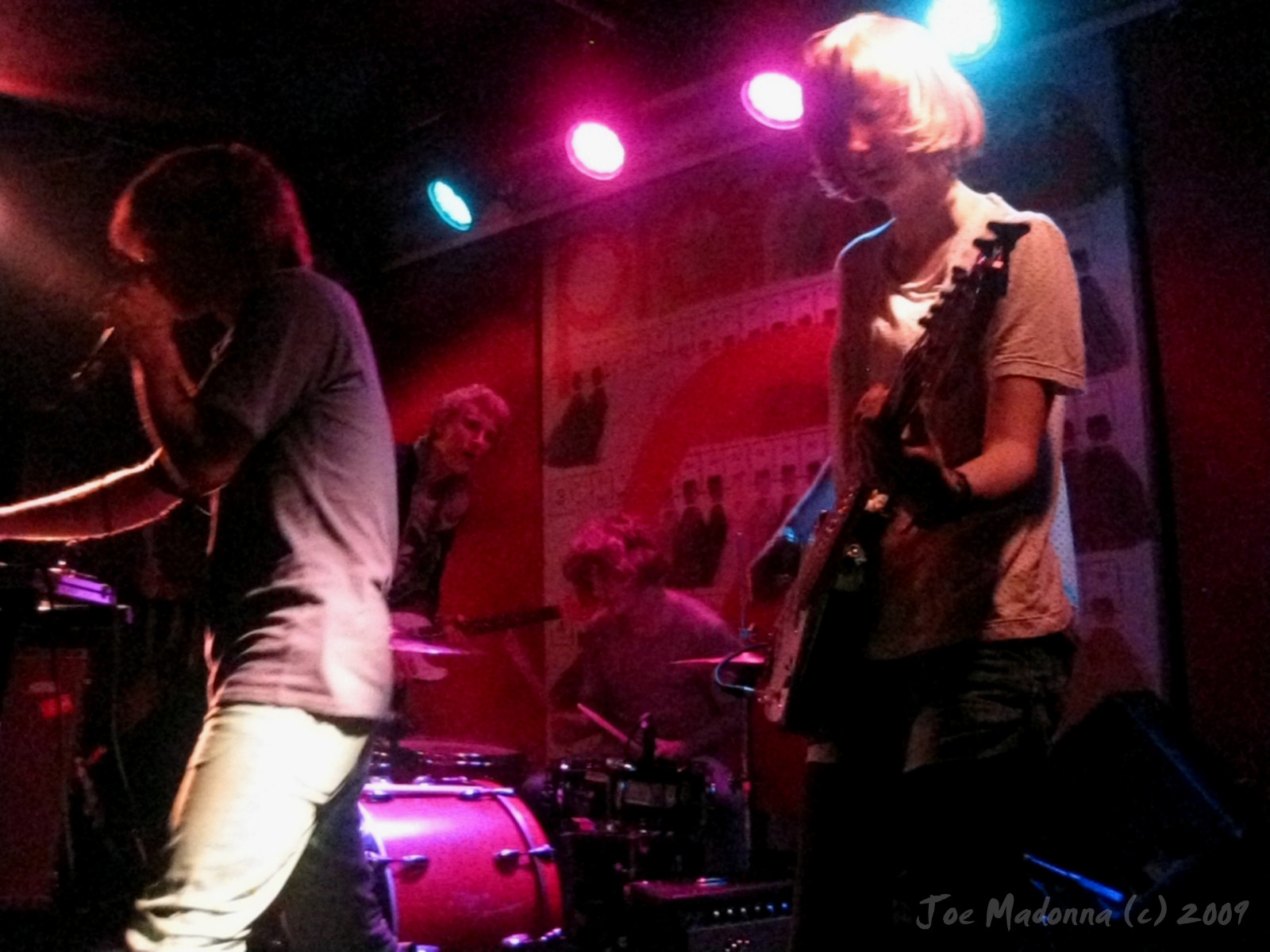
There’s not that many bands that I wait all year long to see, but these guys I did. The last time BBE was in the states to play shows, our new president won. It was a crazy night in NYC. I had their self titled ep and those tracks made me want to see them live. Now, it’s October 2009 a year later, and the band BANG BANG ECHE is ready to rock the crowd at Piano’s for one of many of their gigs during the CMJ Music Marathon going on in NYC. Forget the fact that there two hundred or so other bands I could go see during CMJ. This is the band I have been waiting to see.. There seems to be alot of buzz around the crowd… The show is about to start and the room is to full capacity. With a NEW four song EP about to drop to the college radio crowd, they play new songs like “fist full of dollars” and the song “dirt in the water” which has vocals similar to Aphex Twin and crazy guitar playing. This band is tight.. I mean..jumping around on stage.. one of their most energetic songs is called “Fingers in the Till”..this is when Zach is singing and Charlie rips on the guitar and then all of a sudden they jump off the stage and play to the crowd like they did at Piano’s.

 They also rocked out tunes from their 1st EP like “Time Mismanagement” and “4 to the Floor” Oh, did I forget to say they are from all the way around the world. Yes, they hail from New Zealand. How cool is that? The thing I like about Zach great vocals with his accent is that when he plays certain songs, he has what alot of club DJ’s use for effects. The Kaoss Pad.. oh man, does this come in very handy and sounds so good with his vocals and the way he makes it sound when they are playing live. the Band is headed off to Europe for now, but they will back in the states in the Sping, make sure you make it out to see them live.
-Joe Madonna

Check out Bang Bang Eche on their Myspace

Check out Bang Bang Eche’s Live CMJ Performances!

“Time Mismanagement”

 New Song!
object width=”425″ height=”344″>

Spreading the Love with Savoir Adore!

sa

Savoir Adore might make little to no sense when translated from French, but this New York based band has been doing the complete opposite. While gaining an immense amount of recognition in the indie-rock industry, Savoir Adore plans on gradually expanding its music not only domestically but internationally.The group’s mates Deidre Muro, Paul Hammer and David Perlick-Molinari expose the details of Savoir Adore’s debut album In the Wooded Forest and share their experience of their second year at the CMJ.

What is the translation and meaning of your band’s name?

Deidre:We just sort of jammed together and we had never played together before. We literally made one mp3 recording and wanted to share it with people on Myspace. So, we made a name on the spot to share that mp3, that’s how it started but we found more meaning in it on the way.

Paul: We had just been talking about the French language and Deidre recorded a song with several French words in it and our name roughly translates as to know love, or adoration. Savoir Adore is actually two verbs so it doesn’t literally make sense, but maybe a hundred years from now it will be accepted as a phrase.

The news are that you guys have a new album, what sets it apart from the previous recordings you’ve worked on?

Deidre: We only had one album before this one. It was recorded in one weekend, so we kind of challenged ourselves. As for the new album, we had a more extended approach, we definitely spent more time with it, I guess that’s the main difference.

Are you pleased with the outcome?

Paul: It’s sort of unavoidable, as you record the new songs, it’s unavoidable to discover the new recording methods. We learned a lot through the process. I’m definitely happy with how it turned out, but also now we’re separated from it and we’re recording new stuff.

sa2

Can you describe your music-making process?

Deidre: We have a couple of different methods. We’ll be in the same room, Paul will be on the drums while I’m jamming on something else and we sort of hit record and jam.Afterwards, we’ll listen back and pick out different parts. Sometimes, one of us will start an mp3 and forward it to someone else and take it from there.

Paul: Another way to describe the process is to tell you what we don’t do. That being is that we never get together and write a song straight through. The project itself has to do a lot with experimenting with both song writing and recording processes. The EP was basically all the sounds you hear was the first time we ever played them. Everything was written in the room. As for the new album is was more developed; we sent a few tracks back and forth and built upon music we had recorded. As we develop, we’re discovering what works the best. 

Who mostly contributes to the song-writing?

Paul: The song-writing is pretty even. We find ourselves swapping material. Deidre tends to write more lyrics, I tend to write more of the rhythms, and David contributes with melodies.

Do you have any favorite songs from your own recordings?

Deidre: I would say “We Talk like Machines”. 

Paul: I agree.It has become our favorite song on the album. For some reason every time we play it live, it always feels new and refreshing every time.

What bands have you been listening to?

Paul: We both have been listening to Phoenix nonstop.

2009_1024CMJ0082

Aside from the band and the music, what do you spend your time on?

Deidre: I love this question! We both enjoy cooking and eating, I like discovering new recipes and I cook for David all the time.

Paul: I’m more of a meat person. I like roasting meat…None of you guys are vegetarian, right?

 Well, I’m actually a vegetarian.

Paul: I guess I have to rephrase that now(laughs). I definitely enjoy cooking though.

Was there a turning point for Savoir Adore?

Deidre: We didn’t start out as a band, it was very gradual. There was not really a turning point, and I don’t even know if it’s that way now. I mean, we both have left day jobs, but we still do freelance, It’s just a different lifestyle.

 How has your music developed and changed over time?

Deidre: I think it’s a time reflection what we’re currently influenced by. We absorb what we’re into in the moment and incorporate it into music.

Paul: The last two years we’ve learned a lot about playing together. It was interesting to see that the way we recorded and discovered what works for us and what doesn’t. Much of what we have done so far is experimentation. Now we want to approach things more critically, realizing the need for more harmonies.As you work on a project you sort of realized the strengths and weaknesses.

This being your second time playing at the CMJ, would you say you like it? 

Paul: We haven’t been able to see a lot of bands because our schedule revolves around performances. I think it’s been great both years.Every weekend in New York is sort of a mini CMJ. We’re hoping for booking agents to discover our music through our shows.

 Do you have a favorite venue to play at?

 Paul: Music Hall by far! They treat you well, the sound is incredible, and you’re in the middle of Williamsburg.

What’s the band’s next mission?

Deidre: Definitely writing.

Paul: We’re planning on going back to the studio, we’re hoping to expand on where we’ve been releasing our music. Touring is definitely on the agenda, but we want to do it right. This meaning support and someone setting up shows for us. Recording, releasing music in the UK and hopefully going to Europe eventually. I think the world is ready (laughs)!

-Viktorsha Uliyanova

múm’s The Word

mum

Close your eyes and you’ll see black. Maybe some sparks, some flecks and non-descript shapes. But when members of múm close their eyes they see two-headed talking goats, whimsical planets made of ice, and prancing forest nymphs. They see their music take shape into wondrous things. múm has long been part of the Icelandic ethereal elite (alongside Björk and Sigur Rós), producing beautiful epic noise that matches the mystique of their native land. It’s the sound a haiku would make if it could talk. And in the past 10 years, múm has toured extensively around the world, spreading the joy and sadness of their five albums, countless EPs, and compilation discs. Now they’re embarking on a European tour off the heels of a North American stint, and luckily, we got to talk to founding member Gunnar Örn Tynes prior to playing a show in San Francisco. Here he talks about his band, his roots, and the music you shouldn’t be surprised he listens to.

Modern Mystery: How different is Sing Along to Songs You Don’t Know from múm’s other albums?

Gunnar Örn Tynes: I think we always been open to doing different things because we don’t want to get stuck in a groove. But then again, we are always creating music. [Sing Along] is a lot more simple maybe. I think it’s such a linear thing for me, I’m really excited about it and the music we’re doing now.

Out of all the albums spanning your career, would you say one of them is quintessentially múm?

I wouldn’t want to say one is more than the other, it’s very hard to pick your favorite children. But I think we have the same approach to music now, [it’s] just [that] we are very different people.

You tend to have two or three-year gaps between albums, is there a reason for that?

Two years is not really a long time when you think about it. We do an album and then we do all the touring, that usually takes almost a year and then we have a little break. It’s a natural cycle.

 Are you ever not doing music then?

No, not really. I’m constantly working. I do a lot of production and engineering for other people when I’m not working on my own stuff. I’m usually with somebody else in the studio or I kick back and relax. I’m actually reading a very funny Swedish criminal story. I read a lot of different stuff, whatever people recommend.

What kind of music do you listen to? Anything people might be surprised about? 

I hope not. I think it’s very strange when people only like one type of music, when people only like one type of food. I can’t put any limit on what music I like. I listen to classical music, rock and roll, R&B, hip hop, it’s music! I have friends who really like Britney Spears songs, but they can’t acknowledge it because it’s not correct or whatever. I think it’s wrong, suppressing your own feelings.

Are there certain cities you love to play?

We just played in Japan a couple months ago, it’s amazing. It’s a great place to go play and spend some time, very different from anything else. But I just think it’s very nice going around. The interesting thing is meeting the people. People are generally interesting wherever you go.

It’s interesting, you’re fascinated by other cultures, yet Icelandic culture itself is so fascinating, especially because people don’t know very much about it. What was your upbringing like and how did Icelandic culture play a part in your music?

My parents were both working for an airline company. My dad was a captain and my mom was a stewardess, so I was off along with them all around the world on trips. Great fun for me, of course. But in Icelandic culture, [there’s] a lot of music in the traditional culture, a lot of spoken word or rhyme. There’s always been a movement, playing music not to try to make a band that’s going to be next big thing, but it’s always been a very common activity for a lot of people. It’s very collaborative in Iceland.

2009_1024CMJ0317 by you.

When did you discover music?

 Very early, I was maybe 10. I started messing around with cassette tapes and doing strange music. I never learned how to play any instruments, I’ve always been more like playing with sounds, or doing something unexpected, like an experiment. Soon after I started doing things on the computer, from there I picked up a new instrument every two years.

You call it “playing with sounds,” and that’s true about múm’s music. It’s very playful, but there’s an inherent sadness. Is that dependent on your mood?

 It’s hard to break down what feelings there are in a song, because there’s usually a lot of everything. It’s a very emotional thing to do. There are aspects of music that can elevate your moods, whichever way you go. I used to love The Cure, for example, and that music is very much sad and it’s up to you to interpret it.

What do you think you’d be if you weren’t a musician?

[It’s] very hard for me to think about it. I would probably be working with sound in one way or the other. If not I might just be a school teacher. But it wouldn’t be a glamorous business. I couldn’t.

múm has been together for over 10 years now. In what direction are you looking to take the band for the next 10 years?

Ten years is a very long time. Anything could happen. Next album could be a hip hop album, I don’t know! I look forward to seeing where the music takes me.

 -Paola Capo-Garcia

Check out Live Photos from múm’s CMJ Show After the Jump

Surfer Blood is EVERYWHERE!

Surfer Blood @ CMJ, Cake Shop by you.
We can see a little bit of everything that’s good about music in Surfer Blood. And, while they played a total of twelve shows over the week of CMJ, I only got to catch two of them. It’s still a big number to see any band more than once at CMJ, and they were well worth it! As I trailed behind this site’s curator, Melissa, she will more than likely recount that this band was my obsession for the majority of the festival. We were also more than pleased to be blessed an interview with the band, which is posted below. Surferblood is at the top of the surf rock genre that exploded this summer, although they are hesitant to admit it. No, this is an indie rock band, and one of the best and brightest and…youngest at the most. You can hear the rifts of some of the genres greatest. A little bit of Yo La Tengo, a smidge of built to spill,  and even a pinch of Pavement. So, although the band has a very modern sound, the influences of Surfer Blood go back a ways. This is all in my own interpretation though, the only band dropped by the lead singer, JP Pitts,  as being an influence is Yo La Tengo (in particular the song “Sugar Cube”). Surferblood has been on constant replay in my itunes, and I’m sure we will be hearing a lot about them soon. The CD drops Janurary 19th on Kanine.

 Bonus: Same label as Grizzly Bear!
-Joe Paolucci

Surfer Blood Interview @ CMJ by you.
Surfer Blood is one of the fastest rising bands on the scene right now. Blending a bit of 90’s alternative with 60’s surf rock, the band who was hoping they could land one show at CMJ ended up with over 12. I sat down with the band who is John Paul Pitts, Brian Black, Tom Feketethe, Tyler Schwarz and Marcos Marchesani, on their first day of the festival, in the back of their van no less, to get the scoop on one of the hottest  bands around.

How did everyone in the band meet?

JP: The drummer Tyler and myself have been playing together since 2006 — we met in Orlando, Florida. We started playing together and feeling it out. We were working and going to school full time, and we started jamming together as this band called Jabroni Sandwich, which is a retarded name but we were serious at the time. We had a few members come in and out and then I met these two guys (Tom and Brian) at a Diplo Ultra after party in Miami, we all went for the free beer and met each other. They were like “Oh I’ve heard of you guys, I really like you,” and we had heard their band too and was like “We should all jam together sometime and tour.” And I was like, “Well if you’re serious, call us and we’ll do it.” And three days later were already learning the songs and planning a tour.

Tom: It’s strange, because we had heard their songs and really liked it but none of us were really doing anything, I feel that each of us had a member or two in our band that wasn’t really available to do it full time. We’ve been a band for 6 months, but we started  with the idea of we’re going to get this record out and we’re going to tour and that’s it. So that’s what we did and we’re on a tour right now, so it turned out.

How did you come up with the name Surfer Blood?

JP: The same night that we met in the club, Tyler was in the backseat just mumbling stuff under his breath, and we had the music playing really loud and he wanted us to turn it down but no one was really listening to him so he started yelling random things, and Surfer Blood was one of the things he yelled, and we all were cracking up. We were trying to think of names and stuff.

Who are your influences? You sort of have a Weezer meets Beach Boys vibe.

JP: We get Weezer a lot , but I don’t see it as much. I love Pinkerton but it’s not like it’s a bad thing.

Tom: A lot of people tell us they get a nostalgic feel from us, like we remind them of a lot of bands from the 90’s.

JP: We love all those bands, we don’t really mess around with too much electronic stuff. I mean we have Marcos playing keyboards.

Tom: We have another member (Marcos) we just added to do all the keys and do extra percussion on the record, and it works out.

JP: Now the live show has gotten that much better. Our influences, Yo La Tengo is one of my favorite bands, in terms of current bands, Women are great, Holiday Shores is really good. We’ll be playing with them and we’re excited about that.

Brian: There’s this whole group of bands in Athens, GA, this guy Mercer is in a couple of bands, this one called Mouser.

JP: The So So Glos from New York are really good, we’re big fans. Our influences if you can’t tell in the record, are really, really broad. Some of the guitar effects and rhythms. We get really excited about other people’s music and that’s what kind of makes us want to play music. We love so many bands.

Brian: We’re glad there’s other bands out there otherwise we’d be writing the same song over and over again.

You’ve been getting a lot of attention from blogs, online media and general word of mouth. Does your ever growing and fast attention ever surprise you?

JP: Every single day. We’re just so grateful, just the fact that we’re playing 12 shows. Just four months ago we were like “Oh man hopefully we can find a way to get one CMJ show,” and now we’re playing 12.

Tom: I always say this, it doesn’t really hit us until we’re doing it. We’re kind of floating around and then it’s like “Shit it’s really happening.”

JP: Everytime we see a favorable blog entry or review or something we’re just so happy because people can be so brutal. It’s so bizarre to us. It’s really strange how it happened, we played 4 shows in New York, and the first couple were really bad and then we played one that was decent, then I guess a couple people wrote and heard about us and ever since then it’s been steady. I got a message at 9 o’clock in the morning saying “Hey do you guys want to be on the Pitchfork Forecast?” and we thought they were joking or something and we saw it later that day like “Oh wow!”

Is  this your first time playing CMJ?

JP: Yeah, it’s all of our first time playing, none of our previous bands did.

How did you get involved with Kanine Records?

Brian: You know The Drums? They were name dropping us in interviews and stuff, and then there was a show for Insound that they were playing and they told Leo to go see us at Bruar Falls, and Leo came.

Tom: They’re really cool and they’ve been the most helpful people.

Tyler: When I first moved to Orlando, I was playing in this band that I wasn’t really into but I was playing drums for it, and I didn’t even know anyone. And his band was based 45-minutes east of Orlando and we played a bunch of shows together, so they contacted us about 12 months ago asking if they could use one of our songs for DJing, and it wasn’t until we met each other in Gainsville that I was like “Holy shit, you’re that kid Jacob!”

JP: We are really cautious about being lumped into the whole surf rock thing. The only thing really surfy about our band is that we have vocal harmonies, and our guitars sometimes have reverb on them.

Tom: We don’t want to get pigeonhold in that category, we’re going to do other shit. We’re wondering what the next record is going to sound like.

So your first album, Astro Coast is due out in January. Are you more excited  or more nervous about the release?

Tom: It’s been done for a while, and we just want it to be out and available and start working on more stuff.

How does the songwriting process happen within the band?

JP: Well a majority of the songs we already had but people have brought in new dynamics and things have changed. There’s been a lot of tweeking and the live sound sounds very different from the recording sound. It’s a new perspective.

You’re doing a lengthy tour with Japandroids and Art Brut. Is this the longest tour you’ve ever done?

JP: It’s the furthest we’ve ever been for sure, and yes our longest.

Brian: We did like 30 self-booked dates but those were miserable for the most part. Sometimes you go to a city and no one is there. It happened in DC, it was Thomas’ brother and his girlfriend. Even the promoter didn’t show up.

Where do you see Surfer Blood in 5 years?

JP: We still want to be touring and writing, doing exactly what we’re doing now.

Tom: At the end of the day, there’s nothing we’d rather be doing. It’s fun, it’s better than school!  We don’t want to be some sort of hype band.

JP: We kind of want to break the trend that’s been going on. After people stop blogging about them, it’s all over.

CHECK OUT TONS OF SURFER BLOOD PICTURES FROM CMJ 2009 AFTER THE JUMP