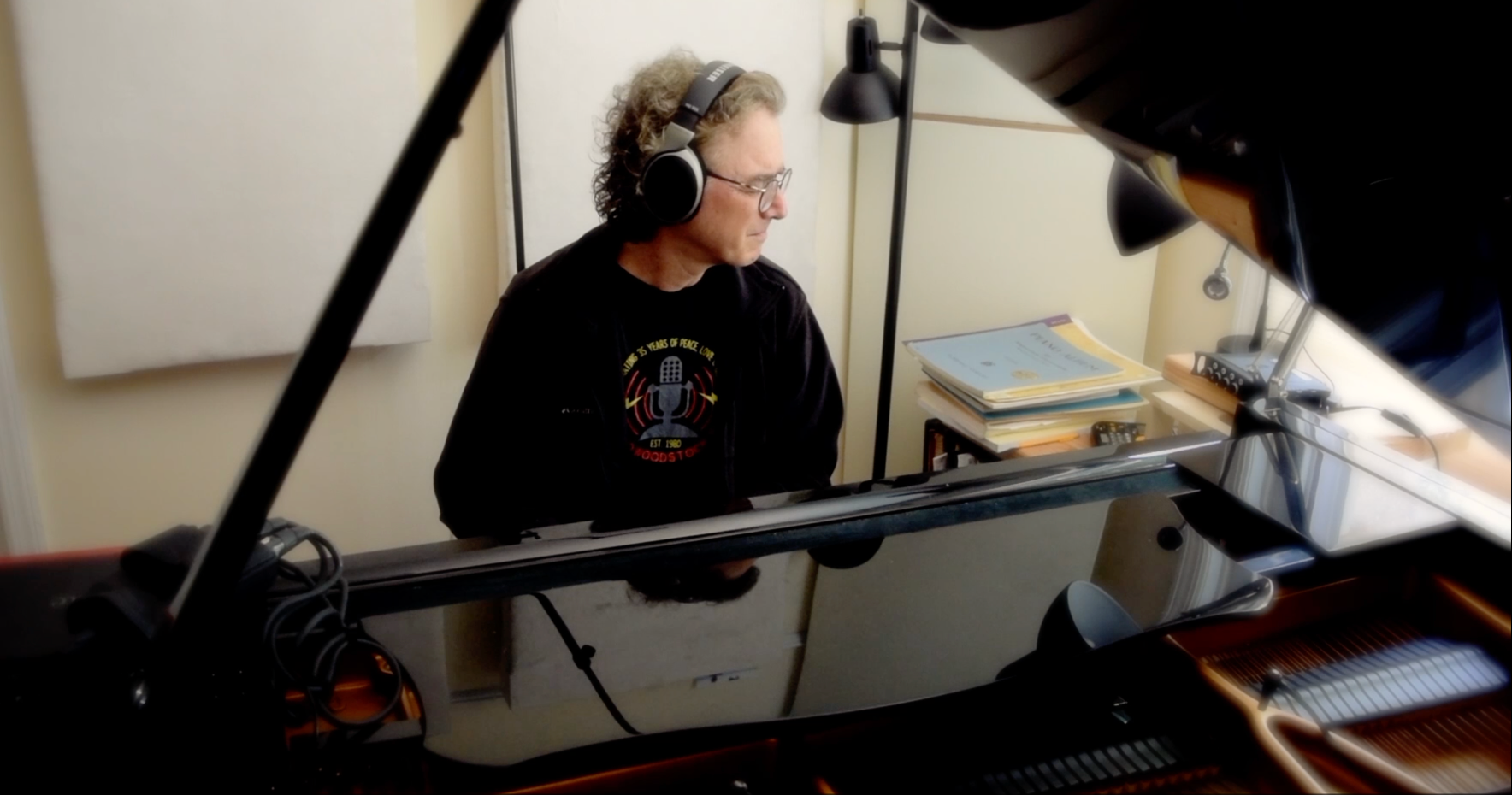
Ben Neill & Mikael Seifu – A Transcontinental Dialogue in Breath and Rhythm with “Nefasphere”

benneill1

There’s a quiet poetry in the way “Nefasphere” came to life. Fifteen years ago, in a college classroom in New Jersey, a young Ethiopian musician named Mikael Seifu met Ben Neill, a composer already known for his experiments with the Mutantrumpet, a hybrid instrument that fuses brass performance with electronic control.

Seifu was a student then, and was just beginning to shape what would become his signature sound: a fusion of ancient Ethiopian tonalities with the pulse and texture of global electronic music.

Neill was the professor, an emerging artist who had already collaborated with the likes of David Behrman, John Cage and La Monte Young.

Fast forward to 2025, and the conversation that began all those years ago has evolved into Nefasphere. The word nefas, from Amharic means “wind,” “breath,” or “spirit” and it’s an apt metaphor for what the music achieves – a flow of energy that moves through both artists, reshaping itself as it passes.

In the Worldwinds Mix, Neill and Seifu create a kind of ambient exhalation with long, flowing tones and circular patterns that expand and contract like the breath itself. Seifu’s electronic grounding draws from the Ethiopiyawi Electronic movement he helped define. It’s meditative yet propulsive, organic yet digitally alive. Neill’s Mutantrumpet threads through this landscape, with its tones resonating like ancient horns re-imagined for a new era. The effect can be felt with the African rhythmic pulse beneath the Western harmonic drift, and yet the music never settles neatly into either world.

The Moire Mix takes the same thematic DNA and refracts it through a more textural lens. Here, beats glitch and shimmer around deeper bass modulations, suggesting the interference patterns from which the mix takes its name. This version is less meditative and more exploratory – a field recording from some unseen interdimensional borderland between Addis Ababa and New York City.

What makes “Nefasphere” so affecting isn’t just its sound, but its story. This is music born from a relationship – teacher and student, mentor and mentee – that has evolved into genuine creative partnership. In Seifu’s own words, the collaboration marks “a rebirth… a reflection of the power of honest mentorship full of mutual respect and insight.” For Neill, it’s the realization of a long held artistic vision to create living, breathing music systems where structure and improvisation coexist in perfect balance.

Both versions of “Nefasphere” invite deep listening. They resist the quick satisfaction of streaming culture, instead unfolding slowly, like a landscape viewed from above. It’s music that rewards patience, music that is unmoored from trends and yet deeply of this moment.

For Seifu, this marks a luminous return following his acclaimed Zelalem EP (RVNG Intl, 2016). For Neill, it continues a lifelong exploration of evolution in his music, from minimalist composition to digital improvisation, from hardware to human breath.

But for both, “Nefasphere” is more than a collaboration. It is a shared meditation on sound as life force, a reminder that in the meeting of air and electricity, something sacred can still occur.

More About Ben Neill

Composer/performer Ben Neill is the inventor of the Mutantrumpet, a hybrid electro-acoustic instrument, and is recognized as a musical innovator who “uses a schizophrenic trumpet to create art music for the people” (Wired Magazine). Using interactive computer technologies, Neill generates unique musical and visual experiences that blur the lines between acoustic and electronic music, minimalism, and visual media. Neill has recorded thirteen albums on labels including Universal/Verve, Thirsty Ear, Astralwerks, Six Degrees, and his own Blue Math label distributed by AWAL/Sony. His first book, Diffusing Music, was released on Bloomsbury Press in 2024.

More About Mikael Seifu

Mikael Seifu is an Ethiopian electronic music producer committed to “Ethiopiyawi Electronic” – a coinage Seifu uses to describe the music he and his peers are producing in Ethiopia’s capital city of Addis-Ababa. Born and raised in Addis Ababa, he moved to the US and went on to study music production & the music industry at Ramapo College of New Jersey, a small school about 45 minutes outside of Manhattan. Here Seifu met a mentor in Ben Neill, the composer and music technologist who trained with La Monte Young. Seifu was inspired by Neill to take serious his calling in music. Mikael’s music does not westernize or electronicize extant Ethiopian music. Instead, Seifu uses Ethio-Jazz’s spirit of brewing estranged styles for his own musical tincturing. Seifu’s passion above all else is to create something befitting of its time, yet “eternally Ethiopian.” 

Connect With Ben Neill:

Website / Instagram / Facebook

VIDEO VOYAGEUR: 3 Q’s WITH MARCO di STEFANO

marcodistefano

Italian composer Marco Di Stefano has been recognized for his ability to blend classical orchestration, folk influences and cinematic scoring into music that feels both epic and deeply human.

His latest project Far Inside takes this skill a step further, pairing his orchestral compositions with striking visual narratives.

The new video for “Tarantella Noire”, a track on the new album, brings together live recording footage from the European Recording Orchestra in Sofia with AI generated cinematic clips, creating a tension between reality and imagination.

Inspired by the events in Palermo in 1992, particularly the murders of judges Falcone and Borsellino, the video balances historical drama with a fictionalized narrative, exploring the shadowy underworld of organized crime through a visual lens.

We spoke with Di Stefano who walks us through the creative decisions behind the video, the process of blending orchestral performance with cinematic storytelling, and how he translated a pivotal moment in history into music and imagery.

1.Tell us the story of this song, why did you choose to visualize this song specifically in this way?

The track was conceived with a strong cinematic and narrative focus, designed to evoke clear imagery and guide the listener through a story. Consequently, the visualization could not be merely an accompaniment; it had to function as a genuine narrative support.

I chose to merge two core elements: authentic footage from the recording session, which lends credibility and showcases the artistic genesis of the piece, and cinematic clips generated via artificial intelligence.

2. What was the inspiration behind this new video (visuals, storyline etc.)?

The inspiration for both the song and the video is rooted in a fictional narrative set against the real historical context of the events in Palermo in 1992, specifically the dramatic escalation leading to the murders of judges Falcone and Borsellino, who symbolized the fight against organized crime.

For the video, I adopted a visual approach that balances documentary style with a cinematic feel. The majority of the footage features the studio recording session with the European Recording Orchestra in Sofia, which highlights the high production value and orchestral commitment. I integrated short, AI-generated clips depicting an old, abandoned house in the Sicilian mountains, envisioned as a criminal hideout. This duality creates a visual tension that mirrors the historical drama of the story.

3. What was the process of making the video?

The process was guided by the dual objective of maximizing the musical performance and enriching it with an evocative visual context. The primary phase involved the meticulous editing of the recording session footage, selecting and assembling the most effective and dynamic moments of the orchestral execution.

Following this, I made the decision to incorporate the AI-generated clips. This was not merely filler, but a deliberate choice to elevate the video’s atmosphere beyond a simple making-of. The integration of these cinematic elements allowed us to create a richer visual texture, providing an implicit narrative backdrop that supports the epic quality of the music and demonstrates my ability to curate detail and the overall mood of the final product.

Keep up with Marco Di Stefano on his Website

VIDEO VOYAGEUR: 3 Q’s WITH ALEX THOMEN

Where-Did-They-Go-Wrong-COVER-ART

In a world where social media amplifies every trend and grifting scheme, Alex Thomen stands out as a songwriter unafraid to mix sharp cultural critique with wit, musicianship and a touch of irony.

The Nashville based composer, producer and multi-instrumentalist began his musical journey playing piano before earning his Bachelor of Music in Composition at Kansas State University and a Masters in Commercial Music Composition and Arranging at Belmont University. Over the years, he has scored commissions, produced cinematic trailer music, and released a solo piano album all while building a reputation as a studio minded artist with a keen eye for contemporary life.

His latest single “Where Did They Go Wrong?” which is accompanied by a striking music video, showcases that narrative precision and sly humor brilliantly.

In this exclusive interview, Thomen talks about the song’s ironic roots, his decision to “perform” it via video rather than on stage, and the full circle collaboration with longtime friend and director Chase Bartholomew.

1. Tell us the story of this song, why did you choose to visualize this song specifically in this way?

“Where Did They Go Wrong?” explores themes that have become increasingly prevalent in the social media age. In essence, it’s an “anti-grifting” song, but it’s disguised in irony instead of strict, polemic writing. During the writing phase, I approached the lyrics, composition, and pacing as if it were to be performed for a live audience. There’s a minute and a half of setup before the first “punchline” hits – that kind of misdirection is characteristic of live comedy. The problem is I consider myself a studio musician more than a live performer, and I enjoy producing studio recordings of my songs.

My solution, therefore, was to make a music video that essentially captures the visuals of a live, in-studio performance. Those moments where the lyrical delivery is communicating something ironic, facial expressions and body language help drive that point. Irony is best communicated with the eyes – I believe this is why jellyfish are famously unfunny.

2. What was the inspiration behind this new video (visuals, storyline, etc.)?

Each topic addressed in the song (manosphere movement, MLMs, alternative medicine) warrants its own in-depth conversation, because the reasons for each one’s existence is culturally complex. My goal was to critique these different trends/movements, pointing out some of the flaws in their ideology. While making it rhyme. While it’s inspired by real conversations and real people, all of the specific characters in the song are made up. I did not have a boyhood friend named Danny.

The lyrics are a self-aware, reductive type of argument – a thorough rebuttal of these beliefs would require more words that I can fit in a song. But I did my best to make it as thought-provoking as possible while keeping it entertaining. Plus, I got to put in lots of words that I’ve never heard in a rock song before. What the song lacks in brevity it makes up for in affectation. 

3. What was the process of making the video?

The video was shot at Colorado Sound Studios in Denver, Colorado. It was directed/produced/edited by Chase Bartholomew. He’s one of my best friends from high school (he is also not a self-proclaimed alpha male, not involved in an MLM, and not a practitioner of alternative medicine). In fact, we used to spend our weekends scripting and filming videos – either for school projects or just for fun (we would do this while other guys were getting invited to parties). He ended up studying film and is now a professional videographer. It was kind of a full-circle moment to collaborate again on a creative project. We have also improved in our video-making skills since high school.

I gave him creative control over the video – I’d give thoughts/suggestions here and there, but he’s the expert when it comes to the visual component so I wanted to let him run with his ideas. I think his vision for framing/editing/coloring helps amplify the message of the story. There’s a whole science of how different colors can evoke certain emotions. Chase is a bit of a perfectionist, so he focused on how small details could change the final shot. He focused a lot of his energy on subtle lighting changes to best capture the performance. For Chase, it was a long video shoot with tons of lighting changes. For me, it was a relaxing day sitting at the piano.

Keep up to date with Alex Thomen on his Website

VIDEO VOYAGEUR: 3 Q’s WITH MARCO DI STEFANO

angelsonourshoulders

In his latest release, “Angels on Our Shoulders,” composer Marco Di Stefano melds orchestral grandeur with cinematic storytelling to honor the heroes of World War II. It is also a stark reminder that the shadow of conflict persists even today.

A track from his upcoming album Far Inside, this piece captures the emotion of heroism through live orchestral performance, layered with modern instrumentation and brought vividly to life in a compelling new video.

We spoke with Di Stefano about the inspiration behind the song, the creative choices in visualizing it and the intricate process of bringing both music and story together.

From conducting a live brass ensemble to incorporating AI generated imagery of soldiers amid the ruins of war, this interview reveals how he bridges past and present, history and emotion in a work that is as cinematic as it is profoundly human.

Watch here:

1. Tell us the story of this song, why did you choose to visualize this song specifically in this way?

This song tells the story of heroes and honors the fallen ones of World War II, therefore I wanted to evoke classic movies such as “Saving Private Ryan” with specific color grades and introducing some AI generated clips of soldiers staring at the destruction of war.

2. What was the inspiration behind this new video (visuals, storyline, etc.)?

Even if World War II is a century beyond us, war is present in our modern world.

This song is composed using a modern language and instrumentation that evokes the spirit of that era and drama. The video starts with footage from the live recording of the orchestra where I personally conducted the brass section.

It ends with clips of soldiers starting at the destruction of war, while the music evokes past memories from the battles.

3. What was the process of making the video?

The video was recorded during a live session with a brass orchestra. The other instruments, from strings to percussion and synth, were added in post production using sample libraries, therefore I used footage from another recording session for the intro.

The final footage of the soldiers was created using AI, I wanted them to make clear to the viewer the context of this song.

Connect with Marco di Stefano on his Website

Pete Calandra’s Latest Album “Night Mist” is a Tonic for the Modern Mind

Night-Misti-Tunes

Pete Calandra’s latest release Night Mist is an album that doesn’t shout to be heard. It simply waits, patiently to be felt.

This eleven track collection is steeped in quietude, unfolding with the elegance of falling dusk and the emotional gravity of late-night introspection.

As both a skilled pianist and prolific composer across Broadway, film and television, Calandra brings a rare blend of technical finesse and emotional restraint to this work. It’s one that feels like a much needed breather in an overstimulated world.

Listen here:

The pieces on Night Mist are deceptively simple. On the surface, they present as minimal piano compositions touched by ambient textures and occasional soft orchestrations. But underneath that lies an exquisite sense of pacing and purpose. Tracks like “Whispers of the Dawn” and “The Heart of Mount Seleya” operate like emotional landscapes: sparse yet vivid, introspective yet expansive. And it is Calandra’s restraint, the space between notes, that becomes its own kind of melody.

What makes this album resonate so strongly is its consistency in tone without ever becoming over repetitive.

Each track brings a new shade of the same emotional spectrum. “Peaceful Valley” introduces cinematic string beds that evoke a pastoral calm, while “Autumn Nights” leans into the warmth of a felted piano to conjure a deeply intimate sense of place.

The ambient title track, “Night Mist” blends light electronics with improvisational phrasing, perfectly capturing the album’s thesis — serenity in the unknown.

Though best known to some for his work behind the scenes, including more than 100 film scores and music for global events like the FIFA World Cup and Kennedy Center Honors, Pete Calandra’s voice as a solo artist has become increasingly distinct over the last decade.

Night Mist builds on the aesthetic developed in ambient-forward albums like First Light and Carpe Noctem, but it lands with much more maturity and emotional clarity.

In an era defined by speed, distraction and technology burnout, Night Mist feels like a defiant gesture — an insistence on presence, on listening slowly, on valuing space.

It’s not just a collection of music, but also a gentle journey inward.

Connect with Peter Calandra via:

Website / YouTube / Spotify / Soundcloud

Peter Calandra Shows Brilliance with new Album Release “Spirit”


Peter Calandra’s latest album, “Spirit,” offers a captivating blend of emotive piano compositions and ambient soundscapes, providing a sanctuary for listeners amidst the chaos of the modern world.

This brand new album consists of 10 original tracks as well as 3 re-imagined classics, reflecting Calandra’s journey from his teenage years to the present day.

The original compositions were curated from material improvised during the pandemic, recorded during Calandra’s Saturday Night Live Sets on YouTube. From these sessions, favorite pieces were selected to be included on the album, all of which are improvised. “Spirit” also features cover songs from Calandra’s earlier days performing in bar bands.

Each track on “Spirit” is meticulously crafted with attention to detail, with the album unfolding like a series of paintings. Layers of sound are carefully blended together.

Tracks such as “Joyful Light,” “Fading Memories,” and “Night Sky” show Calandra’s ability to convey deep emotions through delicate piano solos and ethereal textures.

A standout track on the album is “Layla,” where Calandra reinterprets this classic Eric Clapton song with serene notes and touches of gospel that bring a fresh perspective on the familiar melody.

Overall, “Spirit” offers a reprieve from the noise of the world, inviting listeners to immerse themselves in its beauty and solace. Calandra’s musical expertise shines through in every composition, reflecting his diverse career spanning Broadway productions, film scoring, and composing for prestigious events.

Peter Calandra, based in New York City, is a versatile composer, keyboardist, and guitarist renowned for his contributions to various realms of the music industry. With a remarkable career spanning decades, Calandra has left an indelible mark through his prolific output and diverse musical endeavors.

Notably, Calandra’s expertise in composing extends to the realm of film, where he has scored over 100 films, bringing his distinctive musical touch to a wide array of cinematic productions.

Additionally, his compositions have graced television screens globally, with over 2500 pieces created for TV broadcast.

Calandra’s talent for crafting memorable theme songs has garnered widespread acclaim, with his compositions for network television, including the FIFA World Cup Theme for Fox Sports, The Special Olympics World Games Theme for ESPN, and the Invictus Games Theme for ESPN, standing out as for his versatility as a composer.

In addition to his work in film and television, Calandra has established himself as a prolific recording artist, having released 15 albums of original music.

Calandra has also graced stages around the world, serving as a keyboardist for iconic productions such as the original Little Shop Of Horrors, Phantom Of The Opera, Les Miserables, and The Lion King. His performances, both in theater orchestras as well as alongside esteemed artists such as NY Pops, Dee Dee Bridgewater, and Aretha Franklin, further exemplify an ability to be versatile in genre.

Calandra shares his expertise as a teacher at the Aaron Copland School Of Music at Queens College, CUNY in New York City. Through his teaching, he continues to inspire and nurture the next generation of musicians.

Keep up to date with Peter Calandra:

Website / Facebook / Spotify / YouTube Music / Soundcloud