VIDEO VOYAGEUR: 3 Q’s WITH GEORGE COLLINS

7

With its bittersweet lyricism and warm Americana tone, George Collins’s “By the Time” has already earned praise as one of his most evocative tracks to date.

Now, the newly released music video gives the song a cinematic heartbeat, placing Collins in a dimly lit Prague steakhouse as he strums, sings and pens a final farewell letter to a soon-to-be ex.

Directed by Thomas Cruz and Jarda Malina, and featuring a cameo by Max Munson – the real-life owner of Max’s Steakhouse – this video is full of intimate details. From the half-finished whiskey glass to the knowing glances of a friendly bartender.

Look closer, and you’ll even spot a Dave Matthews Band poster tucked into the scenery, a nod to one of Collins’s lifelong inspirations, and hear his previous single Open Up drifting faintly in the background.

In this conversation, Collins opens up about the song’s origins, the creative choices behind the video and why capturing its acoustic, roots-driven soul on screen was just as important as getting every chord change right.

Watch the Official Music Video here:

Tell us the story of this song, why did you choose to visualize this song specifically in this way?

I came up with the riff while I was noodling around on my acoustic guitar many years ago, and it immediately struck me as extremely catchy.

The opening line, “By the time you’ll be getting ’round to reading this,” popped into my head at the same time, as those lyrics seemed to fit the riff very well in rhythmic terms.

I filed it away for a long time and started writing the song in earnest last year.

The chord changes are quite interesting, full of unresolved tension by deliberately moving outside the key and employing lots of seventh chords, to match the troubled tone of the lyrics.

From the outset, I was hearing the influence of Tom Petty on this tune, and when I started working with my producer to bring the song to life in the studio, I specifically suggested we aim for a similar Americana vibe as Tom Petty’s “Wildflowers,” which was produced by the legendary Rick Rubin, who is an absolute genius and one of my favorite producers.

As we developed the track, the influence of other great songwriters such as Chris Stapleton, Steve Earle, Johnny Cash, George Strait, Ray Davies (one of the finest storytellers in all of music) and Jimmy Buffett (ditto) also became apparent.

Although I have written almost all my songs on my acoustic guitar, this is the first fully produced acoustic track that I have released.  In the past, we took my acoustic demos and fleshed them out with a band in the studio, and I have recorded stripped-down acoustic versions of my previous singles, but this is the first time I deliberately kept the track close to its acoustic roots, to better capture the Americana/Outlaw Country vibe of the song. So you’ll hear many influences in this song, but I also hope that “By the Time” is recognizably me.

What was the inspiration behind this new video (visuals, storyline, etc.)?

In my mind’s eye I imagined a scene like that of the cover art for Led Zeppelin’s last studio album, “In Through the Out Door,” in which a man is sitting on a stool in a dingy dive bar burning a “Dear John” letter.

With the phrase “By the time you’ll be getting ’round to reading this” in my head, I realized that the narrator of my song would not be reading or burning a “Dear John” letter, but rather writing one to his soon-to-be-Ex.

In a bar, of course.Once I imagined the scenario, the lyrics flowed quite naturally — fortunately, and unlike most of my other songs, this one has no autobiographical connotations whatsoever!

What was the process of making the video?

One of my closest friends in Prague, Max Munson, owns Max’s Steakhouse, a classic steakhouse modeled on those from his native Chicago.

He runs a lot of great ads for his establishment, which are created in conjunction with Thomas Cruz of Thomas Cruz Studio and Jarda Malina of Moneyshot Studio in Prague.

Once I decided that I wanted a live music video for “By the Time” (rather than the animated lyric videos for my other tracks to date), and that I wanted it to be shot in a bar, I knew that Max’s Steakhouse would be the perfect location, and that Thomas and Jarda, with their previous experience of filming in the Steakhouse, would be perfect for creating this video.

I met with Thomas several times to discuss the song and exchange ideas for the video, and I invited Max to make a cameo appearance as the friendly bartender.  We agreed early on that there would be two major features of the video:  Me singing the song with my guitar, and me writing the letter at the bar.

I arrived early at the Steakhouse early on a Saturday morning, when the restaurant was closed.  Thomas and Jarda were already setting up lights in the main dining room, and I helped move tables and chairs away to clear a space for my solo performance.  I’d brought several of my guitars and a variety of shirts, which Thomas tested under the lights before choosing a creamy color that would match the warm hues of the room.

With Jarda handling the lights, I sat on a barstool and sang “By the Time” over and over as Thomas filmed me from a variety of angles – I probably played the song fifty times before Thomas was satisfied that he had enough to work with.

Then we moved into the barroom. Max and I chose a bottle of Elijah Craig as a prop – I actually drank apple juice during the filming, though Max did have to pour several glasses of whiskey so we could show the bottle getting progressively emptier.  I enjoyed those glasses, however, only after the filming was completed.

I had written several versions of the lyrics on parchment, each showing the “letter” in various stages of completion.  Again, with Jarda manning the lights, Thomas filmed me from numerous angles as I sat and sipped and wrote and pondered:  Close-ups of my hand moving across the page, close-ups of me stroking my chin and staring off into space, long shots of Max carrying a rack of glasses from the kitchen to the bar before offering me a refill of my bourbon.

Overall, we must have filmed for eight hours for what was eventually edited into a video that clocks in under four minutes.

In the editing process, Thomas had the brilliant idea to have my previous single, “Open Up,” playing in the background as I’m sitting at the bar.  That song, about remaining vulnerable and open to love in spite of disappointments, is the perfect setup for “By the Time,” which is ultimately about liberation and moving hopefully into the future.

I am grateful to Thomas, Jarda and Max for capturing this vibe and helping me bring my song to life so beautifully.

Keep up with George Collins on his Website

Eric Selby – Crafting Timeless Sounds with a Modern Edge in Latest EP “Starting to Sync In”

2-Eric-Selby-Color-Promotional-Photo-by-Crystle-Chrispen-Photography

Eric Selby’s latest EP, Starting to Sync In is a masterclass in blending rootsy Americana with psychedelic folk and a splash of rock and soul.

Recorded between Virginia and Nashville, and mastered at Abbey Road Studios, this collection is full of music that is timeless and contemporary too.

Listen in here:

Opening with “Issues” Selby immediately sets the tone with a wry and self aware groove that channels ‘70s funk and white soul. The track’s playful yet introspective lyrics, born out of an offhand moment with his wife, capture the everyday struggles we all face but with a sense of humor that keeps things light. The chorus – instantly catchy and endlessly relatable – makes this an easy standout and opening track.

“Wine Stains” takes things in a more psychedelic direction. Drawing inspiration from the experimental textures of Revolver and Pet Sounds. With its swirling tablas, deep cello lines, and a dreamy vocal delivery the song feels like a lost relic from the golden age of studio experimentation.

The lyrics push back against over-intellectualizing life’s scars summed up perfectly in the chorus: “I don’t need a sommelier to tell me, it’s just wine stains.”

It’s a clever emotionally sound track that highlights Selby’s knack for balancing weighty themes with effortless melodies.

Then there’s “Because of You,” a heartfelt love song that leans into shimmering rock territory. A song about connection in an increasingly disconnected world, it offers the listener a real sense of warmth and hope. The lush instrumentation and earnest delivery make it one of the most poignant moments on the EP, a perfect closer that leaves listeners feeling uplifted.

Selby has always had a gift for crafting songs that feel lived – in yet utterly original. “Starting to Sync In” is an EP that shows not only his musicianship but the ability to create soundscapes that transcend genre.

He has already made a name for himself with award-winning albums, but with its sharp songwriting, rich production, and undeniable heart, this EP is a must-listen for anyone looking for music that moves both the feet and the soul.

About Eric Selby

Hailing from a small town in Maryland and now calling Virginia home, Eric Selby is a singer, songwriter, and multi-instrumentalist whose music defies easy categorization.

Blending elements of Americana, Psychedelic Folk, and roots-driven storytelling, his sound is both deeply personal and universally resonant. Nestled near the Blue Ridge and Appalachian Mountains, Eric draws inspiration from the natural beauty surrounding him, channeling it into songs rich with emotion, texture, and thought provoking lyrics.

His fourth solo release for Soul Stew Records, Starting To Sync In, shows his talent for blending genres. Recorded in Arlington, VA, with his band and in Nashville, TN, the EP features an all-star lineup, including Seth Rausch (drums – Keith Urban, Sheryl Crow, Little Big Town), Luis Espaillat (bass – The Guess Who, Trace Adkins, Jim Messina), and Justin Ostrander (guitar – Luke Bryan, Kenny Chesney, Steven Tyler). The final touch came from Andy Walter at London’s legendary Abbey Road Studios, whose mastering credits include The Beatles, David Bowie, and Radiohead, ensuring the EP’s sonic depth and cohesion.

Eric’s previous album, Dang Fool, landed in the Top 10 National Alternative Folk Albums of the Year (2024), according to Roots Music Report (RMR). His past releases, Do, Baby. and Where You Born At?, were also named among RMR’s Top Contemporary Folk Albums of the Year, further solidifying his reputation as a forward-thinking artist with an ear for both classic and contemporary influences.

Eric is a Soul Stew Records recording artist and a proud endorser of SonoTone Premium Guitar & Bass Strings, Canopus Drums, Soultone Cymbals, and other leading musical brands.

Whether behind the drums, at the mic, or producing, his commitment to authenticity and innovation remains unwavering.

For music, tour dates, and more, visit www.ericselby.com

VIDEO VOYAGEUR: 3 Q’s with JASON SINAY

meta-ey-Jzcm-NCd-WNr-ZXQi-Oi-Jiemds-Zmls-ZXMif-Q-copy-3

Jason Sinay is a name that carries weight in the music world, not just for his collaborations with icons like Keith Richards, Neil Young, and Lucinda Williams, but for his long-standing role as a member of Heartbreaker Mike Campbell’s band, the Dirty Knobs.

Now, stepping into the spotlight with his solo career, Sinay is carving a new path defined by raw masterful and original songwriting, and a deep connection to his musical roots.

At the heart of this next chapter is “High Plains Drifter,” the lead single from his upcoming double album, “The Mountain due to be released at the beginning of 2025.

Inspired by Clint Eastwood’s iconic Western of the same name, the song blends cosmic country-rock with introspective storytelling, painting a vivid picture of self-reckoning. Its jangly guitars and atmospheric grooves capture the timeless spirit of the Old West while reflecting Sinay’s personal journey of confronting inner demons and embracing the complexity of human nature.

In this exclusive interview, Sinay opens up about the inspiration behind the official music video to “High Plains Drifter”:

1. Tell us the story of this song. Why did you choose to visualize this song specifically in this way? 

High Plains Drifter” centers on an ominous character — “Born to be a liar/ Born to be a liar/ Like me” — who turns out to be the man in the mirror. 

The song is about coming to terms with my own sense of good and evil within myself. I never wanted to look at evil in my life. I always was like, That doesn’t exist. That can’t be true. People aren’t that bad.

And then I realized, Well, sometimes, I’m not that bad.

The song is named after Clint Eastwood’s 1973 Western High Plains Drifter — one of my favorite films ever made!

2. What was the inspiration behind this video (visuals, storyline, etc.)? 

We approached legendary music video director Woody Ford, who brings fun and compelling imagery to his work. We all are fans of the silent Western/Comedy films of the early 1900’s and thought those masterpiece’s could be a great resource to tell the story of the onimous characters of the old West, outlined in the song. I am thrilled with the results.

3. What was the process of making this video? 

Woody and his team spent over 40 hours viewing classic silent films, most over 100 years old, that he could repurpose to bring the storyline to life. I was blown away with the wealth of great footage they uncovered.

It was amazing how Woody used the lyrics, throughout the video, and kept the integrity of these classic films by making the video in the style of a silent film. He did use some modern AI technology, to incorporate me as one of the characters in the video … see if you can locate my cameo?

1
2

Keep up to date with Jason Sinay on his Website. 

Stream music on Spotify and YouTube.

Gretta Ziller’s Latest Release “Hell’s Half Acre” is Brought Back to Life with a Modern Twist

Hell-s-Half-Acre-Anniversary-Artwork

Singer songwriter Gretta Ziller’s re-imagining of her decade-old track, “Hell’s Half Acre,” breathes new life into the song with a sense of maturity and emotional depth.

First released on her debut EP, this song has always held a special place in Gretta’s heart, as it marked the beginning of her journey into the music industry. 10 years later, she revisits the song with a fresh perspective.

The track tells the story of leaving a toxic relationship – a tale of realizing that the rebellious allure of someone who seemed exciting at first was damaging. The lyrics evoke a sense of regret and resolve, with lines like “You’re a wild horse running, but I can’t keep up anymore,” echoing the feeling of moving on from something that no longer serves you.

Gretta’s voice is earthy and full of heart, carrying the weight of the song’s message with an acoustic driven Americana sound. Reflecting on her decision to bring this song back, Gretta says:

“I didn’t get to make a video for the original recording, so this time I wanted to create something that hinted at the story but also allowed the listener to connect emotionally.”

The video to accompany the single is filmed in a DIY style by Gretta and her partner. It captures a raw, organic feel that complements the song’s themes of escape and self-discovery. Shot on the west side of Melbourne with landscapes and shrines providing the backdrop, the visuals contain both a physical and emotional journey.

“I wanted layered visuals to suggest the feeling of leaving, without being too literal. I want people to fill in the blanks and connect with the story in their own way.”

This new rendition of “Hell’s Half Acre” re-visits and re-shapes the song and offers listeners a powerful reflection on how much can change in ten years. With this re-release, Gretta Ziller proves that some songs, like the emotions they capture, are timeless.

Gretta-Ziller-Vertical1-2024-1

About Gretta Ziller

Gretta Ziller is no stranger to blending genres in her music. She often incorporates elements of country, rock, pop, and blues into her unique brand of Americana.

The Melbourne-based singer-songwriter has made a name for herself with her powerful vocals and thoughtful lyrics, earning praise for her ability to convey raw emotion and authenticity in every performance.

Ziller has a background that includes training in classical music. But it’s her exploration of Americana that has brought her widespread acclaim.

“I wanted to push the boundaries of what Americana could be, mixing in all the styles that have influenced me over the years.”

With the re-release of “Hell’s Half Acre” Gretta Ziller proves that some songs, like the emotions that they capture, are timeless.


Stay up to date with Gretta Ziller on her WebsiteFacebook and Instagram.

Stream music on Spotify, Apple Music and YouTube Music.

VIDEO VOYAGEUR: 3 Q’S WITH GRETTA ZILLER

Hell-s-Half-Acre-Anniversary-Artwork

In the realm of music videos where elaborate sets and high-tech effects often dominate, Gretta Ziller’s latest project for her single “Hell’s Half Acre” offers a refreshing departure with its raw, organic appeal.

As a celebrated Americana artist, marking a decade in music, Ziller’s new video is a deeply personal and evocative piece that reflects both her artistic evolution and the story behind her song.

“Hells’s Half Acre” is a track that holds special significance for Ziller as it represents a pivotal moment in her career.

The video, which has been created with a distinctive DIY approach, mirrors the song’s themes of departure, regret, and self-reflection through its earthy, vintage visuals. Rather than presenting a straightforward narrative, the video subtly suggests the song’s story, allowing viewers to interpret and connect with it on a personal level.

We caught up with Ziller to find out more about the creative process behind the video, the inspiration behind it and the innovative techniques used.

1. Tell us the story of this song, why did you choose to visualize this song specifically in
this way? 

“Hell’s Half Acre” holds a special place in my heart as one of the first songs I released when I began my musical journey a decade ago. The song is about getting out of a ‘bad for you’ relationship, the person in the beginning was attracted to the wild/rebelliousness character but in the end it wasn’t who they were and they had to leave.

Although it’s technically a fictitious story there are elements of truth in it. I wrote the song when I was moving from a regional area to a city, a friend of mine was going through a messy divorce, I did know someone in a bike gang, and the Shady Pines Saloon is a real bar and Hell’s Half Acre is a real place! I didn’t get to make a music video for the original recording so this time I wanted to create something that hinted at the story but also allowed the watcher to make up their own about the song.


2. What was the inspiration behind this new video (visuals, storyline, etc.)?

For the release of the new video, I really wanted to create an organic, earthy, vintage feel that complemented the themes of the song. The inspiration was to suggest the story in “Hell’s Half Acre” without being too literal, using subtle visuals like packing a bag,  a dirt road that becomes asphalt, the view outside the car and glimpses of chapels. The idea was to provide hints that evoke the feeling of leaving, regret, and that lingering sense of “I’m old enough to have known better” rather than showing every detail.

I wanted layered visuals to further the idea of memory flashbacks with the feeling of moving forward. Most of all I wanted the clip to allow the watcher the freedom to connect emotionally while imagining the storyline for themselves.

3. What was the process of making the video?

For this video, I took a more DIY approach, which was really exciting and different from how I’ve worked before. I had the concept in mind, and I shared it with my videographer, Arlo Dean Cook, who has done most of my music videos. However, this time, my partner and I decided to film it ourselves.

We spent a day on the west side of Melbourne, capturing the landscape and beautiful Catholic shrines using just our phones. Once we had all the footage, I sent it over to Arlo, and he worked his magic and put it all together. It was a really fun and creatively liberating experience—filming, exploring new parts of my creativity, and having a more hands-on role in bringing the vision to life!

Stay connected with Gretta Ziller on her Website.

Stream music on Spotify, Apple Music, and YouTube Music.

Graham and the Band Upstairs’ Americana Blues Song “Standstill Blues” will Resonate with Commuters

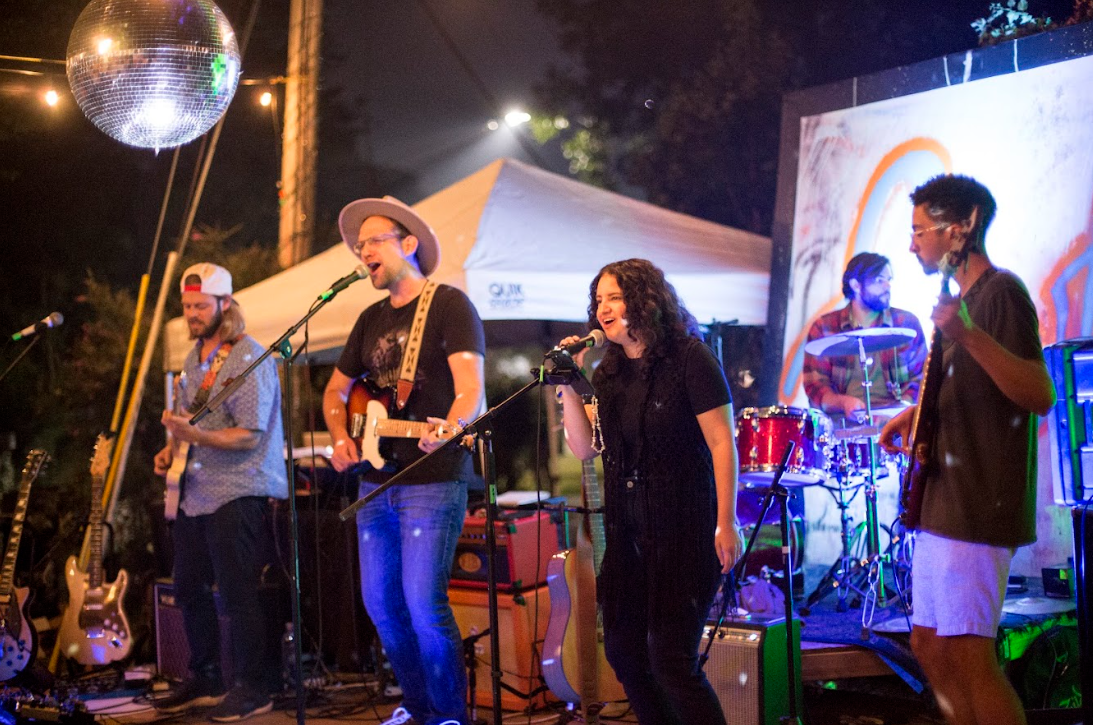
Graham and The Band Upstairs is an Atlanta based Americana band led by Graham Waldrop. The band creates music in the tradition of Bob Dylan and Neil Young, combining introspective lyrics with diverse melodies that meshes the folk, blues, and rock genres to create a fully realized sonic identity for each song.

Graham and the Band Upstairs’ “Standstill Blues” is a captivating and relatable blues track that encapsulates the frustrations of everyday life, particularly the infamous Atlanta traffic. Written from Graham’s personal experience of enduring lengthy commutes, the song explores the theme of stagnation and frustration but expands it into a collection of short stories that evoke a range of emotions.

Initially conceived with a different musical structure, Graham realized that the traditional blues framework would best suit the lyrics and the intended message of the song. This decision allowed the band to tap into their innate understanding of the genre, bringing a genuine and authentic feel to the music.

The interplay between band members is notable, with Josef and Zach providing a solid rhythmic foundation on bass and drums, respectively. Jeff’s skillful lead guitar licks inject the track with energy and vitality, while Veronica’s vocals shine whenever she takes the spotlight.

“Standstill Blues” resonates with listeners on multiple levels, as it captures the universal frustration and monotony that can often accompany our daily routines. Graham and the Band Upstairs have skillfully translated this feeling into a bluesy masterpiece, utilizing their musical prowess to express emotions that many can relate to. The track’s infectious groove and memorable storytelling make it a standout piece in the band’s repertoire.

With their ability to convey the realities of everyday life through the lens of the blues, Graham and the Band Upstairs continue to captivate audiences and leave an indelible mark on the music scene.

Connect with Graham and the Band Upstairs via:
Website / Instagram / YouTube / Spotify