Album Review: The Luyas – Too Beautiful To Work

Photobucket
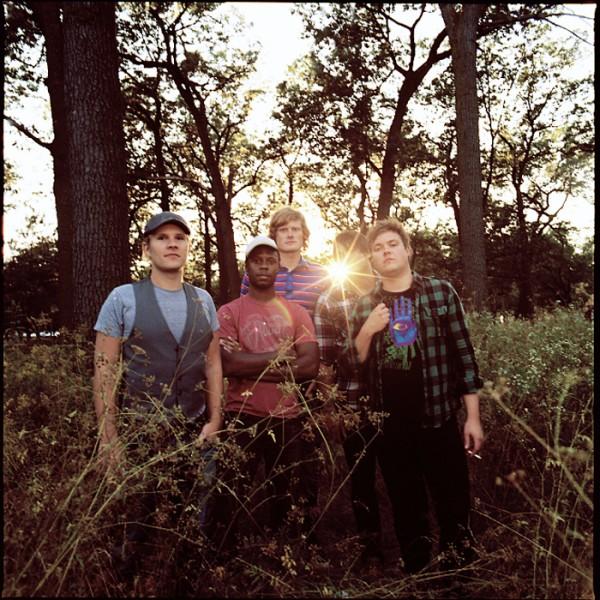
The musicians in Montreal clearly have a deep-seeded need and desire to collaborate. Bands such as Arcade Fire, The Dears, and Broken Social Scene adopt a more-is-better policy when it comes to assembling their personnel. Because of the large infrastructure in many of these groups, musicians travel between the ensembles, like musical chess pieces, as their scheduling and tastes dictate. Another group to add to this list: The Luyas. The band formed in late 2006, releasing their debut album, Faker Death, in 2007. Although the number of members changed at various points in the group’s history, they have essentially consisted of: Jesse Stein [also of Miracle Fortress], Pietro Amato and Stefan Schneider [both of Bell Orchestre, Amato also having worked as a french horn player for Arcade Fire], and Mathieu Charbonneau. Add in Sarah Neufeld [violinist for Arcade Fire] and Owen Pallett [Final Fantasy and string arranger for Arcade Fire] to the current recording roster, and you have one amazing Canadian super-group on your hands.

On their Dead Oceans debut, Too Beautiful To Work, the band excels at crafting dreamy pop textures—using layers of organ, keyboards, horns, and mallet percussion on top of the standard foundation of guitars and drums. Jesse Stein contributes significantly to The Luyas singular sound by playing the Moodswinger—an experimental 12-string zither—as well as supplying her breathy vocals, calling to mind both Nina Persson and CocoRosie’s Casady sisters.

The opening title track plunges the listener right into The Luyas’ world: a short organ riff becomes the foundation for the song’s spiky rhythms, light drums, and Stein’s voice, which churn bubbly lyrics at you so quickly, it actually takes a couple listens to even decipher what the text is. [The track is so infectious and joyous that really, multiple listens would be mandatory anyway.] Stein is incredibly adept with her voice, working hand in hand with the drum set so well that she sounds like she is replicating yet another percussion instrument to add to the mix. “Worth Mentioning” places her even more in the forefront of the group, gently cooing “Trust me now, and keep in mind there are no ungraced thoughts” over throbbing guitars and organ. Stein might as well be singing right into the listener’s ear; the effect created is so intimate and hushed.

The Luyas move into a different direction on lead single “Tiny Head,” washing their entire sound in reverb. The guitars echo, the percussion trembles, and Stein’s Moodswinger finally comes into play. It’s an altogether different sound than you’ll ever hear, and as the vocals and zither dovetail in and out of each other’s phrases, you come to realize that this bizarre instrument is used as an extension of Stein’s voice and not another piece of accompaniment—the Moodswinger even taking center stage as the track gently fades into silence.

The second half of the album alternates between these two contrasting styles: “Canary,” “Spherical Mattress,” and “Seeing Things” submerging the band in their wash of reverb, while “Cold Canada,” “What Mercy Is,” and “I Need Mirrors” display their sense of intricate rhythm and catchy hooks. “I Need Mirrors” finds the band at their most playful and inventive, creating a modified-Bossa Nova rhythm as the foundation of the song, a tropical idea of a dance to enjoy even while your city is covered in snow and ice.

Even though the album began with the greatest sense of energy, by the end of Too Beautiful To Work, the group is seen at its warmest and most intimate on the closing track, “Seeing Things.” After a brief chorale employing a set of muted French horns, an oscillating figure in the guitar begins, and Stein and guest vocalist Pallett form an incredibly moving series of harmonies—never rushing any piece of the melody as the drums and horn try to interrupt their thoughts. Stein keeps the mood tranquil throughout, never allowing the group to attain the energy produced earlier in the album. Compared to the anthemic nature of their Canadian brethren, Arcade Fire and Broken Social Scene, The Luyas overwhelmingly come across as atmospheric, intimate, and endearingly quirky—welcome qualities to display in a music scene already filled with a whole lot of pomp and circumstance.
Album Review: Girls – Broken Dreams Club EP

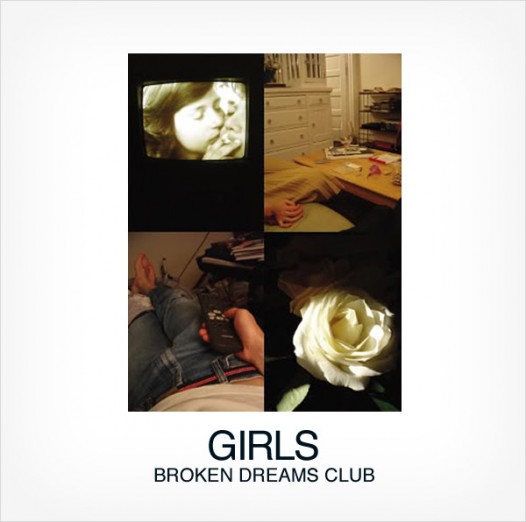
On the True Panther Sounds record label website, a love letter written by label member Christopher Owens is published. Owens and Chet “JR” White are the two California boys who make up Girls. The letter’s subject is you and me: the fans. His confession that without us, their fantastic new EP, Broken Dreams Club wouldn’t exist is oozing with sincerity and endearment to a surprising and delightful degree, for I fear we are the ones who should be thanking them.
It starts out with “Thee Oh So Protective One,” an almost loungey, luxurious cruise ship dance tune. It has the kind of sound meant to be played on or by water, begging for a steel drum to make a cameo, but Girls know better than to ham it up that far. In all seriousness, it’s a well dichotomized song with an easy, rich and full sound with brilliant, almost majestic trumpet incorporation but then sad and unfortunate lyrics: “He’ll never know about the times that you cried in the movies, never know about the times that you cried to the music” and insecure reflections: “I wonder if he’s impressed/Should I have worn the other dress?” This first track is also a great introduction to Owen’s classic vocal style, conjuring that of Burt Bacharach.

White’s bass skills really shine through on “Heartbreaker.” The bass drives the song and adds an extra level of cool to this already radical song. It’s full of charm from the groovy, playful vocals, expert bass, innocent and earnest piano, 80s electric guitar riffs to the light, twinkly tambourine. This well polished song exhibits professional production and a band who means serious business, as far as quality is concerned.

There’s a significant country influence on the title track and on fittingly titled “Carolina,” the former with a somber blues tone actually quite in line with Bright Eyes’ I’m Wide Awake It’s Morning. The muffled, raunchy horns add a nice ragtime jazz touch. “Carolina” is much more experimental but still carries the twangy, drawling, country guitar featured on “Broken Dreams Club.” “Carolina” is a delicious pop dish with booming lines delivered a capella, an oldies “do run run run do do run run” refrain in the background and trippy electronic effects.

“Substance,” if you couldn’t guess from the title, is about drugs: “If you want to shape your brain, I know a substance…that helps you rock and roll.” Ironically enough, it seems to be an anti-drug anthem mocking drug users and their absurd habits, and based on their West Coast, partially ex-hippie cult background (Owens hails from the Children of God cult – or movement – spawned during the 60s California drug phase), are probably mocking themselves: “You can do anything yeah, you can rock and roll outta control/Who wants something real when you could have nothing/Why not just give up, who wants to try.”

This record is buoyant, a little kitschy, and varying in styles. If you’re not already one of the addressees of Owens’ letter, listen o this EP immediately and find out what you’ll soon to be gushing over.

Album Review: Teen Daze – Beach Dreams EP


Whether you call it Chill-wave, Beach Rock, or Surf Music, the influence of The Beach Boys continues to play a huge role in the world of Indie Rock. Not only do present day musicians have an incredible reverence for the tight harmonies and nostalgic feel of the era when The Beach Boys ruled the charts, Brian Wilson continues to provide a point of inspiration, as evidenced in his critically lauded 2004 album, Smile. In the time of a double-dip recession, government bailouts, global terrorism, and now the WikiLeaks meltdown, who can blame musicians for wanting to encapsulate a hazy and warm day at the beach into a four-minute pop song?

Teen Daze has done just that on his latest EP, Beach Dreams. A short collection of just four songs, spanning nearly 15 minutes in length, the Vancouver artist works to transport the listener out of his chilly December environment, making us long for the warm days of Summers past. The good news is that Teen Daze excels in creating this warm, sunny world—the bad news is that they don’t do it in a consistently interesting fashion.

Opening track “Let’s Fall Asleep Together” gets the album off to an animated start, using plenty of drums and bass to get the rhythm moving at an energetic speed. Vocal harmonies float above the motor, much like a surfer already in motion as they first come into view. The lyrics are precious, as the lead singer gently sings, “The sun was set in the sky, a fragment, a piece of a memory that you used to think about me.” A sense of nostalgia is woven right into the song itself; even as these characters are lying in the sun, their thoughts are turned to the past as well.

Unfortunately, the rest of the EP doesn’t always match the magic of the propulsive opening track. “Water” essentially captures the same rhythm as “Let’s Fall Asleep Together,” but the lyrics and harmonies above don’t have the same sense of sincerity involved. The amount of reverb applied to the vocals makes the fragmentary lyrics just that much harder to understand. “Cliff Jump Love Song” tries to resuscitate the energy, making more use of bright guitars and percussion. It’s a great effect, leaving the listener hoping there is a dance floor located somewhere close on the boardwalk. The closing title track does little to keep this momentum moving for the last minutes of the EP, once again using more languid and hazy material, which comes across with a certain level of sweetness, but without energetic interest.

Teen Daze is at his best when writing up-tempo numbers and these songs certainly make for the best use of points of inspiration he culled from the 1960s California rock scene. For only his second release, this artist is moving in the right direction, and growing as a songwriter. Only future music will be able to show whether or not Teen Daze can stand alongside groups like The Drums or The Shins when it comes to recreating the beach, even in the dead of winter.

Album Review: No Joy – “Ghost Blonde”


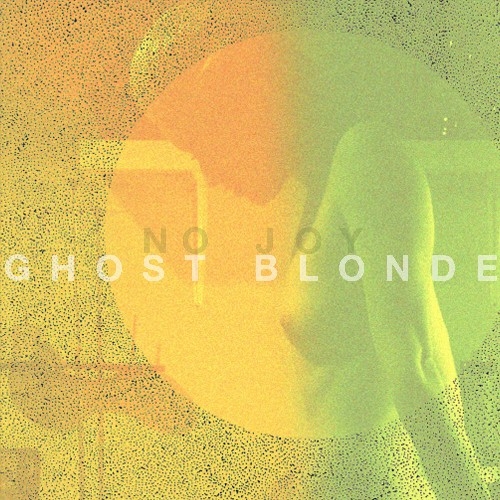
The 90’s are back, girls and boys and I, for one, am pretty stoked about it. Laura Lloyd and Jasamine White-Gluz are the feminine forefront of the noise-fuzz-dream-rock band, No Joy. Their second album, Ghost Blonde was just released on esteemed Brooklyn label, Mexican Summer – host to buzz-worthy band Best Coast, among others – who picked up No Joy in less than a year after their conception.

If you could pick out a song to be released as a single on the album, it would be the second track, “Heedless.” It’s driving and droning with plenty of feedback, distinct guitar melody and soft, silky, and sweet vocals a la The Breeders or Amber Valentine from Jucifer when she’s not shrieking. That pretty much goes for the rest of the album, as well. Their signature sound is largely due to a contrast between masculine, forward music and feminine, restrained vocals. It’s hard to make sense of the lyrics amid the sonic layers but one line from “Heedless” is discernable: “if you don’t care, then I don’t care,” adding to the grungy, submissive tone of this great song that could easily have been released in 1992.

A lot of songs like “Maggie Says I Love You” start out with the slow buildup of static and dissonant guitar reminiscent of Sonic Youth that lead into echoey, drawn out vocals and persistent and repetitive percussion. Others like “You Girls Smoke Cigarettes?” are quick, loud and more varied musically, making for a song that’s easy to rock out to. Each song is about four minutes long on average, so you get the best of both worlds: progressive rock sensibility and pop rock length. This gives the listener just enough time to come up for air before plunging back in to the pool of noise laden with reverb and distortion.

It might be assumed, for no other reason than their name, that No Joy is a sad, complaint-rock band, and even if traces of such mentalities are detected, they are in a purposeful and passive way. More than somber, Ghost Blonde is a female driven record with balls that has sexy guitar riffs and vocals that knock you down and then float you away.


Album Review: Weekend – “Sports”

Photobucket

It’s not too often that the word “subtle” can be used when describing a noise rock band, but “subtle” is exactly what went through my head while listening to Weekend’s Slumberland debut-LP, Sports. The San Francisco trio is quickly gaining popularity, after a year of touring with such bands as Japandroids and A Place To Bury Strangers. The ten song collection of Sports excels in finding nuance within their wall of sound. Although all of the typical elements of noise rock are present—reverb guitars, droning vocals, hammering percussion, and washes of ambient and static sound—Weekend chooses not to use all of these elements continuously.

“Coma Summer” and “Youth Haunts” open the album with the kind of frenetic energy Weekend is gaining notoriety for in their live act, throwing rhythm and guitars at the listener in a frenetic, although not completely aggressive way. Creating this maelstrom of sound over two tracks gives Weekend the room to back off on the volume later on, and become more introspective and lyrical in the middle of the disc. “Monday Morning” is emblematic of exactly what the title states; a slower guitar beat combines with layers of vocals, making a dark snapshot of a grey start to the work week—full of longing (or even regret) for the lost reverie of the weekend. And although snippets of lyrics can be heard in tracks like “Age Class,” where lead singer Shaun Darkin repeatedly sobs “There’s something in our blood,” Sports is not an album that propels its personal message through words. Atmosphere is the main language of the music at hand, and Weekend takes you through incredibly fluid changes in texture throughout the album, making the music feel like a mix of both a summer trip to the beach and the soundtrack of your worst nightmare. The music is both insular and exposed, and all kinds of beautiful.

Many critics are making the obvious comparisons between Weekend and other post-punk outfits: My Bloody Valentine, Joy Division, Sonic Youth, and The Jesus & Mary Chain. Despite having very credible similarities, I couldn’t help thinking of more recent influences, like Liars’ self-titled album, and the earliest work of Sigur Rós, Von, while listening to Sports. These groups, like Weekend, craft music of sweeping crescendo and silences that coax the ear, rather than beating it into submission. Their diversity of sound ultimately makes for a more haunting and satisfying work. At best, Weekend are helping to pave the way to producing craftier and more nuanced versions of the popular post-punk sound, and at worst, they have just made a really, really good album.

Wildlife Release Full Length Version of Their EP, “Strike Hard, Young Diamond”

Canada is a big and confusing place, unless of course, you’re from there. But even then, it’s still a lot to grasp, eh? Seems like the vastness and all the maple sugar highs can often cause people to freak out like a Moose Gone Wild. Or at least, they write songs about the confounded feelings from living in such a large, cold and too-cussing-polite-about-it-all place. Toronto’s Wildlife clearly is no exception, as demonstrated on their latest release, Strike Hard, Young Diamond.

Channeling fellow Canadians Tokyo Police Club and wilderness influenced uber-rockers, Wolf Parade; Wildlife delivers a melodic, heady, transfixing offering with Strike Hard, Young Diamond. Extended from their EP of the same name, Wildlife thought it fitting to finish the project by adding gutsier tracks to round out the effort.

Emoting youth gone angstier, Strike Hard, Young Diamond plays almost too candid at times, offering desperation right from the opening tracks, “Stand in the Water” and “Sea Dreamer” all the way through to “American Eyes” and “Out,” but it works in their favor, like a sordid reality show, it’s hard to turn away. “Drunken Heart” is sure to be a classic. It waxes and wanes with a precision so hypnotic that you’ll mourn it’s ending with maudlin pause. Even “Move to the City,” which sounds familiar and somewhat unimportant at first, unravels into anthem status.

Though there are at least more than twelve moments eerily indistinguishable from Wolf Parade (or any of their myriad worthy side/side/side projects), there’s solace in the sounds on Strike Hard Young Diamond. Imagine that you’re standing in the middle of Canada’s magnificent Boreal Forest. Certainly no one would feel nearly as comforted if there was only one frail tree standing alone. Wildlife embraces the Canadian sound with hubris, laying deep roots alongside fellow greats, hopefully for decades to come.

Vive le forests.

But don’t take my word for it. Listen for yourself. Three songs for FREE:
http://wildlifeband.bandcamp.com/