Waterloo-based alternative artist FRANKIE FLOWERS returns with her haunting new single, “HEX.” Fusing dark-wave, alternative, and synth-pop influences, “HEX” explores the emotional push-and-pull of limerence—the intoxicating yet uncertain space between love and longing.
With gritty industrial textures, distorted synths, and FRANKIE FLOWERS’ mesmerizing vocals, “HEX” is an exhilarating dive into emotional turbulence and sonic unpredictability.
“HEX” is about limerence in relationships—the disorienting feeling of being emotionally drawn to someone but unsure if the connection is real or imagined. You’re in that liminal space, craving answers that never seem to come. – FRANKIE FLOWERS
In the quiet chaos of 3am when bars have emptied, streets glisten with after-rain shimmer and the city feels like it’s catching its breath, MASSEY drops a groove that captures the electricity of that fleeting in-between hour.
“3:00 AM FUNK” isn’t just a vibe. It’s a fully formed nocturnal world built from rhythm, introspection and soul.
Listen in here:
It all opens with a steady, low-slung pulse courtesy of Charlie Wooton’s bass and Doug Belote’s hypnotic drums. Together they work to create the heartbeat of the song, which is measured, magnetic and endlessly listenable. This is a groove that knows how to hold space without rushing forwards. It invites you in and makes you stay.
Guitarists Peter Oravetz and Daniel Groover add fire and texture — dueling one moment and swirling the next — creating a mood that shifts between a swagger and a dream. Their use of reversed guitar loops gives “3:00AM Funk” a psychedelic hint. The 504 Horns (Jason Parfait on saxes and Ian Smith on trumpet and trombone) burst into the mix with brass lines that flash like headlights. All bold, stylish and unmistakably alive.
But “3:00AM Funk” doesn’t just skim the surface of party scene; it digs deeper. MASSEY sings about late night wandering, social saturation and emotional absence. Of longing for something genuine in a world built on performance. And yet, the song is not cynical in any way. It does hold space for beauty too. For those fleeting moments of eye contact, laughter or vulnerability that pierces the surface.
The accompanying music video, which was shot on the vibrant pulsing streets of Denver, matches the song’s mood perfectly – part fever dream, part soul search:
With “3:00 AM Funk,” MASSEY gives the listener a soundtrack for dancing and for feeling. For when the party fades and the questions echo louder.
With his new single, “Hurt A Bird,” St. Catharines-based artist Joe Lapinski delivers a fierce and poignant anthem against intolerance. Rooted in New Wave Rock with a touch of punk spirit, the track channels Lapinski‘s anger toward the adult bullying of transgender and non-binary youth. Lapinski offers a solution: through love and kindness, you too can truly be free as a bird.
Co-produced with Dave Clark (Rheostatics, Gord Downie‘s Country of Miracles), the song’s tight, punchy arrangement emerged through a collaborative effort to refine Lapinski‘s initial, lengthier version. Inspired by late ’70s and early ’80s New Wave icons, “Hurt A Bird” features Elvis Costello-style synths and XTC-inspired basslines, creating a track that is both catchy and emotionally charged.
1. Tell us the story of this song, why did you choose to visualize this song specifically?
This song is essentially about treating people with love and kindness, even if you don’t know them. At its core, it is inspired by people in our communities who are more vulnerable, like youth who are trans, LGBTQ+, and marginalized. Folks who are discovering their identities, while having outside forces telling them that they are wrong. I believe we can all find true freedom through love and kindness. I might just help someone feel they are more welcome in their community.
We thought this message is an important one, and deserved its story to be turned into a video. The lyrics are very visual, and could easily be transformed into a bit of a animated short.
2. What was the inspiration behind this video (visuals, storyline, etc.)?
Hannah Zbitnew is the animator and artist behind this video. She came up with the concept and story, inspired by my song. She thought it would be great to actually have a bird as our main character. Our bird is up against some bad folks, who are trying to cage it and keep it from being free. The bird’s friends and community find out, and go and free our hero bird.
The aesthetics of the video are all Hannah. She has done a lot of 2D stop motion animation work, and thought we could take a similar approach. Making it an animation let us experiment more with images and colour, making it vibrant and alive. Perfect for a song about freeing a bird.
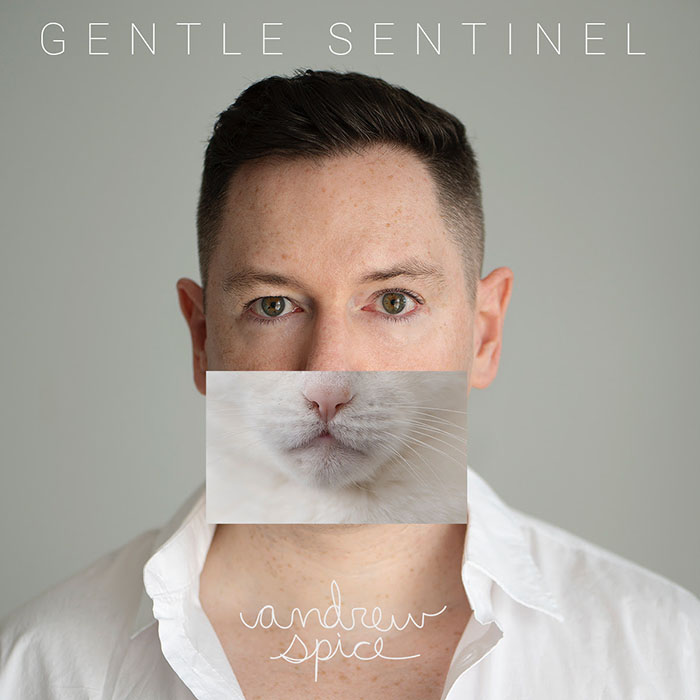
Returning to music last year after a 15-year hiatus, acclaimed singer-songwriter Andrew Spice continues that momentum with the release of “Gentle Sentinel.” Inspired by his late cat, Bea, the ballad pays tribute to the enduring love and quiet guardianship of animal companions. The single marks a deeply personal and poignant re-entry into music for Spice, whose career has drawn comparisons to the likes of Tori Amos and Thom Yorke.
Produced by two-time JUNO nominee Matthew Barber, “Gentle Sentinel” features a breathtaking string arrangement by Grammy nominee Drew Jurecka, whose strings subtly mimic a cat’s purr in an especially moving section. The track’s delicate piano and tender vocals are elevated by a graceful bassline, creating a grand yet intimate atmosphere.
1. Tell us the story of this performance, why did you choose to capture this song specifically? Of the songs on my forthcoming album, ‘With Animals’, “Gentle Sentinel” holds a very special place in my heart and I knew that it needed a video. “Gentle Sentinel” is the first song I wrote after a 15-year hiatus from the music industry. It is a tribute to my cat Bea, who was 18 years old when I wrote it and who has since sadly passed away. I hope that the song and video resonate with people who have loved their animals and have had to cope with the grief of losing them.
2.What were you feeling inspired by the day of this performance? The video was filmed in my home and features my other cat, Auggie, so those were my sources of inspiration. The video tells the story of writing the song as well as losing a pet, and it brought me back to those moments.
3.What was the process of making this video? The director, Mark Pariselli, and I went through a few different concepts before settling on this one. The other ideas were more expansive in scope, and the contained approach we ended up taking just felt more genuine. It was very comfortable, as far as video shoots go: Mark and the cinematographer, Andrew Nguyen, came over and we spent the day together. The three of us worked on my previous two singles, “High Park” and “Rage Stage”, so it was a reunion of our little dream team.
Raised in Saskatchewan and now residing on the archipelago of Haida Gwaii, British Columbia, The Bapti$$—the new musical project from multi-instrumentalist Joseph LaPlante—presents “Mister 808,” a raw and captivating track that blends the lush, soulful tones of acoustic guitars with the driving force of the iconic 808 bass drum. This new single is an ode to simplicity and the beauty of God’s creation, capturing a sound that is as confident and peaceful as it is ambitious.
The Bapti$$, a project born from LaPlante‘s mid-career rebirth, marks a turning point in his artistic journey, and “Mister 808” encapsulates the essence of his growth. The song’s narrative comes from LaPlante’s longstanding love for the 808 bass drum and his reverence for both family and faith. It’s a sonic reflection of the artist’s world, melding the powerful foundation of the 808 with the introspective beauty of acoustic music.
“I am inspired by the beauty of God’s creation and the love of family,” says LaPlante. “‘Mister 808’ feels like the sun emerging from rain clouds on a misty west coast morning.”
The song merges two of LaPlante’s musical passions—the legendary 808 bass and acoustic guitars—creating a sound that is unlike anything currently in mainstream music. With its sparse, minimalistic production, “Mister 808” allows the song’s raw emotions, melodies, and lyrics to shine through.
“The 808 drum has been central to my creative journey,” LaPlante explains. “Since I’ve been a creative in the music game, my main go-to sounds have been the 808 bass drum and acoustic guitars. This song is a love letter to that iconic sound.”
Rising Canadian artist Aidan Skira returns with a vulnerable and refreshingly self-aware new track, “Control (She’s So),” a melodic-rap confessional exploring trust, attraction, and authenticity in modern relationships. With lo-fi textures, bedroom beats, and Skira’s signature blend of emo-rap and melodic hooks, the song offers a bittersweet look at the walls we build and the rare moments someone breaks through them.
Written and produced in his Vaughan, Ontario basement studio, “Control (She’s So)” channels Skira’s signature bedroom hip-hop aesthetic with an emotional undercurrent. The track chronicles a series of disappointments in love, culminating in a connection with someone who doesn’t play the game – she’s effortlessly real, grounded, and unaware of the effect she has.



 Modern Mystery
You must be logged in to post a comment.