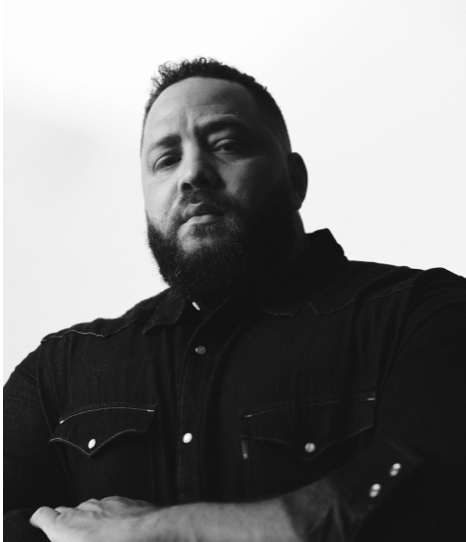
Elevating the Myth Through Music with DaddyPhatSnaps’ Latest Release

With his new single “Superman,” DaddyPhatSnaps delivers a powerful and emotionally nuanced track that reshapes what it means to bear the weight of expectation. The Long Beach-based artist continues to build his own lane, merging hip-hop with a profound respect for anime, gaming, and comic book narratives.

Although “Superman” arrives during a wave of cultural interest in the iconic character, it is anything but a response to trends. The track stands as a statement of identity and endurance, using the Superman figure not as decoration but as a mirror. Where some artists reach for capes and symbols, DaddyPhatSnaps looks deeper. He interrogates what it means to be relied on when you are barely holding yourself together. The result is a striking piece of music that finds its power not in fantasy but in truth.

The production is bold and cinematic, layering orchestral flourishes and heavy rhythms into a sonic backdrop that feels both expansive and deeply intimate. Rather than being overshadowed by the instrumental weight, DPS anchors the track with a vocal performance that blends precision with vulnerability. Each lyric lands with intention. His flow is complex but controlled, and his delivery reveals a depth that goes far beyond surface references.

At the heart of “Superman” is a challenge to the mythology itself. DaddyPhatSnaps does not present himself as untouchable or unbreakable. Instead, he explores the quiet pressure of being expected to show up, to fix, to protect. There is weariness in the verses, but also courage. He does not claim invincibility. He claims the will to continue.

This is what makes the track resonate so deeply. It is not escapism. It is recognition. For those who grew up with comic book icons and digital avatars, the message lands with clarity. The metaphor is familiar, but the delivery is fresh. DPS speaks the dialect of a generation that has found strength in vulnerability and power in shared understanding.

He has long been a figure at the intersection of creative fandom and independent artistry. His work is not an imitation of popular media but a contribution to it. He does not sample culture from a distance. He lives inside it and creates from within. That authenticity is the reason his fanbase continues to grow, not only in size but in dedication.

“Superman” is more than a musical release. It is a chapter in an ongoing conversation between artist and listener. It offers no false promises and no easy answers. Instead, it offers a mirror, an acknowledgment, and a moment of clarity. In a world saturated with noise, this track listens back.

With each release, DaddyPhatSnaps proves that hip-hop still has the capacity for reinvention. He is not following trends. He is shaping something lasting. “Superman” is not about saving the world. It is about surviving it. And in that survival, there is strength.

Ask ChatGPT

VIDEO VOYAGEUR: 3 Q’s WITH DEBO RAY

Debo-Ray

Debo Ray is well known for her powerhouse vocals, and for her ability to command stage presence, but with her latest single “Take That,” the Boston based artist opens a new chapter. Vulnerable, raw and fearless, the song marks a turning point in her music journey – one where personal history, healing and musical innovation come together.

In this exclusive interview, Debo shares the story behind “Take That,” the emotionals that shaped its lyrics, and the process of bringing her past and present selves together on screen.

Filmed in collaboration with Vano Projects, the music video captures the emotional weight of childhood memory, the struggle to reclaim identity and the ultimate act of self liberation.

Watch the Official Music Video here:

1.Tell us the story of this song. Why did you choose to visualise this song specifically in this way?

“Take That” is about reclaiming your power. It’s about what happens when you face down your past, especially the parts that tried to define you, and choose to stand in your truth anyway. I (and my writing partners Jerry Velona and Prince Charles Alexander) wrote this song from the perspective of someone who’s walked through emotional fire and come out the other side with scars and strength.

We chose to visualize this story by weaving together my past and present selves: child Debo and adult Debo, because I truly believe our younger selves never leave us. They’re witnesses. They’re roots. They hold the earliest versions of our dreams. Showing both timelines in the video allowed us to bring that emotional journey to life. I wanted people to feel the transformation.

The video team at Vano Projects helped us bring this vision to life with so much creativity and care, even within the constraints of an indie artist budget (which, let’s be real, is always a part of the puzzle!). We shot everything in just a day and a half across three nearby locations, and somehow, it all came together like magic.

2. What was the inspiration behind this video? (visuals, storyline etc.)

I’m a first-generation Haitian-American, raised in a deeply religious and traditional household. My upbringing was filled with music (both my parents are gifted singers and instrumentalists) but it was also filled with strict expectations, unspoken tension, and emotional volatility. My father had a temper that shaped a lot of my early experiences with fear, shame, and silence. Those patterns followed me, even into adulthood.

For years, I buried that part of my story. I thought if I just kept performing, kept achieving, I could outrun the pain. But when I began writing this album, I knew I had to be honest. “Take That” became a turning point: a declaration. Not of vengeance, but of truth. A way of saying: This happened. It shaped me. But it doesn’t own me anymore.

The visuals reflect that healing arc. There’s resistance, confrontation, but ultimately, release. And that’s the legacy I want to build; not one of hiding pain, but transforming it.

3. What was the process of making the video?

Creating with Bojan and Laura of Vano Projects is always a joy. They’re not just brilliant visual storytellers, they’re collaborators who really see me. We’ve done several videos together now, and they understand my vision, my aesthetic, and my need to tell the whole story from styling, setting, emotion, all of it.

Jerry (my husband, co-writer, and creative partner) and I brought them a loose concept rooted in the lyrics: this idea of a young girl running toward herself. I told them I was finally ready to show more of what I’d been holding back. From there, the four of us sculpted the vision: Laura sourced the two phenomenal actors — Jaelyn Francis, who played little me, and Jimmy Jules, who played my father — and Bojan found the main location. Jerry suggested the Harvard Stadium for the final running shots, which gave the video that haunting sense of endurance and triumph.

We shot most of it in one powerful, emotional day and wrapped up with a quick sunrise shoot at the stadium. The result is something that feels both deeply personal and universally human. It’s one of the bravest things I’ve ever created.

Keep up with Debo Ray on her Website

Saint Tone Lights the Fuse with New Single “Explode”

With brand new single “Explode,” Saint Tone delivers a ballad that digs deep into the emotional trenches, conveying a message of healing and release.

Saint Tone is known for his positive and uplifting songs, but the Sarasota based artist slows things down on this more introspective track. The emotional impact is just as hard hitting.

Listen in here:

Built around warm acoustic guitar, gentle piano and subtle atmospheric textures, “Explode” draws listeners into an intimate space of vulnerability. The lyrics are raw and reflective, with lines like “I am here to expose all the bitterness that soils my soul”, striking a chord for anyone burdened by the trials of life and any unresolved pain.

As the song unfolds, it becomes clear that this isn’t just about sadness. It is more about transformation. Saint Tone invites us to confront the darkest corners of ourselves, not to dwell there, but to finally let go.

The repetition of the chorus – “If I don’t let it go, I will explode” – is both a warning and a revelation. The result is a song that is much like a musical exhale, making way for light again after a rough period.

For fans of Sting, Damien Rice or Ben Harper’s more meditative work, “Explode” will feel like home.

It’s a powerful reminder that sometimes the most important journey is an inward one, and one where healing begins with honesty.

Saint-Tone-PRESS

About Saint Tone

With over 7,000 performances to his name, Saint Tone delivers an uplifting fusion of pop, rock and country styles. He combines catchy hooks with spiritual affirmations and thought provoking lyrics.

Based in Sarasota, Florida, Tony Saint Tone writes music that is centered on themes of self empowerment, motivation and connectionl. His storytelling and high vibe energy together with empowering messages create a musical exoerience that is both fun and deeply meaningful.

Perfect for anthem seekers, dancers and old souls alike, Saint Tone’s music will make your feet move while also feeding your soul.

Find out all about Saint Tone on his Website

Stream music on Spotify and Apple Music

Debo Ray’s Self Titled Debut Shines with Bold Emotion and Limitless Sound

With her self-titled debut album, Debo Ray, the Boston based powerhouse vocalist delivers a soul baring statement of intent. And it is one that refuses to be boxed in by convention.

Known for her virtuosic collaborations and genre blending performances with artists like Terri Lyne Carrington, Esperanza Spalding, and the band Screaming Headless Torsos, Ray has now stepped fully into her own creative spotlight, and she brings with her a striking voice and a fearless approach to storytelling through sound.

Listen here:

From the opening track “Tell Me What You Want,” it’s clear that Debo Ray is not interested in playing it safe. The opener fuses classic R&B sensibilities with a whip smart rap verse, immediately signalling that Ray is here to challenge expectations.

She follows it up with tracks like “Feelin’ Lucky”, which swaps intensity for lightness, dipping into pop’s playful textures without ever losing her signature vocal presence.

Throughout this album there is an energy of total freedom, with each song like a different room in a beautifully lit house.

Drawing directly from her life experiences, tracks like “Gaslight” and “You Read Me Wrong” confront toxic relationships and emotional exhaustion with an unflinching honesty. “Take That”, which is the album’s final track, could have veered into cliché territory in lesser hands, but Ray has transformed it into a moving meditation on solitude and survival. Her vocals here are rich, sincere and even the simplest lines resonate.

One of the most striking things about Debo Ray though is how cohesive the project feels despite its stylistic elasticity. Whether its pulling from rock guitar rifts, jazz harmonies or gospel style vocal layerings, Debo connects each choice back to the core truth of each song.

The other thing to note here is that whether Ray is pulling from rock guitar riffs, jazz harmonies or gospel style vocal layering, she connects each choice back to the truth of the song. Her voice is a thrilling instrument in its own right, morphing from silky smooth phrasing to more gritty soul belts with a total command of her voice without ever losing warmth or clarity.

What makes this debut especially compelling is its balance. It contains joy and pain, vulnerability and confidence, and tradition and innovation all live comfortably side by side. It’s a full picture of who Debo Ray is as a musician and a person. She is complex, radiant and rooted in truth. As she herself has said, “After years of interpreting the music of others, I felt it was time to tell my own story.”

This album is that almost certainly telling that story. One of reclamation, celebration and a declaration of creative freedom.

Find out more about Debo Ray on her Website

Stream music on Spotify and Apple Music

Riley Michaels Gets Nostalgic on New Single “Waiting For You”

Beamsville, Ontario’s Riley Michaels is stepping out of the present and into a dream of the past with his shimmering new single, “Waiting For You.” Known for his soulful voice, guitar prowess, and genre-blending style, Michaels now leans deep into retro-pop with a lush, synth-laced track that pays loving tribute to the music of the 1980s.

Michaels wrote “Waiting For You” not from a personal event, but from a feeling shaped by neon-lit nights, boombox serenades, and rain-soaked movie moments. The track oozes nostalgia with shimmering synths, a LinnDrum beat, and vintage tones that effortlessly conjure memories of a decade he never lived through but somehow belongs to.

Created in collaboration with bandmate and synth specialist Vincent Petrunti, the song was primarily recorded in Petrunti’s condo and Michaels’ home studio. The production breaks new ground for Michaels: it’s the first release in his catalogue that forgoes a live drummer entirely, instead embracing the era’s iconic drum machine sound to reinforce the song’s throwback aesthetic.

This song was born from my desire to create music I actually enjoy making. I love the 80s – I wasn’t there, but I live for the music, the movies, the whole vibe. “Waiting For You” reminds me of that classic movie scene where the guy’s standing outside with a boombox in the rain, hoping she’ll open the door. That’s the energy I wanted. Riley Michaels

Matías Roden Channels Collective Grief into a Cathartic Pop Ballad on “Angels in the Night”

Vancouver-based pop artist Matías Roden returns with “Angels in the Night” – an emotional and cathartic power ballad inspired by the true story of a close friend who survived the 2017 terror attack on London Bridge. The song is both a tribute to survival and a love letter to the city of Roden’s birth, where deepening connection meets collective grief, reflection, and resilience.

Framed by soaring vocals, stripped-back instrumentation, and a haunting 90s-inspired minimalism, “Angels in the Night” carries the emotional weight of its subject matter while offering a message of strength and healing. Produced by acclaimed Canadian artist Louise Burns, the track draws sonic influence from the stark sincerity of Sinead O’Connor and the bold emotionality of SOPHIE’s “It’s Okay to Cry.”

Written after Roden heard his friend’s harrowing account of escaping the deadly attack, the song captures not just personal trauma, but the surreal randomness of survival itself and the guilt, gratitude, and emotional fallout that follow. “Angels in the Night” is a rare pop ballad that balances raw vulnerability with powerful, cinematic expression. 

I wanted to create something that recognized the gravity and trauma of what happened, but was also uplifting – a tribute to the strength to carry onwards. It makes me feel emotional every time I hear it, because I know the story behind it. It’s sad and melancholic, but also uplifting. That duality is what makes it feel honest to me.Matías Roden