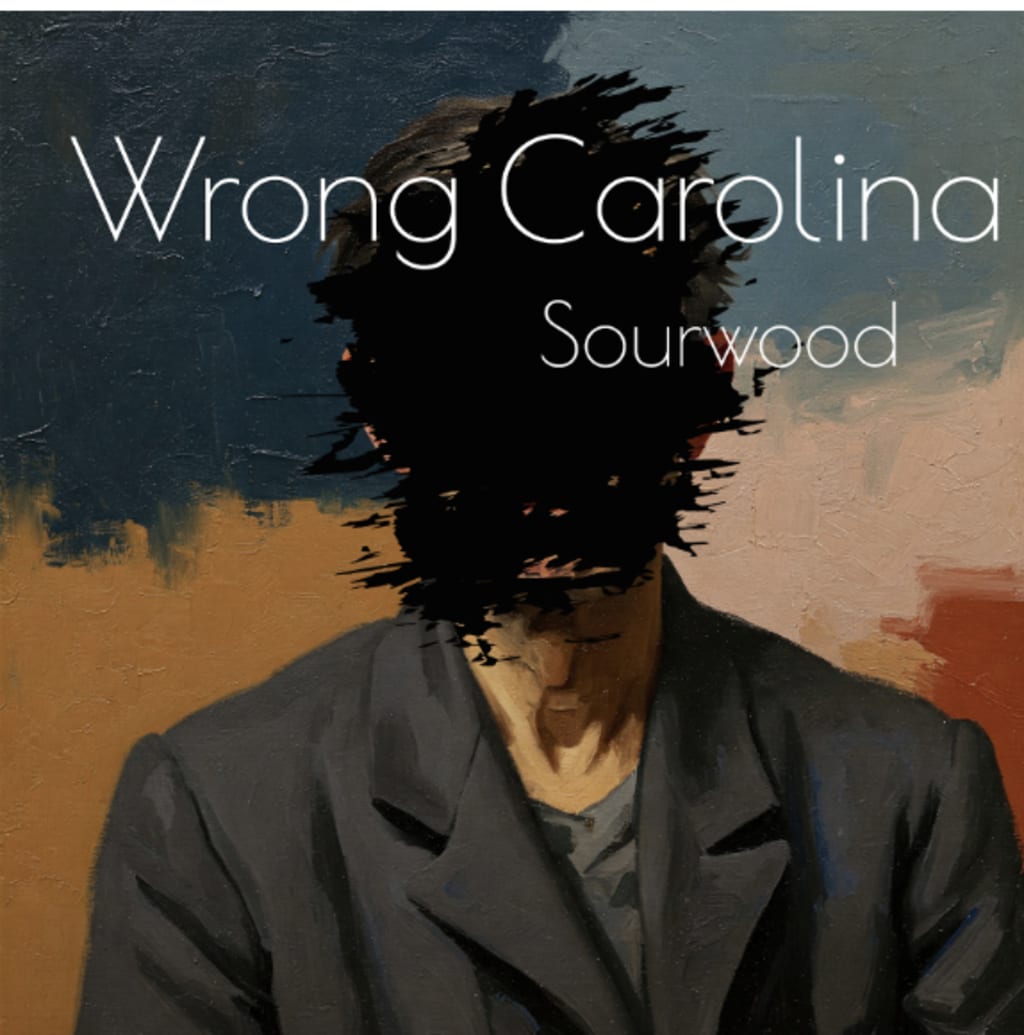
Canada/US Folk and Bluegrass Collective Sourwood Experiment with Perspective and Precision in Electrifying New Single, “Wrong Carolina”

Following their debut release “On the Road,” progressive bluegrass collective Sourwood returns with “Wrong Carolina,” a rhythmically complex and narratively playful second single that blurs the lines between heartbreak and highway maps. The track explores the chaos of mistaken direction—both geographically and emotionally—fueled by one of the band’s most memorable musical arrangements to date.

“It started with this story [that bandmate Liam Lewis] told me,” says frontman Lucas Last, recalling a tour mix-up where Liam‘s band mistakenly arrived at a South Carolina venue – only to find out they were booked at a bar of the same name in North Carolina. “It seemed like a good opportunity for a double entendre, so I mashed together the ideas of the wrong place, wrong time, wrong person.”

The song’s namesake, “Wrong Carolina,” plays with the ambiguity of place and person, letting the title line hit with layered meaning. “We wanted the lyric to feel deliberately unclear—‘I was in the wrong, Carolina’ vs. ‘I was literally in the wrong Carolina,’” Lucas explains. “It’s simple, but the ambiguity is where the real emotional weight is.”

Thematically, the song confronts the moments when confidence turns to confusion—when being sure of something doesn’t make it right. Musically, it’s a standout within Sourwood’s catalogue: pulsing with tension, intricate in rhythm, and laced with the dynamic push-and-pull that has already become a band signature.

The track’s distinctive sound is built around interlocking instrumental patterns, with rhythmic motifs repeating across guitar, mandolin, fiddle, and upright bass. “It almost feels like a prog-rock section passed through a bluegrass filter,” says Lucas. “The way everything locks together creates this feeling of momentum, like a train barreling toward a switch that no one’s pulled yet.”

Despite being the most technically challenging song on the record, it came together surprisingly quickly during a live-off-the-floor session at Halo Recording Studio. “We were intimidated by it—lots of stops and starts, and a very specific arrangement—but we got it in about three takes,” Lucas recalls. “It felt like magic.”

Produced by Roman Marcone and engineered by Danny Smart, the song also showcases Sourwood’s willingness to push sonic boundaries. From phasers on banjo to ambient textures more common in indie rock than bluegrass, the track embraces experimentation. “When I came back to hear the mix, Danny had added all these weird effects. Roman looked nervous, like maybe he’d gone too far,” Lucas laughs. “But I loved it. It was the first time I’d ever heard a banjo run through a phaser and just said, ‘Let’s go with that.’”

With “Wrong Carolina, Sourwood continues to stake out new territory at the intersection of folk, bluegrass, and indie, pairing genre-defying instrumentation with storytelling that feels both intimate and mythic.

From Lower Broadway to the Big Time: David Graham Finds His Groove on Downtown

There are few performers who embody the spirit of Nashville’s Lower Broadway like David Graham. A longtime fixture at beloved honky tonk haunts like Robert’s Western World and Layla’s, Graham earned his stripes the old-school way—by playing night after night, delivering blistering sets that blend classic country, blues, and rock ‘n’ roll with irrepressible swagger. As frontman of the rowdy hillbilly trio The Eskimo Brothers, he became known for his magnetic stage presence and tireless work ethic. Now stepping further into the spotlight, Graham’s new solo album Downtown captures the grit, heart, and honky tonk soul that he’s spent years perfecting on stage.

Out today, Downtown is a love letter to the rhythm and chaos of a city he knows intimately. From the foot-stomping opener “Big Time Tonight” to the haunting, cinematic “Ghost Town,” Graham showcases the range of his Americana roots influences while staying true to the live-wire energy of his performances. The title track, featuring harmonies from his daughter, reveals a more personal side, making Downtown not just a musical statement but a reflection of a life spent chasing songs in smoky bars and neon-lit corners of Music City. Before his release show at Layla’s this Sunday, Graham sat down with us to talk about the record, the city that shaped it, and everything in between.

Do you remember the first time you ever stepped on stage in Nashville? What was going through your head?

The first time I stepped on stage in Nashville was at Tootsie’s. A very surreal experience for me because I had always had a love for Nashville—even as a kid. But I learned very quickly that was not the right spot for me.
My first long-standing gig in Nashville was at Robert’s Western World.
Even to this day, after playing thousands of shows, it’s still a bit surreal every time I’m down there. The love affair continues.

What artists or records were playing in your house growing up that planted the seed for the kind of music you make now?

Great question. Basically, my parents’ record collection was the start of it all for me—and to this day, still some of my favorite artists.
There was lots of Elvis, David Bowie, Rod Stewart, Willie Nelson, Bob Seger, Queen, Glen Campbell, The Stones…

If Downtown were a late-night bar, what kind of people would be sitting at that counter?
Cool question.
The lovers and the broken-hearted.
The winners and the losers.
The drunkards and the dreamers.
The lost and the found.
Everyone.

You’ve been part of the Nashville scene for a long time. How has the city changed for better or worse, especially for musicians like yourself?

The biggest change I’ve seen—besides the population boom—is that Nashville has always been a music destination, and in recent years it’s become more of a party destination.
There’s still great music here, you just have to seek it out.
And the traffic blows.

What’s the most unexpected source of inspiration that made its way into this record—something not musical at all?

I would say “Ghost Town,” being inspired by the pandemic and how it affected Nashville.

When you’re on the road, what’s one thing you absolutely need with you to feel grounded?

Pictures of my family.

Do you have a favorite line or lyric from Downtown that still gives you chills when you sing it live?

If you wonder where I am tonight
Locked in a fire fight
Lost in the city lights… downtown.

What’s your relationship like with silence? Do you ever go long stretches without music—or is your world always soundtracked?

I perform so much—silence and I have a very good and close relationship, ha.

If you could go back and give your younger self one piece of advice before your first honky tonk residency, what would it be?

Don’t listen to that negative little voice in the back of your head.

You’re throwing a dream jam session at Layla’s. Dead or alive, who’s showing up to play with you—and what song are you all closing the night with?

Chuck Berry
Ronnie Wood
Rod Stewart
Steve Earle

And then I’d end the night with Sinatra and me singing “The Lady Is a Tramp,”
sippin’ whiskey with one ice cube 🙂

Video Voyageur: 3Qs with Emmett Jerome

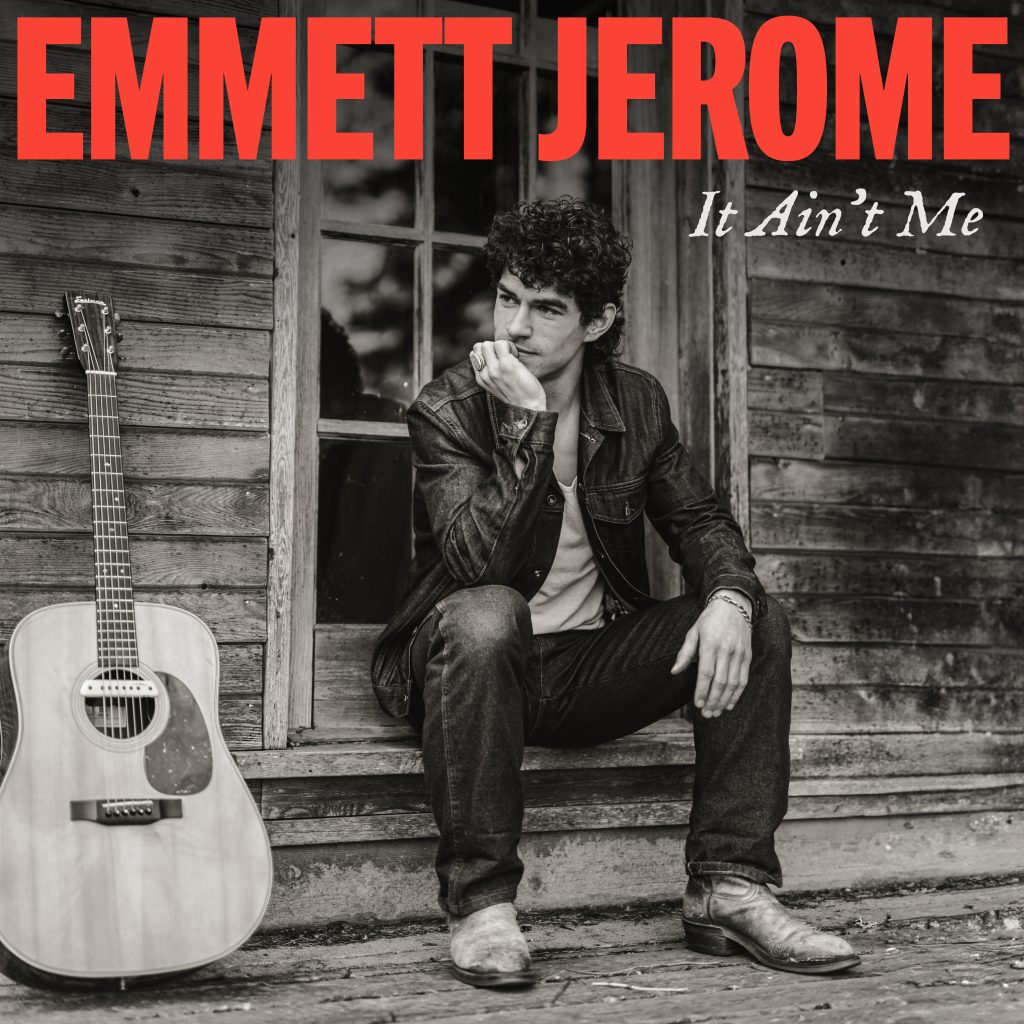
With a voice like worn denim and a songwriter’s compass pointed squarely at the truth, Emmett Jerome returns with “It Ain’t Me,” a dark, tape-warmed Americana track that exorcises heartbreak and hard truths in one raw, live-off-the-floor performance. It’s the sound of dust on boots, a heart in hand, and a young artist wise beyond his years.

Written in a quick flash on acoustic guitar, “It Ain’t Me” captures the emotional aftermath of love gone cold delivered from the voice of a character haunted by what once was. “I related the idea of an emotionally unavailable or heartbroken individual to that of a spooked horse,” says Jerome. “That tension, that jumpiness, is something I’ve known.”

From Springsteen-tinged lyrics to the swirling blend of vintage amps, banjo grit, and studio tape hiss, “It Ain’t Me” straddles the line between classic and contemporary. “It sounds to me like it could be some obscure 70s banjo-rock B-side or a Neil Young/Crazy Horse jam,” Jerome says. “We brought in great players rooted in blues, country, and rock. You can hear it.”

Tracked live off the floor at Vancouver‘s Afterlife Studios – a storied space packed with analog gear and old ghosts – the song barely touches a computer. “Aside from a few vocal overdubs and extra banjo, what you’re hearing is a band playing together in a room. That energy is everything.”

1. Tell us the story of this song, why did you choose to visualize this song specifically?
It Ain’t Me is written about a person who just can’t open up to the world, no matter the cost. I’ve always found a way to run when under pressure to open up in a relationship, and this song compares that to the character of a jittery horse who’s quick to bolt. We recorded the video at The Heatley, a local East Vancouver bar known for having a vibrant singer songwriter and artistic community. Whether onstage sharing new material or listening to my peers, The Heatley stage has been instrumental in my growth as a writer and performer and I’m proud to include it in the ongoing story of ‘It Aint Me.” 

2. What was the inspiration behind this video (visuals, storyline, etc.)?
We wanted to capture the space as raw and natural as possible, and honor the values of simplicity and truth that command the Healtey Stage. 

3. What was the process of making this video?

The video was shot in an afternoon with Matt Miller, the in-house music video director at 604 records. Matt and I basically improvised the whole shoot, crushing Tim Hortons and letting our muse guide us around the dark lit bar. We ended up shooting in a few locations within The Heatley that caught our eye, and Matt stitched them together in a unique way that lets the story unfold. 

Slow Burn Elegance – Lil’ Red & The Rooster Shine on Latest Single “Melancholy Mood”

Lil-Red-7-Cover-Digital-Media

Lil’ Red & The Rooster slow the pace and turn up the elegance on “Melancholy Mood,” the fourth single from their forthcoming album 7.

With a tip of the hat to blues greats T-Bone Walker and Dinah Washington, this track is a smoky and slow burning gem dripping with class, control and emotional finesse.

Jennifer “Lil’ Red” Milligan delivers the vocals with a velvet gloved hand, allowing every word linger in the air like perfume in a dimly lit club. There’s pain here for sure, but it’s the kind of pain worn like a tailored dress – graceful, knowing and timeless. Her phrasing moves with the same unhurried confidence as a singer who understands what it means to have restrain.

Pascal Fouquet’s guitar work is pure vintage cool. His tone is warm and articulate, never showy. It’s just the right bends, the right space and the kind of touch that makes the blues feel intimate and eternal.

Bobby Floyd’s B3 organ swells beneath the track with a soulful subtlety, while Jean Marc Despeignes (bass) and Pascal Mucci (drums) keep things locked in with a hushed, heartbeat rhythm section that lets the emotion breathe.

As part of 7, “Melancholy Mood” feels a lot like a candlelit centerpiece. A moment of reflection that invites listeners to lean in closer. It’s not just a love letter to classic blues, but a confident entry in that lineage, re-imagined with the Rooster’s signature “retro modern” touch.

In a world that often moves too fast, “Melancholy Mood” is a reminder that sometimes the deepest feeling comes in the quietest swing.

Lil’ Red & The Rooster’s upcoming album 7 is a rich blend of gospel, blues, retro soul, and pop jazz rooted in a distinctly 1960’s vibe. Featuring seven original tracks, including an instrumental and a gospel blues opener, the album explores themes of freedom and soulful transformation. With Grammy-nominated Bobby Floyd on B3 and piano, 7 is both elegant and gritty, nostalgic and fresh.

The full album drops August 22, 2025, with singles released every three weeks along the way!

Find out all about Lil’ Red & The Rooster on their Website

Video Voyageur: 3Qs with Forester

Edmonton punk rockers Forester channel late-night longing and the raw edge of memory in their latest single, “Daredevil Youth.” Fueled by adrenaline, angst, and aching nostalgia, the track is a shout-along anthem to the reckless abandon of being young, alive, and utterly unbreakable.

Honest and unpolished, “Daredevil Youth” doesn’t try to dress youth up in sentimentality – it drags it through the mud, slaps on a crooked grin, and raises a glass to everything that shaped us, scarred us, and made it all worth it.

“This one is quite literal,” says pianist Keenan Gregory. “It’s an anthem to our younger years, and being wild and free. The time we’ve spent playing music together has left its mark on each of us – it’s been formative.”

1Tell us the story of this song, why did you choose to visualize this song specifically? 
While there has been an abundance of new amazing artists sharing their stories with the world, I also feel that visual media has become an underutilized artformm, carelessly thrown over the music like wrapping paper as if it were meant to be discarded. Personally, with visuals I always try to either push the song’s narrative further, or attempt to tell another side of the story entirely. It’s another chance for us to communicate with our audience and this song in particular felt like it needed that visual exploration. For us it ended up paying homage not only to the band’s previous members, Ben and Sean, but also to all the bands that we’ve formed over the years. 

2.What was the inspiration behind this video (visuals, storyline, etc.)? 

The inspiration is pretty on the nose. As the band was soaking up the nostalgia we took many trips down memory lane. Luckily me and a few others have been documenting our journey over the years. The moment we decided this song would be a single, it felt like the most appropriate time to use that footage. 

3.What was the process of making this video?

A song’s chorus traditionally signals a change in perspective or narrative. It’s always important to me to select footage that matches that change. The entrance into each chorus was selected very carefully. Same goes for each transition into a new section. Other than that, the process was quite simple. I would review and assemble the footage while being mindful of the overall flow. It was however more emotionally charged than I expected. Some of the shots may seem silly and frivolous, but they represent moments in my life where my sides were absolutely splitting from laughter. It’s fun to look back on these memories, but the emotional toll comes when I recognize my distance from these moments. 

Malia Rogers Unveils Shape-Shifting Debut EP Chameleon, Anchored by the Ethereal Glow of ‘Indefinitely’

Nova Scotia raised, Ottawa-based singer-songwriter and multi-instrumentalist Malia Rogers unveils her debut EP, Chameleon, featuring the vast and heartfelt centerpiece, “Indefinitely.” Chameleon merges her East Coast roots with folk, bluegrass, and Celtic traditions to explore themes of identity, growth, self-compassion, and enduring connection. With a storytelling voice rich in vulnerability and nuance, the six-song collection offers a layered portrait of transformation – pairing past hurts with their healing counterparts.

Indefinitely” offers a barefoot love song for the deeply known – a sweeping meditation on partnership, evolution, and unconditional devotion. Built on rhythmic acoustic textures, lilting mandolin, melodic strings, and a heartbeat of bodhrán, the track captures the feeling of the tide coming in – calm, powerful, and enduring. “I told my producer Neil Whitford that I wanted it to sound like the tide,” says Rogers. “There’s ocean imagery in the lyrics, and as a Nova Scotian living away in Ontario, the water makes me feel like I’m home. So does the love this song is written about.”


Written on the seventh anniversary of her relationship with now-husband Matthew, “Indefinitely” reflects on the idea that we become entirely new people over time – and how rare it is to evolve in tandem with another.