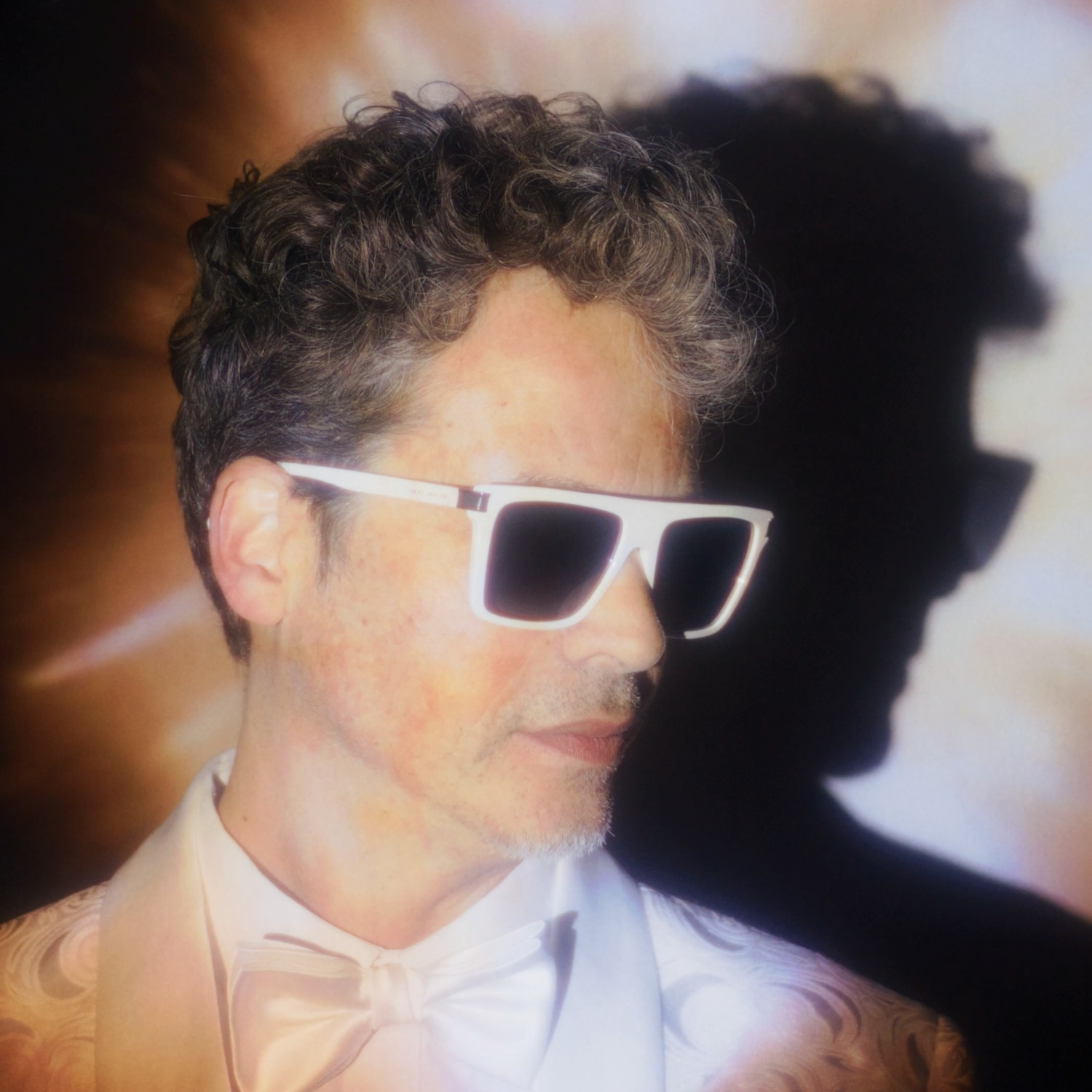
“King Jaymes” Is the Folk Punk Manifesto We Didn’t Know We Needed

King-Jaymes-Official-Album-Art-from-Stephen-Jaymes-1024x1024-png

There’s something quietly revolutionary about King Jaymes, the debut album from folk punk singer-songwriter Stephen Jaymes.

It doesn’t arrive in a blaze of hype or with the polished pagenatry of a major label rollout. But instead, it feels more like a notebook that someone has carried across a war zone, frayed and tear stained but full of truths that nobody else dared to say out loud.

Across ten tracks, many of them already familiar to fans of Jaymes’ trickle release of singles over the past two years, King Jaymes assembles a world that feels simultaneously mythic and also intimate. The songs are not just here to impress, but they resemble almost journal entries, roadside sermons and voice memos from a man documenting the collapse and his own quiet resurrection.

What is most striking about the album is not just the songwriting, although this is excellent and has always been Jaymes strong point. But it is the depth of self-examination and transformation on display here. There is a sense that Stephen Jaymes has survived these songs more than just written them.

Opening with one of Jaymes’s most personal songs, “Saving Daylight”, we are immediately thrown in to a noirish soundscape of piano and muted guitar lines.

The new mix of previously released “Chief Inspector” is more spacious and less raw than the original single, revealing the intricacies of Zsolt Virág’s production work. It’s a tone-setter that invites deep listening.

Elsewhere, songs like “The Evidence Against Her” maintain their haunting intensity. They feel more fully realized here, nestled among companion tracks and dressed in album wide cohesion. Jaymes’s voice is soft and cracked a times, then suddenly forceful in other moments and becomes the compass that guides us through shifting emotional terrain.

While the early singles gave listeners a glimpse into Jaymes’s artistic evolution, it is the album’s final track, “When I Was Young” that truly delivers the emotional knockout.

This previously unreleased track is a lament disguised as a lullaby. It deals with aging, not in the abstract sense but in the deeply personal way of someone who’s felt the world pull away from them. The line between resilience and resignation is walked so carefully that it becomes a kind of dance. This track alone justifies the format of an album.

Beyond the music itself, the King Jaymes era represents a conceptual shift for Stephen Jaymes as an artist and public thinker. His VISION2025 initiative and the accompanying Particles blog present a worldview rooted in hope, dignity, and practical utopia not just art for art’s sake, but art as taking action.

Meanwhile, King Jaymes may be Stephen Jaymes’s debut album, but it plays like a legacy statement. It’s a defiant and deeply human record that builds a world you want to live in, even if that world hurts.

Keep up with Stephen Jaymes on his Website

Stream music on Spotify and Apple Music

VIDEO VOYAGEUR: 3 Q’S WITH STEPHEN JAYMES

Saving-Daylight-Stephen-Jaymes

We are thrilled to sit down with Stephen Jaymes to talk about the music video to his new single “Saving Daylight.”

Stephen is an artist who tells bold stories through his music and visuals. The new single comes with an evocative video, taking us on a journey that merges personal memory with a sense of solitude and reflection.

Taking inspiration from his own childhood experience as well as recent life events, Stephen explores the theme of isolation, the passage of time, and the emotions tied to being alone.

In this exclusive Video Voyageur we find out how AI was used to create a video that beautifully mirrors the song’s theme:

1. Tell us the story of this song, why did you choose to visualize this song specifically in
this way?

The story of Saving Daylight begins with a young child waiting in the dark predawn hours for his school bus to arrive. Waiting alone, in the cold, surrounded by snow, with a cold face pointed toward the end of the street where the headlights would show. Staring and silently waiting. But most of all, waiting for the sun to appear and feeling like time doesn’t really exist, or doesn’t exist yet.

2. What was the inspiration behind this new video (visuals, storyline, etc.)?

Saving Daylight explores the feelings that come from being left alone and being told it’s good for you. It’s about all the thoughts and memories that spring from that experience. Last year my partner had to attend to her dying father, and she spent some time away.

We said it was a silver lining that I could have some time to focus on finishing the album. But after she’d gone, I felt this strange echo back to childhood, and the first times I was told that being alone was good for me. There’s a lot of my personal story in this song and in the video.

3. What was the process of making the video?

I knew I wanted to explore overlaps between my performance of the song and images that represent both the Los Angeles me now and the Michigan me as a child. I found a lot of resonant stock footage to serve as a sort of a continuous dreamworld establishing shot, pinging back and forth between California palm trees and the tall pines of my childhood.

I used a series of art pieces in the video that I created with the help of AI. They help to tell the story of a midwest boy who is lonely in California, thinking about when he was lonely as a child. I wanted the art to be dreamlike, and to have the quality of art you might see as a child in a school or doctor’s office. I had to do a lot of experimentation with different prompts to get what I wanted.

After I had finally got the art right and licensed the stock footage, I cut it all together on my iPad Pro using the Videoleap app.


“Saving Daylight” was written, performed, engineered, recorded, and produced by Stephen Jaymes. Mixed and mastered by Zsolt Virag. Cover art by Stephen Jaymes.

Stay connected with Stephen Jaymes here:

Website // Facebook // Instagram // Spotify // Soundcloud // Apple Music // YouTube Music

Stephen Jaymes’ “Tokyo” is the Folk Rock Hit We Needed

The latest musing from LA-based singer/songwriter Stephen Jaymes is the upbeat folk rock single “Tokyo.” Following his impressive debut with “Chief Inspector,” Stephen Jaymes continues to reveal his artistic prowess and ability to craft music that resonates deeply with the soul.

“Tokyo” is just the second in a series of four singles that pave the way for Stephen Jaymes’ debut full-length album. His songs are a search for truth and authenticity, crafting a sonic landscape that refuses to tell big lies but explores the profound depths of human experience. It’s a knock on the window of reality, beckoning listeners to join him on a journey to a magical place that two people create together, even in the face of climate destruction. 

From the moment “Tokyo” starts, its rousing guitar riff sets the tone for an invigorating experience. However, this Tokyo isn’t the Japanese city we know but a metaphorical place of transcendence between two people. It’s an escape from the apocalyptic scenes that pervade consciousness, a mythical name from a pre-apocalyptic past. As the singer invites his lover to go there with him, the song feels like a glimpse into a hopeful future.

Stephen Jaymes’ music is a compelling mix of punk poetry, wounded-romanticism, and sonic noir. He weaves intricate narratives reminiscent of Charles Bukowski while infusing his work with psychedelic and introspective elements. His ability to capture the essence of emotion and storytelling makes “Tokyo” a captivating and thought-provoking experience for listeners.

As a self-contained artist, Stephen showcases his multi-talented abilities as a songwriter, singer, multi-instrumentalist, and producer. His music exudes the stylish playfulness of Prince, with clever turns of phrases and occasional funk influences, while also channeling the stateliness and mystique of Leonard Cohen.

With his unique blend of folk rock and poetic lyricism, Stephen Jaymes’ “Tokyo” is an exciting glimpse into the talent of this rising star in the music industry.

Connect with Stephen Jaymes via:
Website // Instagram // Facebook // Twitter // YouTube // Spotify

Video Voyager: Stephen Jaymes’ “Chief Inspector”

Singer-songwriter Stephen Jaymes might be best described as Charles Bukowski ditching whiskey for psychedelic mushrooms while feverishly ingesting Rumi poetry and Phil Ochs records. The LA-based artist is a punk poet; a wounded-romantic; a sonic noir auteur and a post-apocalyptic hippie. He is a gifted multi-instrumentalist, songwriter, singer, and producer. His music exudes the stylish playfulness of Prince with clever turns of phrases and occasional funk flashes, but it also conjures the stateliness and mystique of Leonard Cohen. Film and television editor Christal Khatib (ScandalTransparent) hears “both of those ghosts and Johnny Cash too – all visiting the same body.”

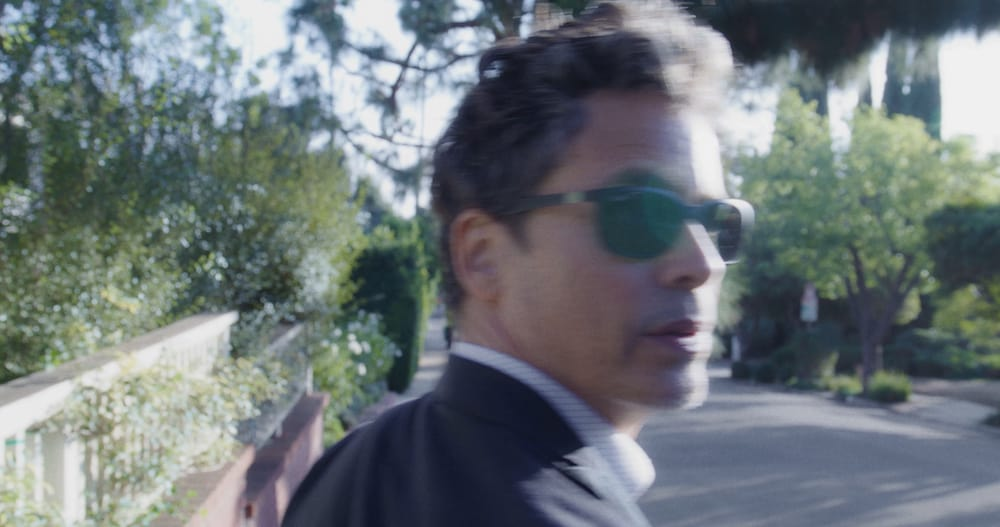
His newest song “Chief Inspector,” and the accompanying video, is a noir inspired Jungian tale of a man who once locked up his shadow and is now hunted by it.The video reaches back in time to say a little something about the present moment. Wanting to evoke the LA noir imagery used in the song’s lyrics, the singer and the video’s producer Ross Kolton, were drawn to the iconic 1973 Robert Altman classic “The Long Goodbye” for its visually unique take on noir in the sunshine.

Easter eggs and direct references include a shot of Jaymes leaving the same tower apartment complex where Elliott Gould’s Philip Marlowe eked out a living. The film classic is noteworthy for looking back to the 40s to shine a light on the (then) current 70s culture. Similarly, Kolton and Jaymes look back to the 70s to indirectly reflect a modern Instagramed world, where a noir thriller of dark realities continues to unfold, now through millions of sunny lenses.

We spoke with Stephen Jaymes about the new video for “Chief Inspector,” which you can watch below:

Tell us the story of this song, why did you choose to visualize this song specifically in this way?

In a nutshell, this is what happens when you start digging deeper into Jung while watching the Inspector Morse series. The song is about the choice we make to lock up a part of ourselves to achieve our (often stupid) objectives, and how that shadow part always escapes and hunts us down later. Morse is a hero of mine, the original “true detective” of modern television who is chased as much by his own ghosts as he is by the flesh and blood criminals. It was a rare instance where the lyrics all pretty much fell out in one go. I’d pay to have that experience every time. And what fell out was a “Cape Fear” scenario: Robert Mitchum is not happy; and he’s out to get you; and he’s you. In my case, I later realized, my shadow was hunting me down to demand I start writing and playing more music.

What was the inspiration behind this video (visuals, storyline, etc.)? 

The video is the result of my collaboration with LA-based filmmaker and music video producer Ross Kolton. We both have a deep love of noir, so we were looking for a reference point that we could use. We wanted to literalize the song’s dark noir imagery and psychological tension, but also reflect how noir films frequently juxtapose that darkness against sunny LA. Our eureka moment came in the form of Ross’s idea to use the location from Robert Altman’s 1973 “The Long Goodbye” in the video. From that seed of an idea we found our story, and the video ended up being an homage to that film in many ways (toxic suitcase MacGuffin notwithstanding). 

What was the process of making this video? 

The goal was to make a tight doppelgänger drama that reaches back to “The Long Goodbye” to illustrate the tension between today’s dark realities and their sunny, Instagrammed exterior. Ross is super organized, so many of the shots were his ideas that we basically tested in the field. He has an approach to film that really synchronizes with my approach to songwriting: both of us leave a ton of room to capture the magical accidents in our creative process. On shoot day we started in the Hollywood hills where we paired a condo interior with the actual exterior of Elliott Gould’s apartment complex. We had a location waiting on the Westside for the “arrival” part of the story, so we literally worked our way east to west through Hollywood, stopping at some planned places and others that jumped out at us as we drove around. By the time we had finished with all the exterior “story” shots, we were exhausted. After he put together the first cut, Ross decided that the lip sync performance shots reflected that exhaustion. So we reshot the performance, weeks later, after I’d buzzed my head. This resulted not only in a treatment that better reflected our “sunny noir” aesthetic, but also emphasized better the doppelgänger theme because I look so different. Just another example of staying loose and allowing experimentation (and some director perfectionism) to work its magic. Thankfully I had no deadline as we hadn’t set a release date for the song yet.