Video Voyager: Stephen Jaymes’ “Chief Inspector”

Singer-songwriter Stephen Jaymes might be best described as Charles Bukowski ditching whiskey for psychedelic mushrooms while feverishly ingesting Rumi poetry and Phil Ochs records. The LA-based artist is a punk poet; a wounded-romantic; a sonic noir auteur and a post-apocalyptic hippie. He is a gifted multi-instrumentalist, songwriter, singer, and producer. His music exudes the stylish playfulness of Prince with clever turns of phrases and occasional funk flashes, but it also conjures the stateliness and mystique of Leonard Cohen. Film and television editor Christal Khatib (ScandalTransparent) hears “both of those ghosts and Johnny Cash too – all visiting the same body.”

His newest song “Chief Inspector,” and the accompanying video, is a noir inspired Jungian tale of a man who once locked up his shadow and is now hunted by it.The video reaches back in time to say a little something about the present moment. Wanting to evoke the LA noir imagery used in the song’s lyrics, the singer and the video’s producer Ross Kolton, were drawn to the iconic 1973 Robert Altman classic “The Long Goodbye” for its visually unique take on noir in the sunshine.

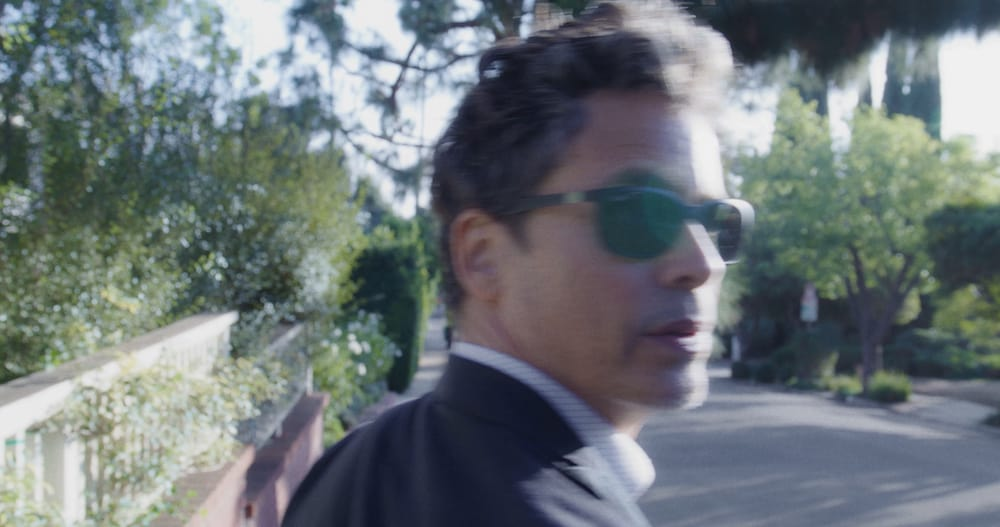
Easter eggs and direct references include a shot of Jaymes leaving the same tower apartment complex where Elliott Gould’s Philip Marlowe eked out a living. The film classic is noteworthy for looking back to the 40s to shine a light on the (then) current 70s culture. Similarly, Kolton and Jaymes look back to the 70s to indirectly reflect a modern Instagramed world, where a noir thriller of dark realities continues to unfold, now through millions of sunny lenses.

We spoke with Stephen Jaymes about the new video for “Chief Inspector,” which you can watch below:

Tell us the story of this song, why did you choose to visualize this song specifically in this way?

In a nutshell, this is what happens when you start digging deeper into Jung while watching the Inspector Morse series. The song is about the choice we make to lock up a part of ourselves to achieve our (often stupid) objectives, and how that shadow part always escapes and hunts us down later. Morse is a hero of mine, the original “true detective” of modern television who is chased as much by his own ghosts as he is by the flesh and blood criminals. It was a rare instance where the lyrics all pretty much fell out in one go. I’d pay to have that experience every time. And what fell out was a “Cape Fear” scenario: Robert Mitchum is not happy; and he’s out to get you; and he’s you. In my case, I later realized, my shadow was hunting me down to demand I start writing and playing more music.

What was the inspiration behind this video (visuals, storyline, etc.)? 

The video is the result of my collaboration with LA-based filmmaker and music video producer Ross Kolton. We both have a deep love of noir, so we were looking for a reference point that we could use. We wanted to literalize the song’s dark noir imagery and psychological tension, but also reflect how noir films frequently juxtapose that darkness against sunny LA. Our eureka moment came in the form of Ross’s idea to use the location from Robert Altman’s 1973 “The Long Goodbye” in the video. From that seed of an idea we found our story, and the video ended up being an homage to that film in many ways (toxic suitcase MacGuffin notwithstanding). 

What was the process of making this video? 

The goal was to make a tight doppelgänger drama that reaches back to “The Long Goodbye” to illustrate the tension between today’s dark realities and their sunny, Instagrammed exterior. Ross is super organized, so many of the shots were his ideas that we basically tested in the field. He has an approach to film that really synchronizes with my approach to songwriting: both of us leave a ton of room to capture the magical accidents in our creative process. On shoot day we started in the Hollywood hills where we paired a condo interior with the actual exterior of Elliott Gould’s apartment complex. We had a location waiting on the Westside for the “arrival” part of the story, so we literally worked our way east to west through Hollywood, stopping at some planned places and others that jumped out at us as we drove around. By the time we had finished with all the exterior “story” shots, we were exhausted. After he put together the first cut, Ross decided that the lip sync performance shots reflected that exhaustion. So we reshot the performance, weeks later, after I’d buzzed my head. This resulted not only in a treatment that better reflected our “sunny noir” aesthetic, but also emphasized better the doppelgänger theme because I look so different. Just another example of staying loose and allowing experimentation (and some director perfectionism) to work its magic. Thankfully I had no deadline as we hadn’t set a release date for the song yet.
“Wig Glue”: Ray Levier’s Inspiring Ode to Resilience and Groove

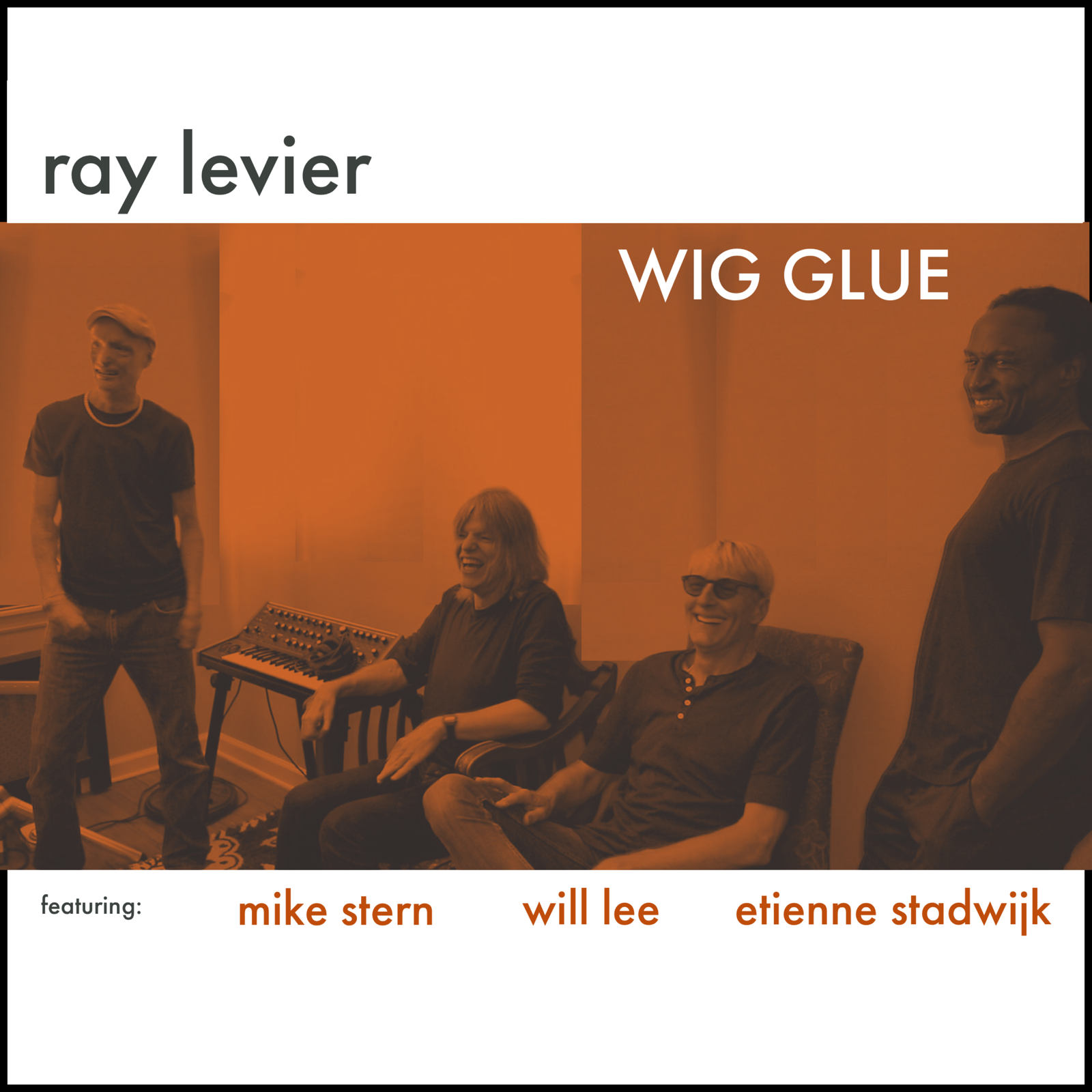
Ray Levier, a seasoned drummer and highly sought-after sideman, unveils his most poignant and personal track to date with “Wig Glue.” This jazz funk fusion composition pays tribute to the legendary guitarist Mike Stern, renowned for his work with Miles Davis and other esteemed jazz and fusion acts. “Wig Glue” is a spirited and groove-filled piece that embodies resilience and determination, inspired by Stern’s remarkable journey of overcoming a devastating accident.

The backstory behind the song adds a layer of depth and inspiration. In 2016, Stern suffered a severe accident, breaking both of his humerus bones and causing nerve damage. This left him struggling to hold a guitar pick, threatening his ability to continue performing. In a stroke of fortuitous creativity, Stern discovered a solution in wig glue—a conversation with fellow musician Etienne Stadwijk led him to Ray Levier, who had been using wig glue on his drumsticks after his own accident.

Levier, a highly skilled drummer, generously shared his unconventional method with Stern, resulting in a remarkable breakthrough. By using wig glue, Stern regained his ability to hold the pick and continue playing. Grateful for the solution, Stern highlighted Levier in interviews and expressed deep appreciation for the fortuitous suggestion. Together, they formed a bond and playfully referred to themselves as members of the “wig glue club.”

“Wig Glue” serves as a dedication to the resilience of both Ray Levier and Mike Stern, embodying the idea that even if something is broken, it can be glued back together, allowing the journey to continue. The track itself captures the spirit of funk, infusing it with elements of jazz and fusion to create an infectious and dynamic sound. Levier’s rhythmic prowess takes center stage, driving the groove and delivering captivating musical moments.

Joined by Etienne Stadwijk, Mike Stern, and esteemed bassist Will Lee, known for his exceptional contributions on ‘Late Night with David Letterman’ and collaborations with renowned figures like George Benson and The Brecker Brothers, Ray LeVier and friends embark on a melodic enchantment with “Wig Glue.” This harmonious convergence of musical talent amplifies the impact of the track, elevating it to new heights.

With its infectious rhythms, captivating melodies, and spirited performances, “Wig Glue” captures the essence of overcoming adversity and pushing forward in the face of challenges. It serves as a testament to the power of music to inspire and uplift, and Ray Levier’s tribute to Mike Stern stands as a powerful symbol of the strong bonds and mutual support that exist within the music community.

Listen to “Wig Glue” and embrace its empowering message of resilience:

Night Wilds Drops Debut Single “City of Strangers”

The debut single “City of Strangers” from Seattle’s Night Wilds drops today. It is the first release from a 17-track debut Rock-opera album All That Should Have Been, which much like Pink Floyd’s The Wall, along with modern inspiration from Tool, Radiohead, and even Rage Against The Machine, blurs the line between entertainment and enlightenment. 

When Night Wilds singer-songwriter Seth began writing “City of Strangers” 15 years ago, he couldn’t have known that the song would turn into the first single, but it serves as the perfect launching point for a collection of songs that reveal a deeply personal and sometimes painful story.

Regarding the creative process, it could be said that the song grew with him, as the first verse of “City of Strangers” came at a time when Seth had not yet begun the journey of recovery and sobriety. 

The somber ballad starts with: Well they shut and locked the door to my cell now/And they called lights out so long ago/And I don’t think I can take this darkness anymore/All my walls are falling down. And follows with: And down that corridor I hear/Men throw themselves against steel cages/Oh God, tell me this is not what we’re living for/Oh tell me there’s more

“The beginning of the song, which is really a sort of desperate story of this guy listening to people slam themselves against these steel cages and screaming, you know, ‘God, is this really what we’re living for? Like, this can’t be why we’re on this earth, just to slam our bodies into these cages.’ That’s the part that was written 15 years ago,” says Seth. 

The track bends from the darkness into the light, just as Seth’s path into sobriety, with this ending: And brother, you’re not broken you’re just tired of the cold/And you have built the prison, and you guard the door

“The whole end of the song was just finished a few months ago as it sort of came into focus in the whole arc of the album,” says Seth. “So with recovery, that’s where I began to realize the second half of the song.”

“City of Strangers” was tracked at Robert Lang Studios (Alice In Chains, Nirvana, Foo Fighters) and Electrokitty Studios (U2, Dave Matthews, Kendrick Lamar) with longtime Heart drummer Ben Smith and mastering and mixing engineer Tom Hall, and features a strings arrangement and performance by Yoed Nir. 

After taking in the song’s musicality and lyrics, the listener is left with a message of hope and a belief that things can always get better, but first, we must venture into the darkest caves to understand that we’ve had the key to access the light all along.

Listen to “City of Strangers” now on  Spotify and all streaming platforms

Check out the Night Wilds Website

Follow Night Wilds on Instagram


Rock Band Kickstand Jenny Shares Debut Album with a Song Featuring Mark Slaughter

Kickstand Jenny is an alternative rock group based out of Santa Rosa Beach, Florida. With inspiration coming from all genres of music, from Van Halen to Prince, they have been inspired from all the good stuff, forming their diverse original music.

The band is known for their hard work and humble spirits, and the success of their music has allowed them to tear up the stages with some of their idols, including Slaughter, Living Colour, Sebastian Bach, L.A. Guns and LIT.

The 4-man rock band just released their debut rock album, Between the Lies. The 10 song album explores  the death and rebirth of a soul. The songs are upbeat and heavily reminiscent of the likes of Slaughter, Van Halen, Aerosmith, and even Bon Jovi.

The project is inspired by the “death of live music” caused by the pandemic, and the desire to march on and rise up like a phoenix. The album was recorded in Nashville, Tennessee with famed producer Chas Sandford.

But the standout song on the album is the song “Solo,” which features Mark Slaughter himself. “Solo” was actually the first song from the album the band recorded. “We sent Mark some songs to check out, and he chose this one, as he said it reminded him of his early days when he was in the band, Vinnie Vincent Invasion,” shares Preston Morelock, Kickstand Jenny’s frontman. “Mark really put his stamp on the song, yet it remarkably sounds unique and different from his other works.. Interestingly, the song is about going solo and leaving a situation, which is what he did in 1989 when he left Vinnie Vincent and formed the band Slaughter.”

Connect with Kickstand Jenny via:
Website / Instagram / Facebook / Twitter / YouTube / Spotify

Video Voyager: Tadgh Billy King’s “sit and wait”

Irish alt-rocker Tadgh Billy King (pronounced like “Tiger” without the “er”) is a multi-faceted an actor, writer, director, a composer for theatre, and an award-winning classical singer. He didn’t set out to re-create the sound of frustrated punk rock in his song “sit and wait,” instead he’s unapologetically adding to the conversation through a modern lens with this new release. The result is a blistering, blunt and rousing ride through noisy hardcore, math-y punk and gazy walls of sound. At times brash, at times sublimely ethereal.

Tadgh’s immersive artistry speaks to its conception during times of deep introspection. His cathartic musicality spans post-punk, goth, noisy hardcore, and math-y punk, and is inspired by such artists as Bauhaus, Drive Like Jehu, Fugazi, Joy Division, Nirvana, Radiohead, and contemporary Irish bands such as Fontaines D.C., The Murder Capital, Gilla Band and Just Mustard.

The video for “sit and wait” depicts Tadgh’s blunt outlook on the world that surrounds with us bright colors and moving images over stagnant objects that reveals the subtle undertones of confusion and frustration that sits with a lot of younger people today.

We got the chance to speak with Tadgh about a more in depth look into his music video. Watch and read below:

Tell us the story of this song, why did you choose to visualize this song specifically in this way?

The song is trying to encapsulate a feeling, which seems to be pretty rampant among late-teen to early-to-mid twenty year olds. It’s a sort’ve existential dread that is hard to articulate. I think it comes from a recognition that there’s a lot of problems in the world today and there doesn’t seem to be a whole lot of clear, viable ways to fix them. So it can feel like people can find themselves sitting and waiting for something catastrophic to happen. While, at the same time, they’re just trying to figure out their own lives. The song is about that frustration. We are left discussing the things that disappoint us, but some of these things are completely out of our control. And then, sometimes, these discussions we have with each other can cause internal rifts within friendships and relationships. 

With this video, I wanted to try and capture these feelings. I felt that by filming people in their late teens and early twenties moving through their own emotions and navigating relationships, while also projecting some weird, beautiful and disturbing imagery that falls within the themes I’m talking about in the song onto them, I could capture and convey this strange feeling we all have for our collective future.

What was the inspiration behind this video (visuals, storyline, etc.)?

I always thought that projection onto a body was really cool. There’s a really interesting theatre/dance company in Australia called Chunky Move and I remember watching a video for this piece they did called Mortal Engine and just being completely enamoured by it. My video is very different to that piece, but it sparked my interest in using projection onto people. I got a hold of a little projector and thought “this is perfect.”

I also really enjoy art that on the surface is really colourful, vibrant, attractive and interesting to watch, but if someone was to look deeper or read into it more they could start discovering multiple layers or narratives to the piece. In this video, try following the couples and seeing what narratives you put onto them from just the emotion you see on screen. What overall narrative or storyline jumps out at you when all the elements (the couples interacting, the emotional expressions from the performers, the lyrics and music, the images being projected) are combined? I know what I was trying to say with the song and video, but that doesn’t matter anymore. What’s really interesting to me is how my intention with the art isn’t important after a certain point. What really matters is what the audience or the viewers pick up and what they project (haha get it) onto the video. 

Late in the process came the idea of adding the first scene of me coming into my room and the last scene of me waking up. This is part of a larger narrative that will unfold across my music, but you’ll just have to follow along to see where it goes.

What was the process of making this video?

When I decided that I wanted a lot of people for the video I just started asking my friends. Everyone you see in the video (all credited in the video description) are artists themselves who are either studying or working (or both) in Dublin and Ireland, creating work that helps to make the city and country more vibrant every day.

For the background video that was projected onto the performers I compiled footage of anything that was interesting to me and fit the vibe of the song. Then I messed around with the colours to make them more vibrant and built the video around the song.

I wrangled as many people as I could together and did a few takes with them in front of the camera and projection, trying out different things that I, or they, thought could be interesting. I directed them through different emotions, asked them to just stare deadpan into the camera, asked them to debate a few different things with each other (nothing incredibly serious), took them to extremes and just kinda had fun with it.  Once everyone else was recorded I filmed myself singing the song. Ultimately, I wanted to let the imagery and people in my video do the talking. Editing it took a little bit of time, just because there was so much footage, but it was a very fruitful experience that allowed me to create something interesting to watch.

The lasting message I want this video to have is that despite life’s challenges, building a positive community and creating art that inspires you is the way forward. The making of this video itself is an example of that. I hope this inspires others to make cool art with the people around them.

Connect with Tadgh Billy King via:
Website // Instagram // Facebook // Twitter // YouTube // TikTok // Spotify

Graham and the Band Upstairs’ Americana Blues Song “Standstill Blues” will Resonate with Commuters

Graham and The Band Upstairs is an Atlanta based Americana band led by Graham Waldrop. The band creates music in the tradition of Bob Dylan and Neil Young, combining introspective lyrics with diverse melodies that meshes the folk, blues, and rock genres to create a fully realized sonic identity for each song.

Graham and the Band Upstairs’ “Standstill Blues” is a captivating and relatable blues track that encapsulates the frustrations of everyday life, particularly the infamous Atlanta traffic. Written from Graham’s personal experience of enduring lengthy commutes, the song explores the theme of stagnation and frustration but expands it into a collection of short stories that evoke a range of emotions.

Initially conceived with a different musical structure, Graham realized that the traditional blues framework would best suit the lyrics and the intended message of the song. This decision allowed the band to tap into their innate understanding of the genre, bringing a genuine and authentic feel to the music.

The interplay between band members is notable, with Josef and Zach providing a solid rhythmic foundation on bass and drums, respectively. Jeff’s skillful lead guitar licks inject the track with energy and vitality, while Veronica’s vocals shine whenever she takes the spotlight.

“Standstill Blues” resonates with listeners on multiple levels, as it captures the universal frustration and monotony that can often accompany our daily routines. Graham and the Band Upstairs have skillfully translated this feeling into a bluesy masterpiece, utilizing their musical prowess to express emotions that many can relate to. The track’s infectious groove and memorable storytelling make it a standout piece in the band’s repertoire.

With their ability to convey the realities of everyday life through the lens of the blues, Graham and the Band Upstairs continue to captivate audiences and leave an indelible mark on the music scene.

Connect with Graham and the Band Upstairs via:
Website / Instagram / YouTube / Spotify