Hamilton, ON-based singer-songwriter Bernadette Connors unveils her powerful new single, “White Magnolia”—a deeply personal and emotionally raw anthem about patience, faith, and trusting the timing of life. With a haunting vocal performance, soaring melodies, and a gripping blend of Southern Rock, Americana, and Indie Folk, the song captures the tension of longing and the beauty of surrendering to the unknown.
Written in collaboration with John-Angus MacDonald (The Trews) during a time of creative and personal transition, “White Magnolia” is a reflection on the slow, often frustrating journey of chasing a dream. The magnolia—symbolizing rare, fleeting beauty—serves as a poignant metaphor for the rewards of perseverance.
The track came to life through a collaborative and emotionally charged recording process. Produced by Stu Weinberg, whose experimental and bold approach pushed Bernadette to embrace vulnerability, “White Magnolia” evolved into a cathartic release. With Jeremy Kleynhans on drums (and knee slaps), Anthony Carone (Arkells) on keyboards, and Mike Bruce providing backup vocals, the track carries a rich, full-bodied sound that blends rootsy authenticity with modern production.
The song’s standout moment—a massive, cathartic note coming out of the bridge—was a spontaneous in-studio choice. Encouraged by Weinberg’s unwavering belief in her abilities, Bernadette delivered a spine-tingling vocal performance that elevated the entire track.
With the release of their new single ‘Solid’, via Cutters Records / The Orchard, GRAMMY-nominated, ARIA award-winning electronic trailblazers Cut Copy make their long-awaited return—reigniting the pulse that’s defined two decades of transcendent dance music and emotional clarity.
‘Solid’ is Cut Copy’s first original release in five years, following 2020’s Freeze, Melt—a critically praised album that saw the Melbourne-originating band exploring new depths of atmosphere and restraint. Where Freeze, Meltinvited listeners to lean inward, ‘Solid’ gently lifts them forward, guided by the buoyant energy of Cut Copy’s signature synth work, delicate rhythmic builds, and a lyrical core that feels both intimate and universal.
Originally imagined as an instrumental, ‘Solid’shifted shape during a moment of creative clarity. It opens with subdued textures—softly pulsing keys and mellowed basslines—before gradually swelling into something more expansive: twinkling synth layers, tactile percussive hits, and a mantra-like chorus that repeats with quiet insistence: “We’ll be solid.”The result is a track that offers space for both movement and reflection—a kind of danceable resilience.
Speaking on the song, frontman Dan Whitford shares: “I wrote the song as a reminder to myself that things will be ok, even when life gets turned on its head and it feels like there’s no way forward. I hope in some small way it gives other people a little nudge forward in the direction of their dreams. Hang in there… we’ll be solid.”
Written during a period of personal transformation, ‘Solid’ distills the kind of emotional duality Cut Copy has always excelled at: songs that are just as cathartic on a festival stage as they are through headphones at midnight.
The release also comes with a limited-edition, double-sided 12″ vinyl available for pre-order on the band’s website, featuring an exclusive B-side titled ‘A Decade Long Sunset’.
Since its beginnings as a solo recording project by Whitford, Cut Copy has evolved into one of Australia’s most influential and globally celebrated bands, now consisting of Whitford, guitarist Tim Hoey, drummer Mitchell Scott, and bassist Ben Browning. Across six studio albums, the group has shaped the global electronic landscape while refusing to sit still. From the luminous highs of 2008’s In Ghost Colours to the textural explorations of Zonoscope and Haiku From Zero, the band has navigated a sonic journey marked by curiosity, craft, and a connection to the dancefloor.
Their accolades are as numerous as they are varied: In Ghost Colours was named among Pitchfork’s top albums of the 2000s, Zonoscopeearned a GRAMMY nomination and won ARIA’s Best Dance Release, and their expansive remix and DJing work—captured in efforts like Fabriclive.29 and Oceans Apart—cemented their influence beyond the studio.
Cut Copy’s music has found life in cultural moments big and small, from festival main stages like Coachella, Lollapalooza, Primavera, and Big Day Out, to sync placements across film, TV, and commercials—FIFA 18, Dolby, Levi’s® campaigns, and beyond.
With ‘Solid’, Cut Copy reemerges not simply to continue their legacy but to expand it. The single marks the start of a new chapter—one built on the same foundation of heartfelt songwriting, forward-thinking production, and an enduring sense of joy. As the band quietly hints, more new music is expected in 2025.
After five years of silence, Cut Copy has returned. They never lost the beat. And now, with ‘Solid’, they’re inviting us back into motion.
Cardboard Sessions is a trailblazing fusion of music, art, and innovation, created by Signal Snowboards and Ernest Packaging. This dynamic video series challenges traditional jam sessions, offering an unpredictable and raw exploration of sound. The twist? The musicians play on instruments crafted entirely from cardboard—guitars, drums, and more—transforming the way music is created and experienced.
Originally born from the collaboration known as Cardboard Chaos, this project was meant to showcase how cardboard could be used in both music and action sports. Cardboard Chaos brought to life groundbreaking instruments, like the Cardboard Fender Stratocaster and Cardboard Drums, which caught the attention of music icons such as Chester Bennington of Linkin Park and Eric Kretz of Stone Temple Pilots. These unique creations pushed boundaries and earned support from legendary musicians who helped bring them to life.
When the world paused during the pandemic, the Cardboard Chaos project entered a temporary hiatus. But creativity doesn’t stop—it simply evolves. And so, Cardboard Sessions was born. This fresh iteration places the focus squarely on the musicians, allowing them to improvise and experiment with these one-of-a-kind instruments in an unscripted, free-form format.
What sets Cardboard Sessions apart is its complete unpredictability. There’s no rehearsing, no script—just pure, spontaneous music-making. Seasoned musicians and up-and-coming talent alike dive into these experimental sessions, creating an exciting blend of sound that’s as unique as the instruments they play.
From ZZ Top’s Billy Gibbons to Dinosaur Jr.’s J Mascis and Guns N’ Roses’ Matt Sorum, the show has attracted legendary artists, each adding their own flavor to the raw and creative power of cardboard instruments. The series also features performances from LP, Marcus King, Meg Myers, and other musicians like Robby Krieger of The Doors and Stephen Perkins of Stone Temple Pilots. Even pro-skateboarder and musician Ray Barbee showcased his improvisational skills, turning spontaneous jams into musical gold.
In a truly remarkable moment, the show even reunited legendary singer Terry Reid after a two-decade hiatus, reinforcing that Cardboard Sessions is about more than just the instruments. It’s about the connection between musicians, their shared love of music, and the joy of rediscovering the art of jamming.
Each episode of Cardboard Sessions invites viewers into a world where anything can happen. It’s a must-watch for music lovers, innovators, and anyone intrigued by what happens when musicians step outside the box—literally and figuratively.
King Ludd, the brainchild of seasoned producer and engineer Michael Keire, delivers a blistering debut on “Trouble,” a post-hardcore anthem fueled by tenacity, resilience, and the raw chaos of creation. With influences spanning from Fugazi to The Mars Volta, “Trouble” thrives in tension, embracing a cinematic, narrative-driven structure that transcends traditional song formulas.
The track is born from a deep admiration for the sincerity and drive found in music and art, channeling the energy of punk, the playfulness of experimental noise, and the fearless spirit of “skate and destroy.” Keire crafts an auditory experience where each section unfolds like a scene in a film, utilizing soundscapes and tone as essential storytelling elements.
Featuring Luke Bentham (The Dirty Nil) on lead guitar, Theo Mckibbon (The Trews) on drums, Linnea Siggelkow (Ellis) on backing vocals, Jon Harvey (The Wild High) on bass, Marco Bressette (Dead Tired) on rhythm/lead guitar and even more Hamilton, ON talent.
1. Tell us the story of this song, why did you choose to visualize this song specifically?
The story of the song is far more interesting than my reasoning behind visualizing it. It’s visualized because it’s my first song lol!
The story behind the song is something I’ll try to condense.
When I was in university I was thinking about starting a project where I played guitar even though I didn’t know how to play yet (and still dont to be honest (I know the names of two chords)). Previously I drummed in a few fun bands but never went further than that. So I texted my friend Marco Bresette who is a fantastic guitar player and is now in Dead Tried if he could give me some lessons. He said the last thing I needed was lessons and to just start playing and have fun. So that’s what I did. I went and bought a cheap Godin guitar, found a peavey rage somewhere and got clumsily writing. I formed Luddite which played a few shows, recorded a few demos (one where Adam Bentley sang, who sings on this version) and then things fizzled out. I don’t think I was ready for the project yet and hadn’t come into my own in many ways.
Years (many) went by. I started making records and working in studios as an engineer/producer and then last year I got the itch to start expressing myself and developing the songs. So, it seemed fitting to hit up Marco again and see if he could lend a hand getting things off the ground. He came by and we laid down some guides and talked about what I had done. I was very insecure about my writing because it was coming completely from ear with no grounding in theory. Marco was really stoked on everything and kept reassuring me it didn’t need to be more and that my simple chords were actually a cool way to voice things. Ultimately, he gave me permission to do it my way which I am so thankful for and think I needed for my confidence. Marco suggested I get Theo McKibbon involved who plays in Dead Tired with him. That felt right since I was working with Jon Harvey and Theo played in Monster Truck with him. Theo was super excited about the tunes, he laid down some incredible passes totally crushing it and after that the momentum was developed to keep things going. I hit up Adam again, as well as, some people who I had crossed paths in those months, we recorded, and here we are.
2.What was the inspiration behind this video (visuals, storyline, etc.)?
I knew I wanted a simple video that was almost photographic in its nature. I loved the way
renaissance painting was used in Kanye’s power for instance. I loved the way balance was being used in Kendrick videos. And I knew simple meant cheaper and attainable. Plus, I feel I have learned so much about making the most out of simplicity from David Byrne. He’s a master of that.
There’s a room in my studios building where several artists using mixed mediums work. And one of those people happens to be John Smith. He’s a pal and we’ve worked together before. I knew he did cool things visually, often lo-fi and experimental, even though he’s had huge successes he tends to keep it real, so to speak, and I told him a total random collection of ideas I had while we listened to the song.
I love odd couples. I love the duality of them. From Run the Jewels to Perfect Strangers, what’s not to like? So I said, I’d love to do something with the presentation of something like American Gothic or Prodigy’s Firestarter, and maybe find a middle ground, where the odd couple is just there, occupying space like a criminal line up, and use that Kendrick setting reference to create something visually pleasing. We also mentioned David Lynch like 10 times…so thats in there too, but in a Lynchian way that you cant really put your finger on….perfect, hed liked that I imagine.
He sat with the idea and hit me back with how he wanted to film it and the location idea. I started hunting. I asked my pal Andy if we could use his parents house as I knew it was the 90’s setting John was looking for as a contrast to the intensity of the song. He was down (thank you Richardson family) and we had a plan.
3.What was the process of making this video?
After brain storming the idea we spent 2-3 hours in the Richardson house while John set up a few very old VHS cameras he had. We did like 10 passes in two places, one being a couch and the other the dining room, and we ended up using the dining room. He then told us he was going to play the song in double time and film it in regular time so when it slows down to regular speed the visuals create a weird dreamy effect. No skin off my back…I just sat around trying to be there and also not detract. But, poor Adam was struggling to make sense of the lyrics and song at that new speed. It’s a punk song with weird back phrasing vocals and fairly sophisticated rhythmic/cadence play that is hard at regular speed let alone thrash metal speeds. He did a great job and the beauty of the design is that even when he doesn’t nail it only adds to the dreamy and unsettling feel of things. There wasn’t much more to it. More or less, I just tried to give some really talented people some ideas to play with and then we had a song and video. I’m very grateful and happy with what happened.
Canadian singer-songwriter Ian James Bain, a core member of Nicolette & the Nobodies and guitar player for Jeremie Albino, unveils his latest single, “Come & Gone,” a heartfelt country ballad that reflects on the struggle of trying to make a career in music while grappling with self-doubt, burnout, and the pull of nostalgia. A deeply personal track, “Come & Gone” paints a vivid picture of the uphill battle faced by independent artists, balancing romanticized dreams with the harsh realities of life on the road.
Rooted in classic country storytelling but infused with Bain’s distinctive modern edge, “Come & Gone” blends traditional form with unexpected chord changes, creating a sound that is both timeless and fresh. Lush pedal steel and warm, twangy guitars carry Bain‘s introspective lyrics, culminating in a song that feels both melancholic and reaffirming.
1. Tell us the story of this performance, why did you choose to capture this song specifically?
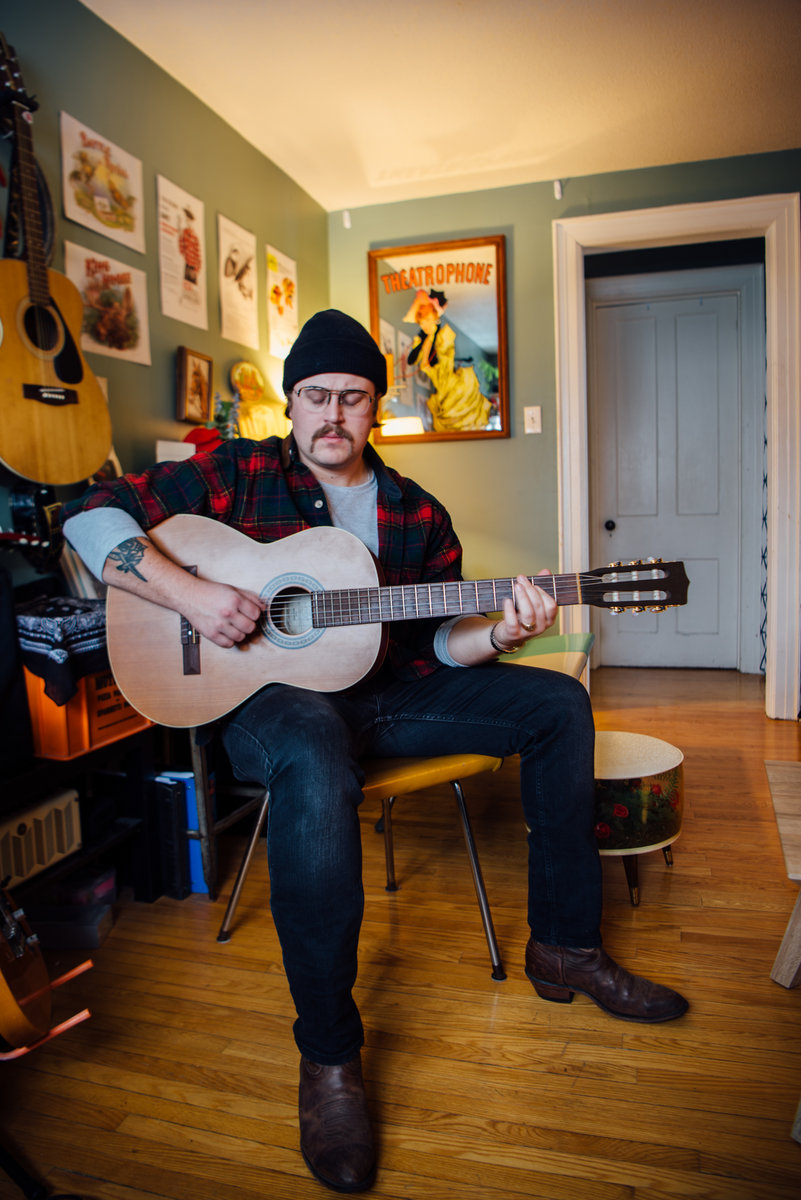
My buddy Taylor Wallace is a filmmaker and musician swung by the house on a cold gray day to film a few songs. I wasn’t sure what I wanted to play so we started with a new one that I had recently finished. I had a feeling we might lead with ‘Come & Gone’ so I figured it would be a good idea to cut that one as well. I was a little tired and a little hungover so I knocked it down a key to make it a little easier to sing and give the performance a more relaxed vibe. I like the way it turned out and I’ve been playing this one in G ever since.
2.What were you feeling inspired by the day of this performance?
Hard to say because this was filmed almost a year ago now but it’s probably a safe bet that I was feeling inspired by Keith Whitley.
3.What was the process of making this video?
Taylor called me asking if I wanted to shoot some live content. I said hell yeah. He swung by with a few lights and a couple of cameras, I put on my boots for “authenticity” we set up in my living room and I plunked out a few tunes. I kept messing up the lyrics on the last verse but we got it eventually. Fast forward a few months and I said I was finally releasing the tunes and he whipped up a nice cut and here we are.
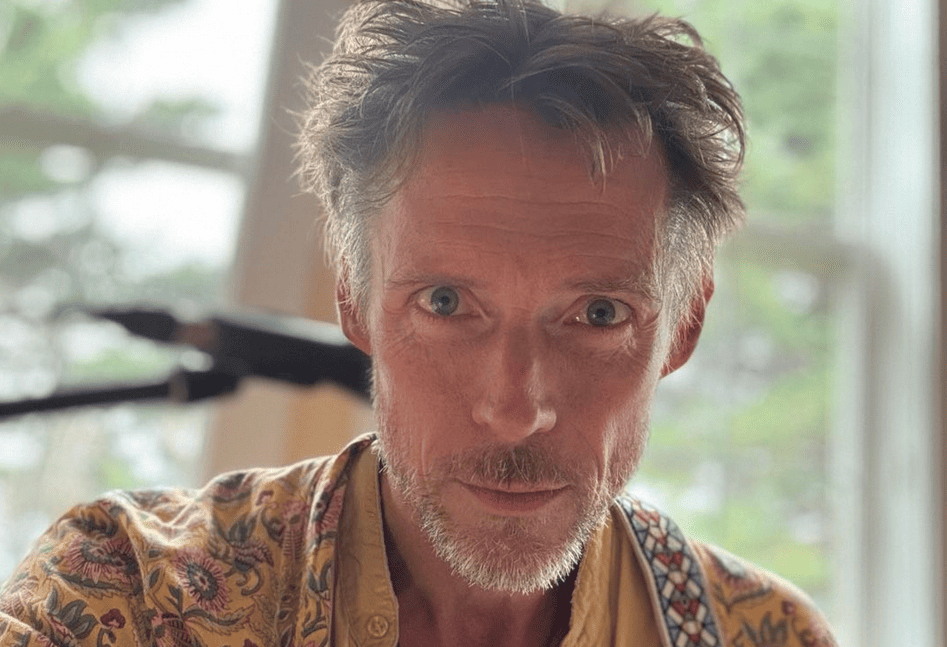
Nova Scotia via London, UK singer-songwriter Jont‘s new single, “Fingers Crossed,” is a powerful and emotionally charged anthem that dives deep into the complexities of forgiveness, accountability, and the transformative process of taking control of one’s own emotional freedom. The song offers an unflinching exploration of the personal struggle to let go of anger and pain, turning them into liberation rather than allowing them to fester into resentment.
Jont‘s music has always carried a sense of introspection, and “Fingers Crossed” is no exception. It comes from a place of yearning for release—release from waiting for someone else to acknowledge their wrongdoing. The song highlights how we often find ourselves trapped in the prison of unspoken grievances, waiting for apologies that may never come, all the while neglecting the fact that we have the power to release ourselves from this self-imposed captivity.
1. Tell us the story of this song, why did you choose to visualize this song specifically?
The story of this song is the story of the world we live in: at the heart of our lives, all our communities, is the tension between masculine and feminine energy, played out most obviously by how women and men have been in conflict with each other for thousands of years. The arrowhead of our evolution as a species is us…. Behind us (the shaft of the arrow) is made up of all our ancestors and past lives…. All of these have been affected and shaped by this masculine / feminine wound, this complex trauma that haunts our species that stems in essence from the illusion of separation.
You can watch the video and very easily see what “the story” of the song is. I wouldn’t insult your intelligence. But the greater story that is being told is that of the ongoing disharmony and pain we live out in our intimate relationships and which we are addicted to and think of as normal.
2.What was the inspiration behind this video (visuals, storyline, etc.)?
The song on its own is quite a different experience than the video. There is no female vocal, it is not a duet. It is more along the lines of a classic angry love song – it feels like my take on Idiot Wind (Dylan), with a bit more of a Rock the Kasbah feel. But the video gave us a chance to deepen the themes and enhance the ambiguity and the chorus message about blame by having the couple sing the song together. There was no inspiration as such behind the water / ketchup / compost / electrocution – it was just an idea that came to me in the bath that seemed like a handy metaphor that was both funny and accurate.
3.What was the process of making this video?
It was quick. Holly Stevens (the actor who plays my partner) had to leave at a certain time and by the time the set was finished we only had about an hour to film everything. We also knew we couldn’t shoot any of the messy parts twice. So it was quite a pressurized and condensed process – as with the recording of the song which was done in just a couple of takes – and that lends some life and freshness to it.




You must be logged in to post a comment.