Harris Hawk “Make the Fonz Bleed”

image009

Straight from the heart of Boston, MA, meet the infectious sounds of HARRIS HAWK. The group has just premiered their riotous new single, “Make the Fonz Bleed,” from their latest record Mutes.

Harris Hawk was formed in 2012 when Anne Warnock (vocals, guitar) and Oliver Hinds (guitar) realized they both liked weird, loud bands. Together they demoed a few songs, found them sufficiently weird, and sought other people to play them loudly. Steve Shannon (drums) and Mike Sullivan (bass) eventually came on board, and liked these unusual songs that Warnock and Hinds had created.

With one record already under their belt with the 2013 debut, FEEDER, the group released their latest effort, Mutes, in June 2014.

Mutes was tracked and mixed in four days by the wizards at Machines with Magnets in Pawtucket, RI and mastered by Heba Kadry at Timeless Mastering. The album proves to be a louder, quieter, hookier, and weirder record, meant to intrigue on the first listen and continue to surprise into the tenth.

Harris Hawk “Make the Fonz Bleed” : https://soundcloud.com/citybirdpr/harris-hawk-make-the-fonz-bleed

Album Review: Sufjan Stevens – Age of Adz

Sufjan Stevens can make anything sound beautiful.  Even a song that sounds like it came straight from a Gameboy, which he skillfully demonstrates in his most recent album, Age of Adz.  It opens with the typical Sufjan sound that we all know and love.  “Futile Devices” is hushed vocals and delicate guitar strumming, interrupted by cheerful plucking.  However, any resemblance of another Seven Swans album quickly disappears as soon as the first beat from the next track hits.  Burbling synths and subtly erratic beats in “Too Much” ease the album in a new direction.  And despite the warped trombones and weird synths, “Too Much” preserves the simple beauty that Stevens manages to create in every track.
 
After “Too Much” the “easing” into a new direction ends abruptly, and the album quickly takes off with agressive immediacy.  Title track, “Age of Adz,” is sudden and loud, with industrial beats and ominous choruses of “oooohhhs” and “ahhhhhs.”  As the song begins, one might imagine standing in a fiery factory, surrounded by angry builders in welders masks.  But when Stevens comes in, his voice leaves behind the fiery depths and guides the song to a better, lighter place, assuring that “this is the age of adz/eternal living” (whatever that means).  Like most tracks on the album, this song is a true hybrid–fluttering synths alongside a frenzy of stringed instruments and electronic blips blending with majestic horns.  But unless you pay very close attention, the contrast of musical styles goes unnoticed and the sounds fit effortlessly together.
 
Other notable tracks are “Bad Communication” and “All for Myself,” both a little slow and sad.  I wouldn’t call them “downers,” but they certainly evoke feelings of longing and heartbreak.  But beautiful heartbreak.  “Bad Communication” is a subdued, desperate plea to a loved one and “All to Myself” is a gentle, reflective monologue driven by strong lyrics and a passionate, swelling chorus.
 
From electronic beats reminiscent of Enjoy Your Rabbit to folksy guitars and a full-fledged orchestra, Age of Adz has obvious range.  It’s a melting pot of various sounds and styles.  Like Enjoy Your Rabbit met Seven Swans, had a quick encounter with Beck, used the “f” word a few times, and created the score for a musical starring Royal Robertson (the shizophrenic artist whose work is referred to by the album title).  And then turned it into the soundtrack for a Nintendo game.  And as crazy as it all sounds, it’s actually not that crazy at all.  Stevens takes contrasting and somtimes difficult sounds and makes it all fit together in a beautiful, cohesive song.  Which is even more admirable when you place that into the context of a 25-minute closing track.  “Impossible Soul” is 25-and-a-half minutes of musical mayhem.  Yet, that half hour consists of well-structured melodies and strong phrasing that thread the song together and turn something that one might hope to be “endurable,” into something that is remarkably enjoyable. 

While Age of Adz might be seen as going in a “new” direction for Stevens, it is, in fact, a culmination of “old directions.”  Stevens has gathered his experiences from previous works to create an evolved–but somewhat familiar–collection of strange and beautiful songs.

Album Review: Crocodiles – “Sleep Forever”

Last year, duo Charles Rowell and Brandon Welchez caught the attention of many with the dark and druggy post-punk Summer of Hate and its less than subtle influences of The Jesus And Mary Chain.  And while Crocodiles lean heavily upon these influences, almost mimicking them, their sophomore album, Sleep Forever, shows that their music is starting to form its own identity, becoming good enough to stand on its own.

 With James Ford of Simian Mobile Disco producing this album, the layered instruments are bolder, complimenting the more developed, sharper song-writing of the San Diego band.  The opener “Mirrors,” begins with slow and subtle beats, unfurling into an 80s-esque upbeat blend of psychadelic synths and echoing vocals.  “Stoned To Death” follows by immediately jumping into a swampy, drum-heavy repitition of distorted riffs and distant vocals, later accompanied by an organ.  “Hollow Hollow Eyes” is one of the better and funkier tracks, where the band’s heavier use of the organ helps to swing the song into a mesmerizing swirl of sound.  Crocodiles explore their range of sound with the slower, romantic “Girl in Black” and the more poppy “Hearts of Love.”  With the explosive sing-along chorus, accompanied by a tinkling glockenspiel, “Hearts of Love” might be the catchiest track on the album. 

 Sleep Forever is an improved extension of the smeary, gritty sound of 2009’s Summer of Hate.  It’s eight tracks of louder, fuller and more concrete jangle noise pop.  I would commend Crocodiles for their progress.  Still, the album retains a similarity to the last–it’s enjoyable but certainly not revolutionary.

Album Review: Belle and Sebastian – Write About Love


Belle and Sebastian’s forthcoming album, Write About Love, is a collection of good songs.  Nothing more.  Nothing less.  And nothing to get excited about.  It’s their eighth studio album, and it’s just what you would expect from the indie-pop Scots.  I could never get into Belle and Sebastian, and I really wish I could.  I wish I could love them like so many people do. The only thing I love about them is their ability to successfully incorporate a recorder (as in, the woodwind instrument we learned “Hot Cross Buns” on in fifth grade) into a pretty great song (“The Boy With the Arab Strap”).

Despite my general indiffernce toward Belle and Sebastian, I listened to Write About Love with open ears and an open mind.  And after a good listen or two, I am, regretfully, still not a fan.  I emerged from the 43 minutes of of easy-going pop melodies with the same conclusion: Belle and Sebastian makes music I might enjoy listening to, but would never actively choose to listen to.

Listening to the album is definitely a pleasant experience.  Much of it is well-crafted, mild-mannered upbeat tunes.  For example, the album opener “I Didn’t See It Coming,” a calm and charming pop lullaby with sweet vocals over friendly music.  It sounds like staring out of a window on a rainy day.  “Come On Sister” is a more lively, synth-heavy tune, followed by the slower, sadder “Calculating Bimbo.”  I could go on and probably have similar things to say about the rest of the songs, but there are two in particular worth mentioning.  “Little Lou, Ugly Jack, Prohpet John” (which features Norah Jones) is slow, beautiful and completely out of place.  The adult contemporary singer adds lovely vocals over Stuart Murdoch’s modest murmurs, creating quite an interesting contrast.  It’s sad and pretty, but doesn’t seem to belong on the album.  “Write About Love” however, definitely belongs on the album (as it should, since it’s the title track). Actress Carey Mulligan’s vocals are well-suited for a Belle and Sebastian song.  Her smooth and understated declaration “I hate my job/I’m working way too much” creates the song’s too-true-to-be-cliché, catchy hook.  It’s an alluring contribution to one of the better tracks on the album.

I wish I could say that this album changed my mind about Belle and Sebastian.  However, my feelings remain unaltered.  The album seems to pick up where the last left off.  The songs are typical and safe.  They’re good, but not great.  If someone were to play the album, I would hardly object.  I might even hum along.  But ask me what I want to listen to, and this album would be far from my mind.

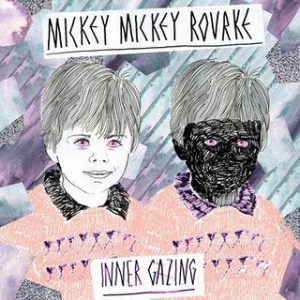
Album Review: Mickey Mickey Rourke – Inner Gazing

I made two mistakes when I first set ears on Mickey Mickey Rourke‘s Inner Gazing.  Number one: I judged a band by its name.  And number two: I listened to the album at work.  Miller Rodriguez’s deceiving moniker evokes the thought of action-packed songs and loud, upbeat headbangers.  But instead, my ears were filled with meditative sound-art that soothed me into a hypnotic coma.  Euphoric lethargy ensued.  Levels of productivity promptly declined. 

Inner Gazing, however, is appropriately named.  You can’t help closing your eyes and sinking into seclusion.  Yet during this self-meditation, you might find yourself somewhere else.  It’s inner gazing for an out of body experience.  The album begins with the airy “Candy Cults” (featuring Top Girls)–a perfect introduction to the spiritual journey that lies ahead.  It starts you off in a natural setting (could be the chirping birds) and slowly eases you into meditation, inducing a sense of purity and tranquillity.  “Doozie,” explores a bit more as an etheral waterfall of notes pours over darker echoing sounds in the distance.  “Glitter Blood” (featuring Raw Moans) is possibly the most “spiritual” track on the album.  It’s very slow and gradual with subdued and serene voices blurring together with the other sounds.  Listening to this song is like seeing something for the first time and being strangely amazed by its beauty.

“Gloomy Guts” (featuring Craft Spells) is the one song that stands out as an actual song.  There are real lyrics, a good beat and melody, and the same sense of mellow self-reflection.  For the rest of the album you can expect various forms of audio-inspired meditation–sounds of underwater floating in “Koopa” and carefree, voiceless floating in, well, “Voiceless and Floating.”

Inner Gazing is meant to be listened to in isolation and with closed eyes.  It’s 49 refreshing minutes of tranquil meditation.  And it’s completely free to anyone who wants it.  So visit Mickey Mickey Rourke’s bandcamp site to download your very own, and sit back, relax, and watch the soothing soundscapes.

Album Review: Les Savy Fav – Root for Ruin

After nearly 15 years of bona fide rock and various on-stage debauchery, Les Savy Fav are still together and making loud and jaunty music for sweaty crowds to jam out to. For their fifth studio album, Root for Ruin (Frenchkiss Records), the Brooklyn band has returned three years after the release of their last album with as much energy and animation that you might expect from their first. For a band that has been together longer than some of their fans have been breathing, that is something to be proud of. And from their repetitive chanting of ‘we’ve still got our appetite’ in the album’s opener, “Appetite,” I think it’s safe to say that they are.

For their last album, Let’s Stay Friends, Les Savy Fav expanded their musical sound by including other artists and even vocals from fans.  But for Root for Ruin, it seems they played it safe and kept it within the Fav group.  And while one would think this contrast might result in a less exciting and heard-before sound, one would be wrong. The band’s evident-as-ever raw energy and excitement will explode from your speakers/headphones. Most tracks on the album are what you would expect from Les Savy Fav–in-your-face, edgy rockers. Tracks like opener “Appetites” or the guitar-frenzied “Dirty Knails” burst with the energy of their live show. The only thing missing is Tim Harrington–in front of you and dressed like a yeti, making out with a stranger.

But there are a few subdued tracks, like the graceful, grooveful “Sleepless in Silverlake,” that provide a fitting contrast to the usual sweat-fueled jams. One thing, however, remains the same throughout the entire album: it is upfront and direct the whole way through. “Let’s Get Out of Here” isn’t structurally or lyrically complex, but it gets the point across, and it’s catchy. The simple “I want you yo want me now” is overly cliché, but, among the rest of the lyrics, fitting and refreshingly straight forward. In “Excess Energies” Harrington is a 17-year-old loser reflecting on his possibly worthless life and in “Lips ‘n Stuff” Harrington wants a friend with benefits (and who doesn’t?).

It’s no secret. Les Savy Fav has never been fancy or stylistic. They don’t dress up their music (only Tim Harrington’s body) and they don’t confuse you with lyrics. They are real with you. And Root for Ruin is the real deal.