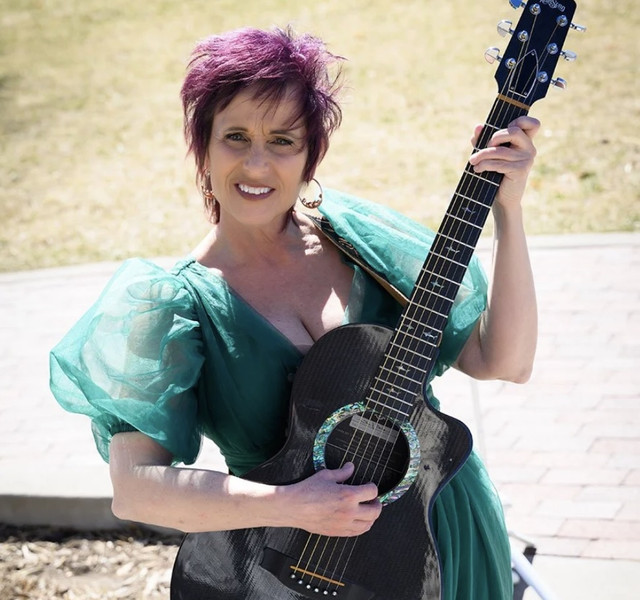
Canadian singer-songwriter Shiloh Lindsey shares “Failing Hail,” a tender, bittersweet, and quietly hopeful alt-country ballad drawn from one of the most personal moments on her forthcoming album, The Western Veil, set for release on November 6th, 2026. Blending the warmth of Canadiana, indie folk intimacy, and roots rock restraint, the single transforms a late-night message between siblings into a moving meditation on resilience, compassion, and the ways we carry one another through life’s darkest seasons.
The song began not with a guitar, but with a text message. While Shiloh was recovering from the devastating motorcycle accident that nearly claimed her leg, her oldest brother found himself awake at two in the morning wrestling with demons of his own. Hoping, as he later told her, to “fool them with some nicer thoughts,” he wrote a poem and sent it to his younger sister.
Deeply moved by his words, Shiloh eventually transformed the poem into a song. “It became about the quiet ways we carry one another through difficult times,” she explains, “Sometimes hope comes from someone else when you’re having trouble finding it yourself.”
Its title comes directly from one of the poem’s most striking images: The bad times will fail like melting hail. The metaphor immediately resonated with Shiloh, who saw something profoundly comforting in the idea that even life’s fiercest storms cannot last forever. “Hail can arrive violently and suddenly and feel overwhelming while you’re caught in it,” she says. “But it can’t sustain itself – it melts.”
That perspective makes “Failing Hail” unlike any other song in her catalogue. While much of Shiloh’s songwriting emerges from her own lived experience, this track began through someone else’s eyes. “I wanted to preserve the spirit and much of the language of what my brother originally sent me,” she explains. “It’s someone who loves me looking in from the outside and saying, ‘I see what you’re going through, and I believe you’re going to make it through.’”
The recording itself arrived just as unexpectedly. Originally absent from the sessions for The Western Veil, “Failing Hail” entered the picture after the band found themselves with unexpected studio time. Producer Jesse Waldman asked whether Shiloh had another song worth trying. The musicians had never rehearsed it together. Hearing the song for the very first time, they recorded only a handful of takes before discovering what would become the final performance.
“There was something really special about not having the chance to overthink it,” Shiloh recalls. “Everyone was simply listening to each other and responding to the song in the moment.” That spontaneity became central to the production. Rather than polishing away the imperfections, the band embraced the loose, organic performance, allowing warmth and emotional honesty to guide every decision. The understated arrangement leaves space for the lyrics to breathe, balancing melancholy with quiet optimism rather than dramatic catharsis.
David Diaz’s “Are We Gonna Talk?” began with a question that came from a very real place. After a friendship broke down and an attempt to ask for emotional support was met with silence, David found himself reflecting on a pattern of giving too much of himself to people who did not always give the same in return. Rather than leaving that frustration where it was, he turned it into a song, transforming hurt, anger and a few uncomfortable truths into something both personal and instantly relatable.
The video, however, takes that emotional story somewhere considerably more unexpected. Initially reluctant to make a video at all, David was persuaded by his friends and co-directors Abiesel “Abi” Baez and Kahlil Antonio to turn the song into an ’80s slasher movie, with David himself becoming the rather unlikely “Callback Killer.”
Shot over three days with a large cast and crew, the production became as much about collaboration and having fun as it was about telling the story. David describes the experience as feeling more like a camp getaway than a conventional music video shoot, with everyone from the directors and actors to the production and design teams contributing to the final result. Here, he talks about the personal experiences behind “Are We Gonna Talk?”, the unlikely inspiration for its horror-themed video, and why sometimes the best way to deal with being ignored is to become the killer everyone remembers.
Tell us the story of this song. Why did you choose to visualize the song specifically in this way?
“Are We Gonna Talk?” came from a falling out I had with a close friend of mine. Essentially, I came to understand that I was putting a lot more into the friendship than he was, and it wasn’t the first time that happened.
What initially brought everything on was that I was in a place where I needed something, and that one particular thing was just support. When I asked him for emotional support, it felt like it was too much or like I was an inconvenience to him, because when I asked him, he never answered me. Eventually, I found out he was prioritizing other things he thought were more important, and I felt like I wasn’t being prioritized.
In our relationship, I had given him a lot. I didn’t necessarily put everything on hold, but I did a lot for him and sacrificed a lot for him, and it just felt like he didn’t care about me at all. So I tried to reach out—nothing: no answer, no response, no conversation or explanation. I was completely in the dark.
At some point, I messaged him, “Are we gonna talk at all?” Still nothing. So I went home and made a song out of that line.
I felt like a complete idiot for putting myself in a position to be treated like that. It had happened to me a lot in the past because I was a people pleaser. I wanted people to like me, and I would do anything to try to keep them around, even if it hurt me. This was happening during a transitional period when I was starting to undo a lot of damage and unlearn things that didn’t benefit other people or me. So I got angry and made it into a song.
For the cover art and the general promotion, I knew I wanted it to be something along the lines of phones and people not getting a callback, and I wanted to be a little bit on the nose with it. Initially, it was going to be more modern—flip phones, smartphones, texting, whatever—but I was like, “That’s so boring.”
I want to say what I want to say, but I want to find a fun way to say it. If it’s going to be out there forever and people are going to hear this message, I think it’s more fun and more palatable for me, and hopefully for other people too, if it’s something familiar presented in a unique package. So, whenever you come back to it, see it or listen to it, you’re like, “Yeah, there’s that message that I know,” but you’re seeing it through this really unique, different lens of an ’80s world.
I really enjoy world-building, lore, and things like that, so that was really fun. My favorite color is blue, so I wanted to incorporate that into things too and put myself into the world.
It’s sort of a meta version of myself. It’s still David Diaz, the artist and the person, but more like a blank canvas so he can be whatever he needs to be for a particular song or situation. So yeah, it’s kind of me, but it’s also not at the same time. I had a lot of fun with it.
What was the inspiration behind this video? (visual, storyline, etc.)
I can’t take too much credit for the inspiration behind the video, because, initially, I didn’t even want to do a video for this song.
I usually find music videos to be very daunting and stressful. Even with shoots that I’ve really enjoyed in the past, they were still stressful for me because there’s so much involved and usually a very large crew. Mind you, these are amazing people who are so much more talented than I should be working with and have incredible vision and skill. It’s just such a different world for me. I appreciate it because I love films and movies, but these people actually know what they’re doing.
My friends and co-directors Abiesel “Abi” Baez and Kahlil Antonio came to me and asked, “If you were to do a music video for this song, what would you want to do?” And I was basically like, “I don’t really know.”
Then they said, “Okay, listen. Hear us out. What would you think about an ’80s slasher horror?”
And I was like, “Are you out of your f**king mind?” They know I hate scary movies. I can’t do anything involving supernatural horror because I will 100% get nightmares (I’m a lucid dreamer, so it makes them even a thousand times worse).
They were like, “Just think about it,” and I did. And I was basically like, “Yeah, no. Let’s do something else.”
Then, I think they showed me something, or showed me a plan with shots and different ideas, and somehow they managed to sell me on it, and I went through with it.
I remember one thing in particular. They were like, “Imagine this will technically be a sort of therapy for you.”
And I was like, “Uh, what do you mean?”
They said, “Instead of you being scared of anyone, you’ll be the one that’s scary.” And I was like, “You know what? I didn’t think about it like that. That’s actually funny.”
I’m so glad I listened to them because these guys absolutely know what they’re doing. They were incredible, and they came up with a lot of the story. I gave them the general direction I wanted and the inspiration behind some of the more specific parts of the story that inspired the song.
Even though the song was inspired by that one particular situation I mentioned, it’s happened to me multiple times with different people. So it’s really a collection of all of these different experiences. That’s why there are the friends who die and me as the killer – it’s the dramatization of the consequences of the actions of those particular people.
Visually, I really wanted to stick to the ’80s, and our entire production team did an amazing job. They were so much fun to be around and so much fun to watch and work with. I can’t wait to show everyone the behind-the-scenes footage, because what that place looked like before is absolutely not what it looked like during the shoot.
Abi and Kahlil came up with the rest of the sequence, the shot order, and everything along those lines. They would flesh everything out and run it by me. 99% of the time, I would approve everything on the first go because I really admire and respect their creativity and vision. I entertain it and run with it because I’ve learned to trust them and their process, and they’ve done the same with me.
They really understand me as a person, my art, and how I communicate artistically. I feel like we make a really good team, and I love working with them, even when it’s on fun little side projects that nobody might ever see, something you might see in the future, or things we’ve done in the past that I’m really happy we did.
I think this is the best thing we’ve done together, and I plan to work with them more in the future, whether it’s a music video or one of their projects, because they’re so much fun to be around and work with, and they’re awesome people overall.
The same goes for the crew and everyone they brought on and worked with on these projects. There’s a whole list of people who did amazing work on set during the video shoot, and I wish I could mention every single one of them by name here (which I will in the video credits, for sure). Abi and Kahlil were definitely the driving forces behind the storyline and the characters. Visually, I came in with ideas that the art and production design team, captained by the talented Ross Widener, brought to life so, so beautifully. Just wait until you see my blue scrapbook they made for the video; it’s hilarious.
What was the process of making this video?
The process of making the video was absolutely so much fun.
As I said before, we had already done multiple videos together, and I had done other videos before meeting them as well. The song itself had been finished for a long time, so by the time we started seriously talking about doing a video – and after they convinced me—we started booking everything far in advance.
Everything you see in the music video, including the location, was locked in about a year in advance. We had everything planned out to the day. We were ready.
They, along with my manager, Amanda Do Nascimento, got everyone on the crew on board, organized the schedule and logistics, and when we got there, it was a three-day shoot. Because we booked the location for multiple days, those of us who chose to stay could room there for the duration of the shoot, which was really cool. They were actual cabins that you could live in.
I really wanted to make sure that while we were shooting the video, everybody had a good time and that it was low-stress. I wanted it to feel more like a camp getaway than a job.
I was constantly taking people’s temperatures and asking how everybody was doing, if people were enjoying themselves, or if anybody was stressed out. Everyone kept saying they were having a really fun time, which I was relieved to hear.
Some people were coming off other shoots and really noteworthy projects, and working on some amazing things. They were tired or spent, and even though they still decided to come work on this, they were having a blast because the environment on set was very laid-back. That was really, really nice to hear, especially since I was internally freaking out because I felt responsible for everyone and everything. After all, my name was on it.
More than anything, I wanted everybody to feel comfortable and have a good time. I know this is a visual extension of my song, but I don’t have to make a music video. I’m doing it because it’s fun. After all, I love the art form and the medium, and I love the vision everyone brought to it.
Even though I’m responsible for the music, the song, and the basis of where the video came from, everything else is because of this crew, Abi, Kahlil, my manager, and every single person involved – from catering, to the production assistants, to people who came to visit, people running to get food or coffee, somebody getting me water, wardrobe, costuming, makeup—everyone. Everybody did such an incredible job, and I had such a blast. I’m so glad I got to meet everyone who was there. They all deserve so much credit.
The killing scenes were absolutely hilarious. Honestly, it wasn’t just those scenes—any time we were shooting, we would forget we were filming a music video because it started to feel like we were making an actual film. You’ll really see that more in the behind-the-scenes footage. These actors are screaming their heads off and acting their faces off. They did such an amazing job. If you muted the song and just listened to what was happening on set, it could have been a movie.
I absolutely want to highlight the actors because they were incredible and some of the most talented people I’ve worked with in my life. They brought so much life to these characters without having much to work with. Our main four are Carolina Lopez, who plays Gina, Jacob Stutchman, who plays Scooter, Marlene Zapien, who plays Wilma, and Sebastian Ortega, who plays Fernando, and then Joslyn Guzman and Christina Castillo play the other two characters, Daniela and Ellen, who get killed at the beginning of the video.
They all did an incredible job. They had to adapt and work through things with us at the last minute because we sometimes needed to change things around, and they were amazing. They also had fun with it, which was great, and they made really cool and funny choices that I’ll remember forever and always come back to the video to rewatch.
I also really want to highlight our director of photography, Carlos Irazabal. He did such an incredible job with these shots. I could not have asked for anything better visually. I don’t know anything about cameras, but Carlos absolutely knows what he’s doing, and he is so good and so talented. He’s also such a real person, and I could say the same about everybody else on the crew. Abi and Kahlil did such an incredible job directing everything together, and Carlos captured it all so beautifully. He really managed to let the characters shine and let the actors’ talents and interpretations come through. They took direction so well, and everyone did such an outstanding job.
I know this answer is already long (sorry), but everyone involved made this production what it was, and I couldn’t be more pleased with how it turned out. I feel so lucky to have been part of this production because of the people I got to work with. No artist can do something like this all alone. It takes a village, and everyone involved knocked it out of the park.
I’ll always remember the shoot fondly. At the end of every day, we would chill out, drink, eat, talk, be loud, and have a great time. Some of my favorite parts were sitting out in the grass or on the porch, stargazing, talking about life, hearing about projects everybody was working on and their passions, and just having a blast.
I hadn’t met some of these people before, so it was really cool to get to know them. It genuinely felt like a getaway—like camp, but no one gets murdered by the Callback Killer.
I felt like a kid again, if I were alive in the ‘80s, haha. It was the best.
There are some heartbreaks that linger long after the person who caused them has disappeared. For award-winning Americana/Folk-Pop singer-songwriter Randie O’Neil, that feeling became the inspiration behind her latest release, “Ghost of Me”, a haunting song about loss, loneliness and finding your way back to the part of yourself that can feel lost when someone walks away. Released today alongside its atmospheric new music video, the track finds Randie exploring the darker side of emotional abandonment while still holding on to the resilience that has become such a defining part of her songwriting.
The video was filmed at dusk in New Hope, Pennsylvania, a town with its own reputation for ghost stories, making it the perfect setting for a song about being haunted by someone who is no longer there. Walking through the fading light and shadows, Randie captures the searching quality of the song, while the visual echoes the emotional journey at its heart.
Randie has never been afraid to explore the experiences that shape us. Here, she talks about the personal story behind “Ghost of Me”, creating the video without her usual team, filming at dusk in one of Pennsylvania’s most atmospheric towns, and turning an experience of rejection and hurt into something hauntingly beautiful.
Tell us the story of this track. Why did you choose to visualise it specifically in this way?
I was literally ghosted on my birthday. I felt so empty and lost. You think you found someone, take that chance and they just can’t give it back.
What was the inspiration behind this new video (visuals, storyline, etc.)?
I just wanted it to be haunting, searching so we waited until dusk in New Hope PA (a truly haunted town).
What was the process of making the video?
I didn’t have my usual team so I took a chance and they were great. Two videos in one day. This was the end of the day dusk shot. Tried to emote as I walked. “Shadows know your name” is an angry line that he will get what’s coming.
Singer-songwriter Dan Pallotta shares Children and Ghosts, an intimate new folk/Americana album that offers a contemplative reprieve from the noise and chaos of everyday life. Across nine songs and just 25 minutes, Pallotta meditates on coming and going, existence and absence, memory and impermanence, creating what he describes as “one cozy lullaby made of nine ideas.”
Recorded entirely on an iPhone in his bedroom over two days, Children and Ghosts is deliberately simple in both sound and presentation. Pallotta sat in the same chair, with the same guitar and the same mood, capturing the songs with as little distance as possible between the moment of performance and the listener. All of the songs were played on a 1930s mahogany Martin 2-17 parlor guitar, and the album was purposely mixed in mono to enhance the simplicity, with the reverb mixed in stereo to give it a touch of modernity.
“I’d wanted to make something like this for several years – a simple little record with a simple sound, inspired by old Hank Williams recordings,” Pallotta says. “I made this to be listened to in a quiet space. It’s best on headphones, and most affecting when listened to start to finish.”
At the heart of the record is “Abandoned Mansion,” a quiet meditation on the lives that once occupied the spaces we now pass without a second thought. Beginning with the familiar experience of driving past an old house and wondering who once lived there, the song imagines a forgotten estate that was once alive with wealth, parties, ambition, laughter, love, and dreams before gradually falling silent.
That sense of transience runs throughout Children and Ghosts. With two exceptions, its songs were written over several months last year, but they share a singular atmosphere, contemplating the traces people leave behind and the strange space between presence and absence. Rather than approaching those ideas with grand arrangements, Pallotta strips them down to their essentials: a voice, an acoustic guitar, a room, and the questions that remain when everything else grows quiet.
“Abandoned Mansion” brings those questions into particularly sharp focus. Who once filled those forgotten rooms with laughter? Who fell in love there? Who imagined a future from inside those walls? By constructing a life around a place now defined by its emptiness, Pallotta turns the abandoned home into a reflection on mortality and memory.
“It’s a reminder that, in the end, every life leaves behind stories,” he says. “The question is whether someone will still be listening.”
Continuing the cosmic journey first launched with WE ARE ONE and expanded on WE WILL FREE YOU FROM YOUR BODY TONIGHT, RUMBLEFRENZ return with their third release, WE EXIST IN THE REALM OF INFINITE POSSIBILITIES. Led by the exhilarating focus track “HIT THE ROAD,” the album finds the band leaning further into guitar-driven alternative rock while retaining the adventurous spirit, infectious hooks, and boundless creativity that have defined the project from the beginning. Across its runtime, the record becomes both a celebration of possibility and an invitation to make your own luck.
While previous releases embraced sprawling collaborations and synth-heavy experimentation, WE EXIST IN THE REALM OF INFINITE POSSIBILITIES offers a tighter, more focused experience. Written largely during the band’s annual winter songwriting sessions, the album transforms the isolation of cold December days into something vibrant and uplifting, collecting spontaneous riffs, melodies, and ideas into songs that encourage listeners to take chances, follow their instincts, and create the life they want.
“We wanted to make another fun record that represented where we were at the moment,” Rumble explains. “When it came time to curate the tracks for this album, it was clear that the prevailing theme of the album is to do your thing, shoot your shot, and to make your own luck and opportunities.”
That philosophy finds its purest expression in “HIT THE ROAD,” an energetic anthem inspired by countless late-summer evenings spent cruising aimlessly through small towns with the windows down and the radio turned all the way up. Capturing the excitement of creating your own adventure when there isn’t much else to do, the song taps into a feeling that transcends nostalgia, celebrating the freedom that comes from saying yes before you know exactly where you’re headed.
“Every single evening as a youth, we spent driving around with the windows down, blasting the radio and getting especially excited when one of our favourite songs came on,” Rumble recalls. “We wanted to capture the feeling of boredom and looking for something to do in a small town. Having to make your own adventure, going out, hitting the road for an evening drive with the windows down and the music blasting. Make the night yours!”
Built around explosive guitars, singalong hooks, handclaps, dynamic breakdowns, and moments designed for audiences to scream back every word, “HIT THE ROAD” perfectly embodies the spirit of the album. Beneath its carefree exterior, however, lies a message that quietly runs throughout the entire record: if there’s something you want, chase it. Whether it’s love, friendship, creativity, or simply the next adventure, nothing happens until you decide to move.
That same balance of immediacy and intention shaped the recording process. The band intentionally embraced a 1997-inspired alternative rock aesthetic, drawing from the records that defined their youth while allowing each song to evolve naturally. Longtime collaborator Gregory Harrison returned to mix and master the album, while bassist Michael Small (Meligrove Band, Rich Aucoin, Loviet, Kellie Loder) was encouraged to improvise his parts with fresh ears, resulting in spontaneous moments that quickly became some of the album’s highlights.
Together, WE EXIST IN THE REALM OF INFINITE POSSIBILITIES and “HIT THE ROAD” represent RUMBLEFRENZ at their most confident. Guitar-forward, endlessly catchy, and powered by an infectious sense of optimism, both the album and its centrepiece encourage listeners to embrace uncertainty, chase possibility, and remember that every great adventure begins by simply deciding to go.
RUMBLEFRENZ is the creative project of Rumble, best known as the drummer of the viral Transformers tribute band Cybertronic Spree. Conceived as an outlet for fearless experimentation alongside a rotating cast of close collaborators, the project has evolved into an annual tradition of ambitious concept-driven releases that blend infectious songwriting with an anything-goes creative philosophy.
After introducing listeners to their dance-rock universe on WE ARE ONE and expanding it through the genre-hopping adventure of WE WILL FREE YOU FROM YOUR BODY TONIGHT, RUMBLEFRENZ now turn toward a more guitar-centric alternative rock sound without sacrificing the playful curiosity that defines the band’s identity. Joined by longtime collaborators Shaun Hatton and Michael Small, with additional contributions from Chad Thompson (BANDEAU, Johnny Headband), the group continues building a catalogue that rewards repeat listens through interconnected songs, hidden callbacks, and a spirit of limitless musical exploration.
With WE EXIST IN THE REALM OF INFINITE POSSIBILITIES, RUMBLEFRENZ continue their mission of making music that both rocks and slaps. Joyfully nostalgic yet relentlessly forward-looking, the album reminds listeners that the future belongs to those willing to chase it. Sometimes the most meaningful journeys begin with nothing more than rolling down the windows and hitting the road.
Continuing her unfolding musical journey, Scarlett Macfarlane returns with “Where There’s Smoke, There’s Fire,” a dark, smoky pop-rock single that transforms betrayal into resilience. Equal parts cinematic and cathartic, the track channels the slow burn of heartbreak into a powerful story of intuition, self-trust, and ultimately reclaiming one’s own strength. Blending singer-songwriter storytelling with brooding pop production and subtle Americana influences, the song reframes the familiar “woman scorned” narrative into something unexpectedly empowering.
Inspired by a close friend’s difficult breakup, the song grew from Scarlett’s long-standing fascination with the phrase “where there’s smoke, there’s fire.” While none of the events are strictly autobiographical, witnessing someone question their instincts sparked a vivid story about the quiet power of women’s intuition. Interestingly, the song evolved from an earlier composition that explored similar emotional territory before ultimately giving way to something stronger.
“I had another song called ‘I Don’t Wish You Well’ that came first, but this one became its successor,” Scarlett explains. “I don’t think this song would be as good as it is if I hadn’t written that one first.”
While the title draws from a familiar expression about trusting your instincts, Scarlett uses it as the foundation for a more nuanced emotional journey. One of the song’s most distinctive storytelling devices arrives through its shifting perspective. It begins in the first person, immersing listeners in the protagonist’s immediate pain, before a pivotal moment of realization in the bridge allows her to step back from the experience. By the final chorus, the narrative shifts into the third person, reflecting a newfound emotional distance and the clarity that comes from finally trusting herself.
That transformation also reshapes the meaning of the song’s central metaphor. Fire initially represents secrets exposed and relationships consumed by dishonesty, but by the closing moments it becomes something entirely different: the quiet strength that has existed within the protagonist all along.
Sonically, Scarlett set out to create a world unlike anything in her catalogue. Drawing inspiration from the outlaw spirit of Johnny Cash and the cinematic atmosphere of Lana Del Rey, she and Grammy–winning producer Scott Jacoby infused the track with subtle Americana textures while maintaining its pop-rock foundation. A defining element comes from guitarist and bassist Eli Menenez, whose evocative Southwestern guitar work gives the song its dusty, smoldering character, particularly during its soaring final chorus.
Capturing the right vocal performance required equal dedication. Scarlett envisioned a lower, raspier delivery that felt lived-in and emotionally weathered, but because the song sits at the very bottom of her vocal register, that quality proved surprisingly elusive. After an initial recording session felt too polished, she returned for a second attempt with an unusual plan.
“I made a point not to warm up or speak at all after waking up so that my voice would be as low and raspy as possible,” she reveals.
“Where There’s Smoke, There’s Fire” stands confidently on its own while also marking the 10th chapter in Scarlett’s forthcoming 15-song body of work. As the project has taken shape, she has discovered an unexpected thread running through the collection: songs rooted in resilience, inner fortitude, and the quiet strength that emerges after life’s most difficult moments.






You must be logged in to post a comment.