Furthering his lifelong exploration of music as a source of healing, reflection, and connection, Montreal-born/Gabriola Island-based composer, vocalist, and meditation leader Mark Fenster shares Serenity Sessions, Vol. 2, a peaceful collection of collaborative works created to reconnect listeners with the beauty, love, and harmony within themselves. Arriving alongside lead single “Cascades, part two: Wistful Promenade,” the album blends new age, meditation, and healing music into an immersive space for stillness and contemplation.
An extension of Serenity Sessions, Vol. 1, the new album retains its predecessor’s intention while opening the creative process to a wider circle of collaborators. Where the first volume was largely a solo undertaking, Vol. 2 finds Fenster creating alongside co-composers and musicians he deeply admires, allowing each contribution to introduce another voice into the project’s shared pursuit of peacefulness.
“Both albums guide the listener to the musical and harmonious gifts that they can enjoy, feel and even share in their own hearts,” Fenster explains. “The essential difference between the two albums is that volume one was essentially a solo effort, and volume two is more of a series of collaborative works with co-composers whom I adore, respect and am grateful to be creating alongside.”
Recorded amid the quiet natural beauty of Gabriola Island, BC, Serenity Sessions Vol. 2 reflects the environment in which it was created. Throughout the album, Fenster uses music as a reminder that beauty and harmony remain accessible even amid the noise and uncertainty of everyday life.
That philosophy flows directly into “Cascades, part two: Wistful Promenade,” the album’s lead single and the second movement in a three-part composition inspired by the changing character of flowing water. Following “Cascades, part one: Glacial Riverflow,” the piece slows the current, imagining the moment when rushing glacial waters settle into a gentle, meandering stream before ultimately reaching the final movement, “Spirit Falls.”
For Fenster, the composition translates that transformation into sound. If “Glacial Riverflow” captures water in lively motion, “Wistful Promenade” represents its quieter passage: graceful, deliberate, and steadily moving toward the eventual release of a waterfall.
Musically, “Cascades, part two: Wistful Promenade” mirrors that natural flow through emotive chord changes and intuitive interplay between guitar and cello. Rather than rigidly scripting each movement, Fenster and collaborator Corbin Keep allowed improvisation to guide the performance, translating their individual impressions of the landscape directly through their instruments.
That spontaneity resulted in an unexpected challenge. The pair’s first live take captured exactly the feeling Fenster had hoped for, but also captured the unmistakable sound of his squeaking chair.
Rather than sacrificing the emotional immediacy of the performance, Fenster preserved Corbin’s original cello take and re-recorded his own guitar part, carefully recreating the feeling of that first performance while leaving the unwanted noise behind. “Magic retained, noise released!” he says. “It’s still beautiful and full of all the love we put into that first take.”
The result embodies the broader spirit of Serenity Sessions, Vol. 2: musicians listening, responding, and creating together without losing sight of the emotional intention at the heart of the music. Across the project, collaboration becomes another expression of Fenster’s guiding philosophy that even within apparent chaos, there is enduring access to beauty, peace, and harmony.
“My wish for everyone listening is that you too feel and share this love, joy, and peaceful inspiration in your beautiful world,” Fenster shares. “Namaste.”
princefarming, the solo project of singer, guitarist, and songwriter Michael Wynn (Vicky von Vicky, Melted Wings), shares Bleeding Star, a three-track EP that reaches more than 15 years into the past to revisit a formative chapter of his songwriting. Bringing together newly remixed and remastered versions of two early favourites alongside a previously unreleased title track written during the same period, the EP gives Wynn an opportunity to reconsider songs he once overlooked and finally put them into the world on his own terms.
“For a long time, I didn’t think anything of these songs,” Wynn admits. “It was only recently that I started listening again. I don’t think they are my best work, but I do think they have promise, and I thought they should be ‘out there.’”
Arriving alongside the EP is lead single “You Win The Trophy,” a driving, off-kilter alternative track that turns its attention toward the mythology of Hollywood success. Written from the perspective of someone watching another person pursue dreams of becoming an actor or musician in Los Angeles, the song gradually reveals a darker undercurrent, as ambition gives way to the possibility of excess, addiction, disappointment, and eventual burnout.
Rather than being built around one overarching narrative, Bleeding Star offers a snapshot of the recurring ideas that have long fascinated Wynn as a songwriter. “Signals” takes the form of a breakup song, the previously unreleased “Bleeding Star” looks outward toward existential questions and humanity’s place in the universe, while “You Win The Trophy” represents his tendency to find songs in quirky, unexpected subjects.
Originally recorded at home using GarageBand, the songs retain the exploratory DIY spirit of their beginnings. Wynn revisited the recordings with additional vocal and guitar parts before enlisting Nixon Boyd to remix the material, allowing the songs to retain the character of their original performances while giving them renewed depth and clarity.
That process reflects Wynn’s broader approach to songwriting. Rather than forcing himself into a routine, ideas tend to simply “show up,” often beginning as fragments captured in voice memos. His subject matter can be similarly spontaneous, drawn toward odd occurrences, everyday observations, or stream-of-consciousness ideas that might otherwise go unnoticed.
On “You Win The Trophy,” that instinct becomes a cautionary story about the pursuit of success. While the song initially follows someone dreaming of making it in Los Angeles, its perspective comes from someone watching that dream begin to unravel. The narrator never entirely condemns the ambition at its centre; instead, Wynn leaves room for the idea that seemingly impossible dreams are still worth having, provided they do not consume the person pursuing them.
Musically, Wynn underscores that tension through driving single-note guitar lines and dissonant rhythm chords, drawing inspiration from the taut, angular guitar language of bands like Interpol. The alternative and indie framework gives the track forward momentum even as its lyrics complicate the ostensibly uplifting promise contained in its title.
Toronto singer-songwriter and filmmaker David Jane shares his new EP, Ambleside, an alternative collection born from the disorienting aftermath of a transformative year spent studying film in Vancouver. Rooted in longing, memory, and the strange ways the past continues to exist within the present, the five-track project finds David pairing his raw, acoustic songwriting with producer Sam Arion’s expansive ambient soundscapes to capture the feeling of desperately wanting to return to a time and place that can never truly be recreated.
The seeds of Ambleside were planted during the late stages of COVID, when David, creatively paralyzed after releasing his debut EP, turned back to his first love of film in search of new inspiration. A year at Vancouver Film School quickly became everything he had been craving: an intensely creative community, new friendships, adventure, parties, love, and a sense that everyday life had temporarily suspended itself. Returning home was a shock.
“It felt like all of us were existing in this miracle lapse, as if the rest of the world was on hold,” David recalls. “But, as all things do, our year eventually came to an end, and the sucker punch of returning to reality was a lot to process, which finally led me back to my passion for music.”
The EP’s focus and title track, “Ambleside,” brings that longing back to a specific place: Ambleside Beach in North Vancouver. Away from the spontaneity and bustle David associated with places like Kitsilano and English Bay, Ambleside became a quiet respite as his year in Vancouver approached its end – somewhere the rush of the city seemed to disappear and time itself became strangely elastic.
Across Ambleside, David processes that lost chapter from different angles. “Garden Out Back” pleads for the reincarnation of a lost love; “Concussion” romanticizes a fading past as its final moments seem to slip away; “Five and Dime” turns toward film, music, and art as an escape from an unfamiliar reality; and “Story of a Night” considers what happens when the present begins to exist entirely in the shadow of what came before. The title track ultimately brings those ideas together in one emphatic refusal to let the past disappear.
Writing the EP also reshaped David’s understanding of time itself. Inspired in part by T.S. Eliot’s “Burnt Norton,” he began to question the idea that time moves neatly forward, instead viewing the past, present, and future as experiences that continue to exist within us simultaneously.
“There’s a beauty but also a longing in this perception, as you can never fully let go of that time within you,” he says. “The goal and idea was that, by processing this lost time through art and music, perhaps there was a way to recapture it. I’m still unsure whether or not I succeeded.”
On “Ambleside,” that philosophy becomes both place and feeling. David remembers the beach as somewhere he could sit after a busy day, watch the sun disappear over the water, and briefly feel removed from everything around him. Hours could pass almost unnoticed, followed by a hazy return to the city and an inexplicable desire to go back.
Produced by Sam Arion, the title track places David’s rustic, folk-influenced songwriting inside an ethereal world of dreamlike synths, ambience, and the sound of actual waves. Built around only four persistent chords across its nearly five-minute runtime, the song uses melodic push and pull to create a tranquil, almost meditative headspace while gradually deepening its sense of yearning.
After 16 years, more than a thousand live performances, and a reputation as Canada’s ultimate party band, Dwayne Gretzky is bringing the spirit of their celebrated live show to listeners everywhere. Dwayne’s World Vol. 1 collects 20 standout performances from the band’s wildly popular Dwayne’s WorldYouTube series into their first-ever live covers album, available digitally September 15 and on limited-edition vinyl September 18.
Recorded completely live off the floor inside a painstakingly recreated Wayne’s World-inspired basement set, the collection captures everything that has made Dwayne Gretzky a beloved live act: infectious energy, remarkable musicianship and an unmistakable joy for celebrating some of the greatest songs ever written.
Among the collection’s defining moments is the band’s rendition of Queen and David Bowie’s “Under Pressure,” a natural showcase for the scale and chemistry of Dwayne Gretzky’s ensemble. Tackling a song built around the interplay of two unmistakable voices, the band approaches the classic with the same philosophy that guides the entire project: honour what makes the original timeless while allowing the personalities and strengths of their own rotating cast of musicians to shine through.
“Under Pressure” sits comfortably within an album designed to move with the dynamics of a Dwayne Gretzky concert. From the euphoric singalongs of “Radio Ga Ga” and “Take On Me” to the emotional sweep of “The Chain,” the collection jumps effortlessly across decades and genres while continually building momentum.
Since launching Dwayne’s World in July 2025, the series has quietly become one of the band’s biggest success stories. Featuring lovingly recreated performances filmed inside the custom-built set, the videos have attracted more than 100,000 new followers while generating over 2 million streams. Their rendition of Paul Simon’s “You Can Call Me Al” has garnered 1.3 million views and resonated with audiences around the world, helping introduce Dwayne Gretzky to listeners across the United States, Europe and beyond.
Rather than treating the recordings as polished studio productions, the band embraced the spontaneity that has always defined their concerts. Every performance was captured live, with no overdubs, while three cameras rolled simultaneously. Each session consisted of only three takes before selecting the strongest performance, preserving the chemistry that has developed after 16 years of playing together.
“Typically we shoot five songs in a day, working from around noon to 5pm. They’re very fun, albeit hectic shoot days. We definitely move quickly and work efficiently,” DG’s Nick Rose elaborates. “These are live recordings with no overdubs and obviously having three cameras rolling adds to the pressure overall, but it’s a fun challenge and everyone in the band always rises to the occasion.”
That live immediacy runs through all of Dwayne’s World Vol. 1. Mixed by guitarist Ian Docherty, the album balances faithful interpretations of beloved classics with the unmistakable personality of the musicians performing them. The material stretches across rock, pop, soul, new wave, country and beyond, with each selection beginning with genuine affection for the original before being matched with the strengths of the band’s singers and players.
“It’s enjoyable to try new things, mix it up, and continue to push our musical boundaries,” Nick says. “We pride ourselves on our versatility, of being able to cover a wide range of music. It’s just fun to celebrate these great timeless songs together and try to bring them to life to the best of our collective abilities.”
There is something revealing about a song written from the perspective of someone who wants to be understood but cannot quite find the words to explain themselves. It is an emotional contradiction that sits at the heart of Miriam Armonie’s “You Should Know,” a single that explores the uncomfortable territory between attraction and avoidance, vulnerability and self-preservation, and the things we want from other people versus the things we feel equipped to give them.
Emerging from New York’s creative scene, Armonie is building a musical identity around atmosphere, and a willingness to let different influences inform her songwriting. Her latest single draws on personal experience, revisiting a relationship in which someone wanted more from her than she felt able to offer.
At the time, she was focused on establishing her career and lacked the emotional maturity and experience to navigate the situation with the sensitivity it deserved. The person in question was someone she cared about deeply, which only made the decision to distance herself more difficult. Rather than risk leading him on, she chose to cut contact altogether, a decision she now recognises could have been handled differently.
That backstory gives “You Should Know” its weight. This is a song shaped by hindsight, by the realisation that protecting yourself from a situation you do not know how to manage can leave another person hurt and unanswered questions lingering long after the moment has passed. There is an important distinction here between not wanting someone and not knowing how to make room for them in your life. Armonie is interested in exploring the possibility that feelings can be genuine even when the person experiencing them is unable to act on them in a healthy or constructive way.
The song also touches on the complicated relationship between avoidance and vulnerability. Sometimes, withdrawing feels easier than explaining yourself, particularly when you are still learning how to articulate your own insecurities. The difficulty is that silence can communicate something very different from what you intended. In looking back at her own behaviour, Armonie allows herself to acknowledge the hurt she may have caused without dismissing the reasons behind her decision. It is an honest, recognisable form of reflection, and one that gives the song more nuance than a straightforward tale of missed romantic opportunity.
Musically, “You Should Know” carries the kind of soft and ambient rock landscape that is shaping Armonie’s forthcoming Blue Hour EP. The project takes its name from that fleeting period between day and night, a space that seems particularly suited to songs concerned with uncertainty, memory and emotional states. Armonie’s interest in combining genres also suggests an artist who sees sound as something to explore rather than a formula to repeat.
That curiosity is central to her approach. While Blue Hour leans towards softer, atmospheric rock, Armonie has already written material that moves into funk, groove, disco and punk. Her musical influences include Sade, Lana Del Rey, Anita Baker, Willow and Olivia Rodrigo, artists whose work demonstrates different ways of balancing a distinctive identity with an appetite for experimentation. Sade, in particular, represents an ideal for Armonie: a performer whose understated vocal delivery can convey enormous feeling without relying on theatrical excess. It is a useful reference point for an artist interested in the subtleties of emotional expression.
Beyond her own releases, Armonie is developing her work as a songwriter and producer with ambitions to create music for other artists. She is also outspoken about the importance of retaining creative control, particularly for women working in an industry where experience and authority can too easily be used to undermine their instincts. That determination to trust her own perspective is reflected in the personal nature of her writing. She is willing to revisit decisions she regrets, examine the less flattering parts of her own behaviour and consider what those experiences have taught her.
With “You Should Know,” Miriam Armonie turns an uncomfortable personal memory into an opportunity for understanding. The song’s tension lies in the gap between feeling something and knowing what to do with it, a space where good intentions can become tangled in fear, uncertainty and the inability to communicate.
As the Blue Hour project continues to take shape ahead of its 2027 release, “You Should Know” offers a compelling introduction to an artist whose songwriting is as interested in the questions we leave unanswered as it is in the emotions we find the courage to express.
Keep up with everything Miriam Armonie on her Website
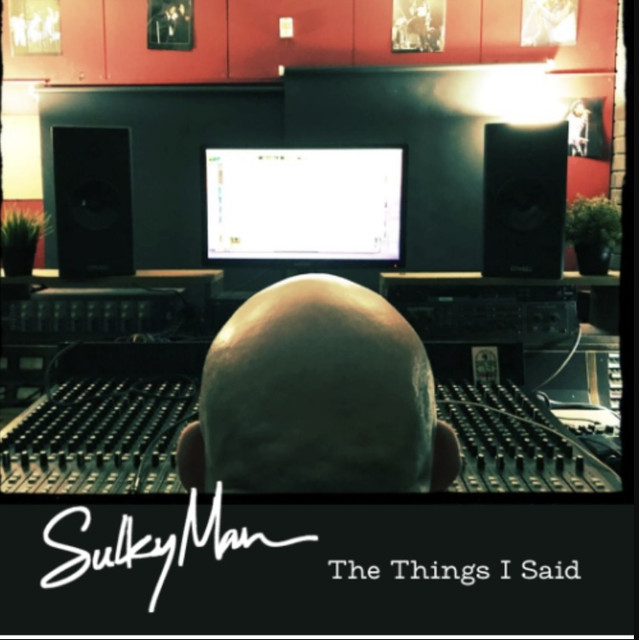
Three decades is a long time for a song to wait to be heard. Somewhere between the hiss of an old four-track recorder and the shifting currents of London’s underground music scene, Chris Pascoe captured a handful of ideas that would eventually slip out of view, leaving four recordings to gather dust while life took him in other directions. Now, as SulkyMan, he has brought them back into the light, and the results are a fascinating glimpse into a period when guitar music could be gloriously wayward, instinctive and unconcerned with staying in its lane.
Recorded around 1995 on a Yamaha MT50 four track analogue recorder, these songs have survived without losing the curious energy that made them worth recording in the first place. There are wiry guitars, restless rhythms, unexpected melodic turns and an appealing roughness that feels inseparable from their character. Rather than sounding like relics retrieved for nostalgia’s sake, the four tracks reveal a songwriter already comfortable following an idea wherever it leads. What emerges is not simply a document of Pascoe’s musical past, but a reminder that some songs can outlive the circumstances in which they were created and still have a few surprises left.
Listen here:
The title track opens the collection with shimmering jangling guitars and a beautifully measured bass part that gives the arrangement warmth and movement. There is a natural swing to the music, an ease in the way the melodic elements find their places, and spaciousness that allows the song to unfold without losing its infectious quality. It has the DNA of classic nineties indie, when guitar bands could be melodic without becoming predictable and atmospheric without disappearing into their own introspection. Yet there is something appealingly timeless about it, too. Had “The Things I Said” emerged during the original heyday of the Britpop era, it would not have sounded out of place. Heard now, it carries the pleasure of discovering a song that has somehow escaped the usual boundaries of its time.
“I Wonder Why” takes a more unsettled route. The guitars have a nervous, slightly careering quality, moving between melodic passages and rougher, more insistent textures. There are shadows of post punk in the atmosphere, with something of Echo & the Bunnymen’s brooding musicality and the ragged charm associated with Nikki Sudden. The bass deserves particular attention here, providing a fluid counterpoint to the guitars and giving the song much of its distinctive character. It is an arrangement that thrives on the interplay between its parts, with tension and melody pulling against one another in a way that keeps the listener engaged.
“Nothing Is Easy” brings a sharper edge to the collection. Its angular guitar work and snarling delivery suggest a song with little patience for easy answers, while unexpected melodic turns lend it a more playful character than the title might imply. There is a hint of the Beatles in the way the melody seems to emerge from within the song’s rougher exterior, a reminder that memorable pop instincts can survive even the most unconventional arrangements. Pascoe seems comfortable allowing these contrasting elements to coexist.
“Never Change” completes the quartet with a nod towards the more restless end of new wave and post-punk. There is a tautness to the song, a sense of unresolved movement that suits the material, while its melodic instincts keep it from becoming overly austere. Across these four recordings, that balance between accessibility and eccentricity becomes one of SulkyMan’s defining qualities. Pascoe understands that a song can be catchy without being obvious, and rough around the edges without sacrificing musical detail.
What makes the collection particularly interesting is the knowledge that these recordings represent an earlier stage in an ongoing creative life. Pascoe has travelled an unusual musical road, from his teenage years playing bass in London anarcho-punk band Part 1 to his later involvement in the underground tech-house scene, before developing SulkyMan into a solo project in which he writes, performs, records and produces his own material. Across those different worlds, he has consistently followed his own instincts rather than settling into one recognisable musical identity.
The songs collected here reveal the foundations of that independence. There is an instinctive understanding of arrangement, a willingness to let contrasting moods sit alongside one another, and a melodic sensibility that prevents the music from becoming an exercise in obscurity. The analogue limitations may have influenced the way these recordings were made, but they have not diminished their character. Instead, the music retains the sense of discovery that comes from an artist working things out for himself, following a line of thought wherever it happens to lead.
There is also something quietly moving about hearing music return after so much time. Thirty years can change the meaning of a song, even when the recording itself remains untouched. Lines written in one period of life inevitably acquire different shades of meaning when heard from another, while the sound of a younger self can become an unexpected conversation between past and present. Pascoe has spoken of his amazement at finding these recordings again, and it is easy to understand the appeal of bringing them into the world after believing they had disappeared from view.
The beauty of “The Things I Said” and its companion tracks is that they do not need their history to justify their existence. The story behind their recovery adds interest, certainly, but the music stands on its own merits. The guitars have character, the bass lines reward attention, and the melodies linger long after the songs have finished. More than anything, there is a sense of artistic freedom running through the collection, the sound of someone making music because the ideas are there and need to be followed.
Plenty of recordings from the nineties survive as nostalgic souvenirs of a particular scene or sound. SulkyMan’s rediscovered material offers something more satisfying. These four songs feel like fragments of an unfinished conversation, recovered from the past and given another chance to be heard. They are reminders that good songwriting does not necessarily come with an expiry date, and that the passage of time can occasionally turn a forgotten recording into a new beginning.
For Chris Pascoe, the past has proved to be a surprisingly fertile place to start again. With “The Things I Said”, SulkyMan brings a long-lost piece of musical history back into circulation, and finds that the songs still have plenty of life left in them.
About SulkyMan
SulkyMan is the solo project of London musician Chris Pascoe, a songwriter and multi-instrumentalist whose musical journey spans the worlds of anarcho-punk, underground electronic music and alternative guitar rock. Beginning his musical life as a teenage bass player in London anarcho-punk band Part 1, Pascoe went on to explore the underground tech house scene before developing SulkyMan as a space for his own songwriting, recording and production.
His music brings together melodic instinct, restless guitar work and a willingness to explore the space between indie rock, post-punk and pop. Unconcerned with genre boundaries, Pascoe follows his ideas wherever they lead, balancing angular arrangements and rough edged textures with memorable melodies.
SulkyMan’s latest release, The Things I Said, brings four recordings made around 1995 on a Yamaha MT50 four-track analogue recorder back into circulation. Rediscovered decades after their original creation, the tracks offer a glimpse into Pascoe’s earlier creative life, preserving the spontaneity and independent spirit of the era while revealing a songwriter whose musical instincts have stood the test of time. Rather than simply revisiting the past, SulkyMan gives these long-lost recordings a new life, allowing their distinctive character to find an audience in the present.




You must be logged in to post a comment.