Sim, the bandleader of Action Forever, grew up in Brantford, Ontario. His obsession with music began at age five and, for the next two decades, his natural talents were fostered by a musical family upbringing and constant exposure to a unique and eclectic mix of influences ranging from 80’s pop, to progressive rock, to jazz and indie.
He’d been working for years on a body of original fringe-pop music for a 4-piece band, now to be released under the name Action Forever. The music, while lively, electric, melodic, and danceable, explores darker themes such as loneliness in a digital age, abusive relationships, loss of identity, and mental health. “Loveless Love,” the latest single from the group, was written by Sim from the POV of a man suffering from online sex addiction and parasocial relations. “Loosely, the song tells the story of a man who is entranced by the world of live online sex, so much so that he gives up who he is: his morals, his dreams, his money, etc. for virtual transactional relationships with performers which he ultimately falls in “love” with” I want the listener to feel the tension of the main character’s struggle – the struggle of addiction.”
In the haunting melodies of Julie Haven’s latest creation, “Between the Lies,” a raw and poignant narrative unfolds. This soul-stirring composition delves into the harrowing depths of domestic abuse and gaslighting, revealing a personal journey of resilience and self-discovery. As the artist herself, Julie lays bare the inspiration behind the song, stemming from a tumultuous relationship that left her mentally battered and questioning her own worth. With unflinching honesty, she shares the transformation from a strong, independent woman to one ensnared in the insidious web of manipulation and self-doubt. Julie’s revelation is not merely confined to her personal struggle but transcends into a universal anthem for those who have faced similar tribulations.
Through the emotional chords of “Between the Lies,” she invites listeners to join her in deciphering the truth hidden behind the facade of falsehoods. With each note, Julie unearths the gradual erosion of confidence and strength, ultimately finding solace in the song’s empowering message to “read between the lies.”
We caught up with Julie Haven below:
Tell us the story of this song, why did you choose to visualize this song specifically in this way?
I wrote this song while living through an emotionally and mentally abusive relationship with an alcoholic narcissist. I was confused as to how someone as independent as me could allow someone to break me down to a level where I didn’t even recognize myself. It was the first time I understood why women stay in abusive relationships. It’s something that happens slowly and you don’t realize what is happening until you’re already deep in it. So when I sat down to write this song I really had to ask myself if I was smart enough and strong enough. One of the things I would hear a lot is that I was stupid. I was actually with a man who was very well educated and came from a lot of money, where I just had a high school diploma and my family didn’t have a lot of money, so he would love to tell me how much smarter and of a higher class he was than me. Eventually I believed I was in fact stupid and trash. However, there must have been a part of me who realized these were lies or the song would not have written itself in such a way. I like to think of it as my higher self stepping in to help me come to this realization.
So with the video, I wanted to share my story. The text messages in the video were almost word for word what I would receive on a regular basis, edited of course, because the language was actually much more offensive than what was shown in the video. I wanted the video to portray my life experience in the most raw way I could think of.
What was the inspiration behind this video (visuals, storyline, etc.)?
The inspiration was as I said, my life experience. I sat down with a friend to help write a storyboard for the song and gave Lance, the videographer, creative freedom to suggest other ideas along with the amazing actors.
The basic story is watching an independent woman be broken down into a shell of herself by anger and abuse. The whole time, I (playing an “angelic” character) am watching her go through this alone. She can’t see me until it gets so bad (physically abusive) when she realizes she needs to leave. That’s when she can finally see me and I reach for her and lead her out the door to a new path where she can find herself again.
I loved the idea of that story because even though there was no literal angel I could see leading me away when I went through this myself, the song was my higher self leading me through the darkness.
What was the process of making this video?
Making the video was a beautiful and therapeutic experience. I wanted so badly to play myself in the video, but I was encouraged to hire actors instead. I am so glad I listened to the advice because I think they did a much better job than I could have. I put out a casting call and got video responses and when I saw Manny and Vickey’s videos I knew they were the ones. They exceeded my expectations by far. It was a great day because they came to the house the morning of the shoot and we all met for the first time. By the end of the day I had made new friends. I still keep in touch with them as well. Manny especially blew me away because he played such a monster and was so believable that I actually started crying at some point. The funny thing is he is one of the gentlest and kindest people I have ever met and he’s also a very talented singer and pianist. Vickey is this bright and bubbly person yet she had such a way of portraying the part so flawlessly. Lance, the videographer, who also directed and edited the video did such a brilliant job at piecing this altogether. I was so grateful to have been connected with him.
I think we were all affected emotionally by the filming of this video.
As the music fades into the echoes of Julie Haven’s heartfelt lyrics, the artist reflects on the collaborative effort that brought “Between the Lies” to life. In a poignant visual portrayal, actors Manny and Vickey breathe life into the painful narrative, their performances resonating with authenticity and emotional intensity. Julie’s decision to step back from playing herself in the video, instead assuming the role of a guiding presence, adds a unique layer to the storytelling, emphasizing the transformative nature of the artist’s journey.
Through this evocative creation, Julie Haven extends a compassionate hand to those who may find solace and strength in her music. With a hope that her song becomes a source of wisdom for those grappling with the torment of abusive relationships, Julie envisions “Between the Lies” as a beacon of resilience. In sharing her story, she seeks to remind others that they are not alone and that the path to healing begins with the courage to confront the lies and emerge into the light of self-discovery.
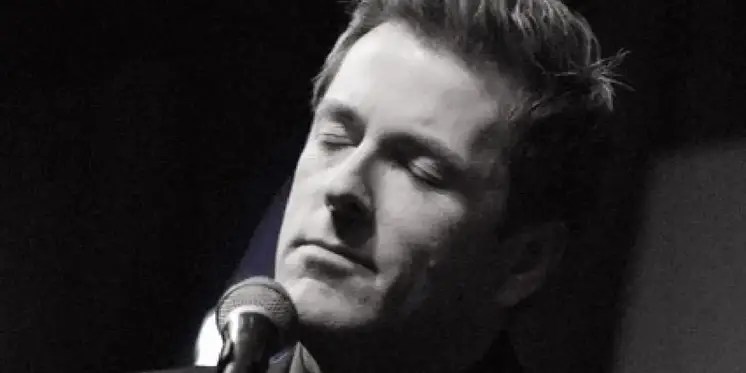
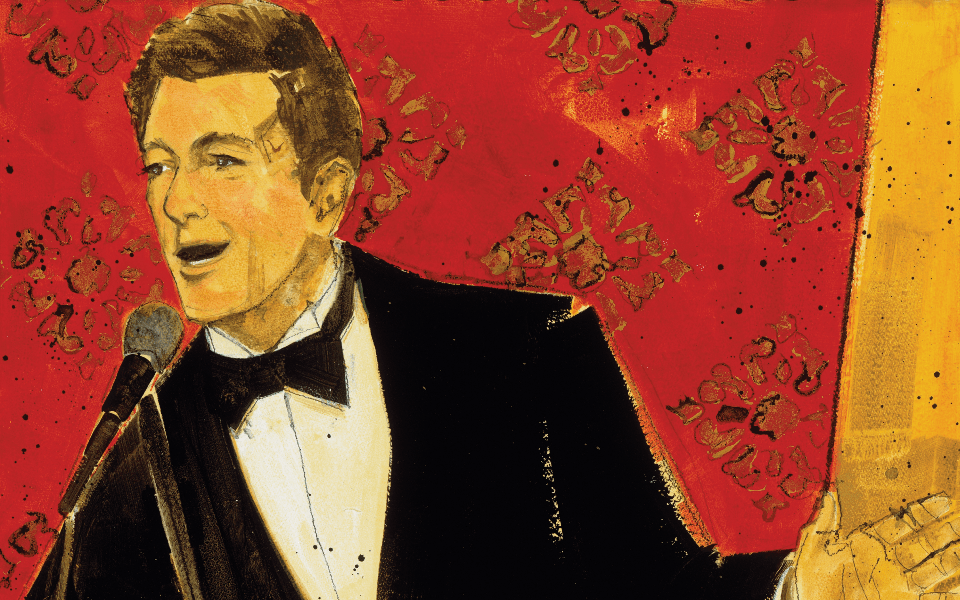
Renowned as “San Francisco’s Favorite Crooner,” Russ Lorenson has emerged victorious over cancer, showing his dedication with the release of a never before heard live jazz-cabaret album, “Standard Time: Live In New York.”
Published under the independent label LML Music, Lorenson celebrated the album’s launch on December 4th at The Triad Theater in New York, presenting an exceptional line-up of singers including Billy Stritch, Mary Foster Conklin, Lennie Watts, Jennifer Roberts, and #1 Billboard Artist Spencer Day. All proceeds from the event were to support the American Songbook Association.
A devoted advocate of The Great American Songbook, Lorenson has charmed audiences across the United States and Europe with his rich tenor and warm charisma. With three critically acclaimed albums under his belt, including two Christmas albums still enjoying a heavy radio rotation nearly two decades later, Lorensen faced a life-altering diagnosis of HPV-positive tonsil cancer in 2021.
Overcoming this health challenge through early detection, he now finds himself in remission. While cancer may have taken his ability to sing, it hasn’t silenced his voice. With deep gratitude and a renewed purpose, Lorenson is channeling his creative energies into various projects, including reintroducing his back catalog, a children’s book inspired by his fan-favorite holiday track “Jingles, The Christmas Cat,” and notably, his first album in 8 years, “Standard Time: Live in New York.”
“Standard Time: Live in New York” offers a captivating glimpse into Lorenson’s live performances at the iconic Metropolitan Room in New York, recorded in 2008. The album demonstrates Lorenson’s vision that The Great American Songbook continues to evolve, featuring a “modern classics” program of songs.
Throughout his musical career, Lorenson masterfully interprets a range of compositions, from a haunting rendition of Lionel Richie’s “Hello” to heartfelt performances like “How I Will Say I Love You,” “Diamond In The Sky,” and the beautifully nostalgic “It’s Raining Memories.” Each track carries versatility and a deep connection to jazz’s profound history.
“Raise the Roof” stands out as a dynamic and energetic musical piece, crafted by composer Andrew Lippa. Infused with a lively, rhythmic melody and spirited jazzy undertones, the song radiates infectious enthusiasm.
“Standard Time: Live in New York” serves as a seamless bridge between the classics of the past and the potential classics of the future, influenced by contemporary greats like Michael Feinstein, Harry Connick Jr., Tony DeSare and John Pizzarelli.
Reflecting on the album, Lorenson remarks:
“Many have deemed that The Great American Songbook is going extinct. But in 2008, I saw it differently. I put together a show of “new standards,” demonstrating that songs with soul and depth were still being crafted. My show, “Standard Time,” was a tribute to love and relationships, shedding light on the fresh pages being added to The Great American Songbook of the New Millennium.”
Beyond the album, Lorenson has exciting plans, including a series of children’s books, starting with his Christmas book in 2024, and other special offerings. His career, and music, have been fuelled by his desire to leave a lasting, positive legacy, and these future endeavors show this lasting commitment.
Standard Time: Live in New York” is a reminder of the timeless appeal of classic song-writing and performances. Lorenson invites listeners to embark on this soulful musical expedition, rekindling their love for The Great American Songbook’s perennial charm, while embracing the promise of tunes that resonate with today’s audiences.
“While initially recorded with the intention of a 2009 release, this album of songs from the sorely missed Metropolitan Room nightclub had been shelved. But now, 15 years later, these rediscovered gems validate my belief: many have indeed evolved into the new generation’s standards.”
Standard Time: Live In New York was co-produced by René Wieland, Dutch music producer, engineer and radio host of The Great American Songbook Radio Station.
Listen to “Standard Time: Live in New York” on Spotify.
Since making his breakthrough club debut in 2005, Russ Lorenson has solidified his standing as one of the foremost interpreters of jazz standards in the San Francisco Bay Area. Whether gracing the stage of a grand concert hall or engaging an audience in the more intimate setting of a cabaret, Lorenson’s singing prowess shines.
Drawing comparisons to the likes of Tony Bennett, Mel Tormé, and Chet Baker, his voice is both memorable and savored, earning him the title of “San Francisco’s Favorite Crooner.”
Lorenson’s musical finesses has not gone unnoticed. Downbeat magazine hailed him as “a showman of taste and discretion,” recognizing his sophisticated command of musical language. The Los Angeles Times commended his “supple voice and strong sense of characterization,” noting his ability to infuse each song with depth. The San Diego Union-Tribute praised his “relaxed, easy deliveries,” deeming them natural and heartfelt. In simpler terms, the Coronado Journal deemed him nothing short of “irresistible.”
Alternative pop artist ROKI unveils her Lovable EP, and her singles “The One” and “Hands Up” have already been met with positive reviews. Produced by ROKI, Ben Kaplan (Mother Mother) and Winston Hauschild (Wanting Qu), Lovable heralds a new era of sound: dreamier, brighter, and hopeful for new possibilities, and carries with it a message that we are all lovable, even in our imperfections.
“Natural” is ROKI’s second songwriting collaboration with Tea Petrovic (who she previously worked together on “Hands Up”), as well as Nat Jay. ROKI wanted to write this song as a gift for someone close to her heart, to celebrate their positive relationship.
Lovable’s message and core theme is of love, the ups, the downs, the desperation at times, and at other times the ease. It’s an ever-evolving, ever-changing dynamic that pulls at our emotions.
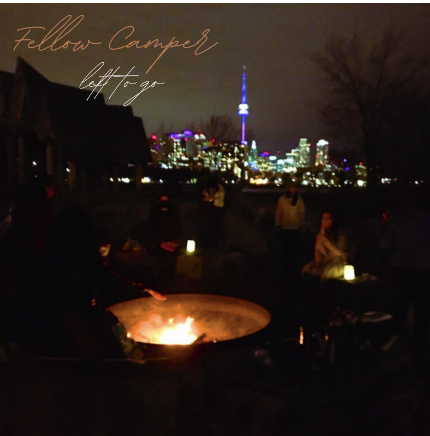
Fellow Camper is a folk duo featuring Lee Watson and Benjamin Roy, who met as literal “fellow campers” sitting around the fire on the shores of Beausoleil Island in Georgian Bay, Canada. They sing in a close, two-part harmony style, drawing inspiration from Canadian folk pioneers who graced the stages of Toronto’s Yorkville music scene in the 60s and 70s. Combine that with a modern sensibility, and you’ve got Fellow Camper.
The song “Left To Go” is inspired most deeply by the desire to escape from the busy hustle and bustle of life, and looks at this both figuratively and literally. It loosely takes themes from a number of post-apocalyptic dystopian novels like Station Eleven written by the Canadian author Emily St. John Mandel in 2014. “Left To Go” is a short form of the literal question from the chorus, “Is there somewhere left to go?” that one of the protagonists in the book implicitly asks himself as the early days of the pandemic are announced. “It can be a lot of fun and really rewarding to borrow ideas and themes from other works of art and create something new from them,” explains Roy. “Station Eleven is a pretty well known work, especially when it became a miniseries in 2021, so it’s not exactly off the beaten path, but as Canadian artists we love shining a light on other Canadian artists and works of art.”
Aloysius Bell (a·lo·wish·us bell) is the alter ego of Winnipeg-born, Montreal-based singer-songwriter Annick Brémault. While her name is a nod to the male pseudonyms of the iconic Brontë sisters, Aloysius Bell is a persona born from intense soul-searching who aims to shed light on murky, in-between spaces.
Born from the interplay of otherworldly realms and her imagination, Aloysius Bell’s debut EP Warm Thing artlessly melds her distinctive songwriting with pop, RnB and electro influences. Produced with multi-disciplinary Toronto artist Driftnote (Korea Town Acid, R. Flex) and mixed by David Plowman (July Talk, Dillan Ponders), Warm Thing is set for release in February 2024.
For Brémault, “That Is Me” highlights the way that she was taught to please – like many other AFAB humans – and in this song she’s reimagining herself the way she wishes she’d been in her 20’s: not wasting time trying to please other people.
I remember looking above my bed at this painting (by a friend’s mom, the artist Louise Gill) of a woman lying alone on a bed in a dark room and thinking, that is me right now. I was feeling cozy and kind of like nothing could induce me to go out at that point even if I had had somewhere to go. And that reminded me of those times I’ve gone out despite not feeling like it (because FOMO), and ended up disappointed that I wasn’t doing something more fun to me – like napping.




 Modern Mystery
You must be logged in to post a comment.