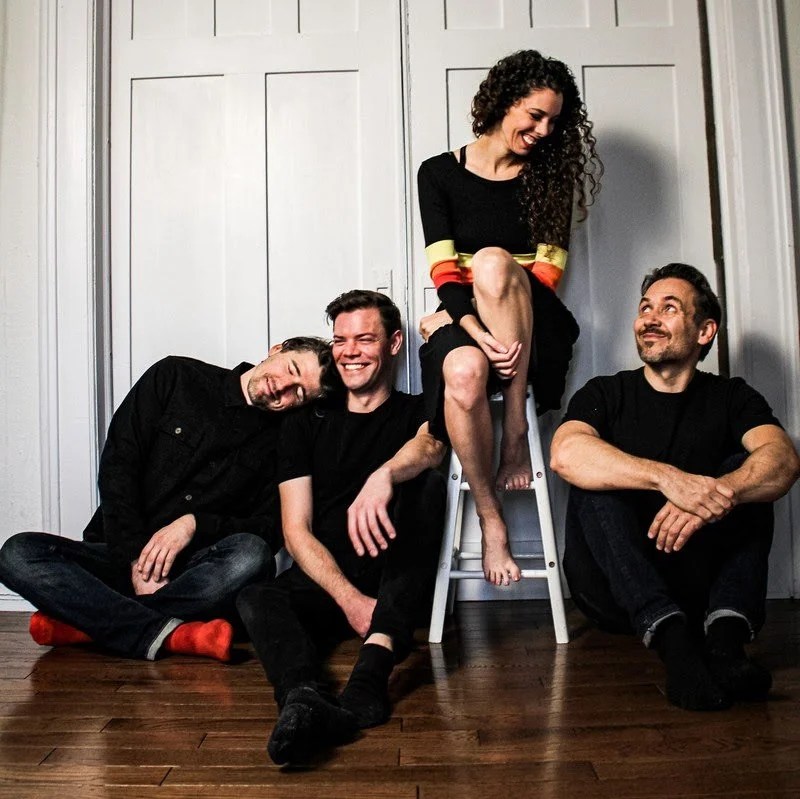
Video Voyageur: 3Qs with Summer Bruises 

Calgary-based indie-rock outfit Summer Bruises are releasing their sophomore album, Out of Body, recorded at OCL Studio with producer Lorrie Matheson.

The record asks the listener to face the archetype of the predator – internal, external, figurative, or literal. From cartoonish vampiric characters in “Sang Crême Glacée” to the volatile intensity of “With Me or At Me,” the album wrestles with abusive relationships, loneliness, self-reckoning, and the desire to heal. Lead single, “Death Disco,” pulses with unrelenting energy, balancing goth-inspired tension with a sharp post-punk edge.

Musically, Out of Body hears Summer Bruisesleaning into darker textures and isolating atmospheres compared to their debut. “As the album’s music and lyrics are ‘colder’ than our debut, Light to Waste, we isolated ourselves from each other in different rooms during recording or finished our tracks individually,” explains guitarist Aaron Smelski. “This was intentional and encouraged by our producer, Lorrie Matheson. Overall, it has a colder feel – similar to a Joy Division album – than warm cohesiveness like our previous record.”

The cold, drum-machine-inspired percussion and discordant piano break open the artery of lead single, “Death Disco,” creating a danceable yet uneasy atmosphere. While much of the band’s debut Light to Waste LP came together with harmony and ease, “Death Disco” was the first time Summer Bruisesencountered creative friction. “Don’t worry – we still love each other,” they clarify, “but it was the first time we really had to navigate through tension and find a healthy way forward.”

1. Tell us the story of this song, why did you choose to visualize this song specifically? 

The origin of this song, if you ask Elyse, the vocalist and lyricist, is this: I used to wonder why some migratory birds fly at night. I’d spy the pale shadows of waterfowl on autumn nights, hear them shrieking overhead to orient themselves to one another. Just… hurling themselves at full speed through the yawning black of the lightless countryside. 

When we started writing this song, it finally occurred to me that they did it because they must. Or maybe because they couldn’t stop themselves even if they wanted to. Even if they were terrified. And maybe once they’re already up there in the dark, they can’t come down anymore. They’ve already picked up so much speed, flown so high… can’t see below them, so it’s too late to come in for any sort of graceful landing. They’d crash out.

This translates to this concept of succumbing to ones desires or instincts, maybe even being lured into it, realizing you’ve fallen into something, something you can’t climb out of or don’t know how to, but not being able to find the brake pedal. It’s about spiralling out of control, and the regret that comes with it. 

Why did we choose to visualize this song? It sort of happened through sheer luck. KC Caywood from SAIT’s 2023 Film and Video Production Program approached us with a fully-fleshed idea for a vampire music video, and as soon as we were presented with it, we knew that Death Disco would be the perfect fit. 

2. What was the inspiration behind this video (visuals, storyline, etc.)? 

KC Caywood was the visionary behind this video and would certainly be able to answer this question more thoroughly than anyone from Summer Bruises can, but I know she referenced Herk Harvey’s ‘Carnival of Soul’s (1962) stylistically, and probably some other old horror films from that era. Summer Bruises did not actually have much creative input regarding the video, but we are thrilled with how it turned out!

3. What was the process of making this video?

We were involved in the filming part for one night, so I can’t speak to what KC and the film crew’s process was, but I have filmed short films in the past so I’ll take an educated guess that there were probably a lot of very long hours, late nights, and heaps of caffeine to keep the crew fuelled. That’s usually part of the process. A lot of heart involved, too. That entire film crew was brimming with heart and enthusiasm, even though they were running on maybe just a handful of hours of sleep. We filmed the band’s part in one night – the vampire ball where the band is playing music for all the dancing vampires and their soon-to-be victims, and honestly? It was a blast. KC had us sit with the hair and makeup expert, who dolled all four of us up, then we did a bunch of takes, pretending to play Death Disco on our respective instruments. The pretending part felt kind of silly, yet we really leaned into it. After filming the band’s parts, the rest was in KC and the film crew’s capable hands. 

Midnight Channel Summon Cosmic Catharsis on Jazz Odyssey LP Alien Love Songs feat. Monster-Sized Highlight “Shelly”

Lethbridge, Alberta’s Midnight Channel aren’t just playing jazz – they’re reimagining it, tearing it apart, and letting the pieces orbit through time, memory, and love. Their new album, Alien Love Songs, is a sprawling, groove-heavy collision of blistering horn lines, meditative melodies, and the emotional messiness of being human.

Featuring the monstrous, mystifying focus track “Shelly,” the record explores romantic, platonic, spiritual, and self-love as well as the aching absence of it. It’s as inspired by anime and inside jokes as it is by Don Cherry, Makaya McCraven, or Miles Davis’s electric era. The result? A chaotic, transcendent, deeply personal take on the jazz album.

Alien Love Songs was recorded live-off-the-floor in an empty church and later refined at Studio One at the University of Lethbridge. The result is a sonically raw but emotionally rich document of the band’s collective evolution.

“We’re lucky to have a community of talented friends and producers who helped us bring this to life,” says drummer Drake McCheyne. “The whole thing felt collaborative, grounded, and real.”

As the album explores themes of longing, grief, joy, and disconnection, it never loses its sense of mischief or play. “When we first started playing original music, we’d joke before going on: ‘Ready to scare them?,’” says tenor saxophonist Stuart Dalby. “That attitude actually helped us stay true to what we want from songwriting and performing. It reminds us to focus on what we love, not what other people might think.”

Boys Night Out Return with “100% Ghosts,” a Hopeful and Emotive Post-Hardcore Anthem

Boys Night Out have officially returned with their brand new single, “100% Ghosts” — a cathartic, high-energy blend of alternative and post-hardcore that captures the band’s trademark mix of raw emotion, technical musicianship, and unforgettable hooks.

100% Ghosts” is inspired by the importance of moving forward, even when it feels impossible. The song presents a two-chapter story: the first half acknowledges the fear and vulnerability of confronting personal demons, while the second half builds toward a resolution, propelled by gang vocals, screaming, and surging instrumentation that remind us to keep going.

The title itself was born from a playful moment – vocalist Connor Lovat-Fraser joking about his wife’s ghost sightings on tour buses and in venue green rooms. Paired with the song’s themes of perseverance, however, it became the perfect way to encapsulate the message.

Produced, engineered, and co-written by longtime BNO collaborator Scotty Komer – who also played bass on the track – “100% Ghosts” reflects everything fans have come to expect from the band: handclaps, gang vocals, alliterative lyrics, a balance of clean singing and screaming, and a sound rooted in punk rock, hardcore, and pop.

“Personally, this song makes me feel positive and excited for what the future holds,” says vocalist Connor Lovat-Fraser. “It was deeply cathartic to write and sing during the recording process. I can’t wait to perform it live on stage.”

Dre Dupuis Debuts New Single “Drift,” from the Self-Titled Debut Album Out 10/24

St. Catharines, Ontario-based artist Dre Dupuis unveils his intimate new single “Drift,” recorded entirely in his laundry room on a Tascam 488 tape machine. Homemade, melancholic, and soothing, the track is a testament to Dupuis’ DIY spirit, blending lo-fi indie rock with introspective melodies and warm, intricate harmonies.

“‘Drift’ was tracked entirely at home,” Dupuis explains. “I sampled and chopped some drums, recorded guitars and bass directly into the board, and ran vocals through a dynamic mic. Working within the tape machine’s limitations forced me to simplify, which actually freed me up creatively. After two weeks of overcomplicating things digitally, I went back to live mixdowns on tape and finished the mix in two evenings. Hell ya.”

The single exemplifies Dupuis’ hands-on approach to music-making, from recording to mixing, capturing a sound that is both intimate and timeless. Drawing from influences like The Strokes, Andy Shauf, and The Beach Boys, Dupuis layers punchy riffs, tender vocals, and textured instrumentation to create a world of personal reflection and quiet beauty. 

Every chord and note in “Drift” comes from a place of patience, experimentation, and quiet observation – music crafted in the small, meaningful moments of everyday life.

Singer-Songwriter James Correa Shares New Album “Bonny Park” by Title Track

Montreal singer-songwriter James Correa returns with his most personal work to date, Bonny Park – a contemplative, emotional, and heartfelt collection that dives into themes of family, memory, and the temporary nature of all things. The making of the album was a solitary pursuit where Correa wrote, performed, and produced the album entirely himself. That singular vision makes the record feel intimate and direct, yet expansive in its emotional weight.

“I wanted to see if I was capable of doing an album entirely by myself,” says Correa. “The most challenging aspect was producing my own performances – being honest in my editing, really listening to what I was doing. It was frustrating at times, but worth it.”

The album’s production approach is raw and human – Correa insisted on using real drums, recording upward of 20-30 takes per song to capture the right feel. Musically, his guiding principle was simple: What would Paul McCartney do? The result is a timeless sound that nods to classic songwriting while feeling fresh and deeply personal.

The lead single and title track sets the tone for the album – a ramble-shot stream of memories, both specific and elusive, stitched together with a chorus that unlocked the meaning of the song for Correa.

“There are only a handful of people who would understand the references in this song, and only I would understand them all. You can’t get more personal than that. Yet every time I sing it, it still feels totally relatable. Weird,” he says.

VIDEO VOYAGEUR: 3 Q’s WITH MARCO di STEFANO

marcodistefano

Italian composer Marco Di Stefano has been recognized for his ability to blend classical orchestration, folk influences and cinematic scoring into music that feels both epic and deeply human.

His latest project Far Inside takes this skill a step further, pairing his orchestral compositions with striking visual narratives.

The new video for “Tarantella Noire”, a track on the new album, brings together live recording footage from the European Recording Orchestra in Sofia with AI generated cinematic clips, creating a tension between reality and imagination.

Inspired by the events in Palermo in 1992, particularly the murders of judges Falcone and Borsellino, the video balances historical drama with a fictionalized narrative, exploring the shadowy underworld of organized crime through a visual lens.

We spoke with Di Stefano who walks us through the creative decisions behind the video, the process of blending orchestral performance with cinematic storytelling, and how he translated a pivotal moment in history into music and imagery.

1.Tell us the story of this song, why did you choose to visualize this song specifically in this way?

The track was conceived with a strong cinematic and narrative focus, designed to evoke clear imagery and guide the listener through a story. Consequently, the visualization could not be merely an accompaniment; it had to function as a genuine narrative support.

I chose to merge two core elements: authentic footage from the recording session, which lends credibility and showcases the artistic genesis of the piece, and cinematic clips generated via artificial intelligence.

2. What was the inspiration behind this new video (visuals, storyline etc.)?

The inspiration for both the song and the video is rooted in a fictional narrative set against the real historical context of the events in Palermo in 1992, specifically the dramatic escalation leading to the murders of judges Falcone and Borsellino, who symbolized the fight against organized crime.

For the video, I adopted a visual approach that balances documentary style with a cinematic feel. The majority of the footage features the studio recording session with the European Recording Orchestra in Sofia, which highlights the high production value and orchestral commitment. I integrated short, AI-generated clips depicting an old, abandoned house in the Sicilian mountains, envisioned as a criminal hideout. This duality creates a visual tension that mirrors the historical drama of the story.

3. What was the process of making the video?

The process was guided by the dual objective of maximizing the musical performance and enriching it with an evocative visual context. The primary phase involved the meticulous editing of the recording session footage, selecting and assembling the most effective and dynamic moments of the orchestral execution.

Following this, I made the decision to incorporate the AI-generated clips. This was not merely filler, but a deliberate choice to elevate the video’s atmosphere beyond a simple making-of. The integration of these cinematic elements allowed us to create a richer visual texture, providing an implicit narrative backdrop that supports the epic quality of the music and demonstrates my ability to curate detail and the overall mood of the final product.

Keep up with Marco Di Stefano on his Website