CHAOS CONTROLLED PODCAST ANNOUNCES SEASON 3 PREMIERE

Chaos Controlled Podcast, the raw and unfiltered show that has built a reputation for opening up conversations around mental health, has launched its 3rd season of this conversational interview show; out today on all platforms. Hosted by festival and nightlife boss Mikey Tableman and renowned character actor Danny J. Gomez, this new season of the podcast continues its mission of destigmatizing discussions about mental health while giving audiences a platform filled with honesty, vulnerability, and connection.

“I’m beyond excited for Season 3 because we’re diving into some of the most powerful and eye-opening conversations we’ve ever had,” says host Mikey Tableman. “Mental health is something that impacts everyone, and this season is packed with incredible guests who are ready to share their stories, their struggles, and the tools that have helped them overcome.”

Since its debut, Chaos Controlled has stood out for its ability to bring candid stories to the forefront, with a nuanced focus on highlighting the struggles of men and how they express their mental health battles. Tableman and Gomez have cultivated a space where people from different walks of life feel empowered to share their struggles and triumphs, reminding listeners that it’s not only okay to talk about mental health, but also necessary for growth and healing. By drawing out authentic dialogue, the show has become a trusted resource for anyone navigating their own challenges.

Season 3 of Chaos Controlled is shaping up to be the most impactful yet, featuring some of the biggest guests the show has ever featured from a variety of talents, including notable actors, musicians, and prominent lifestyle influencers, starting with multi-talented performer and viral sensation Josh Killacky. Dropping new episodes every Wednesday, the show will continue to balance raw storytelling with hope, leaving listeners with insights they can apply in their own lives.

Listeners can follow along with Season 3 beginning September 17th on Spotify, Apple Podcasts, YouTube, and all other major platforms. For behind-the-scenes content, updates, and community interaction, the podcast can also be found on Instagram at @officialchaoscontrolled.

Audiences tuning in can expect even deeper conversations about resilience, emotional health, and the tools people use to overcome adversity. With its bold approach and elevated, influential lineup of guests, Chaos Controlled continues to remind us that healing begins with a conversation.

VIDEO VOYAGEUR: 3 Q’s WITH MASSEY

MASSEYBooking

When MASSEY unleashed his blistering new single “BOOKIN’” it immediately felt like more than just another funk-rock cut.

Co-written with longtime friend and guitarist Charlie Lerant, “BOOKIN'” explodes with blues rock riffs as it tells the story of two lovers racing toward each other and towards tragedy. It’s full throttle passion and heartbreak set to music, a rush of guitars, horns and syncopated rhythms that makes you feel the chase in your bones.

But MASSEY’s vision didn’t stop at the audio. To bring “BOOKIN’” to life visually, he turned to fine artist Lionel Thomas, a painter he has admired for years and who created the artwork for his upcoming debut album Reason for Being.

Thomas’s decision to hand draw each frame of the “BOOKIN’” video in manga style animation is virtually unheard of today. The result is an action drama that mirrors the intensity of the track – a woman on a train, a man in a car, villains, storms, battles and, at the heart of it all, a love story barreling toward a cliff.

We caught up with MASSEY to talk about how “BOOKIN’” was born, and how Lionel Thomas transformed one of MASSEY’s most intense songs into a rare, hand drawn visual experience.

Watch the Official Music Video:

1.Tell us the story of this song, why did you choose to visualize this song specifically in this way?

As the lyric writer and singer, as soon as my collaborator on this one, the amazing guitar player Charlie Lerant played each lick, hook and attack of the guitar part he wrote, I knew what this song was about: full-throttle, possessed passion, two people drawn like high powered magnets yet forced to chase, forced to race, towards inevitable catastrophe.

And the first word that came immediately to mind, for the title, and the chorus hook: BOOKIN’! 

The general story or arc of the song came to me quickly from there, and the lyrics rolled from the story board I built in my mind. 

2. What was the inspiration behind this new video (visuals, storyline, etc.)? 

Well, the video was the complete work of the visionary fine artist Lionel Thomas.

His paintings are one of a kind. I have been a fan, patron, and owner of his work for more than 5 years. We brought him on to paint the commissioned cover of the soon-to-be-released MASSEY debut album, Reason For Being, dropping in a few weeks on October 24th.

And we were so blown away by the album cover he painted, that we commissioned Lionel, once again, to create what is pretty much unheard of in this moment: a hand drawn manga anime music video for the entire 2 minutes and 44 seconds of BOOKIN’! 

I knew he would do the most fabulous job, and gave him free reign to conceptualize, storyboard and present the story he felt matched the energy. So, as Lionel explained to me, he quickly started seeing the story, with story-board outlines in his mind’s eye: – an over-the-top  action film, ala Mission Impossible. There’s a train, a heroine, a villain and a hero racing down the highway to catch them. 

The heroine fights, the hero races …

They ultimately embrace …

Yet it doesn’t end well …

3. What was the process of making the video?

As it was described to me by Lionel, his conceptualizing of the video was similar to how, as soon as I heard the music from my songwriting partner, Charle Lerant, I felt what the song was about, and then wrote the lyrics.

Lionel told me, after a couple listens to the song, he knew the story he wanted to tell. He saw a Mission-Impossible like action adventure plot line, with a woman as the hero, done in a Japanese manga animation style.

From that vision, he drew more and more detailed storyboards. He presented a draft of a segment, to be sure we liked his progress. Yet we wanted more story development.

After drawing it out more, we worked to be sure the action was syncing with the drama of the music and attack of the song. The result was better than we could have imagined! A masterpiece final product, with classic cinematic-style credits, too! We are out of our mind in love with Lionel’s work, merging the drama of the song with a visual extravaganza, matching and enhancing that drama. 

///

Keep up with MASSEY on his Website

Stream music on Spotify and Apple Music now!

Ger Carriere’s “Can I Be Her” Transforms Yearning Into Visual Spectacle

Ger Carriere’s latest music video isn’t just a visual accompaniment—it’s a fully realized world. Her single “Can I Be Her” is reimagined through a lens of hyper-femininity, complete with saturated pinks, pastel dreamscapes, and Ger herself cast as a doll navigating her own meticulously crafted fantasy. The result is glossy, charming, and intentionally over-the-top—a perfect reflection of the song’s emotional layers.

The track explores a relationship that has slipped out of balance: the adoration once felt now feels draining, and the longing to feel treasured again becomes impossible to ignore. The video translates that tension into a dazzling aesthetic, wrapping emotional weight in shine and sparkle. While the visuals offer an escapist fantasy, they subtly hint at the emptiness lurking just beneath the surface.

Every glitter-coated smile and pastel backdrop carries a double meaning: playfulness paired with poignancy. Carriere expertly blurs the line between pop art and personal confession, using visual splendor to amplify the song’s themes. The video for “Can I Be Her” doesn’t just decorate the track—it enriches it, deepening the sense of yearning and emotional resonance.

This striking visual statement signals that Carriere’s forthcoming EP promises to be as bold as it is intimate, a fusion of spectacle and honesty that demands attention.

VIDEO VOYAGEUR: 3 Q’s WITH ALEX THOMEN

Where-Did-They-Go-Wrong-COVER-ART

In a world where social media amplifies every trend and grifting scheme, Alex Thomen stands out as a songwriter unafraid to mix sharp cultural critique with wit, musicianship and a touch of irony.

The Nashville based composer, producer and multi-instrumentalist began his musical journey playing piano before earning his Bachelor of Music in Composition at Kansas State University and a Masters in Commercial Music Composition and Arranging at Belmont University. Over the years, he has scored commissions, produced cinematic trailer music, and released a solo piano album all while building a reputation as a studio minded artist with a keen eye for contemporary life.

His latest single “Where Did They Go Wrong?” which is accompanied by a striking music video, showcases that narrative precision and sly humor brilliantly.

In this exclusive interview, Thomen talks about the song’s ironic roots, his decision to “perform” it via video rather than on stage, and the full circle collaboration with longtime friend and director Chase Bartholomew.

1. Tell us the story of this song, why did you choose to visualize this song specifically in this way?

“Where Did They Go Wrong?” explores themes that have become increasingly prevalent in the social media age. In essence, it’s an “anti-grifting” song, but it’s disguised in irony instead of strict, polemic writing. During the writing phase, I approached the lyrics, composition, and pacing as if it were to be performed for a live audience. There’s a minute and a half of setup before the first “punchline” hits – that kind of misdirection is characteristic of live comedy. The problem is I consider myself a studio musician more than a live performer, and I enjoy producing studio recordings of my songs.

My solution, therefore, was to make a music video that essentially captures the visuals of a live, in-studio performance. Those moments where the lyrical delivery is communicating something ironic, facial expressions and body language help drive that point. Irony is best communicated with the eyes – I believe this is why jellyfish are famously unfunny.

2. What was the inspiration behind this new video (visuals, storyline, etc.)?

Each topic addressed in the song (manosphere movement, MLMs, alternative medicine) warrants its own in-depth conversation, because the reasons for each one’s existence is culturally complex. My goal was to critique these different trends/movements, pointing out some of the flaws in their ideology. While making it rhyme. While it’s inspired by real conversations and real people, all of the specific characters in the song are made up. I did not have a boyhood friend named Danny.

The lyrics are a self-aware, reductive type of argument – a thorough rebuttal of these beliefs would require more words that I can fit in a song. But I did my best to make it as thought-provoking as possible while keeping it entertaining. Plus, I got to put in lots of words that I’ve never heard in a rock song before. What the song lacks in brevity it makes up for in affectation. 

3. What was the process of making the video?

The video was shot at Colorado Sound Studios in Denver, Colorado. It was directed/produced/edited by Chase Bartholomew. He’s one of my best friends from high school (he is also not a self-proclaimed alpha male, not involved in an MLM, and not a practitioner of alternative medicine). In fact, we used to spend our weekends scripting and filming videos – either for school projects or just for fun (we would do this while other guys were getting invited to parties). He ended up studying film and is now a professional videographer. It was kind of a full-circle moment to collaborate again on a creative project. We have also improved in our video-making skills since high school.

I gave him creative control over the video – I’d give thoughts/suggestions here and there, but he’s the expert when it comes to the visual component so I wanted to let him run with his ideas. I think his vision for framing/editing/coloring helps amplify the message of the story. There’s a whole science of how different colors can evoke certain emotions. Chase is a bit of a perfectionist, so he focused on how small details could change the final shot. He focused a lot of his energy on subtle lighting changes to best capture the performance. For Chase, it was a long video shoot with tons of lighting changes. For me, it was a relaxing day sitting at the piano.

Keep up to date with Alex Thomen on his Website

Kat Lee Rivers Offers a Quiet Response to a Noisy World with “American Heartbreak (Acoustic Version)”

Kat Lee Rivers’ new single, “American Heartbreak (Acoustic Version),” feels like a deep breath in a crowded room—a moment of stillness and grace amid the noise. With only her voice and Bob Lanzetti’s understated guitar, Rivers turns heartbreak into reflection, and reflection into something quietly hopeful.

The song strips away every distraction. What remains is Rivers’ rich, soul-baring delivery—her phrasing shaped by years as a jazz vocalist, her tone both intimate and assured. She sings as if from the kitchen table, transforming “American Heartbreak” from a slogan into a lived experience. The pauses, the subtle harmonics, the space between notes—each detail reveals a tenderness that feels both timeless and necessary.

For listeners new to her, Kat Lee Rivers is an artist whose path has crossed continents and genres. A 2014 finalist in the Sarah Vaughan International Jazz Competition and multiple DownBeat award recipient, she first emerged in the jazz world before expanding into Americana and the rhythmic warmth of Brazilian music. Her debut album, Anything but Ordinary, marked that evolution, blending Americana grit with Brazilian color and jazz sophistication.

Following a period of vocal recovery, Rivers’ voice has returned stronger than ever. Her songs draw on experiences from years living and performing in Spain, Texas, Los Angeles, and New York. She sings in Portuguese and has graced stages from house concerts to iconic (and now-closed) New York venues like Cornelia Street Café and Rockwood Music Hall, as well as The Chapel Restoration in Cold Spring, where she’ll return this fall. She’s performed with the Dallas Symphony Orchestra backing Ben Folds, and toured Europe with Barcelona trio Árid, including a rooftop show at La Pedrera.

Now working with Grammy-winning guitarist and producer Bob Lanzetti (Snarky Puppy), Rivers is crafting a new album for Spring 2026 that deepens her “old soul” sound—one that blends the intimacy of folk with the nuance of jazz.

“American Heartbreak (Acoustic Version)” stands as both a bridge to that upcoming project and a statement on its own: deeply felt, beautifully sung, and rooted in the belief that even in fractured times, a song can still offer a measure of unity.

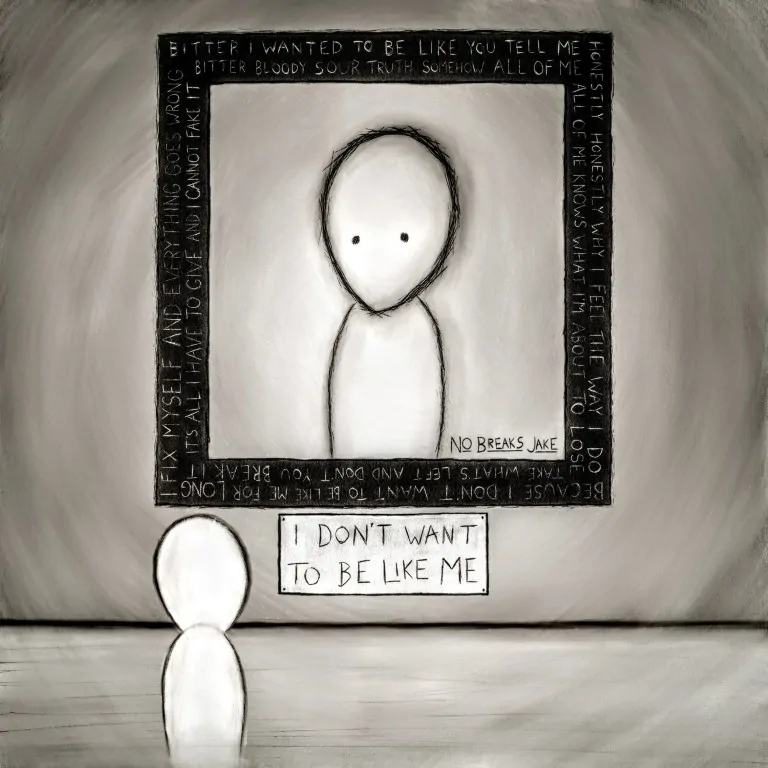
Video Voyageur: 3Qs with No Breaks Jake

Toronto’s No Breaks Jake returns with “I Don’t Want to Be Like Me,” a volatile, slow-burning alt-rock track that grapples with identity, guilt, and the longing for self-reinvention. It’s a heavy, emotional unraveling – one that begins in quiet vulnerability and erupts into a wall of fuzzed-out guitar riffs, cathartic screams, and sky-is-falling chaos.

The single marks a thematic cornerstone of No Breaks Jake‘s upcoming Amygdalan EP, setting the tone for a project that doesn’t shy away from the harder truths. “This song evokes a state of mind that, honestly, I’m trying to leave behind,” says bandleader Jacob Kassay. “Actually doing that is definitely a little harder.”

Written and self-produced in Toronto, the song evolved through a dozen different iterations and multiple structural overhauls before landing in its final form. “It was all about telling the story effectively,” says Kassay. “I love how it builds from something intimate and restrained into a screaming mess. There’s something satisfying about watching it all fall apart.”

1. Tell us the story of this song, why did you choose to visualize this song specifically in this way?

The first lyrics written were the first you hear: Bitter / I wanted to be like you / Tell me honestly, honestly / Why I feel the way I do. Right away, I knew I was writing about some of the ugliest, most unlikeable traits I have as a person – toxic, jealous, empty feelings. I think we can all relate to having those thoughts, and wanting to outgrow them – but it’s never easy, and it tends to take quite a long time. It’s always two steps forward and one step back. This song is about carrying those expectations, shaking under the weight, until finally everything gives out and you break entirely. That’s okay too, remember – two steps forward, one step back. We can keep moving forward after we recover. Right now we need to stumble.

Most of my favourite art could probably be pigeonholed in this category of having these heavy, depressing themes that deal with the darker side of life, but I think that’s where the beauty is. Life can be scary and impossible and chaotic. Art is about having the courage to confront it anyways. All I want to do is create with integrity in this fashion. This video is my attempt at trying to capture that integrity.

2. What was the inspiration behind this new video (visuals, storyline, etc.)?

The song being what it is, I was fascinated with this general idea of ‘looking at yourself’. Early on, I landed on the visual of the broken mask, this perfect facade that had cracked and something ugly was seeping through. The decision to make it eyeless was one of those happy accidents; earlier sketches looked more like a typical china doll, with big doe-eyes, eyelashes, and lips, but I wasn’t great at drawing it and simplified the design. What I ended up with really struck me because suddenly there was this connotation of self-inflicted blindness. It’s the mask we all wear, the one that hides everything about ourselves we can’t see – or don’t want to. And apparently, in this haunted art gallery, it comes to life, sprouts an eldritch body, and tries to kill you. How fun.

It was important to me that the storyline of the video wasn’t too oppressive or hopeless. I wanted our hero’s journey to reflect my own feelings about the song: things aren’t looking great, but that doesn’t mean we can’t make them better. We’re not giving up. So I had him fight back, outmatched though he was. Things end a little ambiguously, too; it’s unclear who won the fight, or if either of them might get back up. But I like to think that the point of my little tale isn’t how it ends; it’s that he chose to take up arms in the first place.

3. What was the process of making the video?

First, I just gave myself a premise. What would be interesting to draw, interesting to see? More importantly, what gets across the message of the song? And once I had that premise, that haunted, monstrous, mask… thing, I could map out key visuals that fit the biggest moments in the song.

I’m generally not such a ‘storyteller’ songwriter. I don’t want to keep track of characters or plot points or chronology; I like songs that embody an emotion, a thought, a feeling, and then hit you as hard as they can with it. Fittingly, the video plays out less like a story and more like a dream: scattered, fleeting images strung together, carrying you from one idea to the next. I had several sort of ‘big moments’ in my head: the unearthly presence of the mask, the monster that grows from it, the haunting, judgmental stares of the painting it emerged from, or especially that shot near the end of the monster in its largest form, coiled like a dragon around this terrified but unflinching hero. From there it was about connecting the dots, like trying to unravel what must have happened to end up in this place.