Singer-songwriter Stephen Jaymes might be best described as Charles Bukowski ditching whiskey for psychedelic mushrooms while feverishly ingesting Rumi poetry and Phil Ochs records. The LA-based artist is a punk poet; a wounded-romantic; a sonic noir auteur and a post-apocalyptic hippie. He is a gifted multi-instrumentalist, songwriter, singer, and producer. His music exudes the stylish playfulness of Prince with clever turns of phrases and occasional funk flashes, but it also conjures the stateliness and mystique of Leonard Cohen. Film and television editor Christal Khatib (Scandal, Transparent) hears “both of those ghosts and Johnny Cash too – all visiting the same body.”
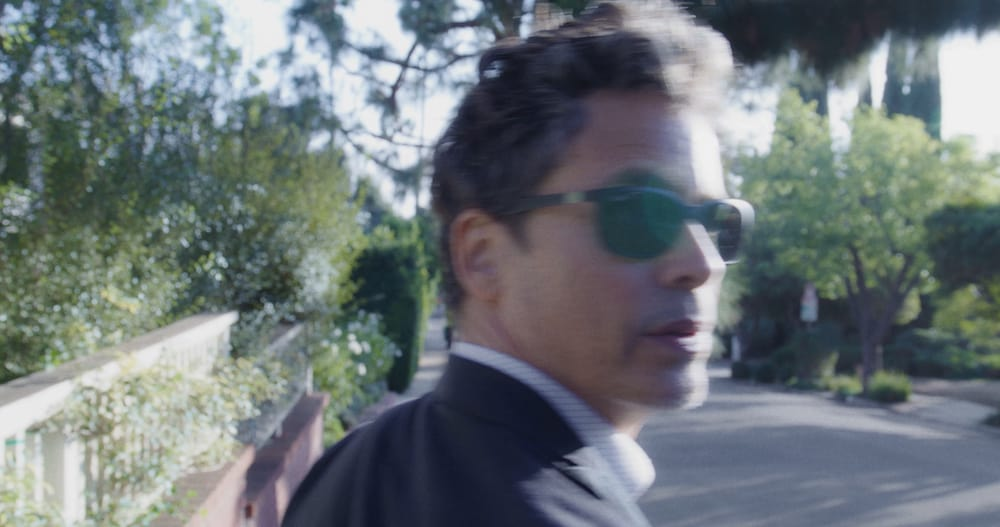
His newest song “Chief Inspector,” and the accompanying video, is a noir inspired Jungian tale of a man who once locked up his shadow and is now hunted by it.The video reaches back in time to say a little something about the present moment. Wanting to evoke the LA noir imagery used in the song’s lyrics, the singer and the video’s producer Ross Kolton, were drawn to the iconic 1973 Robert Altman classic “The Long Goodbye” for its visually unique take on noir in the sunshine.
Easter eggs and direct references include a shot of Jaymes leaving the same tower apartment complex where Elliott Gould’s Philip Marlowe eked out a living. The film classic is noteworthy for looking back to the 40s to shine a light on the (then) current 70s culture. Similarly, Kolton and Jaymes look back to the 70s to indirectly reflect a modern Instagramed world, where a noir thriller of dark realities continues to unfold, now through millions of sunny lenses.
We spoke with Stephen Jaymes about the new video for “Chief Inspector,” which you can watch below:
Tell us the story of this song, why did you choose to visualize this song specifically in this way?
In a nutshell, this is what happens when you start digging deeper into Jung while watching the Inspector Morse series. The song is about the choice we make to lock up a part of ourselves to achieve our (often stupid) objectives, and how that shadow part always escapes and hunts us down later. Morse is a hero of mine, the original “true detective” of modern television who is chased as much by his own ghosts as he is by the flesh and blood criminals. It was a rare instance where the lyrics all pretty much fell out in one go. I’d pay to have that experience every time. And what fell out was a “Cape Fear” scenario: Robert Mitchum is not happy; and he’s out to get you; and he’s you. In my case, I later realized, my shadow was hunting me down to demand I start writing and playing more music.
What was the inspiration behind this video (visuals, storyline, etc.)?
The video is the result of my collaboration with LA-based filmmaker and music video producer Ross Kolton. We both have a deep love of noir, so we were looking for a reference point that we could use. We wanted to literalize the song’s dark noir imagery and psychological tension, but also reflect how noir films frequently juxtapose that darkness against sunny LA. Our eureka moment came in the form of Ross’s idea to use the location from Robert Altman’s 1973 “The Long Goodbye” in the video. From that seed of an idea we found our story, and the video ended up being an homage to that film in many ways (toxic suitcase MacGuffin notwithstanding).
What was the process of making this video?
The goal was to make a tight doppelgänger drama that reaches back to “The Long Goodbye” to illustrate the tension between today’s dark realities and their sunny, Instagrammed exterior. Ross is super organized, so many of the shots were his ideas that we basically tested in the field. He has an approach to film that really synchronizes with my approach to songwriting: both of us leave a ton of room to capture the magical accidents in our creative process. On shoot day we started in the Hollywood hills where we paired a condo interior with the actual exterior of Elliott Gould’s apartment complex. We had a location waiting on the Westside for the “arrival” part of the story, so we literally worked our way east to west through Hollywood, stopping at some planned places and others that jumped out at us as we drove around. By the time we had finished with all the exterior “story” shots, we were exhausted. After he put together the first cut, Ross decided that the lip sync performance shots reflected that exhaustion. So we reshot the performance, weeks later, after I’d buzzed my head. This resulted not only in a treatment that better reflected our “sunny noir” aesthetic, but also emphasized better the doppelgänger theme because I look so different. Just another example of staying loose and allowing experimentation (and some director perfectionism) to work its magic. Thankfully I had no deadline as we hadn’t set a release date for the song yet.
 Modern Mystery
You must be logged in to post a comment.