The Bankes Brothers are about to light up Canada’s indie-rock scene and ignite audiences everywhere. Since the release of their debut single “In Waves” in February 2023, the band has garnered acclaim and recognition across Canada and beyond – regularly showing in the Top 5 on Canadiancommercial radio’s alternative charts and seeing constant support on Sirius XM’s The Verge for the past year.
Now with the highly anticipated unveiling of full EP In Waves,alongside the final track “Walkin’” – all eyes return to The Bankes Brothers for what promises to be another banner year for one of Canada’s rising stars in contemporary rock and roll, set to embark on a whirlwind tour of the UK alongside Red Rum Club.
“Walkin’ is about doing your own thing – gut checking you know?”
The EP can best be described as a six-track shot of dopamine spilling over with irresistibly catchy melodies, exhilarating vocals, and joyous indie-rock instrumentation. Produced and recorded by indie legend Steve Bays (Hot Hot Heat, The Zolas, Mounties), In Waves is the culmination of the band’s wide-ranging influences—from Elvis to The Strokes, Paul Simon to The Pixies—coming together in a way that defies sonic parallels, yet remains welcomingly familiar.
Basement Revolver has always centered around the friendship of bassist/keyboardist Nim Agalawatte (they/them) and guitarist/vocalist Chrisy Hurn (they/them). Lead guitarist Jonathan Malström (he/him) and drummer Levi Kertesz (he/him) round out the band’s larger-than-life sound. Since 2020, Basement Revolver found time to wrestle with questions about identity, faith, mental illness, and sexuality.
The inspiration for their new song, “Red Light,” came from a discussion at a band practice Chrisy shared that they had received a red light ticket which was extremely frustrating because it was for a greater amount than their recent paycheck. As a band who has received their fair share of parking and speeding tickets while playing shows and touring, they are no strangers to financial setbacks when it comes to working towards their dreams. The band members realized that it was a relatable topic so they wrote a song about it.
“Hopefully we’ve all learned to be a little more careful while driving!” says Nim Agalawatte. “Especially in cities like Hamilton where we live that have many red light cameras now.”
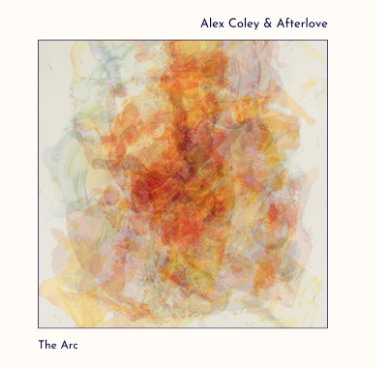
Built around his soulful, worn-in voice and wrapped in tender harmonies, Alex Coley & Afterlove explore the elemental tension between joy and pain; heartache and healing; what was and what will be. Debut album, The Arc,arrives at the end of this locked-down, fearful era when gazing backward was all we had, serving as a beautiful reminder of the transformative power of introspection. The songs that emerge are both melancholic and hopeful, capturing themes of nostalgia, resilience, heartbreak and unexpected clarity. Alex Coley & Afterlove’s music reminds us that the darkest, windiest days are often the days we feel deeper and love harder.
Alex wrote the album’s focus track, “Hold it All,” at a time when he was feeling like he was holding all of the blame. Despite his best efforts to be friends with his ex, they hadn’t spoken for a while and he was starting to become angry about it. So, in a moment of anger and frustration, holding all of the responsibility, Alex had this cathartic release where he refused to keep blaming himself for everything and started sharing some of the blame, and that’s when he wrote “Hold it All.”
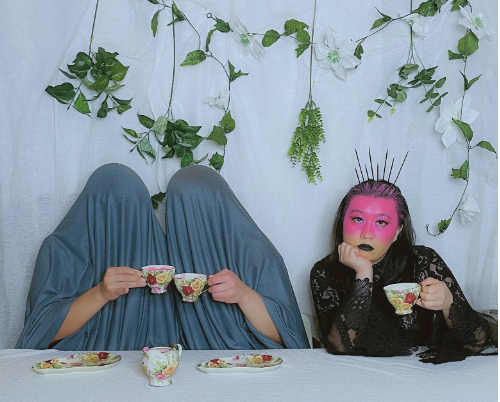
Vicki Lovelee is a Chinese-Canadian alt-pop sensation based in Markham, Ontario. She merges the luminosity of pop with brooding shadows of dark drama and orchestral instrumentations. Her latest single, “Click,” stirs anticipation for a new album in fall 2024.
When you hear the word “Click,” you usually think of three different contexts for the word, but they all relate to the meaning of the song. “Click” – for pieces to fit together. In this case, Vicki is speaking about not clicking with certain people. “Click” – like a computer mouse when you’re selecting something. It’s the same for the meaning of the song – the feeling of wanting to be chosen; to be “clicked” on. The final word is clique: a group of people with shared interests who don’t let others join.
I wrote “Click” because I started feeling like an outsider in the music industry. Sometimes I feel like no matter what I do or how hard I try, nothing ever clicks. Even though I’m not in school anymore, there are still social groups or “cliques” everywhere. And the music industry is no exception. There’s always cliques that everyone wants to be a part of. And because I wasn’t part of it, I felt like such an outsider.
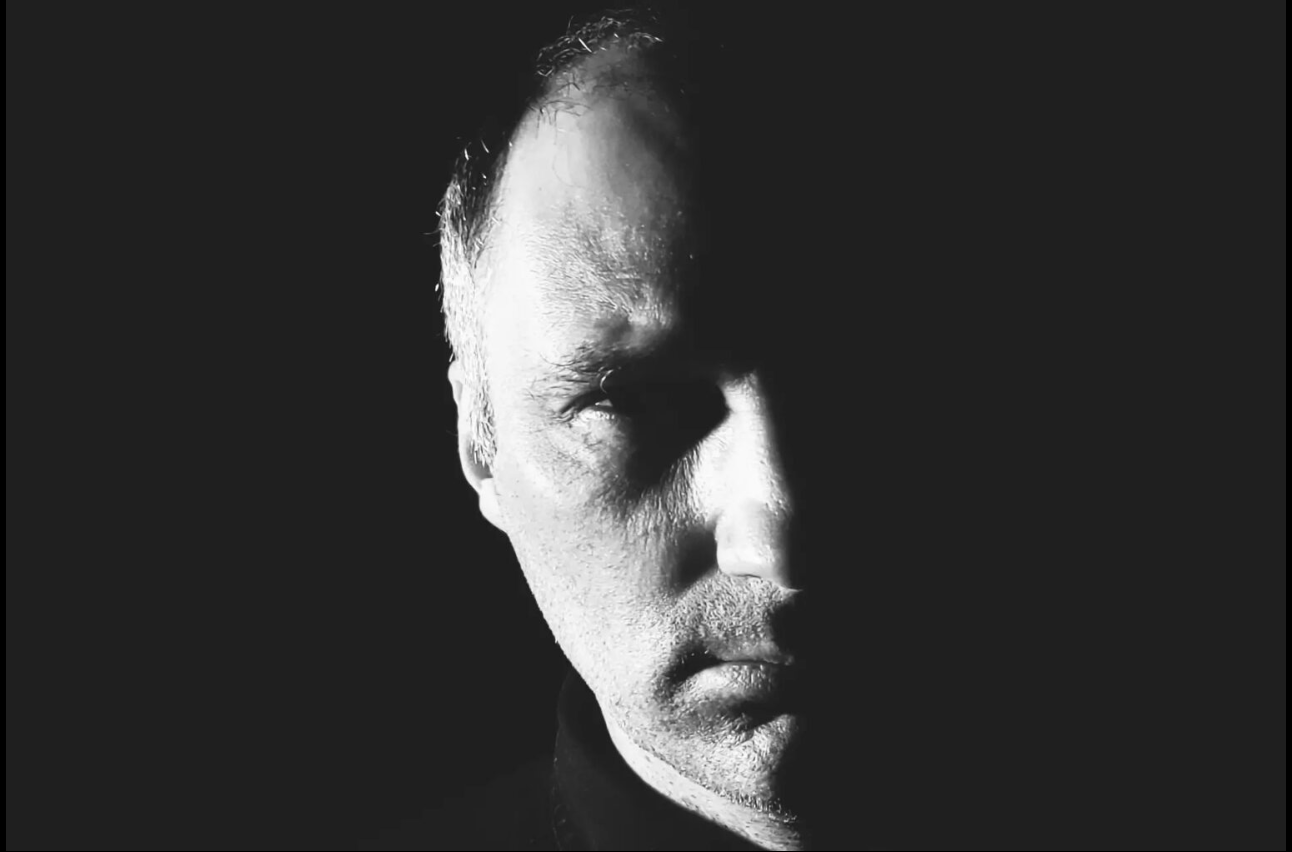
Born in Detroit in 1971 and raised in Duluth, Minnesota, Lafontaine‘s music is a reflection of his challenging life journey. Growing up on barroom floors, he found solace and expression in music, particularly through his guitar. His style, influenced by diverse artists ranging from Metallica to Beastie Boys to Stevie Ray Vaughn, blends rock, metal, and prog-rock. His LP, M.M.I., re-released in 2021, showcases this blend. Lafontaine’s upcoming EP, “Thorn, Sliver, Smolder,” continues his exploration, offering instrumental tracks that narrate his personal growth. His music is a testament to overcoming adversity and finding one’s voice through art. We dive into this creative process below.
How has your music evolved over the years, and how do you see it reflecting your personal journey?
“From day one, I’ve been writing my own music on the guitar. Learning from other artists has been a challenge because I tend to take their work and create my own unique riffs and grooves. With dedication, discipline, and routine, I’ve gained a comprehensive understanding of song creation, arrangement, and dynamics. This has enabled me to deliver more captivating music to my listeners.”
“I consider music creation to be more than just a profession. Despite having little formal training, I have always relied on improvisation and my intuition to create something that sounds and feels good. I learned to play the guitar by relying on improvisating and emotions. Nowadays, I combine my natural approach with music theory and a disciplined routine to make my work more accessible to listeners.”
Which artist or life event radically changed your approach to music?
I simply had a thirst for knowledge. I kept finding myself at a roadblock in my writing. The songs had the same pace and feel, creating a mundane tone and repetitiveness. So out of frustration, I started aggressively banging down on chords, and I must have hit the right chord because it gave me goosebumps. This led me to investigate why this one chord change gave me so much feeling, and I started to dive into music theory.
However, the issue then became the countless YouTube versions of how to teach music theory, along with the countless interpretations of music theory. Again, I became extremely frustrated and turned back to my influences. Eddie Van Halen stated it best for me, “There are only 7 notes in a scale. Use them how you like.” This helped me because it brought it down to earth.
Slowing down and learning in baby steps, I still had an issue with a routine. That is when I stumbled upon a book called “The 7-day practice routine for Guitarists” by Craig Smith. Craig Smith set this routine with specific parts of the guitar and music theory. Once I practiced discipline with this routine, in a very short timeframe, I understood what a Mode was and where a mode comes from. I also learned how chords are created and where they come from, and how important it is to keep a steady disciplined routine not just for better playing ability but also for learning.
How would you describe your creative process?
I usually start with a riff or beat that moves me. I lay it down in its raw form with no foundation or arrangement. I then jam to it on a loop. If I have a good feel and ease of adding harmony or melody, I then start building the foundation.
The foundation for me is from the drums and the bass. If the drums and bass are not communicating in the melody, then there is no point in moving forward. A harmony/riff on a guitar, synth, piano, vocal, etc. is only as good as the foundation will allow it to be.
Once I have a foundation, I start to add harmony to whatever instrument I hear in my head. This could be the vocals, guitar, synth, piano, etc. This is the point where things start to get tricky because often adding harmony will set forth a change not only in the foundation but also in the arrangement of the song.
This is where I take a step back and allow the song to start creating itself. At this stage, I think a lot of artists tend to keep to a specific genre, stick to music theory, or just don’t allow the song to communicate what it wants to move forward. When an artist does this, it removes the personality of the piece.
When I was writing “Thorn,” I had a foundation, but I wasn’t allowing the song to tell me what or where it wanted to go next, so “Thorn” sat on the shelf for two years. I kept coming back to it only to run into the same issue. I was blocked. I couldn’t move forward.
I then tried a highly-regarded drum sym plugin. This plugin was so close to a real kit that it was a bit strange at first. I tested out a few grooves, and BAM, it just exploded the tone and feeling. What the song was trying to tell me is that the drum foundation was not enough and needed more movement.
With “Smolder,” I had a great intro, but I was stuck with the next move. I attempted many chords, time sig changes, and drum grooves. Nothing was working. I listened to what the song was attempting to communicate to me. I could feel a steady groove, but I was not feeling the guitar, so I picked up the bass, and instantly, I changed the key and kept a steady moving melody and rhythm. This became the body.
Many ask why there are no lyrics in “Thorn,” “Sliver,” “Smolder.” The songs didn’t want lyrics. Every time I would attempt to add a vocal harmony, the song’s personality would kick back for some reason.
This leads to how an artist knows when the piece is done. For me, it is when I play the song in its entirety, and it doesn’t sound like I wrote the piece, and the song is not telling me that there needs to be more. At this point, I start getting into sound production.
Now some would say that sound production has nothing to do with song creation, but I fully disagree. There have been many times when I enhanced an instrument or instruments, and based on the sound quality or tone, it changed the foundation, the style, how the parts are played, the arrangement, etc.
With that said, I have learned to make sure that the sound quality and tone are where they need to be, and then play the parts. This has saved me time.
This leads to the mixing and balancing process. Again, mixing and balancing have a huge effect on how you want the song to be perceived. I wanted “Thorn, Sliver, Smolder” to sound like the listener was in a stadium. I feel that too many artists nowadays mix and master to clean. If you listen to Black Sabbath, Zeppelin, and Robert Johnson’s recordings, they all have a feel based on the equipment they were using at the time.
For me, there is a huge difference in the way Zeppelin’s “No Quarter” sounds on vinyl than Spotify. Way more feeling on vinyl than the digital releases.
What is your writing process like?
“My writing process is my creative process. I never set out to write a specific song based on anything. If the song calls for lyrics, I start asking questions like, “What story are you trying to tell?” “What does this song feel like?” “What time period does this story take place in?” This helps me get a better understanding of what the song is trying to convey.”.
When you’re in the creative process, is there a consistent theme or emotion that drives your songwriting?
“No, I do not attempt to create based on an emotion, how I am feeling at that moment, what is happening to me in life, etc. I always let the song build itself. I have attempted to convey my feelings and/or emotions into a song and it always fails. I find it best to just let the song build on its own and create a personality.”
Each aspect of music – writing, recording, practicing, and playing live – offers something different. Can you share a particularly meaningful moment from each?
Recording: “When I recorded M.M.I, there was a particular moment that struck me. I realized that the final product had originated from one simple riff. It was surprising how big the song became, and it didn’t sound like my usual style. After the mixing and mastering process, when I heard the final cut, I had a feeling that I couldn’t have created that. This made me think that music is not something that is created, but rather something that happens in one form or another.”
Practicing: I discovered that learning a small amount at a time is more effective than trying to learn many things at once. When I feel frustrated, I take a break and move on to something else. Instead of trying to play fast, I focus on playing well by paying attention to my technique. By staying disciplined in my practice routine, I have seen significant improvements in my guitar playing and music creation. These practices have been far more beneficial than being stubborn and rushing through my learning process.
Playing Live: “I once booked a gig at the Cabooze for a Tattoo Contest. I had written some fresh music and recorded it on a cassette tape. I didn’t have a band at the time and just wanted to see if I could pull off a live performance. About 100 people showed up to the event. During my set, I was just having fun and focusing on the music, not paying much attention to the crowd. When I finished the last song and looked up to say goodbye, I was surprised to see that the entire crowd, including the bartenders, were watching the stage. As soon as the crowd realized I was done, they burst into applause. I thanked the crowd and walked off the stage. Several friends rushed up to me with excitement and told me how good the performance was. This was unexpected and it stunned me.”
Do you take advantage of technology and collaborate remotely, or do you wait until you’re physically present with the rest of the band?
“I’m sorry to say that I don’t currently have a band. I do have a few friends that I collaborate with, but it’s only to exchange ideas, not to work on finished pieces. I perform, write and produce all parts of my music by myself.”
Is there a song in your repertoire that holds a particularly deep personal meaning for you? Can you share the story or inspiration behind it?
“Among my compositions “M.M.I” and “Thorn, Sliver, Smolder”, I consider the latter as my best work. This is because I allowed the song to build on its own, and listened to what the song wanted to become, rather than forcing it to be what I envisioned. This approach gave the song a more dynamic personality, making it stand out from my other works.”
Maryen Cairns’ latest single, “Flew Away” pays homage to Joan Taubman, a trailblazing female pilot from Australia.
Released on International Women’s Day, the song reflects Cairns’ deep admiration for Taubman’s courage and resilience, despite her initially knowing much about her extraordinary life.
The song draws from folk influences, with Cairns’ exquisite vocals and intricate guitar work.
Performing the song solo, Cairns shares her personal connection to the track including her unique approach to the whistling solo originally composed by her friend Paul Stockton:
“When my children were little, I used to take them to the swimming at the pool in my parents building in Sydney. They were, like most children, very noisy! An old lady who lived in the building used to waylay us on the way to the pool, and demand to know who gave us the right to use the pool. Years later my mum told me that she had been one of Australia’s first female pilots and that she used to reminisce about flying under the harbour bridge with her friends! Joan Taubman’s flying suit and helmet are in Sydney’s Powerhouse Museum, and I wrote Flew Away to celebrate how we never know what another person has gone through, what they have achieved, just by looking at them.
Now when I see an elderly person I wonder what adventures they’ve had, what made them laugh or cry, if they were able to follow their dreams, what they regretted, if they had a great love… I’m aware that we cannot see what a person has been through by looking at them, and this was a big lesson to me, that resulted in me writing Flew Away. I wrote this just after I had made the Femina Australis album, and of course it would have fitted beautifully on that album, being about an amazing Australian woman! The original recording of this song is on my album Come To Me from 2019. It features a beautiful whistling solo from my London friend Paul Stockton. Having been a leading choirboy at St Paul Cathedral school many many moons ago, this was only his 2nd time in a recording studio, and he came up with an incredible melody to whistle as a solo. Now, I can’t whistle, not at all (!) but I love Paul’s melody so much that I feature his solo by singing it!
Recorded at Echotown Studios in Dorchester, England, and produced by Chris Kimsey, “Flew Away” forms a pivotal part of Cairns’ upcoming debut vinyl release, marking a significant milestone in her music career.
With an extensive catalogue comprising of seven solo albums and collaborations with esteemed artists like Fish and Chris Kimsey, Cairns has solidified her position as a notable figure in the indie music scene.
Born in Scotland, and then emigrating to Australia, she began writing songs at the age of thirteen. She pioneered a home recording studio with tools like the Tascam 4-track, and Cubase. In the 2010s, she broke barriers with albums like “Stories from the Red Tent” which challenged taboos with its groundbreaking birthing imagery, and “Femina Australia” celebrating the lives of Australian women.
Beyond her solo work, Maryen founded The Mfest, a celebration of motherhood and women’s creativity, and hosted Sydney’s first originals-only open mic night. Collaborations included backing vocals for ex-Marillion vocalist Fish. She even played a grand piano in an extinct volcano for a promotional video.
Inspired by her recent solo tour across the UK in August 2023, Maryen continues to engage with her audience through platforms like The Cairns Club, where she shares her personal stories, as well as a popular livestream series.

 Modern Mystery
You must be logged in to post a comment.