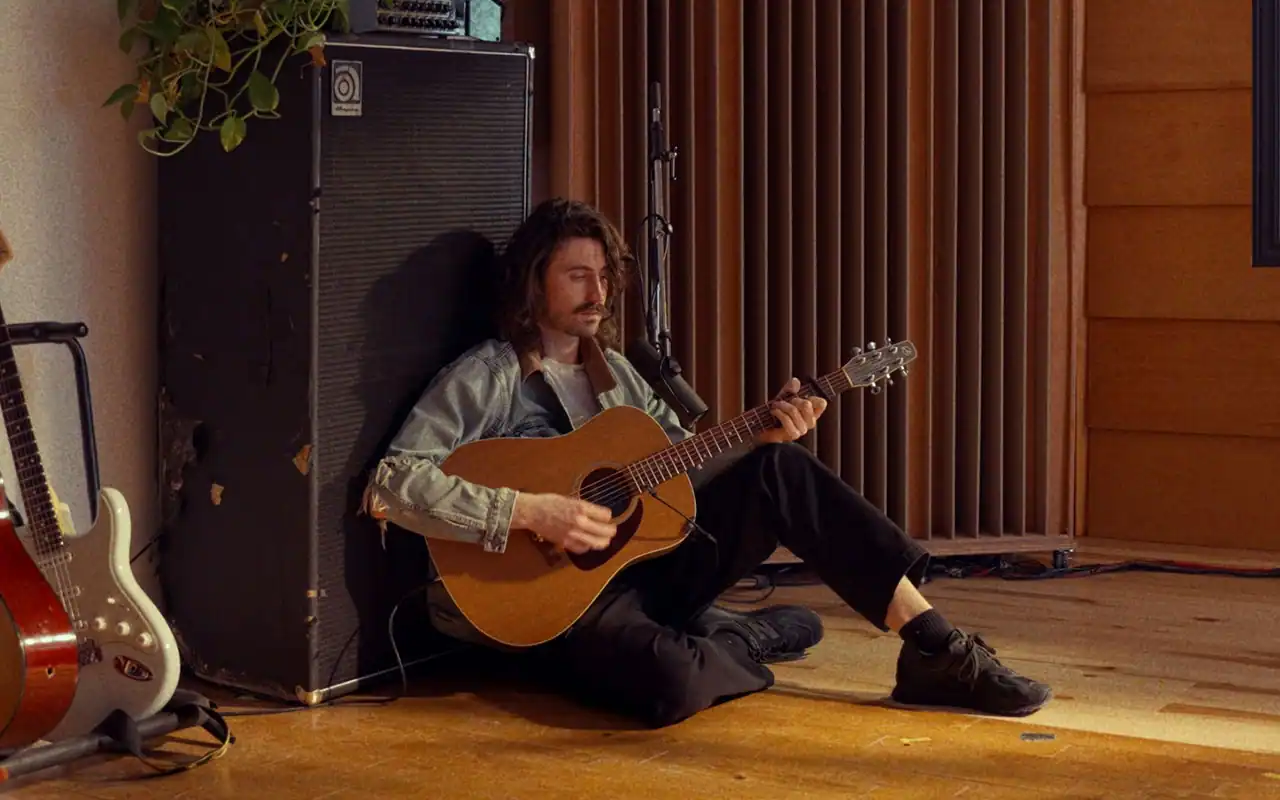
Canada/US Folk and Bluegrass Collective Sourwood Strip It All Back in Stark, Soul-Baring New Single, “When I’m Gone”

After the intricate rhythms and sly wordplay of “Wrong Carolina,” Sourwood return with “When I’m Gone,” a bold departure in form and tone that underscores the power of simplicity. Built around a clean, classic verse-chorus-bridge structure, the song trades technical complexity for emotional clarity—cutting straight to the ache of one-sided closure.

“This song is simply about figuring out that it’s time to move on,” says frontman Lucas Last. “That you have to realize sometimes there’s no closure to be had—and that your experience was entirely one-sided.”

Written during a period of rapid, disorienting personal change, “When I’m Gone” confronts the quiet resignation that can follow emotional upheaval. “Circumstances beyond my control were pushing me into a new phase of life,” says Lucas. “I had to come to terms with the fact that you don’t always get closure on a chapter. Sometimes, things just… end.”

The title itself is never actually sung, but acts as the invisible hinge of a key lyric: Don’t think you’ll miss me. Lucas explains, “That line is delivered in such a matter-of-fact way, and the title feels like its unsaid other half. It’s the emotional subtext that frames the whole song.”

In contrast to Sourwood’s usual dynamic interplay and bluegrass flourishes, “When I’m Gone” is restrained and direct—showing a different kind of strength. “This one doesn’t have extended solos or odd time signatures,” Lucas notes. “It’s just a clear story with a straightforward message. We love complexity, but there’s a different kind of emotional power in something that feels raw and unvarnished.”

Ironically, that simplicity made it the hardest track to record. “We must’ve spent half a day on this one,” Lucas laughs. “It’s the least complex song in our catalogue, but that actually made it more difficult—because the performance had to carry the full weight of the song. We were constantly tempted to add more, but the power came from holding back.”

The track features a notable guest: Lucas’ wife, Aubrey Last, who contributes harmony vocals. “It’s not a duet, but she’s very much the other character in the song,” he says. “She lived through a lot of what inspired this track. She was right there with me when the ship was going down. So it felt only right to have her voice on it.”With “When I’m Gone,” Sourwood continues to expand their emotional and musical range—showing that the most stripped-back moments can hit just as hard as the most intricate.

MOTO SOLO Teams Up with QOTSA’s Michael Shuman on Atmospheric New Single “History Crept On Me”

Los Angeles-based project MOTO SOLO returns with a compelling new single, “History Crept On Me,” continuing its evolution into richly layered, synth-forward territory. The track was co-produced by Michael Shuman of Queens of the Stone Age, who brings an added depth to the release, further highlighting MOTO SOLO’s cinematic sound and dark melodic leanings.

The song’s emotional complexity is matched by its origin. Frontman and multi-instrumentalist Bobby Tamkin shares, “Lyrically, History Crept on Me speaks to the quiet chaos within—a moment when you’re lost or unraveling, and someone from your past returns, just when you need them most. You’re happily surprised and relieved when they appear. After creating the music video, I realized another meaning: that we sometimes slip into our deepest fears, not realizing that all we ever needed was the presence of a friend to help snap us out.”

Tamkin’s creative history spans decades and genres. Before launching MOTO SOLO, he cut his teeth in the experimental underground, most notably as a member of Hovercraft—a band formed during Seattle’s grunge explosion that found itself opening for Foo Fighters and playing with The Melvins. As a young drummer, Tamkin absorbed the raw energy of the era, often finding himself in living room jams with members of Soundgarden and Mudhoney.

Back in Los Angeles, Tamkin became a fixture in the psych-rock circuit, drumming for acts like The Warlocks and crossing paths with players from the Red Hot Chili Peppers and Beck’s touring crew. After years behind the kit, he took a step into songwriting and production, teaching himself piano and crafting what would become the sound of his former group Xu Xu Fang. That project garnered acclaim for its expansive, moody textures—earning premieres from Rolling Stone, nods from MOJO and The AV Club, and syncs in high-profile shows such as Gossip Girl and Bates Motel.

With MOTO SOLO, Tamkin fully claims center stage. “Xu Xu Fang was my band, but I never sang anything,” he says. “I’d write the music and lyrics, then hand the lyrics over to somebody else to sing. It was fun, but there was a disconnect. Felt like it was time to emerge from the curtain. It was the only musical challenge left.”

That leap began in earnest around 2023, when Tamkin began crafting songs with himself in mind as vocalist. He invited Shuman to contribute, initially just on bass, but their collaboration deepened—guitars, synths, arrangements, and co-production followed. With sessions later moving to 64 Sound in Highland Park and mixing helmed by GRAMMY winner Michael Harris, the sound of the project crystalized into something sonically rich and emotionally precise.

“History Crept On Me” follows recent singles like the Depeche Mode-inspired “There’s Another Way” and its Gui Boratto remix, along with the swirling “Celebration Sound.” While still anchored by driving synth lines and Tamkin’s resonant baritone, this new single adds a reflective and intimate tone that hints at what’s to come on the full-length album.

MOTO SOLO continues to push boundaries by blending post-punk atmospherics, synth-pop flair, and the depth of lived experience into something distinct—and “History Crept On Me” might be its most personal chapter yet.

Ask ChatGPT

Video Voyageur: 3Qs with Dylan De Braga

Like a flower rising through the ashes of a burnt forest, Montreal’s Dylan De Braga‘s debut single, “Hold The Door,” blooms from devastation into something achingly beautiful. Written in the aftermath of a painful, heart-shattering breakup, the folk-infused track captures raw emotion with a tender, unguarded honesty.

Unable to even touch his guitar for nearly two months following the breakup, De Braga eventually found the courage to sit with his pain and within minutes of picking up his guitar again, “Hold The Door” emerged. “Without this song I wouldn’t be where I am, and I certainly wouldn’t be who I am,” says De Braga. “It will always hold a special place in my heart.”

Pairing confessional lyrics with a soaring, powerful vocal performance, “Hold The Door” transforms personal grief into a universal meditation on loss, healing, and resilience. The result is a song that feels both deeply intimate and widely relatable, inviting listeners to find their own reflections within its stirring lines.

1. Tell us the story of this performance, why did you choose to capture this song specifically?
I chose to record hold the door specifically because of all the songs I’ve written, it has done more for me than all of the others combined. Before I wrote this song, I was lost, heart shattered and completely empty. I didn’t even touch an instrument or sing for a good 2 months. The first day back I picked up my guitar, and this song basically wrote itself out of thin air. Later I decoded the meaning and realized it was an homage to the very girl who broke me 2 months prior. Since writing the song my life has changed in so many magical ways and it has (no pun intended) opened doors for me that would have been locked without it. Doing an acoustic live demonstration of the song as it was written only felt fitting before releasing the real song.

2.What were you feeling inspired by the day of this performance?
On the day of the performance I was thankfully able to tap into some of the raw energy and emotion that the song was written from. Even 2 years after the event in my life which led to Hold The Door, the pain and damage is still very easy to access through a time portal of music.

3.What was the process of making this video?Creating this video was a deeply immersive and emotional experience. I had the privilege of working with two incredibly gifted videographers who brought not only technical brilliance but also a profound sensitivity to the process. They transformed what began as a chaotic, nondescript studio into something that felt sacred, a space filled with warmth, intimacy, and a quiet kind of magic. That environment allowed me to connect with the emotional core of the song in a way I hadn’t anticipated. It felt less like performing and more like surrendering, letting the music and the visuals guide me to a place that was raw and honest. I truly believe that energy is captured in every frame of the final piece.

Video Voyageur: The Bapti$$

Following the soul-stirring release of “Crazyglue and Skeletons,” The Bapti$$, the boundary-pushing musical rebirth of multi-instrumentalist Joseph LaPlante, returns with “My Father’s Sins,” a raw, introspective new single taken from his just-announced debut album, Pop Cult(ure), out September 26th.

Anchored in aching guitar and a deep 808 heartbeat, “My Father’s Sins” is a confessional offering that digs deep into the scars of lineage, masculine silence, and the fight for spiritual freedom.

“I wholeheartedly believe in Generational Curses and contracts made with the Spirit World,” LaPlante reveals. “I took it on myself to break my family tree free of those shackles that have caused so much pain in my blood line.”

1. Tell us the story of this song, why did you choose to visualize this song specifically? 

I come from a long line of hardened individuals who have grown to love the life of sin they inherited. That didn’t sit right with me, so I chose to use my Art to shed light on the topic and break generational curses with my music.

2.What was the inspiration behind this video (visuals, storyline, etc.)? 

It tells a story that too many are familiar with, Lust, Addictions, Violence and the battle we have with ourselves between light and dark. 

3.What was the process of making this video?

A lot of people are using AI but myself and Dark Shawn when we team up we want to do it a tasteful way. We have a good balance of old style film and AI generated story telling. 

Carrabelle Returns with Epic Release “We Can Fix You”

From the heart of Orlando, Carrabelle invites listeners to join them on a new sonic journey with the release of their latest single, “We Can Fix You.” This track emanates a poignant yet playful exploration of human vulnerability, offering a balm for those who’ve ever felt shattered, misunderstood, or in need of something to stitch their soul back together. “We Can Fix You” is a melody woven from Carrabelle’s signature blend of emotional depth, shimmering guitar-driven hooks, and a bright, pop-infused glow. It embraces the essence of pop-punk’s youthful heart while gracefully stepping into a more mature and polished sound. It’s as if the reckless energy of the mid-2000s has matured into something softer but no less powerful, like the kids who once found solace in All Time Low have grown into adults, still carrying the same hunger for connection, but with a touch of wisdom.

This single stands as a testament to the band’s growth, both in sound and spirit. It serves as an ode for the ones who have stumbled yet continue to reach out, yearning for a way forward. A song that feels both timeless and fresh, it speaks directly to the soul, reminding us all that no wound is too deep for healing. Fans can catch Carrabelle live at Harbour & Friends ‘25 on August 9th at The Abbey in Orlando, where they will be joined by Abby Holiday. The performance promises to be a reflection of everything the band has become: vibrant, heartfelt, and connected to the audience in a way only Carrabelle knows how to achieve.

Carrabelle is an indie rock band from Orlando, blending emotional lyricism with punchy guitar-driven hooks and bright, pop-influenced melodies. Known for their vibrant energy and down-to-earth charm, Carrabelle writes songs that feel both personal and universal, whether they’re fixing broken hearts or introspectively looking within. Their latest release, “We Can Fix You,” showcases their signature mix of wit, warmth, and raw honesty, delivering a playful yet heartfelt anthem for anyone who’s ever felt broken.sty, delivering a playful yet heartfelt anthem for anyone who’s ever felt broken.

Joe Lapinski Debuts Powerful and Resonating Releaes “New Day,” Lead Track “Set Free”

Canadian indie artist Joe Lapinski unveils his bold and deeply personal new album, New Day, a genre-blurring exploration of identity, community, trauma, and healing. At the heart of the album is its theatrical and liberating focus track, “Set Free,” a passionate plea to break cycles of addiction and self-sabotage in the name of love.

Produced in close collaboration with longtime creative partner Dave Clark (Rheostatics, Gord Downie’s Country of Miracles), New Day is Lapinski’s most sonically adventurous and emotionally resonant release to date. Across its tracks, Lapinski channels life-altering transitions – opening a studio, becoming a father – into songs that wrestle with what it means to surrender to growth.

“Set Free” stands as a powerful centerpiece, blending indie rock punch with glam-era theatricality, calling to mind early Bowie and Bahamas in its fearless emotional range. It plays like a duet between two people desperate to connect, but haunted by inner baggage – a raw, slow-burn anthem made for anyone who’s ever felt like their past keeps them from the love they want.

“Set Free” is a passionate scream – a cry to be free from your baggage, your addictions, your fear so you can finally let love in. It’s about pushing past what’s holding you back, not just for yourself, but for someone you care about. A thread that runs through New Day is “letting go.” If we let love rule, we’ll find a deeper happiness, as well as a deeper connection to the people around us, and our community. – Joe Lapinski