Fool’s Gold: Backyard Party Starters

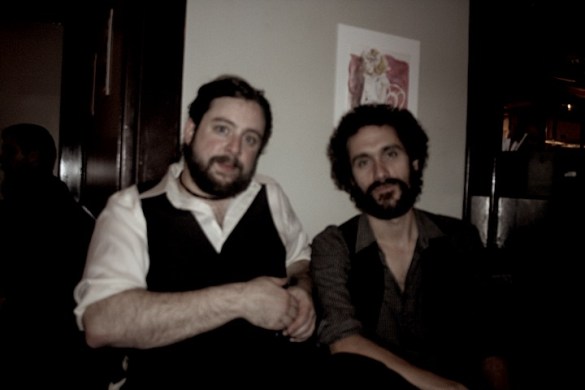
Winter is fast approaching, which means puffy parkas, runny red noses, and Frank Sinatra holiday songs. But if you need an escape from the grey, put all your trust in LA-based, Afro-poppers Fool’s Gold. One look at their Matthew Lessner-directed video (I don’t know if geriatrics in neon-colored swim trunks do it for you), and you’ll be questioning why the hell you don’t live in California. The video and its song, “Surprise Hotel,” is pure summer joy, punctuated by Lessner’s quirky visual style. This is the same dude who produced Dirty Projectors’ “Stillness is the Move,” the best ode to llamas ever. But back to the topic at hand: Fool’s Gold is good. The 11-member troupe combines Afro-Caribbean soul and good ol’ domestic indieness. The band, co-founded by Israeli-born Luke Top and Lewis Pesacov, blends Hebrew and English to form a cultural explosion of sound that makes you smile and dance and smile some more. They’re currently touring, bringing their big-band, on-stage celebration to cities all around the U.S. In between shows, we touched base with guitarist Pesacov to find out just how creatively effective all that California sun is.

Tell us about the tour Fool’s Gold is embarking on. Excited?

Lewis Pesacov: This is going to be the longest tour we’ve done. We played in LA extensively and we’ve done the West Coast a couple of times, but we’ve never done non-stop, all the way around the country, so we’re super stoked.

What’s your favorite city to play?

I love playing Montreal, it’s always fun. The area is so cool, the crowds in Canada are always really good. We played a show recently in Vancouver and we had a serious encore, which was crazy because we had never had that outside of Los Angeles before.

You used to play a lot of causal shows like barbeques and birthday parties. What’s the transition been like playing actual stages and venues?

We played anywhere. Those kinds of shows are so communal and we played really long sets and then it’s so blissful and everyone’s dancing and having an incredible time. So going on the road and trying to win over fans in the traditional venues…it’s a different challenge. It’s our goal to make these shows feel like backyard barbeques.

What’s your favorite venue to play in Los Angeles?

There are so many good venues. We live in Echo Park, so we always play The Echo.

Have you always been based in Los Angeles?

I lived in San Francisco for 5 years and Germany for a year and a half in a little village in the Black Forest and 5 months in Berlin. My degree is in classical music theory and composition, so I was at a music conservatory studying for the year. I went to San Francisco State University with [Luke Top] the singer for Fool’s Gold.

When did you graduate?

 Oh, ages ago. 2002.

How did you and Luke come together musically?

We actually know each other from high school. We both grew up in Los Angeles and always played in each other’s bands. I played keyboards in his band in college and he played in my other projects, but it never happened that we started writing songs together till about 5 years ago. And that’s when we formed Fool’s Gold.

How did the band’s Afro sound come about?

I’m in another band, Foreign Born, with Fool’s Gold member [Matt Popieluch] and we’ve been playing in indie bands predominantly. We play all sorts of music, but Luke and I always shared a love for world music that we never really explored, so we decided to explore it.

Why did you decide to incorporate Hebrew?

We didn’t make a decision to sing in Hebrew straight up. It came about very naturally. Luke was born in Israel and most of the music we listen to is, in fact, sung in a foreign language. It’s been really joyful and Luke’s had a good time exploring writing lyrics in Hebrew and I think it’s liberated him to sing in a different manner.

Your music has a strong communal sound. Did you always envision Fool’s Gold as a big collective of musicians?

It’s intrinsic with that type of music, it’s always played in the communal sense. So when we first started the band Luke and I were writing the songs and we just invited all of our friends, anybody who wanted to come play with us. We started with maybe 15 people playing with us and it naturally whittled itself down to the people who wanted to become dedicated members.

What are the pros and cons of having such a big band?

The pros are that it’s always fun, you’re always with all these great friends. It just makes music so enjoyable to play with so many people. It’s an incredible thing. The cons are just transporting that many people. Unfortunately, we’re not wealthy enough to get a bus, but we all squeeze into the van and get to know each other really well.

A little too well, maybe.

That’s part of it.

Is Fool’s Gold spending Thanksgiving together on the road?

It’s actually my birthday. Our saxophone player Brad Caulkins lives in Ohio, so we’re going to drive to Columbus, Ohio, and have a family Thanksgiving at the Caulkins household. It’s going to be really fun.

Your Matthew Lessner-directed video is pretty trippy. Where did the idea come from?

We gave him free reign, he had this vision. The idea was a surreal feel, to capture the ecstatic bliss you can reach. Like the old men going crazy spraying each other with soda, wow! It’s a funny video.  

What are you envisioning for the next album?

We’ve been discussing it a lot, and there are so many new directions we could go. We already have new songs. Luke and I have been talking about going off somewhere for some time together to figure out exactly what we’re going to do. There could be a shift in sound, it could be interesting.

Rolling Stone, Wall Street Journal, and Pitchfork all recently came out with articles on you guys. How does it feel to be getting all this mainstream press coverage?

It’s really strange, we’ve been playing music our whole lives. we’re just so happy to be doing it. It’s exciting to think that other people get to hear our music finally after all these years.

Do you work outside of Fool’s Gold?

I’m lucky that I work for a really cool company called Black Iris. They make music for TV commercials.

Like jingles?

Well jingles are outdated these days. If you watch TV, commercials want indie rock or alternative music. So we basically have this boutique company where we get to make the music that we like hearing ourselves. Black Iris also has a little 7” label, so we’ve been recording local bands. We record it in our own studios and then we release them on our own little label and it’s only 7” singles. That’s the first way we recorded Fool’s Gold.

MM: You do a lot between Black Iris, Foreign Born, and Fool’s Gold.

LP: These days I’m holding on to my energy. I’ve got a lot on my plate. I have a lot of creative energy, I’m just happy that I have multiple projects. It’s a fine balancing act. I love recording music and I have so many ideas. I’ll walk the tight rope as long as I can.

–Paola Capo-Garcia
Spreading the Love with Savoir Adore!

sa

Savoir Adore might make little to no sense when translated from French, but this New York based band has been doing the complete opposite. While gaining an immense amount of recognition in the indie-rock industry, Savoir Adore plans on gradually expanding its music not only domestically but internationally.The group’s mates Deidre Muro, Paul Hammer and David Perlick-Molinari expose the details of Savoir Adore’s debut album In the Wooded Forest and share their experience of their second year at the CMJ.

What is the translation and meaning of your band’s name?

Deidre:We just sort of jammed together and we had never played together before. We literally made one mp3 recording and wanted to share it with people on Myspace. So, we made a name on the spot to share that mp3, that’s how it started but we found more meaning in it on the way.

Paul: We had just been talking about the French language and Deidre recorded a song with several French words in it and our name roughly translates as to know love, or adoration. Savoir Adore is actually two verbs so it doesn’t literally make sense, but maybe a hundred years from now it will be accepted as a phrase.

The news are that you guys have a new album, what sets it apart from the previous recordings you’ve worked on?

Deidre: We only had one album before this one. It was recorded in one weekend, so we kind of challenged ourselves. As for the new album, we had a more extended approach, we definitely spent more time with it, I guess that’s the main difference.

Are you pleased with the outcome?

Paul: It’s sort of unavoidable, as you record the new songs, it’s unavoidable to discover the new recording methods. We learned a lot through the process. I’m definitely happy with how it turned out, but also now we’re separated from it and we’re recording new stuff.

sa2

Can you describe your music-making process?

Deidre: We have a couple of different methods. We’ll be in the same room, Paul will be on the drums while I’m jamming on something else and we sort of hit record and jam.Afterwards, we’ll listen back and pick out different parts. Sometimes, one of us will start an mp3 and forward it to someone else and take it from there.

Paul: Another way to describe the process is to tell you what we don’t do. That being is that we never get together and write a song straight through. The project itself has to do a lot with experimenting with both song writing and recording processes. The EP was basically all the sounds you hear was the first time we ever played them. Everything was written in the room. As for the new album is was more developed; we sent a few tracks back and forth and built upon music we had recorded. As we develop, we’re discovering what works the best. 

Who mostly contributes to the song-writing?

Paul: The song-writing is pretty even. We find ourselves swapping material. Deidre tends to write more lyrics, I tend to write more of the rhythms, and David contributes with melodies.

Do you have any favorite songs from your own recordings?

Deidre: I would say “We Talk like Machines”. 

Paul: I agree.It has become our favorite song on the album. For some reason every time we play it live, it always feels new and refreshing every time.

What bands have you been listening to?

Paul: We both have been listening to Phoenix nonstop.

2009_1024CMJ0082

Aside from the band and the music, what do you spend your time on?

Deidre: I love this question! We both enjoy cooking and eating, I like discovering new recipes and I cook for David all the time.

Paul: I’m more of a meat person. I like roasting meat…None of you guys are vegetarian, right?

 Well, I’m actually a vegetarian.

Paul: I guess I have to rephrase that now(laughs). I definitely enjoy cooking though.

Was there a turning point for Savoir Adore?

Deidre: We didn’t start out as a band, it was very gradual. There was not really a turning point, and I don’t even know if it’s that way now. I mean, we both have left day jobs, but we still do freelance, It’s just a different lifestyle.

 How has your music developed and changed over time?

Deidre: I think it’s a time reflection what we’re currently influenced by. We absorb what we’re into in the moment and incorporate it into music.

Paul: The last two years we’ve learned a lot about playing together. It was interesting to see that the way we recorded and discovered what works for us and what doesn’t. Much of what we have done so far is experimentation. Now we want to approach things more critically, realizing the need for more harmonies.As you work on a project you sort of realized the strengths and weaknesses.

This being your second time playing at the CMJ, would you say you like it? 

Paul: We haven’t been able to see a lot of bands because our schedule revolves around performances. I think it’s been great both years.Every weekend in New York is sort of a mini CMJ. We’re hoping for booking agents to discover our music through our shows.

 Do you have a favorite venue to play at?

 Paul: Music Hall by far! They treat you well, the sound is incredible, and you’re in the middle of Williamsburg.

What’s the band’s next mission?

Deidre: Definitely writing.

Paul: We’re planning on going back to the studio, we’re hoping to expand on where we’ve been releasing our music. Touring is definitely on the agenda, but we want to do it right. This meaning support and someone setting up shows for us. Recording, releasing music in the UK and hopefully going to Europe eventually. I think the world is ready (laughs)!

-Viktorsha Uliyanova

múm’s The Word

mum

Close your eyes and you’ll see black. Maybe some sparks, some flecks and non-descript shapes. But when members of múm close their eyes they see two-headed talking goats, whimsical planets made of ice, and prancing forest nymphs. They see their music take shape into wondrous things. múm has long been part of the Icelandic ethereal elite (alongside Björk and Sigur Rós), producing beautiful epic noise that matches the mystique of their native land. It’s the sound a haiku would make if it could talk. And in the past 10 years, múm has toured extensively around the world, spreading the joy and sadness of their five albums, countless EPs, and compilation discs. Now they’re embarking on a European tour off the heels of a North American stint, and luckily, we got to talk to founding member Gunnar Örn Tynes prior to playing a show in San Francisco. Here he talks about his band, his roots, and the music you shouldn’t be surprised he listens to.

Modern Mystery: How different is Sing Along to Songs You Don’t Know from múm’s other albums?

Gunnar Örn Tynes: I think we always been open to doing different things because we don’t want to get stuck in a groove. But then again, we are always creating music. [Sing Along] is a lot more simple maybe. I think it’s such a linear thing for me, I’m really excited about it and the music we’re doing now.

Out of all the albums spanning your career, would you say one of them is quintessentially múm?

I wouldn’t want to say one is more than the other, it’s very hard to pick your favorite children. But I think we have the same approach to music now, [it’s] just [that] we are very different people.

You tend to have two or three-year gaps between albums, is there a reason for that?

Two years is not really a long time when you think about it. We do an album and then we do all the touring, that usually takes almost a year and then we have a little break. It’s a natural cycle.

 Are you ever not doing music then?

No, not really. I’m constantly working. I do a lot of production and engineering for other people when I’m not working on my own stuff. I’m usually with somebody else in the studio or I kick back and relax. I’m actually reading a very funny Swedish criminal story. I read a lot of different stuff, whatever people recommend.

What kind of music do you listen to? Anything people might be surprised about? 

I hope not. I think it’s very strange when people only like one type of music, when people only like one type of food. I can’t put any limit on what music I like. I listen to classical music, rock and roll, R&B, hip hop, it’s music! I have friends who really like Britney Spears songs, but they can’t acknowledge it because it’s not correct or whatever. I think it’s wrong, suppressing your own feelings.

Are there certain cities you love to play?

We just played in Japan a couple months ago, it’s amazing. It’s a great place to go play and spend some time, very different from anything else. But I just think it’s very nice going around. The interesting thing is meeting the people. People are generally interesting wherever you go.

It’s interesting, you’re fascinated by other cultures, yet Icelandic culture itself is so fascinating, especially because people don’t know very much about it. What was your upbringing like and how did Icelandic culture play a part in your music?

My parents were both working for an airline company. My dad was a captain and my mom was a stewardess, so I was off along with them all around the world on trips. Great fun for me, of course. But in Icelandic culture, [there’s] a lot of music in the traditional culture, a lot of spoken word or rhyme. There’s always been a movement, playing music not to try to make a band that’s going to be next big thing, but it’s always been a very common activity for a lot of people. It’s very collaborative in Iceland.

2009_1024CMJ0317 by you.

When did you discover music?

 Very early, I was maybe 10. I started messing around with cassette tapes and doing strange music. I never learned how to play any instruments, I’ve always been more like playing with sounds, or doing something unexpected, like an experiment. Soon after I started doing things on the computer, from there I picked up a new instrument every two years.

You call it “playing with sounds,” and that’s true about múm’s music. It’s very playful, but there’s an inherent sadness. Is that dependent on your mood?

 It’s hard to break down what feelings there are in a song, because there’s usually a lot of everything. It’s a very emotional thing to do. There are aspects of music that can elevate your moods, whichever way you go. I used to love The Cure, for example, and that music is very much sad and it’s up to you to interpret it.

What do you think you’d be if you weren’t a musician?

[It’s] very hard for me to think about it. I would probably be working with sound in one way or the other. If not I might just be a school teacher. But it wouldn’t be a glamorous business. I couldn’t.

múm has been together for over 10 years now. In what direction are you looking to take the band for the next 10 years?

Ten years is a very long time. Anything could happen. Next album could be a hip hop album, I don’t know! I look forward to seeing where the music takes me.

 -Paola Capo-Garcia

Check out Live Photos from múm’s CMJ Show After the Jump

Playing it Raw with The Tall Tall Trees

ttt

For those who thought organic option was only available in the food menus and grocery stores, open your mouths for a fresh injection of natural banjo harmonies and strictly natural beats. New York’s band Tall Tall Trees have set themselves for an  unprocessed music foundation, which developed through the release of their debut album. The band’s members Mike Savino and Mathias Kunzli join Modern Mystery after their show at the Bowery Electric and share the recipe used for cooking up their tunes.

What is the story behind the band’s name?

Mike: Tall Tall Trees is a song written by Roger Miller, who is one of my song-writing heroes. We kind of wanted something that is really organic and natural, so when we came across Tall Tall Trees it kind of clicked.

How did the band start making music?

Mike: The band was originally a trio. Looking back at the datebook we started writing in 2005, but that wasn’t really the band.Then Mathias and the guitarist Kyle joined and we started playing acoustic.

Who are your influences and what is the main inspiration behind your music? It doesn’t have to  be limited to just the music spectrum.

Mike: The thing that four of us have in common is that we’re all freelance musicians. The main thing for me is just getting the music out. Just exposing our chemistry as a band and our friendship is a big part of our music and inspiration. I just love hanging out with these guys, we have so much fun playing together.

How did you pick up your instrument?

Mike: I was originally a bass player and went to school for it. There was a trip when I went to Brazil and I was playing electric bass. We would be in the country side of Brazil and the rest of the band had all acoustic instruments and were able to play with street musicians and hang out and just play all night. Having an electric bass I didn’t have a chance to share that. I picked up on some percussion but I really love to play string instruments. After the trip I looked into my closet and up on the top was this banjo that I toyed with as a teenager but I pulled it down and that same day I wrote two songs, and it kind of took off from there.  Our sound is really organic, I don’t ever see us using a computer while playing onstage.

Mathias: I initially wanted to play drums very early, but they didn’t offer it in school In Switzerland. It wasn’t until I was 13 that it went through and I actually followed the sound and went to school for it, and I still haven’t stopped.

How long did it take you to record your debut album and would you say you’re pleased with it?

Mathias: It took us a long time merely because we didn’t have any cash to go anywhere in a proper situation where we can go and record in a studio all together. Also, Savino just kind of started messing around with sounds and the banjo. We just did it all in our homes, passing around the music files.

Mike: So in the end it took about a year. It also took so long because we’re all so busy involved with creating music outside of the band. We had a lot of fun recording, it has  New York in it. It was recorded in Harlem, also in Brooklyn, there’s also the New York marathon in there, we were just trying to capture our environment in the music. We’re very proud of it and and wouldn’t change a thing. We’re working on our next one, where we hope to be recording together in the same room.

Do you have any favorite songs to perform during shows?

Mike: It all depends on the day and the sound. Also the audience is a big deciding factor. If the people are more rowdy we like to hit it harder, but if it is more of a listening crowd, which we don’t really have that much then of course we’ll jam with more mellow sounds. A balance of both sounds is great, through which we tried to make the album more eclectic.

If you guys could time travel which band or artist would you want to play with?

Mathias: Oh man! The first stop would have to be the 70’s, probably check out Hendrix, Aretha Franklin, The Beach Boys. Mike: But we’re also recovering jazz addicts.

Have you guys discovered any good tunes lately?

Mike: I love Akron Family, Dr. Dog, Fleet Foxes. I’ve also been getting into Dirty Projectors, I mean there is lot of good music out there.

Mathias: I checked out a lot of the stuff Michael mentioned. I explore sporadically, I rarely have time to check out music. When I get home I never have music plating, I mean I do sometimes. I’ve been packing up my house and moving and I realized that for 2 days I’ve listened to nothing.

What are your interests outside of the music scene?

Mathias: I’ve been getting into photography, just checking out a ton of art, I’m into some visual arts, really into animals. All I really would love to do is just take photos of animals and work for the National Geographic. I would sell my drum set in a minute.

Mike: For me, I love to read. I have a limited scope, but I love art. I think a parallel life path for me could have been art. I guess I have a basic artistic inclination.

 When did you decide to take a full-time role as musicians and leave your day jobs?

Mike: The weird thing about us is that we’re all music school graduates.From the start of moving here to New York is when I kind of decided that that was the goal. I had a switch go off, I saw a really great show and I realized that I could encompass that too.

 What do you guys like about being part of New York City scene?

 Mike: It’s so alive, just look outside.The thing about playing music here, that’s different from Los Angeles, there’s such a massive amount of things you can get into here, I mean I’ve played with so many different types of music, that varies from belly dancing bands, afro-beat, jazz, rock anything that you can think of. There are so many musicians here that you can collaborate with, learn from, it’s extremely wild. It’s all about diversity here.

Is it your first time at the CMJ?

Mike: As Tall Tall Trees, yes.

Do you like it so far?

We haven’t seen much of it, since we’ve been so busy. Although, we’re planning to go out and check out some shows.

If you weren’t a part of this band what would you be doing?

 Mathias: Be a part of another band probably, or do something else involved with music.

Do you guys have any upcoming tour dates or shows?

Mike: We have a couple of shows coming up, one in November with this great band called Phonograph. Also going to be playing at the Columbia University and the Brooklyn Chapel, have a  great acoustic vibe.

What’s next for the band?

Mike: Well, we’re writing, we’re playing, we’re hoping to earn some money to produce our next record. Hopefully, things will keep moving forward. Mathias:We want to thank anybody who is willing to check out our record and come see the show.We’re just here to make people smile, make good music and sing our hearts out

-Viktorsha Uliyanova

Surfer Blood is EVERYWHERE!

Surfer Blood @ CMJ, Cake Shop by you.
We can see a little bit of everything that’s good about music in Surfer Blood. And, while they played a total of twelve shows over the week of CMJ, I only got to catch two of them. It’s still a big number to see any band more than once at CMJ, and they were well worth it! As I trailed behind this site’s curator, Melissa, she will more than likely recount that this band was my obsession for the majority of the festival. We were also more than pleased to be blessed an interview with the band, which is posted below. Surferblood is at the top of the surf rock genre that exploded this summer, although they are hesitant to admit it. No, this is an indie rock band, and one of the best and brightest and…youngest at the most. You can hear the rifts of some of the genres greatest. A little bit of Yo La Tengo, a smidge of built to spill,  and even a pinch of Pavement. So, although the band has a very modern sound, the influences of Surfer Blood go back a ways. This is all in my own interpretation though, the only band dropped by the lead singer, JP Pitts,  as being an influence is Yo La Tengo (in particular the song “Sugar Cube”). Surferblood has been on constant replay in my itunes, and I’m sure we will be hearing a lot about them soon. The CD drops Janurary 19th on Kanine.

 Bonus: Same label as Grizzly Bear!
-Joe Paolucci

Surfer Blood Interview @ CMJ by you.
Surfer Blood is one of the fastest rising bands on the scene right now. Blending a bit of 90’s alternative with 60’s surf rock, the band who was hoping they could land one show at CMJ ended up with over 12. I sat down with the band who is John Paul Pitts, Brian Black, Tom Feketethe, Tyler Schwarz and Marcos Marchesani, on their first day of the festival, in the back of their van no less, to get the scoop on one of the hottest  bands around.

How did everyone in the band meet?

JP: The drummer Tyler and myself have been playing together since 2006 — we met in Orlando, Florida. We started playing together and feeling it out. We were working and going to school full time, and we started jamming together as this band called Jabroni Sandwich, which is a retarded name but we were serious at the time. We had a few members come in and out and then I met these two guys (Tom and Brian) at a Diplo Ultra after party in Miami, we all went for the free beer and met each other. They were like “Oh I’ve heard of you guys, I really like you,” and we had heard their band too and was like “We should all jam together sometime and tour.” And I was like, “Well if you’re serious, call us and we’ll do it.” And three days later were already learning the songs and planning a tour.

Tom: It’s strange, because we had heard their songs and really liked it but none of us were really doing anything, I feel that each of us had a member or two in our band that wasn’t really available to do it full time. We’ve been a band for 6 months, but we started  with the idea of we’re going to get this record out and we’re going to tour and that’s it. So that’s what we did and we’re on a tour right now, so it turned out.

How did you come up with the name Surfer Blood?

JP: The same night that we met in the club, Tyler was in the backseat just mumbling stuff under his breath, and we had the music playing really loud and he wanted us to turn it down but no one was really listening to him so he started yelling random things, and Surfer Blood was one of the things he yelled, and we all were cracking up. We were trying to think of names and stuff.

Who are your influences? You sort of have a Weezer meets Beach Boys vibe.

JP: We get Weezer a lot , but I don’t see it as much. I love Pinkerton but it’s not like it’s a bad thing.

Tom: A lot of people tell us they get a nostalgic feel from us, like we remind them of a lot of bands from the 90’s.

JP: We love all those bands, we don’t really mess around with too much electronic stuff. I mean we have Marcos playing keyboards.

Tom: We have another member (Marcos) we just added to do all the keys and do extra percussion on the record, and it works out.

JP: Now the live show has gotten that much better. Our influences, Yo La Tengo is one of my favorite bands, in terms of current bands, Women are great, Holiday Shores is really good. We’ll be playing with them and we’re excited about that.

Brian: There’s this whole group of bands in Athens, GA, this guy Mercer is in a couple of bands, this one called Mouser.

JP: The So So Glos from New York are really good, we’re big fans. Our influences if you can’t tell in the record, are really, really broad. Some of the guitar effects and rhythms. We get really excited about other people’s music and that’s what kind of makes us want to play music. We love so many bands.

Brian: We’re glad there’s other bands out there otherwise we’d be writing the same song over and over again.

You’ve been getting a lot of attention from blogs, online media and general word of mouth. Does your ever growing and fast attention ever surprise you?

JP: Every single day. We’re just so grateful, just the fact that we’re playing 12 shows. Just four months ago we were like “Oh man hopefully we can find a way to get one CMJ show,” and now we’re playing 12.

Tom: I always say this, it doesn’t really hit us until we’re doing it. We’re kind of floating around and then it’s like “Shit it’s really happening.”

JP: Everytime we see a favorable blog entry or review or something we’re just so happy because people can be so brutal. It’s so bizarre to us. It’s really strange how it happened, we played 4 shows in New York, and the first couple were really bad and then we played one that was decent, then I guess a couple people wrote and heard about us and ever since then it’s been steady. I got a message at 9 o’clock in the morning saying “Hey do you guys want to be on the Pitchfork Forecast?” and we thought they were joking or something and we saw it later that day like “Oh wow!”

Is  this your first time playing CMJ?

JP: Yeah, it’s all of our first time playing, none of our previous bands did.

How did you get involved with Kanine Records?

Brian: You know The Drums? They were name dropping us in interviews and stuff, and then there was a show for Insound that they were playing and they told Leo to go see us at Bruar Falls, and Leo came.

Tom: They’re really cool and they’ve been the most helpful people.

Tyler: When I first moved to Orlando, I was playing in this band that I wasn’t really into but I was playing drums for it, and I didn’t even know anyone. And his band was based 45-minutes east of Orlando and we played a bunch of shows together, so they contacted us about 12 months ago asking if they could use one of our songs for DJing, and it wasn’t until we met each other in Gainsville that I was like “Holy shit, you’re that kid Jacob!”

JP: We are really cautious about being lumped into the whole surf rock thing. The only thing really surfy about our band is that we have vocal harmonies, and our guitars sometimes have reverb on them.

Tom: We don’t want to get pigeonhold in that category, we’re going to do other shit. We’re wondering what the next record is going to sound like.

So your first album, Astro Coast is due out in January. Are you more excited  or more nervous about the release?

Tom: It’s been done for a while, and we just want it to be out and available and start working on more stuff.

How does the songwriting process happen within the band?

JP: Well a majority of the songs we already had but people have brought in new dynamics and things have changed. There’s been a lot of tweeking and the live sound sounds very different from the recording sound. It’s a new perspective.

You’re doing a lengthy tour with Japandroids and Art Brut. Is this the longest tour you’ve ever done?

JP: It’s the furthest we’ve ever been for sure, and yes our longest.

Brian: We did like 30 self-booked dates but those were miserable for the most part. Sometimes you go to a city and no one is there. It happened in DC, it was Thomas’ brother and his girlfriend. Even the promoter didn’t show up.

Where do you see Surfer Blood in 5 years?

JP: We still want to be touring and writing, doing exactly what we’re doing now.

Tom: At the end of the day, there’s nothing we’d rather be doing. It’s fun, it’s better than school!  We don’t want to be some sort of hype band.

JP: We kind of want to break the trend that’s been going on. After people stop blogging about them, it’s all over.

CHECK OUT TONS OF SURFER BLOOD PICTURES FROM CMJ 2009 AFTER THE JUMP

Portugal. The Man @ CMJ, Apple Soho, October 23, 2009

Portugal. The Man live... by Christoph!.

Roughly 200 fans cramped into the Apple Soho store on Friday, October 23rd to get a glimpse of the prolific, Portland-via-Alaska group, Portugal. The Man, as they skimmed the surface of their catalogue for pre-CMJers.

The band kept the mood mellow, employing strings that coupled nicely with John Gourley’s flailing voice, trembling during high notes, hissing like a crooner during low ones.

The set opened with “AKA M80 The Wolf” off of Waiter: “You Vultures!” The audience, which ranged in age, chanted along Gourley, “I am but a man / but a proud, proud man.” And everyone did their best clap during “The Sun”—a tune from the band’s 2009 LP The Satanic Satanist—while Gourley’s lyrics took flesh (“Fixing up to wallow my soul / Because we are all, we are all just lovers”).

But of course, being as prolific as they are, they can’t just have one full-length album a year. The band has already completed another studio recording, American Ghetto (release date TBA), and is currently on a two-month trek around Europe.
–Paola Capo-Garcia