Eric Reinhart Brings the Energy on New Single “Keep It Simple”

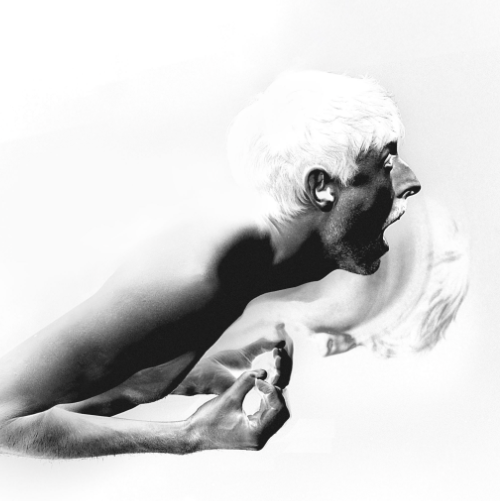
Building on the momentum of his debut single, “Chances,” emerging pop artist Eric Reinhart returns with “Keep It Simple,” a sleek, edgy, and self-assured new single that channels frustration into clarity. Built around a tough, no-nonsense mindset, the track captures the moment of choosing to cut through drama, trust your instincts, and move forward without overthinking.

“I found myself in a really frustrating situation,” Eric shares. “Someone did something I just couldn’t believe, and I had to deal with it. I hate drama, but I had no choice. So I just told myself: keep it simple, don’t overthink it, move forward. That mindset became this song.”

More than just a reaction, “Keep It Simple” reflects a personal philosophy. “It’s kind of a personal motto,” he explains. “I can naturally overcomplicate things, so I’m always reminding myself not to. Life is better when you strip things back.” That mindset drives both the song’s message and its confident, stripped-yet-impactful delivery.

What sets the track apart is its dynamic production. A whispery, tension-building pre-chorus gives way to a bold, high-impact chorus, while the bridge shifts the song into entirely new territory. The production pulls from a wide palette of rap cadences, subtle Spanish guitar textures, and polished pop sensibilities while maintaining a cohesive, unmistakably Eric Reinhart sound.

Keep It Simple” came together quickly, but not by accident. Written during a first-time session with producer Sam Shrieve, the chemistry was immediate. “He built this beat with a real Justin Timberlake kind of energy, and we both just started losing it,” Eric recalls. “I started freestyling over it, and the whole song came together in about two hours.” That spontaneity remains embedded in the track’s energy, giving it a sense of urgency and authenticity.

Mark Fenster Debuts Epic Release “Cascades, part one: Glacial Riverflow”

Furthering his lifelong exploration of music as a source of healing, reflection, and connection, Montreal-born/Gabriola Island-based composer, vocalist, and meditation leader Mark Fenster shares “Cascades, part one: Glacial Riverflow.” A transporting blend of new age, neo-classical, and meditative sound design, the piece draws inspiration from the natural rhythm and resonance of rushing mountain waters.

Rooted in Fenster’s deep connection to nature, the track captures the immersive experience of sitting beside a glacial river, where light, motion, and sound intertwine. “I’ve always loved the feel and sounds of water,” he shares. “I can sit for hours listening and feeling the rush of life and love in every passing drop.” That sense of presence flows through every moment of this composition, offering listeners a space for calm, reflection, and quiet inspiration.

Originally conceived in Montreal in the 1990s, the piece takes on new life as part of a larger, evolving vision. Now forming the first instalment in a three-part suite, “Cascades, part one: Glacial Riverflow” reflects both patience and creative intuition, with parts two and three set to appear on an upcoming full-length release. The expansion into a multi-part work came naturally, guided by what Fenster describes as an inner calling to fully realize the composition’s emotional and sonic potential.

At the heart of the track is a flowing interplay of layered guitar lines, feathered by Jose Vieira’s soaring solo phrases, all moving independently to converge in harmony, mirroring the unpredictable yet cohesive motion of water through rapids. Accompanied by delicate strings and marimba textures, the arrangement is carefully shaped to evoke movement, light, and depth without ever disrupting the piece’s sense of stillness.

Stylistically, every element serves a singular purpose: to recreate the feeling of being immersed in nature’s rhythm. The result is a composition that feels both grounding and expansive, balancing gentle motion with emotional clarity.

Teagan Johnston Comes Alive on “Beat a Dead Horse”

Horse,” a deeply reflective and emotionally charged single that examines the lingering impact of past relationships and the process of releasing what no longer serves you. Rooted in indie rock and singer-songwriter sensibilities, the track moves through grief, awareness, and ultimately toward a renewed sense of hope and forward motion.

The song was sparked by an unexpected moment during a psychic reading in New York City. “I’m not sure what I believe when it comes to psychics,” Teagan shares, “but something she said really hit me. She told me I was allowing old experiences of dark and painful love to dictate how I love now and in the future.” In that moment, Teagan felt a renewed urgency to step out of cycles of emotional repetition and into something more present and alive.

That sense of reflection carried directly into the song’s visual world. The accompanying video was filmed during a trip to Spain with Teagan’s parents, revisiting a place she hadn’t been since her time living there between the ages of 13-14. “Those years in Spain were before the trauma I reference in the song,” she explains. “It felt like the perfect place to reconnect with feelings of optimism and openness.”

Armed only with a digital camera, Teagan approached the shoot with a return-to-basics mindset, documenting beauty, colour, and everyday moments with a sense of curiosity and emotional clarity. The result is a visual companion that mirrors the song’s central theme: revisiting the past not to live in it, but to finally move beyond it.

Sonically, “Beat a Dead Horse” blends emotional lyricism with energetic indie rock and pop-inflected arrangements. The track balances vulnerability with momentum, reflecting the tension between holding on and letting go, while ultimately leaning toward release.

Video Voyageur: 3Qs with Marty Kolls

Building upon years of writing, teaching, and performing music rooted in connection and observation, London, Ontario–based singer-songwriter and multi-instrumentalist Marty Kolls releases her latest single. “Waves” is a calm and meditative folk-pop single that draws from the natural rhythms of water to explore struggle, surrender, and emotional grounding. Gentle yet resonant, the track reflects on the ebb and flow of life, offering a quiet space for reflection and release.

Inspired by time spent along Lake Huron, “Waves” emerged from Marty’s deep, lifelong connection to water. “Whether observing water from the vastness of the ocean or a ripple in a pond, it has been the root of inspiration for me for much of my life,” she explains. “Its stillness can anchor me while its waves can cleanse me.” That duality sits at the heart of the song, where moments of calm and motion coexist, mirroring the emotional cycles we move through.

1Tell us the story of this song, why did you choose to visualize this song specifically?
The story of the song comes from two places.  One is a melody that came to me as I was waking up one morning and I wanted to quickly record on my phone before it disappeared. While the lyrics came to me as I was walking along the beach in Grand Bend Ontario. I have always been in awe of the movement of water. How it ebbs and flows, how it can wear away rock, and how it can be so calming and mesmerizing. When I put the lyrics to the melody I had written, the ebb and flow, or rise and fall of the melody line fit well with the lyrics I had written. 

2.What was the inspiration behind this video (visuals, storyline, etc.)?
I often take pictures or videos of water, and since the creation of the song, I thought taking my own personal shots would go nicely with the images of water moving in many different places and forms.  Since 2022 I have been collecting images of water on my phone and I was able to put them to the music.

3.What was the process of making this video?The process of making this video was something that I had running in my mind for some time.  I was thinking about how different lyrics of the song would go ideally with different visuals, like the trickling of a creek or a slow pan on a moment of reflection.  I was lucky to have enough in my collection to play with. I also wanted to make sure to have the lyrics subtitled, so the text and movement of the water could be enjoyed without necessarily hearing the music, or to help engage the listener further with the text in front of them. 

VIDEO VOYAGEUR: 3 Q’s WITH MARIO MATTIA

mariomattia1

Improvisational pianist Mario Mattia continues to develop a deeply personal and exploratory musical language that exists somewhere between contemporary classical music, jazz improvisation and spontaneous composition. Rather than approaching improvisation as display or variation, Mattia treats it as a form of real-time architecture, shaping long form musical ideas through instinct, harmonic intuition, rhythm and emotional atmosphere.

His recent work has increasingly focused on the relationship between sound, abstraction, visual identity and spontaneous creation. With works such as Origin, Invention, The Unfolding Field, and now Abstract Boogie revealing different dimensions of his improvisational world.

In this exclusive feature, Mattia discusses the creation of Abstract Boogie, the tension between rhythmic propulsion and abstraction within the performance, and the visual language he has developed around his improvisational practice, including the symbolic Möbius imagery that connects his various musical forms.

The result is an artistic approach that is completely unique: grounded in the spontaneity of performance whilst also reaching towards something more immersive and deeply personal.

Tell us the story of this track. Why did you choose to visualize this it specifically in this way?

Abstract Boogie began spontaneously in my studio. It was not a preconceived composition, nor was it something I had planned in advance. I was recording in the moment, and the piece emerged from a chromatic, boogie-derived left-hand pattern that immediately took on a strong physical momentum. From there, the improvisation developed naturally, with the right hand moving in a more abstract, technically active direction above that driving foundation.

What interested me was the tension between that insistent left-hand engine and the more abstract, technically active right hand that emerged above it. It is not traditional boogie-woogie, but rather an improvisation that uses the rhythmic drive of boogie as a foundation for something freer, more chromatic, and more contemporary.

The visuals were chosen to reflect that intensity – the motion, pressure, and forward propulsion of the improvisation. The occasional glimpse of me at the piano is there to remind the viewer that this is a real-time performance, not something assembled or constructed afterward. I wanted the video to feel immersive, energetic, and slightly unstable, much like the music itself.

What was the inspiration behind this new video (visuals, storyline, etc.)?

The inspiration was less about creating a literal storyline and more about finding visuals that could reflect the internal energy of the improvisation. Abstract Boogie has a restless, driving quality – the left hand keeps pushing forward while the right hand moves in a more angular and unpredictable way – so I wanted the video to feel active, intense, and somewhat abstract.

The imagery is meant to mirror that sense of propulsion and tension rather than explain the music in a narrative way. I was drawn to visuals that had movement, contrast, and a slightly unstable quality, because that seemed closest to what the improvisation itself was doing. The occasional image of me at the piano gives the viewer a human point of reference and reinforces that this was a spontaneous, real-time performance.

What was the process of making the video?

The process began with searching for visual material that felt compatible with the intensity and motion of the improvisation. Because Abstract Boogie has such a strong physical drive, I wanted imagery that had energy, abstraction, and a sense of forward movement rather than anything too literal or decorative.

From there, I incorporated my abstract Möbius image, one of three Möbius images I use as visual signatures for the different improvisational areas I work in: meditative (blue), abstract (magenta), and freeform (green blend). Each image has its own distinct color identity, corresponding to the character of that particular genre. The meditative works tend to suggest stillness, depth, and inward motion; the abstract pieces are more angular, chromatic, and unstable; and the freeform improvisations are the most open-ended and exploratory. For Abstract Boogie, I used the abstract Möbius image because its color and visual character represents the intensity, tension, and unpredictability of the performance. The occasional images of me at the piano serve as a reminder that, beneath the abstraction, this is still a spontaneous real-time performance by a single musician responding in the moment.

I assembled and refined the video in DaVinci Resolve, working with the pacing, transitions, placement of images, and overall visual atmosphere until it felt aligned with the music. The goal was not to create a conventional storyline, but to build a visual environment that followed the momentum, intensity, and unpredictability of the performance.

MARIO Edited 3

About Mario Mattia

Mario Mattia is an improvisational pianist and graduate of the New England Conservatory whose work is rooted in spontaneity, deep listening and emotional presence. Drawing on influences ranging from Johann Sebastian Bach to Keith Jarrett and Brian Eno, his music bridges classical, jazz, progressive and ambient traditions.

Each performance is created entirely in the moment, without predetermined themes or structures. While his primary work centers on solo piano improvisation, Mattia also maintains an electronic studio practice that serves as a parallel and occasional extension of his explorations in sound.

Working from his rural studio, Mattia captures every nuance of sound, inviting listeners into immersive, contemplative spaces where music unfolds as lived experience.

Keep up with everything Mario Mattia on his Website

Video Voyageur: 3Qs with Tennyson King

Toronto-based, Hong Kong-born songwriter Tennyson King shares “Big Mountain High (大山高),” a powerful and emotionally resonant new single that marks a defining moment in his artistic evolution. Blending traditional Chinese instrumentation with modern indie folk and singer-songwriter sensibilities, the track stands as a bold expression of identity, heritage, and creative confidence. It is the first single released from his forthcoming album 100 Cities.

“This was the first song I wrote with the intention of fusing traditional Chinese instruments with western folk music,” Tennyson explains. Inspired by the ancient guqin composition “High Mountains and Flowing Water,” he was struck by its emotional depth. “It made me feel sadness and a sense of power at the same time,” he says. “I knew I wanted to write something inspired by it.”

1Tell us the story of this song, why did you choose to visualize this song specifically?  

Big Mountain High (大山高) is the first song I wrote when I started working on the fusion of indie folk music and traditional Chinese music. It is inspired by a very well traditional Chinese composition called ‘High Mountains & Flowing Water” written for the oldest known instrument in Chinese history, the Guqin. I was doing a lot of deep listening to traditional Chinese songs and this one spoke to me, the melody, composition and the story. Once I started writing, the song came naturally and it felt like it worked and that this fusion project could actually be done. At the time, I had my doubts and challenges. I combined elements from traditional Chinese instruments, Peking Opera, and indie folk music. I felt like I found a unique sound that no one has done. The lyrics of this song tell a story of embracing the nature and knowledge of our elders, finding connection with others through the voice of song, and passing on our stories through music. I chose to visualize this song because I wanted people to not only hear my culture but be able to see it as well. To share my passions for Chinese pop culture, music culture, Tai Chi, Qi Gong, and Kung Fu. I also think that because not many people know what these instruments are, or what they look like, hearing it wouldn’t be enough. Seeing them visually performed would be the best way to fully share the art. 

2.What was the inspiration behind this video (visuals, storyline, etc.)? 

We filmed this music video in Taipei, Taiwan, collaborated with a kung fu fashion designer (Fly By Knight), and featured traditional Chinese musicians based in Taiwan. The clothing is special not only because of the collaboration with Fly By Knight but because it uses the ancient design of “through loops” to button up the shirts. This is an ancient practice that was considered a mental meditative practice and also a quick release. The music video is inspired by old 70’s Chinese Kung Fu movies, which is something I’ve always loved. The location is 228 Peace Park in Taipei. We feature performers of Da Gu, Guzheng, and Erhu from Taiwan. The visuals are truly to share more Taiwanese and Chinese culture. It was also filmed while I was on tour in Taiwan.

3.What was the process of making this video?

This music video was filmed and directed by Ewan Mac. I found the location on my previous tour in Taiwan about a year ago and thought it would be a great place for a music video. Fast forward to May 2026, both Ewan and I would be in Taiwan so we planned to shoot the video there. We filmed everything in one morning/afternoon on a weekday at 228 Peace Park which is right near the busy central area of Taipei. There were many people walking around, workers and others doing wedding photos so we had to work around a lot of elements that we didn’t expect. A lot of people ended up just watching us film and perform. It was a hot and sunny day too and both Ewan and I got heat stroke at the end of the day. The video looks so good though so it was all worth it.