VIDEO VOYAGEUR: 3 Q’s WITH REEYA BANERJEE

Get ready to hit the ground running with Reeya Banerjee’s brand new music video for her punchy new single “Runner.”

This visually dynamic video brings to life the hectic, high energy pace of Reeya’s NYC corporate commute days. All complete with high heels, crowded platforms and a barefoot dash through Grand Central Station.

Directed by Reeya herself and edited by Khalifa Cyrus, the video captures the raw, scrappy energy of city life and the relentless rhythm of chasing deadlines, trains, and moments of breathless motion. It’s a candid and kinetic snapshot of a uniquely New York experience, set to a soundtrack that’s as urgent and unrelenting as the story it tells.

Watch “Runner” now and feel the pulse of the city through Reeya’s eyes:

1. Tell us the story of this song. Why did you choose to visualize it this way?

“Runner” is a punky, breathless tribute to my NYC corporate commute era — all high heels, Metro-North mayhem, and motion without pause. I was constantly running: to the train, to the office, back to the platform, across the Mid-Hudson Bridge after work… lather rinse repeat five days a week.

This song captures that manic rhythm. I wanted to visualize it literally — because I really did run barefoot through Grand Central to catch my train. So we shot that. It felt right to put my actual memories on screen.

2. What was the inspiration behind this new video (visuals, storyline, etc.)?

This is my first traditional narrative music video — and it’s rooted in one of the most absurd and real parts of my 20s. The storyline recreates my daily commute: barrelling through the streets of midtown Manhattan, dodging crowds in Grand Central, racing across the platform in heels (or not), and finally collapsing into a train seat as the Hudson River goes by. Khalifa Cyrus brought the pacing to life by blending live footage, timelapses, and performance moments that channel the song’s urgency. It’s scrappy, sweaty, and deeply New York.

3. What was the process of making the video?

We shot on location in Manhattan and Brooklyn — no permits, just sneakers (and high heels!), friends, and phones. Guntas Singh and Jack Quigley helped film the Grand Central and street scenes while I directed and hoped no one would kick us out of the concourse. Khalifa Cyrus handled the edit, cutting between candid footage and the video’s climactic barefoot sprint. This was a deeply DIY process that mirrors the energy of the song: raw, real, and running on fumes.

Keep up with Reeya Banerjee on her Website

“Second Chance” Is Stigma’s Boldest Leap Yet — Raw, Reflective and Roaring with Purpose

7

There’s a fire in “Second Chance” that doesn’t flicker. It surges.

German hard rock band Stigma, forged in 2021, have made good on the promise of their earlier EPs (Last Order, First Call) and delivered something tougher, deeper and far more personal. This is a record born from global, political and internal unrest, and every note very much feels like a response to it.

Recorded high in the Italian mountains and carved out of both philosophical musings and lived in experiences, “Second Chance” truly stands out.

Listen in here:

Stigma don’t look for the easy answers here. Instead, it’s more about owning the chaos, surviving the night, and daring to keep going. From the opening track “The Signs”, frontman Gerald Zinnegger sets the tone. It’s searching, defiant and anthemic.

“Spinning circles in space and time” he sings, with conviction. That duality of doubt and defiance ripples through the whole of the album. “Glorious Victory” follows with a cinematic sweep. Guitars soar, drums pound and the message lands with a force – that true strength lies in control.

If “Second Chance” has a heartbeat, it is “Blaze of My Heart” where Zinnegger is at full throttle, singing like a man with nothing left to lose. It’s a cathartic outburst and a reminder of why any of us hold on through the noise. The bands sounds really locked in here.

Their lead single, “Faraway” is a rare and tender moment. This song is restrained, melancholic and shot through with longing. Inspired by the prison island Gorgona, it is a study in emotional isolation. Yet even here, Stigma show a flicker of hope, of imagined forgiveness.

Then comes “Monster,” arugably the album’s most vulnerable moment. The lyrics here flirt with self loathing but stop short of collapse. The closer “Corruptor” slinks in with a poisonous groove – hypnotic, lean and devestatingly timely. It’s a warning more than protest that corruption is not always loud. Sometimes, it whispers. And, sometimes, it is you.

Overall sound wise, the album strikes a powerful balance. Guitarist Markus Mantau, bassist René Chlebnitschek and drummer Bernd Paptistella lay down a muscular, dynamic foundation throughout. The production captures the sweat and shadows of a real band in a real room.

Crucially, “Second Chance” is an album that connects everything together. It is an album that reminds the listener that rock doesn’t have to posture to hit hard. That heaviness can come from honesty, not just distortion. That a band still finding its shape can already sound this defined.

If “First Call” introduced Stigma, “Second Chance” certainly cements them as not just a band to watch but a band that sees the world clearly and sings about it honestly.

Find out more about Stigma on their Website

VIDEO VOYAGEUR: 3 Q’s WITH CLEMENTINE MOSS

As a founding member of the all female Led Zeppelin tribute band ZEPPARELLA, and the force behind introspective solo projects like Nothing Will Keep Us Apart and Clem & Clearlight, Clementine Moss has long balanced raw rock power with a spiritual depth.

Her latest work continues this exploration, blending poetic songwriting with personal transformation.

In this exclusive interview, Clementine opens up about the emotional and spiritual shifts that inspired one of her most evocative songs called “Coming to Meet The Blues”.

Created during her journey toward sobriety, the track and its accompanying music video captures the ache of existential questioning and the haunting beauty of roads not taken. Working closely with visual artist Luigi Florente of Blackstars Studio, Clementine brings to life a narrative of romantic memory, longing and awakening. All framed through a vintage lens that echoes the soul of the song.

Here, she walks us through the heart of the piece, the vision behind the visuals and how art continues to help her meet life without the veil:

1. Tell us the story of this song, why did you choose to visualize this song specifically in this way?

I wrote the album, and this song in particular, as my life was shifting and I was becoming sober. The songs on the record ended up being a kind of love letter to the life I was leaving behind, the late nights in bars, substance-induced hazy moments where judgment was maybe not present. Those moments could be beautiful and creative, but also illusory and over time I began to be more excited by meeting life without a veil.

This song is about that feeling of longing that is existential, when alcohol takes over and you begin to question all the choices that brought you to this point. The narrator of the song sees someone across the bar and paths not taken come into view and amplify the question… have I made the right choices? Is this where I thought I was going? Is the uncertainty I feel about myself truth or mistake?

2. What was the inspiration behind this video (visuals, storyline, etc.)?

I work with Luigi Florente of Blackstars Studio in Spain to do the videos for the album. I ask that he work with clips and footage without AI generation, and he has a wonderful way of getting inside the song and telling the story. He chose to tell the story of lost love here, and we loved the romantic visuals.

3. What was the process of making the video?

Luigi finds the clips and puts the story together, and then I bring the video into Wondershare and add some lighting and texture. I love working in that program, as there are so many options to use so easily. I love things to look vintage, and the various options of light leak filters really add to the romance.

Cut Cult, the Latest Project from Brian Borcherdt (Holy Fuck, Dusted), Share Grimy, Groovy New Single “Dinosaur”

Nova Scotia’s Cut Cult share their newest single, “Dinosaur” – a grimy, groove-laden alt track driven by a monstrous baritone guitar hook and an experimental spirit that’s equal parts N.E.R.D. and noise-punk. Anchored in raw live energy and a loose, unconventional vocal take, “Dinosaur” distills the chaotic charm of a rehearsal tape into something big, heavy, and undeniably fun. 

Cut Cult is the latest boundary-pushing project from Brian Borcherdt – founder of Holy Fuck, known also for his solo work as Dusted and the viral chipmunks on 16 speed. Reuniting with original Holy Fuck drummer Loel Campbell (Wintersleep, Broken Social Scene, Billy Talent) and longtime collaborator Matt McQuaid (Holy Fuck), the trio formed a new band to explore sonic ideas unbound by the limits of past projects. Rounding out the group is Mairi Chaimbeul, contributing psychedelic harp and synth textures.

Written and recorded in a rural cottage in Black Point, NS, “Dinosaur” emerged during late-night jam sessions, home-cooked meals, and full-band hangs. With its head-nodding 808 pulse and bassy swagger, the song quickly became a band favourite though it lacked a final vocal take. That changed when frontman Borcherdt unearthed a scrappy rehearsal recording and laid it over the session. The timing worked thanks to the shared BPM and the spirit was just right.

We came up with this sort of lumbering monstrous baritone guitar part, something like a scary “Hella Good”-Neptunes kind of hook. We had the title “Dinosaur” due to this Godzilla vibe, but no words. I found a rehearsal tape that was perfect – it was still gibberish, but the vibe was right. Being centred around an 808 beat, I knew it’d fit. So I overlaid that take and was done.Brian Borcherdt

Galamba’s New Single, “Sea Shack,” is a Vibrant, Groove-Driven Instrumental That Celebrates Movement and Joy

Montreal-based guitarist/bassist and composer Galamba unveils his vibrant new single, “Sea Shack,” a groove-rich instrumental that dances between Afro-Brazilian tradition and genre-blurring innovation. Driven by joyful interplay between vocals, guitar, and percussion, “Sea Shack” pulses with warmth and movement from the very first beat.

The song draws its roots from Ijexá, an Afro-Brazilian rhythm not often heard in 3/4 time. The choice to use this odd meter, along with funky rhythmic hits inspired by Fela Kuti and a wah-soaked guitar solo, highlights Galamba’s commitment to honouring tradition while reimagining it through a modern, genre-defying lens.

Inspired by a reunion of friends at the festive Gaspésie-based hostel that gives the track its name, “Sea Shack” reflects the spontaneity, connection, and celebration of that moment. Opening with a bold, rhythmic intro, the piece flows into an exuberant exchange of melody and groove before dissolving into an emotive, vocal-like guitar solo that soars above lush harmonic textures.

A standout in the song is the collaboration with Camille Bertault-style guest vocalist Bianca Rocha, whose performance brings an unmistakable sense of joy and soul to the recording, and keyboardist Manoel Vieira, whose Wurlitzer adds a playful, Donato-esque flair.

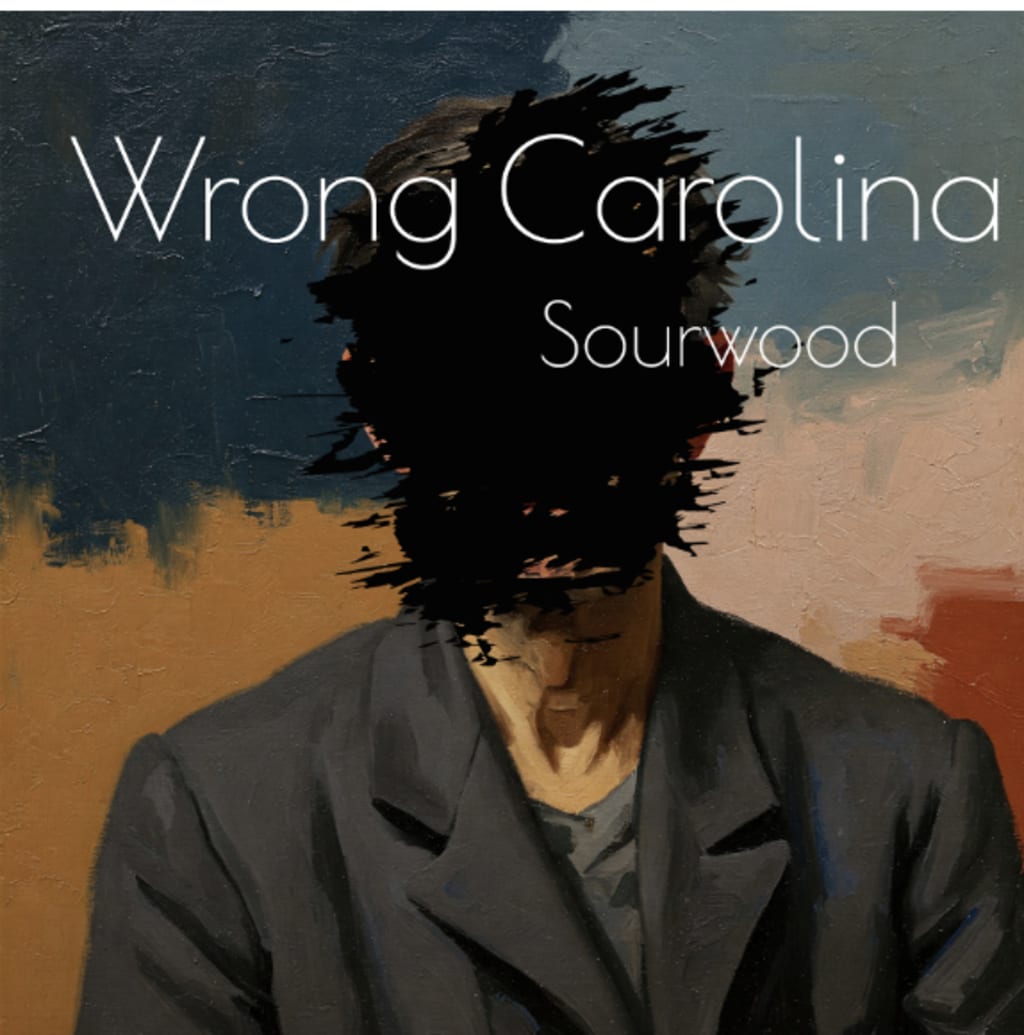
Canada/US Folk and Bluegrass Collective Sourwood Experiment with Perspective and Precision in Electrifying New Single, “Wrong Carolina”

Following their debut release “On the Road,” progressive bluegrass collective Sourwood returns with “Wrong Carolina,” a rhythmically complex and narratively playful second single that blurs the lines between heartbreak and highway maps. The track explores the chaos of mistaken direction—both geographically and emotionally—fueled by one of the band’s most memorable musical arrangements to date.

“It started with this story [that bandmate Liam Lewis] told me,” says frontman Lucas Last, recalling a tour mix-up where Liam‘s band mistakenly arrived at a South Carolina venue – only to find out they were booked at a bar of the same name in North Carolina. “It seemed like a good opportunity for a double entendre, so I mashed together the ideas of the wrong place, wrong time, wrong person.”

The song’s namesake, “Wrong Carolina,” plays with the ambiguity of place and person, letting the title line hit with layered meaning. “We wanted the lyric to feel deliberately unclear—‘I was in the wrong, Carolina’ vs. ‘I was literally in the wrong Carolina,’” Lucas explains. “It’s simple, but the ambiguity is where the real emotional weight is.”

Thematically, the song confronts the moments when confidence turns to confusion—when being sure of something doesn’t make it right. Musically, it’s a standout within Sourwood’s catalogue: pulsing with tension, intricate in rhythm, and laced with the dynamic push-and-pull that has already become a band signature.

The track’s distinctive sound is built around interlocking instrumental patterns, with rhythmic motifs repeating across guitar, mandolin, fiddle, and upright bass. “It almost feels like a prog-rock section passed through a bluegrass filter,” says Lucas. “The way everything locks together creates this feeling of momentum, like a train barreling toward a switch that no one’s pulled yet.”

Despite being the most technically challenging song on the record, it came together surprisingly quickly during a live-off-the-floor session at Halo Recording Studio. “We were intimidated by it—lots of stops and starts, and a very specific arrangement—but we got it in about three takes,” Lucas recalls. “It felt like magic.”

Produced by Roman Marcone and engineered by Danny Smart, the song also showcases Sourwood’s willingness to push sonic boundaries. From phasers on banjo to ambient textures more common in indie rock than bluegrass, the track embraces experimentation. “When I came back to hear the mix, Danny had added all these weird effects. Roman looked nervous, like maybe he’d gone too far,” Lucas laughs. “But I loved it. It was the first time I’d ever heard a banjo run through a phaser and just said, ‘Let’s go with that.’”

With “Wrong Carolina, Sourwood continues to stake out new territory at the intersection of folk, bluegrass, and indie, pairing genre-defying instrumentation with storytelling that feels both intimate and mythic.