A is For Atom’s latest single “Enola” starts with a strong electronic pulse that is modern in quality without trying too hard. It’s the kind of groove you can imagine in an indie club or on a late night drive.
But this track quickly reveals itself as more than a beat. It’s built on a concept that feels both personal and bigger than one person. It’s a reflection on what we inherit, what we carry and what we can’t leave behind.
The Atomic Age imagery isn’t just a stylistic choice. It’s a metaphor for the way past decisions continue to echo. The title nods to the Enola Gay, a Boeing B-29 Superfortress bomber that became infamous for dropping the first atomic bomb, “Little Boy,” on Hiroshima, Japan in 1945. The aircraft played a decisive role in bringing World War II to an end. But this song is more interested in the fallout, in the emotional residue of growing up in a world that keeps shifting beneath your feet.
Mike Cykoski, the man behind A is For Atom, has vocals that very much sit in the center of the track like a witness to the story. There’s a sense of tension in them as if he is telling you something that he hasn’t fully processed. The lyrics move through scenes that are lived in – cruising through Fort Collins, the guilty of Catholic school upbringing, the adrenaline of rock and roll, and then reframing them inside a country that feels very volatile and unstable right now.
What’s striking about “Enola” is how it balances contrast. It’s nostalgic, but also anxious. It’s loud, but it’s not careless. It’s a song that wants to move you but it also wants you to think. It’s a critique of America, but it’s wrapped in autobiography which makes it that bit more human.
In the end, “Enola” is a strong new release from A Is for Atom because it’s not trying to be anything other than what it is. A thoughtful and bold song that sounds familiar but still manages to carve out its own space.
Cadillac today announced the appointment of internationally acclaimed DJ, violinist, and producer Esther Anaya as a Global Brand Ambassador, further reinforcing the brand’s commitment to innovation, cultural leadership, and the future of luxury performance.
A Shared Vision of Innovation & Performance
Esther Anaya’s rise, from classically trained violinist to global electronic music artist performing on some of the world’s most prestigious stages, mirrors Cadillac’s own recent evolution: bold, future-forward, and uncompromising in performance.
Known for seamlessly blending live violin with high-energy electronic production, Esther has become a defining figure at the crossroads of music, culture, and technology. Her artistry embodies precision, emotion, and power—values deeply rooted in Cadillac’s DNA.
“Cadillac isn’t just a vehicle, it’s a statement,” says Esther Anaya. “Innovation, presence, and confidence matter in everything I do, and Cadillac represents that at the highest level. This partnership feels like a natural alignment of vision and momentum.”
The Cadillac Escalade IQ: Electrifying the Flagship Experience
No vehicle better represents this partnership than the ESCALADE IQ, Cadillac’s first full-size electric SUV, which will take center stage throughout the relationship.
As Cadillac’s most advanced SUV to date, the Cadillac Escalade IQ delivers a bold reimagining of the iconic Escalade, now fully electric and engineered for the future.
Primary highlights of the Escalade IQ include: • All-electric performance with exceptional range and instantaneous torque • Striking architectural design blending sculpted luxury with aerodynamic efficiency; Spacious, ultra-luxury interior designed for comfort, creativity, and movement • Advanced immersive technology including next-generation displays and driver-centric interfaces • Celebrates Cadillac’s legacy in music with a 38-speaker AKG* Studio Reference Audio System with Dolby Atmos • Commitment to sustainability without sacrificing power or presence
For Esther, the Escalade IQ functions as both a performance vehicle and a mobile creative hub, supporting a global touring lifestyle that demands excellence, reliability, and distinction.
A Partnership Rooted in Culture & Global Impact
Esther Anaya’s relationship with Cadillac is built on continuity, credibility, and cultural impact. The global ambassadorship announced today marks the evolution of a partnership that first took shape during Esther’s 2023 campaign and tour with Cadillac, where the brand aligned with her live performances, media appearances, and cultural moments across key markets.
That initial collaboration demonstrated a shared commitment to forward-thinking luxury, creative expression, and authentic engagement, laying the foundation for what has since become a long-term global partnership.
A key catalyst in the development and expansion of this relationship has been Cameron Smith, Founder of TITANexp, whose strategic leadership and experiential vision helped bridge Cadillac’s cultural initiatives with Esther’s artistic world. Through TITANexp, Cameron played an instrumental role in shaping Esther’s past campaigns with Cadillac and continues to be a driving force behind the partnership’s ongoing global activation.
From live performances and high-profile cultural events to media storytelling and immersive brand experiences, Esther represents Cadillac at the intersection of music, luxury, and modern identity, bringing authenticity and global resonance to the brand’s evolving narrative.
“Esther Anaya brings a rare combination of artistry, authenticity, and global influence,” said Tom D’Angelo, Cadillac Regional Marketing Manager. “She represents where culture is going, not where it’s been. Building on the success of our earlier collaborations, we’re excited to formally welcome her as a global ambassador as Cadillac continues to define the future of luxury mobility.”
Looking Ahead
As a Global Brand Ambassador, Esther Anaya will continue to collaborate with Cadillac on international campaigns, cultural initiatives, and storytelling that highlights innovation, creative excellence, and the evolving definition of luxury.
Together, Cadillac and Esther Anaya are driving forward, electrified, expressive, and unapologetically bold.
About Cadillac Cadillac is a division of General Motors, committed to shaping the future of luxury through innovation, electrification, and expressive design.
About Esther Anaya
Esther Anaya is an internationally recognized DJ, violinist, and producer known for fusing classical musicianship with electronic music. Her performances span major festivals, stadiums, and global cultural platforms, positioning her as one of the most distinctive crossover artists of her generation.
Veteran singer-songwriter, producer, and entrepreneur Denise Marsa is redefining what it means to evolve as an artist, seamlessly moving into the dance music scene with confidence, creativity, and purpose. Known for weaving emotion and narrative into every note, Marsa’s work is a reflection of her own experiences, giving her music a depth that resonates across audiences and genres. Her style, often described as “pop with purpose,” continues to grow in sophistication and reach.
Marsa’s recent collaborations with UK remixers Jim Sullivan and Craig Jones have turned her most daring musical ideas into fully realized club-ready tracks. With seven consecutive Top Ten hits on the UK Music Week Commercial Pop Club Chart, the partnership has proven to be a powerhouse. The newest release, “HOLE (Until Dawn Remix),” is positioned to become their eighth chart-topping hit, with additional remixes from her forthcoming album RISK + HEAL already in the works. Marsa says, “Every remix is a fresh exploration. We’re connecting story and emotion with the energy of the dance floor, turning feeling into movement.”
“HOLE (Until Dawn Remix)” channels heartbreak into a sense of liberation. Bright guitar strums, buoyant synths, and infectious, shuffling beats create a sonic landscape that feels like stepping into sunlight after a storm. Listeners are invited not just to dance—but to dance through the struggle, discovering joy, connection, and release along the way.
The official music video enhances the track’s message by transporting viewers to The Music Inn, Manhattan’s oldest music store, where creativity and community collide. Marsa guides the audience through the store’s vibrant aisles and into its hidden West Village basement—a gathering space for musicians, friends, family, and fans. Joined by staff, owner Jeff Slatnick, her first NYC guitarist Frank (Francis) Bosco, and her niece Stephanie Colorado, the video captures spontaneous jams, laughter, and the unbreakable spirit of musical collaboration. It is a celebration of the artistry, dedication, and joy that music continues to inspire.
With “HOLE (Until Dawn Remix),” Denise Marsa proves that even in uncertain times, music remains a powerful source of hope, healing, and connection—reminding us that liberation, creativity, and community are never out of reach.
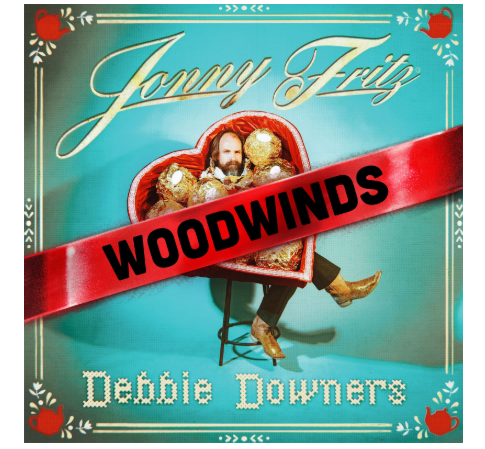
In the summer of 2025, Los Angeles-based country artist Jonny Fritz released his first recorded music after a near decade-long hiatus from the music business. “Debbie Downers”, however, would not be the start of your typical record release cycle, but a multi-album, genre-spanning spectacle meant to bring Jonny’s songwriting to new sonic worlds and challenge the consumption-obsessed nature of the modern digital music landscape. Debbie Downers part one, a classic sounding Americana album recorded in Nashville, was released in October, 2025. The next installment, Debbie Downers – Woodwinds, sees the original album’s nine tracks reimagined with an all-woodwinds ensemble, composed by Andrew Conrad.
“I love woodwinds and have wanted to make this type of record for as long as I can remember. I’ve had this vision of clarinets playing chicken pickin style telecaster solos. Just imagine a Jerry Reed covers album played with clarinets and piccolos. There’s something about the staccato tonguing of a reed instrument that seems to me as enjoyable as playing roadhouse country solos. I’ve never played one so I don’t know but I do think about it all the time. I couldn’t be happier to finally hear it out loud and share it with the world.
The version of this record I brought to Andrew Conrad was very different from what it became. My version was Twinkle Twinkle Little Star and he made it into The Star Wars Theme (or something like that). He was so clearly over-qualified for the job and it made me appreciate him even more.” – Jonny Fritz
Two more versions, to be released later in 2026, will complete the collection. Continue reading to learn more about the project and the enigmatic Jonny Fritz:
For 15 years, Jonny Fritz relentlessly traveled the world as a country music eccentric. You could find him everywhere: onstage, singing songs about laser hair removal and the age old debate of Ford VS Chevy; in Jackson Browne’s recording studio, tracking his debut for ATO Records; in the writing room, penning Top 40 hits for Dawes and cult classics for himself. Fritz put in the hours, climbing the music industry’s long ladder with a novelty-golf-ball-concession-stand sized personality whose sheer weirdness didn’t overshadow, but rather magnified, his genuine talent at songwriting.
Then, one day, he just quit. “I think I kinda overdid it,” he says, thinking back to his decision to leave the road for nearly a decade. “I worried that if I kept making music not only as my passion, but also as my paycheck, it was going to ruin it for me. I needed music to be kept pure and free from the burdens of economics.” What followed was a long break from the limelight. Jonny became a father, settled into his new home in Altadena, and rebranded himself as “L.A.’s Only Realtor,” bringing his wild brand of creativity to the real estate market. For years, he avoided the recording studio and the road altogether. When he finally returned, it was to make Debbie Downers: a collection of four interlinked records, each one featuring a wildly unique interpretation of the same album. First on the menu is the country version, recorded in Nashville, produced by Jordan Lehning and a band of world-class studio musicians. Think of this as the album. Three variations of the album follow in stride. The next course features a version that was arranged and recorded with a quintet of woodwinds. The only real note that arranger Andrew Conrad was given was to “make it sound like tea time on The Titanic”. Here Fritz traded guitars for a wholly unexpected mix of clarinet, flute, and piccolo. Two more albums with different themes TBA.
“I had an idea — a dumb idea, maybe, and I followed it through, making these albums exactly
as I’d envisioned. And hey, at least it was expensive —” he says. “It’s so easy to fall into a pattern of saying, ‘Well, the label wants things to sound a certain way’ or ‘I’m not sure we can afford this,’ but I didn’t want any of that to influence my decision making. I just wanted to stay true to myself. Artistic integrity is worth so much more than any monetary payback, so this project has already been a major success to me, simply because I haven’t compromised or done anything conventional yet. I think that’s the key to success, actually.”
There’s an ancillary benefit, too. “When you release a record, everyone forgets about it a week after it comes out,” Fritz explains. “But I made four different versions of the same record and I’m going to release them over the course of a year. Now I can say, ‘I made a record! … Oh, you forgot about it? Well, HERE IT IS AGAIN!’” (Used-car salesman voice)
Years spent in the real estate market haven’t dulled Fritz’s sense of humor. On the Nashville recording of “Hot Chicken Condos,” he blasts the city’s celebrity and bachelorette party culture, mixing mischief and melody in equal amounts. “I love Nashville,” he promises. “I lived there for a decade, but I think it all just got too L.A. for me… so I moved to Los Angeles. I watched all my favorite places in Nashville get torn down, then rebuilt and rebranded as hot-chicken-themed tourist traps.” On “Have You Seen Her,” he croons his way through a plot summary of the Spike Jonze film “Her” while also delivering some unexpectedly moving thoughts about partnership and romance. “Love transcends the boundaries and the limits of the eye,” he sings, backed by a loping, trail-riding groove on the album’s Nashville recording and flanked by single-reed instruments on the woodwinds version. It’s a moment that’s both poignant and preposterous in the same breath, and it’s there — in the grey space between the humorous and the heartfelt — that Fritz has always done his best work.
Case in point: “Tea Man,” a gorgeously breezy tribute to his favorite caffeinated beverage. “I’m a tea man, and I can drink more than England,” he sings with an almost audible smile, as though he’s two sips into his first cup of the day. Country music boasts a long history of drinking songs, but “Tea Man” is something different: sober, playful, and stunning all the same. In other words, it’s the sort of left-field song that Fritz excels at delivering. “When I first came on the scene, everybody said, ‘This guy is the next outlaw!'” he says. “But I’m no outlaw. I’m a marathon runner who obsesses over Ken Burns’ The Civil War and drinking tea. I don’t even drink coffee and I hate weed. I’m more like somebody’s weird dad. That’s why I coined the genre ‘Dad country.’ I’m much more interested in the mundane than the extreme. I like the nuance — the in-between stuff. I live for that grey area and rely heavily on it for inspiration. I couldn’t care less about anything ‘outlaw’ and I’ll never write about ‘traveling down a whiskey-soaked highway.’ I never want to say anything anyone has ever said before.”
Entirely self-funded and independently conceived, Debbie Downers is a project fueled not by the music industry, but by a genuine love of music itself. Whether he’s skewering his MAGA relatives (“Debbie Downers”), singing about the challenges of working at Walgreens with your roommate (“The Boss”), or sketching the portrait of a divorced father “trying hard to ignore the looks from the earth-tone moms” at the neighborhood playground, Fritz turns the everyday
into the anthemic, creating a colorful soundtrack for blue-collar life. He’s rested and rebalanced, back in the saddle after a long, voluntary break from the road. This time around, though, he’ll be following his own path, not getting derailed by false hopes of pleasing the masses through convention, but rather aiming to please himself and his community of respected musicians.
TRACKLIST
Debbie Downers
Polished Turd
Hot Chicken Condos
Run
Tea Man
Bikers
Have You Seen Her
The Boss
Slow Down
UPCOMING TOUR DATES
February US Headlining Tour
2.12 – Oakland, CA – The Stork Club
2.13 – Santa Cruz, CA – The Crepe Place
2.26 – Milwaukee, WI – Cactus Club
2.27 – Chicago, IL – Hideout
2.28 – Evanston, IL – SPACE
CREDITS
Vocals – Jonny Fritz
Composer – Andrew Conrad
Christine Tavolacci – Piccolo, Flute, Alto Flute
Michael Mull – Clarinet, Alto Sax
Andrew Conrad – Clarinet, Tenor Sax
Brian Walsh – Bass Clarinet, Bari Sax
Recorded, mixed and mastered by Kevin Ratterman live in Alhambra, CA
All songs written by Jonny Fritz except
“Hot Chicken Condos”, written by Jonny Fritz, Jordan Lehning and Skylar Wilson and
“Slow Down”, written by Jonny Fritz, Tim Deaux and Robert Ellis
“Tossed Away”, the latest release from Matt Alter, is quiet, steady and yet painfully relatable. The song is about that moment when you realize that someone has been taking from you without giving back, and finally being able to put that feeling into words.
The music matches the honesty. Both the guitar and instrumentation do not attempt to steal the spotlight but rather allow Matt’s lyrics to really shine:
What really sticks is the writing. The lyrics aren’t complicated, but they are real. You can sense the frustration, the disappointment, the clarity that comes after.
“I was just your stepping stone.
You used me. Tossed away.”
In these striking lyrics you can feel the frustration, the disappointment, and the clarity that comes afterwards. It’s the kind of song that makes you nod and say, “Yeah… I’ve been there.”
Part of what makes “Tossed Away” work so well is the way it was created. Released as part of a single by single rollout, each track got its own space to grow. And you can hear this in the way it is deliberate, punchy, thoughtful but also unafraid to leave some thing unsaid.
About Matt Alter
A lifetime of music has shaped Matt Alter’s journey. From early school bands to picking up his first guitar after high school, music has always been a constant. Even when life and a demanding career as a surgeon took him away from it temporarily.
Returning to the guitar reignited his passion, leading to performances with cover and original bands in Richmond, Virginia, and opening for nationally touring acts.
Now based in Charlotte, North Carolina, Matt Alter has released four solo albums, including The Bitter Pill (2020), Race to the Finish (2021), Did I Offend You? (2023), and an upcoming 2026 release, all reflecting a thoughtful and deliberate approach to songwriting.
There’s nothing flashy about the way Muriel Grossmann approaches “Plays the Music of McCoy Tyner and the Grateful Dead.” The record doesn’t announce itself as a bold idea or a clever pairing. It just starts moving, slowly and deliberately, and trusts the listener to follow. In an era where genre-blurring is often framed as innovation, Grossmann’s album feels almost anti-conceptual. It sounds like music made by musicians who already know where the overlaps live.
Grossmann treats the source material less like repertoire and more like terrain. The Tyner compositions and the Grateful Dead tracks aren’t dressed up or stripped down. They’re allowed to breathe, stretch, and repeat until their internal logic becomes clear. The focus stays on feel rather than form, on how long a groove can hold before it needs to change.
Her saxophone playing is central but unassuming. Lines are patient, often circling the same ideas instead of chasing resolution. There’s a physicality to the sound that suggests endurance rather than urgency, as if the goal is to stay inside the music for as long as possible. Virtuosity never becomes the point, which gives the record its sense of trust and ease.
The band moves as a unit. Guitar parts blur into rhythm, organ tones hover and thicken the air, and the drums keep everything grounded without pinning it down. The interplay feels conversational rather than reactive, built on shared time instead of constant response. Nothing feels rushed, and nothing feels ornamental.
“Walk Spirit, Talk Spirit” sets the tone early, riding a steady pulse that accumulates weight through repetition. “Contemplation” pulls inward, leaving space between notes and letting silence do some of the work. Both performances reflect a respect for the originals without sounding beholden to them.
The Grateful Dead selections slide into place without friction. “The Music Never Stopped” becomes a circular groove rather than a sing-along, while “The Other One” leans fully into its open-ended nature. These pieces feel less like covers than familiar shapes viewed from a different distance.
What makes “Plays the Music of McCoy Tyner and the Grateful Dead” compelling is its refusal to sell itself. Grossmann isn’t interested in explaining why this combination works. She lets repetition, collective focus, and long-form listening make the case. The album unfolds at its own pace, rewarding attention without demanding it, and leaves behind the feeling that these musical paths were always running alongside each other.




 Modern Mystery