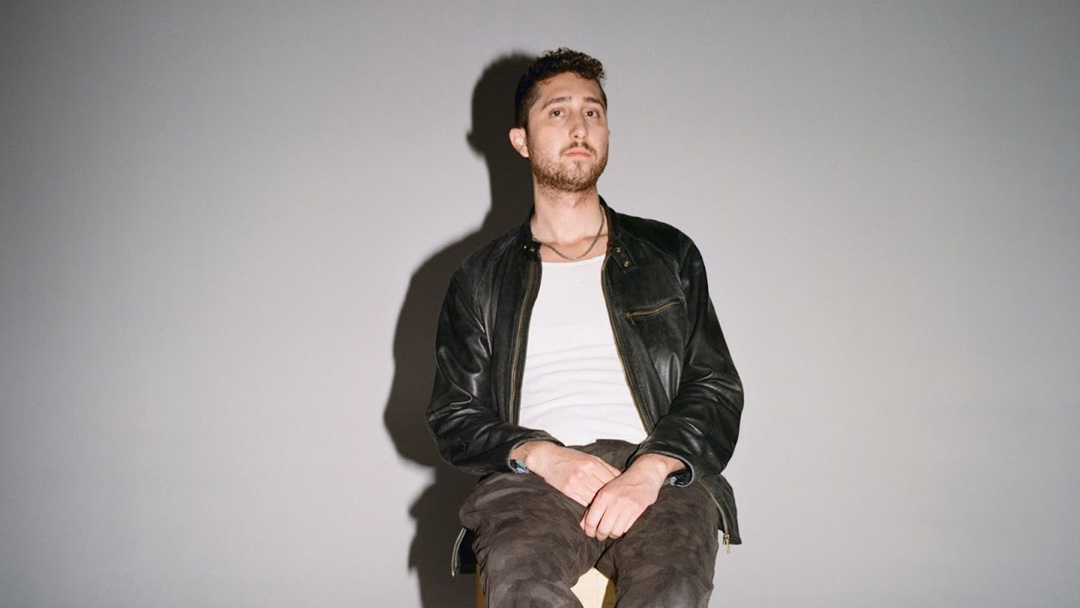
Toronto artist Ben Key unveils his electrifying new single, “James Dean,” an alternative track pulsing with passion, danger, and a us-against-the-world attitude. Blending groove-heavy rhythms, soulful vocals, and ambient synths, the song embodies the restless, rebellious love that defined the golden age of Hollywood.
Inspired by the timeless energy of late ’50s films, “James Dean” channels the spirit of reckless romance. Ben had been sitting on the song’s title for a while, knowing it perfectly captured the feeling of love that feels bigger than the world itself. The track merges modern sonics with a classic Motown groove, reimagining traditional horn sections with futuristic synth textures for a contemporary edge.
1. Tell us the story of this song, and why did you choose to visualize this song specifically? As the first single of this new project, it felt important to establish a distinct visual identity right from the start—one that reflects the era that inspired it. I’ve always been drawn to the look and feel of old black-and-white films from the late ‘50s, with their timeless elegance and understated drama. This song, in particular, carries that same classic energy, so it made perfect sense to bring it to life visually in a way that nods to that aesthetic. It sets the tone for everything that’s to come, both musically and visually.
2. What was the inspiration behind this video (visuals, storyline, etc.)? The song has a certain raw, immediate energy that I wanted to translate into the visuals. Rather than constructing a traditional storyline, the focus was on capturing the essence of a live performance—one that pulls the audience in and gives them a real sense of what to expect from this era of music. The decision to shoot in black and white, with a cinematic yet minimal approach, was a way to highlight that energy while staying true to the classic influences that shaped the project.
3. What was the process of making this video? The goal was to execute something simple yet captivating. We shot from three angles, keeping the focus entirely on the performance. By stripping away excess production and letting the music and presence speak for themselves, the video became more about feeling than spectacle. Every choice—from the framing to the lighting—was intentional in creating an atmosphere that feels intimate yet powerful, giving the audience a glimpse into the world of this new project.
The Neighbourhood Watch‘s brooding new single, “Die This Happy,” serves as the exciting focal point of their brand new album, Mr. Skin and Bones. This track explores the fear that life’s best moments may already be behind you, addressing the inevitable realities of illness, loss, and personal change while simultaneously reflecting the album’s overarching theme: life’s unpredictability, the power of love, and the profound beauty found in the small, often fleeting moments.
Mr. Skin and Bones, as a whole, is an ode to the human condition — a meditation on grief, illness, and the harshness of growing older. The album draws inspiration from personal hardships, the loss of loved ones, and the unpredictable nature of existence. Throughout the LP’s 10 tracks, the band conveys their ongoing journey through these challenges, acknowledging their fragility while also celebrating the strength they find in love, community, and shared experiences.
The album’s focus track, “Die This Happy,” captures this essence with haunting melodies and powerful lyrics that ask if we’ve already lived through our happiest day. “Die This Happy” dives deep into this fear, contemplating the impermanence of joy and the difficulty of embracing life’s darker moments.
Hey Melissa, hope your week is off to a good start!
The Neighbourhood Watch‘s brooding new single, “Die This Happy,” serves as the exciting focal point of their brand new album, Mr. Skin and Bones. This track explores the fear that life’s best moments may already be behind you, addressing the inevitable realities of illness, loss, and personal change while simultaneously reflecting the album’s overarching theme: life’s unpredictability, the power of love, and the profound beauty found in the small, often fleeting moments.
Mr. Skin and Bones, as a whole, is an ode to the human condition — a meditation on grief, illness, and the harshness of growing older. The album draws inspiration from personal hardships, the loss of loved ones, and the unpredictable nature of existence. Throughout the LP’s 10 tracks, the band conveys their ongoing journey through these challenges, acknowledging their fragility while also celebrating the strength they find in love, community, and shared experiences.
The album’s focus track, “Die This Happy,” captures this essence with haunting melodies and powerful lyrics that ask if we’ve already lived through our happiest day. “Die This Happy” dives deep into this fear, contemplating the impermanence of joy and the difficulty of embracing life’s darker moments.
1. Tell us the story of this song, why did you choose to visualize this song specifically?
Die This Happy explores the fear that life’s best moments may already be behind you, addressing the inevitable realities of illness, loss, and personal change while simultaneously reflecting the album’s overarching theme: life’s unpredictability, the power of love, and the profound beauty found in the small, often fleeting moments. We thought it would be good to visualize to capture the overall story of the new album, setting the tone for the whole piece.
2. What was the inspiration behind this video (visuals, storyline, etc.)?
The idea came after seeing Hannah, one of the dancers, krumping on Instagram. She’d been in another project I made, and when I saw her dance, I thought it’d be interesting to pair that style with a totally different type of music. I wanted to see how Hannah and other dancers (who all came from different backgrounds but could all freestyle) would respond to the song when they heard it for the first time. I find the song itself really emotional, touching on themes like the turbulence of youth, the fear of aging, and the pursuit of fleeting joy. It just felt like a perfect match for that kind of raw, free expression that I saw in Hannah’s dancing. I’m also a big fan of Bakar’sAlivevideo, which features this amazing choreographed dance all shot amongst members of the general public in the streets of London. I thought it’d be amazing to try something similar but with freestyle dancers instead.
3. What was the process of making this video?
We shot it in a really guerilla, documentary style. We used two cameras with super long zoom lenses, the kind you’d usually see on wildlife documentaries. It was important to me that the dancers didn’t know we were filming them as I felt it would help make it feel authentic. I didn’t want them to feel like they were performing for the camera, but instead just getting lost in the music. That made the whole thing feel more real and natural. We also wanted the general public to just see the dancers as people freestyling on the streets of Toronto. Most people were too caught up in their day to stop and watch, but a few were clearly impressed. I think some people were a bit concerned about what they were seeing. Some of the dancers were so immersed in the music that it almost looked like they were possessed. At one point, a shopkeeper in Chinatown quickly shut their shutters when one of the dancers moved toward them. Definitely a memorable moment! Normally, music videos rely on choreographed dances, so it was cool to see how each dancer interpreted the song in their own way. The song really has so many different meanings depending on how you look at it, so letting the dancers freestyle gave it a more personal, authentic feel.
ARK IDENTITY‘s new single, “Take Me To Tokyo,” is a high-energy track that captures a yearning for escape and the thrill of new experiences. Blending elements of 80s synth-pop, indie sensibilities, and modern pop, the song is an anthem for those dreaming of breaking free from the ordinary and embracing the unknown. “Take Me To Tokyo” is both a personal expression and a universal anthem of wanderlust, inviting listeners to reflect on the impulse to explore and reinvent themselves.
The song’s inspiration comes from a long-held dream between ARK IDENTITY‘s Noah Mroueh and his best friend to one day visit Tokyo—a dream that has yet to be realized. The track blends that aspirational longing with the infectious energy of chasing adventure.
“Musically, it began as a droning synth idea that we jammed on with Ron Lapota, my producer. It evolved into a track about breaking away from routine, chasing something new, and embracing uncertainty,” Noah explains.
1.Tell us the story of this song. Why did you choose to visualize this song specifically?
This song has an interesting backstory. Going to Tokyo has been a dream of mine for years. Ever since high school, my best friend and I talked about going to Tokyo, but life always seemed to get in the way. Even after our college and university days, we never had the time or funds to make the trip. The stars just never aligned. This dream trip was the inspiration for Take Me to Tokyo.
On the surface, the track may be interpreted as a party song, but it’s really about escape, urgency, and self-reflection. It’s meant to capture that feeling of being stuck—whether mentally or physically—and making the choice to chase something new. For me, on a deeper level, Tokyo isn’t just a place. It represents breaking free from old cycles and stepping into the unknown.
2.What was the inspiration behind this video (visuals, storyline, etc.)?
The inspiration came from both the song’s themes and the visual aesthetic of Tokyo itself. We wanted to capture the feeling of searching for something bigger—wandering through neon-lit streets, caught between urgency and mystery. We also aimed to give the video an ’80s-inspired cinematic look, using bold colors and dramatic lighting to heighten the sense of adventure.
As an independent artist working on a shoestring budget, we had to get really creative. We couldn’t afford to fly to Tokyo to film a video, so our director and editor curated stock footage that felt authentic to the world we wanted to build. Together, we crafted visuals that felt cohesive with the footage we did film, making the video feel as if it was all coming from one unified source.
3.What was the process of making this video?
With a limited budget, we knew we had to think outside the box to bring this vision to life. We filmed it at the Orange Lounge, a cool recording studio in Toronto filled with interesting textures and colors. We meticulously selected stock footage that captured the right energy and emotion, piecing together a story that felt cinematic and real.We focused on visuals that matched the ’80s-inspired aesthetic with bold neon colors.
Now, with the release of Take Me to Tokyo as the first single off the new upcoming EP, that high school dream is turning into a reality. To help promote the song, my best friend and I are actually going to Tokyo to film social media content while we’re there. One of the most exciting parts of the trip is that we plan to visit some of the exact locations featured in the music video, bringing the visual journey full circle. In a way, this video is just the beginning—the real-life Tokyo adventure is just getting started.
With latest single “Tattoo My Heart”,MASSEY has created a fever dream of desire and danger, set against the intoxicating pulse of New Orleans.
The song, anchored by Charlie Wooton’s seismic bass and electrified by dueling guitars from Peter Oravetz and Daniel Groover, captures the city’s magic where passion and mystery intertwine in equal measure.
But the story doesn’t end with the music.
The accompanying video takes this sultry, shadow-drenched world and brings it to life through a mesmerizing fusion of AI-generated imagery and cinematic storytelling. A hypnotic journey through the vibrant streets and smoky backrooms of New Orleans, the video mirrors the song’s themes of seduction, adventure, and the lasting imprint of an unforgettable encounter.
In this exclusive interview, MASSEY and Peter Oravetz pull back the curtain on the song’s origins, the inspirations behind the video’s haunting aesthetic, and the creative process that brought Tattoo My Heart to the screen.
From the funk-infused grooves that shaped the track to the city’s spellbinding energy that influenced its visual storytelling, this is the inside story of Tattoo My Heart.
Watch the Official Music Video here:
Tell us the story of this song, why did you choose to visualize this song specifically in this way?
My lead guitar player and oft-song writing partner, Peter Oravetz, actually wrote this entire song.
That said, we’ve both long had a romance with New Orleans, each attending JazzFest a half dozen times, exploring the great restaurants like K-Pauls, Patout’s, and Brennans, and visiting the river plantations and the bayous.
Peter says:
“The lyrics were inspired by the romantic dark side of New Orleans with voodoo and mojo references. Also, MASSEY and I have always been attracted to the funky side of things, whether it be the Neville Brothers, James Brown, or Dr. John. The hook for this particular track grew out of studying hybrid pickers (using pick and fingers) like David Grissom and Keith Richards. Marrying that percussive guitar line to a driving, Tower of Power-inspired bass line provided the synthesis for Tattoo My Heart.”
What was the inspiration behind this new video (visuals, storyline, etc.)?
The inspiration behind the video for Tattoo My Heart is the allure and mystery around every corner of New Orleans; The music, the food, the intoxicating atmosphere of the city at night and the sensuous free spirit of the people in the streets and the clubs. A reveler is almost uncontrollably drawn to the adventure, often tinged with a more than a bit of danger. The city is an enchantress. A spell is cast. And she can never be separated from your soul, your heart. Secrets are shared, or are they? A warm embrace , and then she is gone. Yet, no matter where you go, she is always with you, like a permanent mark . . .
What was the process of making the video?
Joe worked directly with the AI artist to come up with the images and the flow of the video.
The challenge was to ensure that each frame felt immersive and cohesive, maintaining a cinematic quality that matched the song’s hypnotic allure. The result is a swirling, surreal interpretation of New Orleans at night – a world of deep shadows, neon reflections, and fleeting encounters that linger like a memory you can’t shake. It perfectly capture the feeling of the song.
“Tattoo My Heart” is now available on all major streaming platforms:
Willem James Cowan’s new single, “Jam Jar,” is a raw, visceral anthem about self-reflection, the fallout of emotional mistakes, and the deep, spiraling thoughts that often follow. The track captures the feeling of being stuck in a loop of self-doubt and regret, all wrapped up in a striking folk-rock sound.
Inspired by a fight with his then-girlfriend, “Jam Jar” finds Cowan reflecting on a moment of fault while trying to understand things from the other person’s perspective. “We were out at a party, and I was at fault. While we were on our way home on the Toronto streetcar, I was trying to imagine things from her shoes—buried in a grave I designed,” says Cowan. The song’s narrative feels as personal as it does universal, touching on themes of vulnerability, guilt, and the struggle of owning up to one’s mistakes.
The title “Jam Jar” holds its own significance, referencing a lyric in the first verse: “My empty head now weighs a ton, I should really sell it to someone floating inside a jam jar.” Cowan describes it as “a little self-pitying, a little cynical, maybe. It’s about being tired of screwing up and letting someone down.” Initially titled “Bell Jar,” the final title serves to distance the song from a Sylvia Plath homage while still evoking feelings of entrapment.
The track’s production offers a stark contrast to Cowan’s usual style, blending his developed folk-rock sound with his more recent experimentations in electronic sounds. “This song kind of asked to just be a straight-up folk-rock song,” says Cowan. “Sometimes the best choice is the easiest one.” The bridge of the song, in particular, takes on a feeling of isolation, mimicking the spiraling thoughts of someone grappling with regret, before it blends back into the rest of the track, providing a sense of emotional resolution.
A standout lyric for Cowan comes from the line: “Too late to toss out all the vulgar things I wrote down. They stained the table underneath.” He explains, “I like the imagery of it, and I think it’s a pretty straightforward metaphor that people can likely relate to.”
“Jam Jar” is a striking addition to Cowan’s growing catalog, drawing upon his core themes of anxiety, relationships, and mental health. His songs often explore the balance between emotional vulnerability and the upbeat, punchy tempos that characterize some of his favourite tracks from the records he loves.
Alternative rock artist Stonehocker’s striking new single, “Hello Mr. Hyde,” sets the tone for his brand new album of the same name. Rooted in honest introspection, the track delves into the metaphor of addiction, likening the infamous character of Mr. Hyde to the personal demons that lurk within us all.
Stonehocker’s new album, Hello Mr. Hyde, is an unfiltered journey through self-discovery and surrender. Written while working through a 12-step program, the album reflects the themes of struggle, revelation, and ultimate acceptance. At its core, Hello Mr. Hyde embodies the first three steps of any recovery process, culminating in a surrender to a higher power—a concept rarely explored so openly in modern music.
Inspired by Robert Louis Stevenson’s novel The Strange Case of Dr. Jekyll and Mr. Hyde, Stonehocker saw a profound connection between Hyde and the struggle against addiction. The song acknowledges those inner battles, offering a thought-provoking and deeply personal narrative. “Hello Mr. Hyde” is made even more special with the return of drummer Jeff Towers, a longtime collaborator. The two first worked together on Stonehocker’s 2008 album, Mail Me a Smile, which carried a distinct punk influence. After reconnecting at one of Jeff’s drum clinics on “single drum theory,” Stonehocker invited him to lend that unique technique to this track, creating a distinctive rhythmic feel that sets it apart from the rest of the album.




 Modern Mystery
You must be logged in to post a comment.